
News
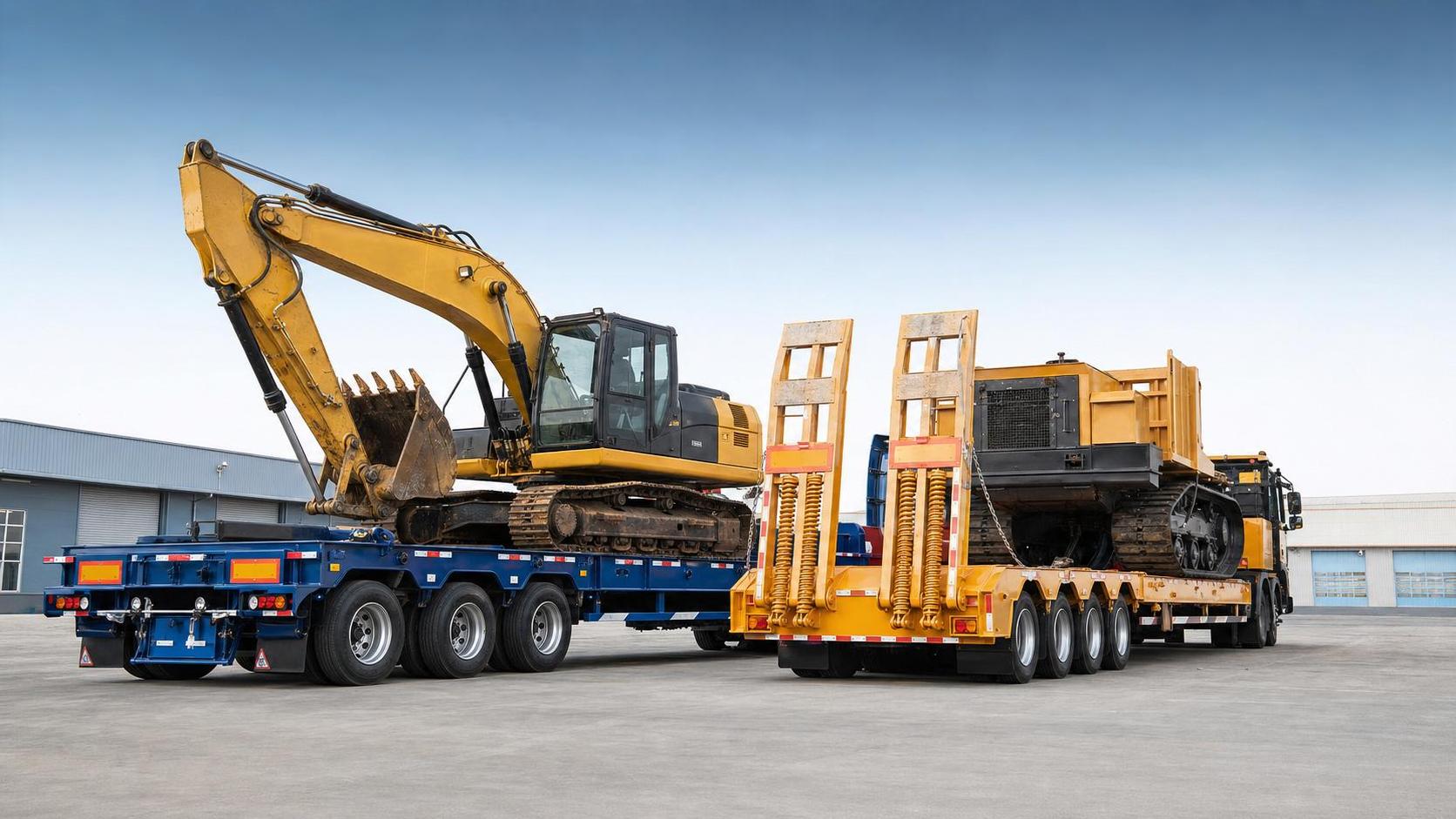
Flatbed Semi-Trailer vs Low Plate: Which Fits Heavy Equipment Better?
When moving excavators, loaders, or oversized machines, trailer choice affects safety, loading speed, and total project cost.
A Flatbed Semi-Trailer works well for many standard transport jobs.
A low plate trailer often performs better when equipment is taller, heavier, or harder to load.
The real question is not which trailer is better overall.
It is which option fits your machine profile, route limits, and delivery pressure better.
This comparison breaks down the decision in practical terms, so planning becomes easier and risk stays lower.
What a Flatbed Semi-Trailer Does Best
A Flatbed Semi-Trailer has a straight, open deck with strong flexibility.
It is widely used for construction materials, medium equipment, steel products, and container-like cargo.
For heavy equipment transport, its biggest advantage is versatility.
If the machine height stays within road limits, loading is usually straightforward and fast.
- Open deck supports multiple cargo shapes.
- Loading from rear or side is often easier.
- Fleet availability is usually higher.
- Maintenance and operating costs can be more predictable.
This matters when project schedules are tight and a replacement trailer must be sourced quickly.
A Flatbed Semi-Trailer also fits mixed cargo planning.
If one trip includes attachments, tools, or lighter machines, the flat platform gives more freedom.
Where a Low Plate Trailer Has the Edge
A low plate trailer uses a lower deck height.
That one feature changes the whole transport equation for large equipment.
Tall excavators, road rollers, drilling machines, and tracked equipment often benefit from the lower center of gravity.
In practical transport work, height clearance is often the first hard limit.
Bridges, tunnels, overhead cables, and local road rules can quickly rule out a standard Flatbed Semi-Trailer.
- Lower deck reduces overall loaded height.
- Better stability supports safer transport.
- Loading angle is often more suitable for tracked equipment.
- It can reduce permit complexity on restricted routes.
That does not automatically make the low plate trailer the better choice every time.
It simply means it becomes more valuable as machine size and route difficulty increase.
Flatbed Semi-Trailer vs Low Plate: Core Selection Factors
The best decision usually comes from five key checks.
1. Equipment Dimensions
Start with transport height, not only weight.
Many teams focus on payload capacity first, but overhead clearance causes more last-minute changes.
If the machine is tall, a low plate trailer usually gives more room to work safely.
2. Ground Clearance During Loading
Some machines climb ramps easily.
Others have low ground clearance or long wheelbases that create loading challenges.
In those cases, a low plate trailer can reduce approach angle problems and lower loading risk.
3. Route Restrictions
This is where trailer selection becomes a project decision, not just a transport decision.
Urban routes, mining roads, mountain sections, and border crossings all bring different limits.
A Flatbed Semi-Trailer may be fully suitable on open highways.
A low plate trailer may avoid costly detours on restricted routes.
4. Loading Frequency
For repeated moves between job sites, loading time matters more than many teams expect.
If equipment is moved often, choose the trailer that reduces setup time and operator effort.
That might be a Flatbed Semi-Trailer for standard machines.
For larger tracked units, the low plate trailer often wins.
5. Total Cost, Not Just Rental Price
A cheaper trailer can become more expensive after permits, escorts, delays, and reloads.
The right comparison should include loading hours, route approval, fuel efficiency, tire wear, and delivery reliability.
Quick Comparison Table
When a Flatbed Semi-Trailer Is the Smarter Choice
Choose a Flatbed Semi-Trailer when equipment height stays compliant and loading conditions are simple.
It also makes sense when operations need fast trailer turnover across multiple sites.
This option is often better for:
- Wheel loaders with manageable height.
- Smaller excavators and compact machinery.
- Projects needing multi-purpose transport capacity.
- Routes with fewer overhead restrictions.
In short, the Flatbed Semi-Trailer is usually the more flexible generalist.
When a Low Plate Trailer Is Worth It
Choose a low plate trailer when cargo height, loading angle, or stability becomes a real operational issue.
It is especially valuable for cross-region moves with uncertain infrastructure conditions.
- Large excavators with tall upper structures.
- Bulldozers, rollers, and tracked machines.
- Roads with bridges, tunnels, or strict clearance limits.
- Projects where transport safety outweighs trailer versatility.
Yes, it may look like a more specialized investment.
But in difficult transport scenarios, it often prevents bigger costs later.
A Practical Decision Checklist
Before confirming a Flatbed Semi-Trailer or low plate trailer, review these points:
- Measure transport height after loading, not only machine height on the ground.
- Check axle load and legal road limits for every region.
- Review ramp angle and loading surface conditions.
- Confirm whether attachments travel mounted or separately.
- Estimate total delivery cost, including permits and delay risk.
- Match trailer choice with loading frequency across the project cycle.
This simple process reduces rushed decisions and helps avoid expensive transport corrections.
Choosing a Reliable Supply Partner Matters Too
The right trailer specification is only part of the result.
Reliable supply, documentation support, and delivery coordination also shape project performance.
Shandong Livol Truck International Trade Co., Ltd. brings strong export experience in commercial vehicles from Shandong, China.
As an authorized dealer for FOTON, SHACMAN, and SINOTRUK, the company supports stable supply and faster response.
Its export team handles vehicle selection, customization, documentation, customs clearance, and logistics coordination.
That becomes useful when a Flatbed Semi-Trailer must match specific project or regional requirements.
Final Verdict
If equipment is standard in height and operations need flexibility, a Flatbed Semi-Trailer is usually the smarter fit.
If the machine is taller, heavier, tracked, or route-sensitive, a low plate trailer often delivers better safety and compliance.
The strongest decision comes from matching trailer type to machine dimensions, route reality, and project timing.
When those three factors align, transport becomes smoother, costs become clearer, and delivery risk drops noticeably.
If you are evaluating a Flatbed Semi-Trailer for heavy equipment transport, start with actual load data and route limits, then compare options with a supplier that understands export execution from end to end.
Search Starts Here