
News
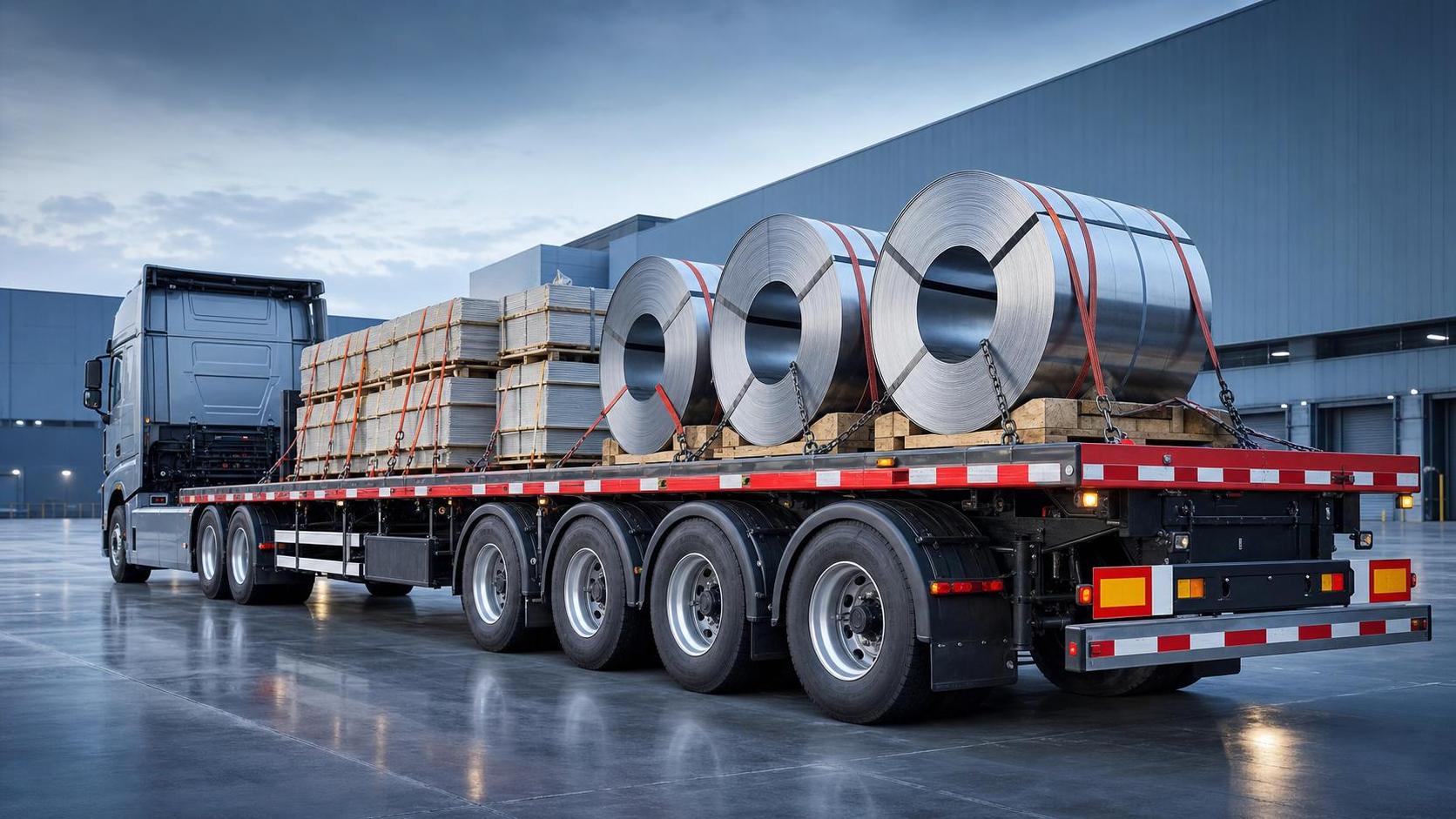
Flatbed Semi-Trailer Payload Limits: Key Factors That Affect Safety and Compliance
Understanding Flatbed Semi-Trailer payload limits is essential for compliant transport operations.
Payload decisions affect safety, axle stress, braking distance, cargo stability, and roadside inspection results.
In practice, overload problems rarely come from one mistake alone.
They usually come from weak load planning, uneven distribution, poor securement, or missing weight verification.
This article explains the main variables that shape Flatbed Semi-Trailer payload limits and how to manage them more effectively.
Why payload limits matter more than total weight
Many teams focus only on gross vehicle weight.
That number matters, but it does not tell the whole story for a Flatbed Semi-Trailer.
A legal total weight can still be unsafe if one axle group is overloaded.
The same load can also become unstable if the center of gravity sits too high or too far back.
This is why payload management must connect structure, dimensions, cargo type, and route conditions.
When these factors are reviewed together, safety and compliance become much easier to control.
Trailer design sets the real payload envelope
Every Flatbed Semi-Trailer has a rated capacity, but the number depends on design details.
Frame strength, cross-member spacing, suspension type, axle rating, deck height, and tire specification all matter.
A trailer built for steel coils behaves differently from one used for packaged construction materials.
Even similar trailers may carry different legal payloads because tare weight is not the same.
A heavier trailer reduces available payload, even if its structure is robust.
Key design variables to review
- Axle configuration, such as two-axle or three-axle layouts
- Rated axle load and suspension capacity
- Kingpin load tolerance and fifth-wheel compatibility
- Deck material, frame thickness, and overall tare weight
- Tire load index and inflation requirements
- Brake system performance under full payload conditions
A reliable payload assessment starts with manufacturer data, then moves to actual operating conditions.
Axle load distribution is the critical control point
For a Flatbed Semi-Trailer, load distribution is often more important than nominal payload capacity.
If cargo sits too far forward, the tractor drive axles and kingpin area may overload.
If cargo shifts too far rearward, trailer axles can exceed limits and steering control may worsen.
This becomes more obvious with dense cargo, irregular machinery, or mixed shipments.
The safest approach is to calculate estimated axle loads before loading begins.
Then confirm actual values with certified scales after loading and before dispatch.
Common distribution risks
- Heavy cargo concentrated over one axle group
- Uneven side-to-side placement on the deck
- Mixed loads with different densities and packaging formats
- Ignoring dunnage height when calculating center of gravity
- Load movement after braking, cornering, or rough-road vibration
Good weight distribution reduces component fatigue and lowers the chance of enforcement penalties.
Cargo characteristics can reduce usable Flatbed Semi-Trailer payload
Not all payload is created equal.
Dense cargo may stay within deck space but exceed axle ratings quickly.
Light but oversized cargo may stay under weight limits while creating securement and balance issues.
Machinery, steel products, timber bundles, precast parts, and palletized materials each create different risk patterns.
This also means loading plans should match the cargo profile, not just the trailer rating plate.
Cargo variables that deserve extra attention
- Unit weight and total shipment mass
- Load footprint and contact pressure on the deck
- Center of gravity height and lateral stability
- Sharp edges that affect chains, straps, and protectors
- Potential for rolling, sliding, or settling during transit
A practical rule is simple: cargo properties can shrink safe payload even before legal limits are reached.
Securement quality directly affects safety compliance
A Flatbed Semi-Trailer can be within weight limits and still fail safety checks.
Poor cargo securement is one of the fastest ways to turn a legal load into a dangerous one.
Chains, webbing straps, binders, edge protectors, anti-slip mats, and blocking devices must match the load type.
Securement strength should consider acceleration, emergency braking, turns, vibration, and road surface changes.
If the load shifts, axle loads change too, which can create a second compliance problem on the road.
A useful securement checklist
- Confirm the cargo weight from verified shipping data.
- Select tie-down equipment with adequate working load limit.
- Inspect anchor points, hooks, chains, and straps for wear.
- Control sliding and rolling with blocking or friction aids.
- Recheck tension after initial movement and during transit stops.
This process supports both legal compliance and predictable trailer handling.
Regulations and standards define the compliance boundary
Flatbed Semi-Trailer payload limits are always tied to local regulations.
These rules can vary by country, port, toll road, and special transport corridor.
Limits may cover gross weight, axle group load, dimensions, bridge formulas, and securement practices.
From recent market changes, enforcement is becoming more data-based and less tolerant of documentation gaps.
That means compliance teams need current references, not outdated assumptions from past routes.
Strong compliance control depends on both physical loading and complete records.
Operational conditions also change safe payload decisions
The rated payload of a Flatbed Semi-Trailer is not the only decision point.
Road grade, weather, braking frequency, loading equipment accuracy, and trip distance also influence risk.
A load that seems acceptable on short highway runs may perform poorly on mountain roads or uneven surfaces.
This is where experienced transport planning adds real value.
Safer payload decisions often include a margin below the legal maximum, especially for variable operating conditions.
How to build a more reliable payload control process
The most effective systems use repeatable checks rather than last-minute judgment.
That approach reduces variation between shifts, routes, and loading sites.
- Keep accurate tare weight records for each Flatbed Semi-Trailer unit.
- Match cargo type with trailer specification before load confirmation.
- Use loading diagrams to guide axle distribution and placement.
- Verify loaded axle weights with calibrated weighing equipment.
- Standardize securement inspection before gate release.
- Update route and regulatory data for each target market.
- Review incidents, overload alerts, and inspection feedback regularly.
This kind of workflow makes payload control measurable and easier to improve over time.
It also supports procurement decisions when selecting new Flatbed Semi-Trailer configurations.
Choosing the right supply partner improves consistency
Payload compliance is easier when equipment quality and technical data are dependable.
A capable commercial vehicle supplier can support specification matching, documentation, and delivery stability.
Shandong Livol Truck International Trade Co., Ltd. brings strong industry strength and practical export experience to this process.
As an authorized dealer for FOTON, SHACMAN, and SINOTRUK, the company supports commercial vehicle selection and customization with stable supply.
Its export team also helps manage documentation, customs clearance, logistics coordination, and after-sales support.
For global transport operations, that consistency can reduce delays and improve compliance readiness from the start.
Final takeaway
Flatbed Semi-Trailer payload limits depend on far more than a simple maximum weight figure.
Trailer design, axle distribution, cargo behavior, securement quality, and legal standards all shape the safe operating window.
The clearer signal in today’s market is that compliance now requires better data, tighter processes, and fewer assumptions.
If you want more reliable transport performance, start by reviewing each Flatbed Semi-Trailer against actual cargo and route demands.
That step creates a stronger base for safer loading, lower risk, and more confident operational decisions.
Search Starts Here