
News
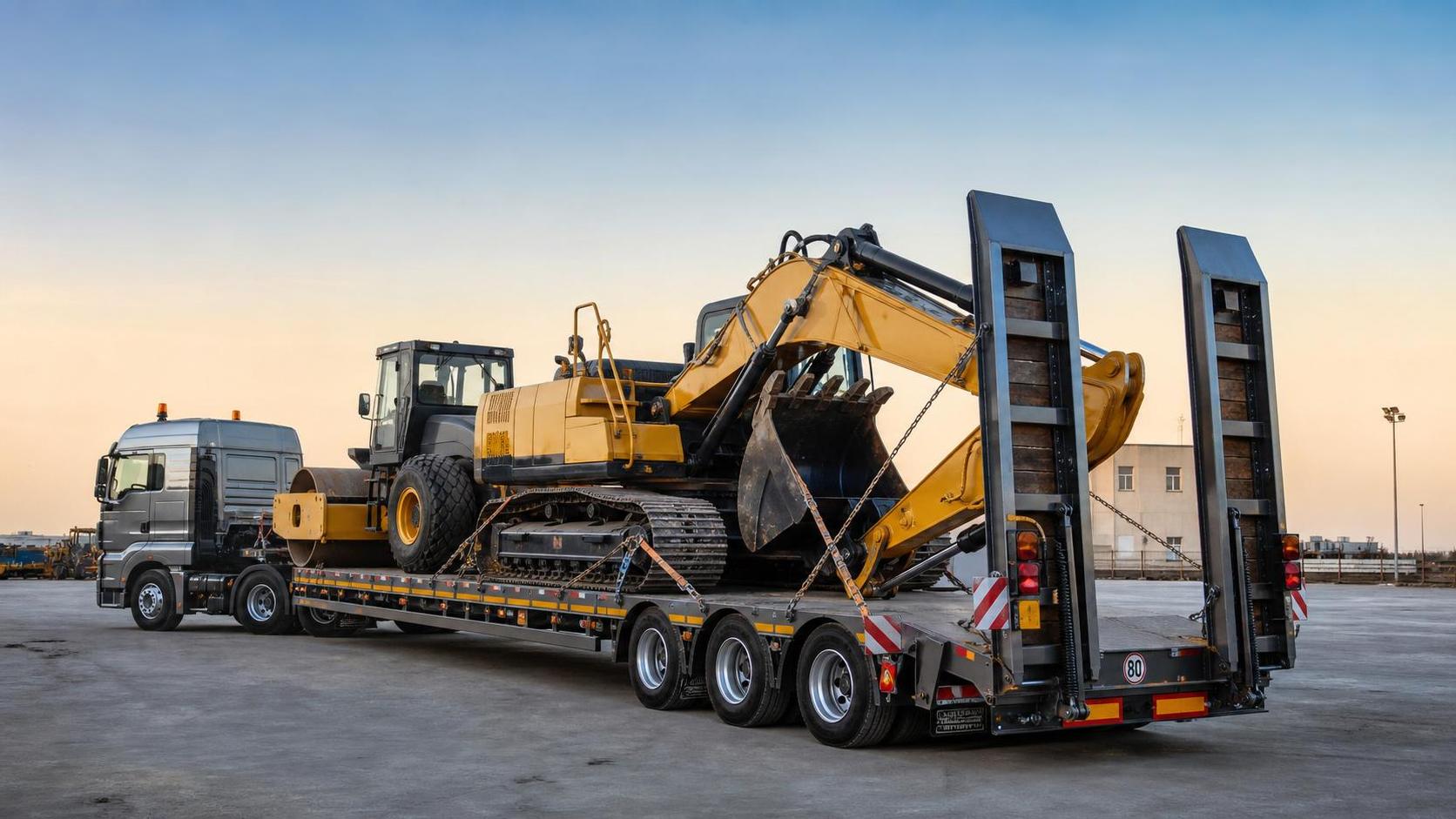
Selecting a Flatbed Semi-Trailer for heavy equipment transport is rarely a simple capacity question. In engineering vehicle operations, trailer choice influences route planning, loading speed, equipment safety, operating cost, and whether a project stays on schedule.
A machine may fit on paper, yet still create problems in real transport. Deck height, axle layout, legal road limits, tie-down points, and tractor matching all shape how well a Flatbed Semi-Trailer performs under site conditions.
That is why experienced buyers look beyond headline tonnage. They compare transport tasks, jobsite access, border requirements, and after-sales support together, especially when equipment moves across regions or into demanding construction environments.
Why trailer selection matters in engineering transport
Heavy equipment transport usually involves excavators, loaders, rollers, cranes, or other machines with concentrated axle loads and uneven weight distribution. A standard freight trailer may carry the load, but not necessarily carry it safely or efficiently.
In practice, the wrong Flatbed Semi-Trailer often leads to avoidable losses. Loading takes longer, route approvals become harder, tires and suspension wear faster, and operators spend more time adjusting equipment position than expected.
The trailer also affects utilization of the prime mover. If the trailer is not well matched to the tractor, total transport performance drops, even when both units are individually compliant.
Start with the actual transport profile
The best Flatbed Semi-Trailer is not the biggest one available. It is the one that fits the equipment mix, route conditions, and operational rhythm of the project.
Before comparing brands or configurations, define the transport profile clearly:
- Typical machine type, operating weight, and track or wheel width
- Maximum load rather than average load
- Transport distance and road class
- Loading method, including ramps or external lifting support
- Frequency of cross-border or multi-region movement
- Expected working life and maintenance environment
This step sounds basic, but it prevents overbuying and under-specifying. Both mistakes increase total cost over time.
Load capacity is only the starting point
Rated payload is the first figure most people check. It matters, but it should never be reviewed in isolation. Heavy equipment creates point loads, dynamic impact, and shifting forces during braking and cornering.
A suitable Flatbed Semi-Trailer should handle not only the gross weight, but also the real load pattern. Machines with steel tracks, rear-heavy structures, or attachments place stress on specific deck zones.
Key structural points to verify
- Main beam design and material grade
- Crossmember spacing and reinforcement
- Deck plate thickness in loading paths
- Gooseneck strength and kingpin area support
- Suspension durability under repetitive shock loads
When the trailer will move mixed equipment, it is often wiser to evaluate the harshest use case, not the most common one.
Deck dimensions and height affect real usability
Deck length and width directly influence whether machines can be positioned safely with proper axle balance. A trailer that is too short limits load placement and raises the risk of uneven loading.
Deck height is equally important. Lower deck height improves stability and helps meet road height limits, especially when transporting tall equipment such as excavators with cabs or mounted attachments.
This is where route conditions matter. If access roads are rough or temporary, ground clearance still needs attention. A low deck helps on highways, but it must also survive jobsite transitions, ramps, and uneven terrain.
Axle configuration, suspension, and braking
Axle count should match payload, legal requirements, and road conditions. More axles can distribute weight better, but they also add maintenance points, tire cost, and turning complexity.
For a Flatbed Semi-Trailer carrying engineering machinery, suspension choice deserves close review. Mechanical suspension is often valued for durability and simplicity. Air suspension may improve ride quality on specific routes, but suitability depends on load type and operating environment.
Braking performance should be assessed with the full combination in mind. Trailer brake response, ABS availability where required, and compatibility with the tractor system are practical issues, not optional details.
Questions worth asking before purchase
- How often will the trailer run at maximum load?
- Are roads paved, mixed, or mainly site-access routes?
- What local rules apply to axle load and spacing?
- Is maintenance support available near the operating area?
Loading safety is built into the trailer design
A reliable Flatbed Semi-Trailer should make safe loading easier, not depend on operator improvisation. This includes ramp design, anti-slip deck surfaces, lashing points, side protection, and stable landing gear.
Tie-down points are especially important for heavy equipment. They should be strong, well positioned, and easy to access. If securing points do not match the machine layout, loading crews waste time and often settle for poor restraint angles.
In actual operations, loading time affects more than labor. It shapes fleet turnaround, crane coordination, site congestion, and the risk of schedule slippage.
Compliance and route planning cannot be separated
Many transport problems begin before the vehicle moves. Overall dimensions, axle load distribution, lighting, reflective markings, and documentation requirements vary by market and by route type.
For international projects or equipment exports, the trailer decision should reflect local road rules from the beginning. A technically strong Flatbed Semi-Trailer still creates delays if it does not align with destination compliance standards.
This is one reason buyers often work with exporters that understand both vehicle specification and cross-border execution. Shandong Livol Truck International Trade Co., Ltd. combines vehicle supply, customization, documentation, customs coordination, and logistics support, which helps reduce mismatches between ordered equipment and delivered transport solutions.
Supplier strength matters after the quotation stage
Price comparison is useful, but long-term value depends on supply stability, technical accuracy, and support after delivery. A Flatbed Semi-Trailer is a working asset, not a one-time shipment.
In this market, buyers usually benefit from suppliers that can coordinate tractors, trailers, spare parts, and documentation together. That reduces the risk of specification gaps between the towing unit and the trailer.
Livol’s role as an authorized dealer for FOTON, SHACMAN, and SINOTRUK, along with broad domestic inventory and export experience, is relevant here. It supports faster matching between transport demand, available stock, and practical customization requirements.
A practical shortlist for final evaluation
When narrowing down options, it helps to review each Flatbed Semi-Trailer against a simple decision checklist:
- Does the payload rating reflect actual machine weight and attachments?
- Are deck dimensions suitable for safe axle positioning?
- Will deck height support legal clearance and stable transport?
- Are axle layout and suspension appropriate for the route profile?
- Do ramps and lashing points support fast, safe loading?
- Can the supplier support export documents, spare parts, and after-sales service?
A clear checklist creates better decisions than relying on a single brochure specification or the lowest initial quote.
Where to focus next
Choosing the right Flatbed Semi-Trailer means connecting technical data with operating reality. Capacity, dimensions, axle arrangement, compliance, and supplier capability all need to work as one system.
A useful next step is to list the heaviest machines, map the main routes, and compare trailer options against those exact conditions. Once that baseline is clear, specification discussions become faster, more accurate, and far more practical.
For projects involving multiple vehicle brands, export delivery, or tailored configuration needs, a partner with strong stock resources and end-to-end trade support can make the selection process much more predictable.
Search Starts Here