
News
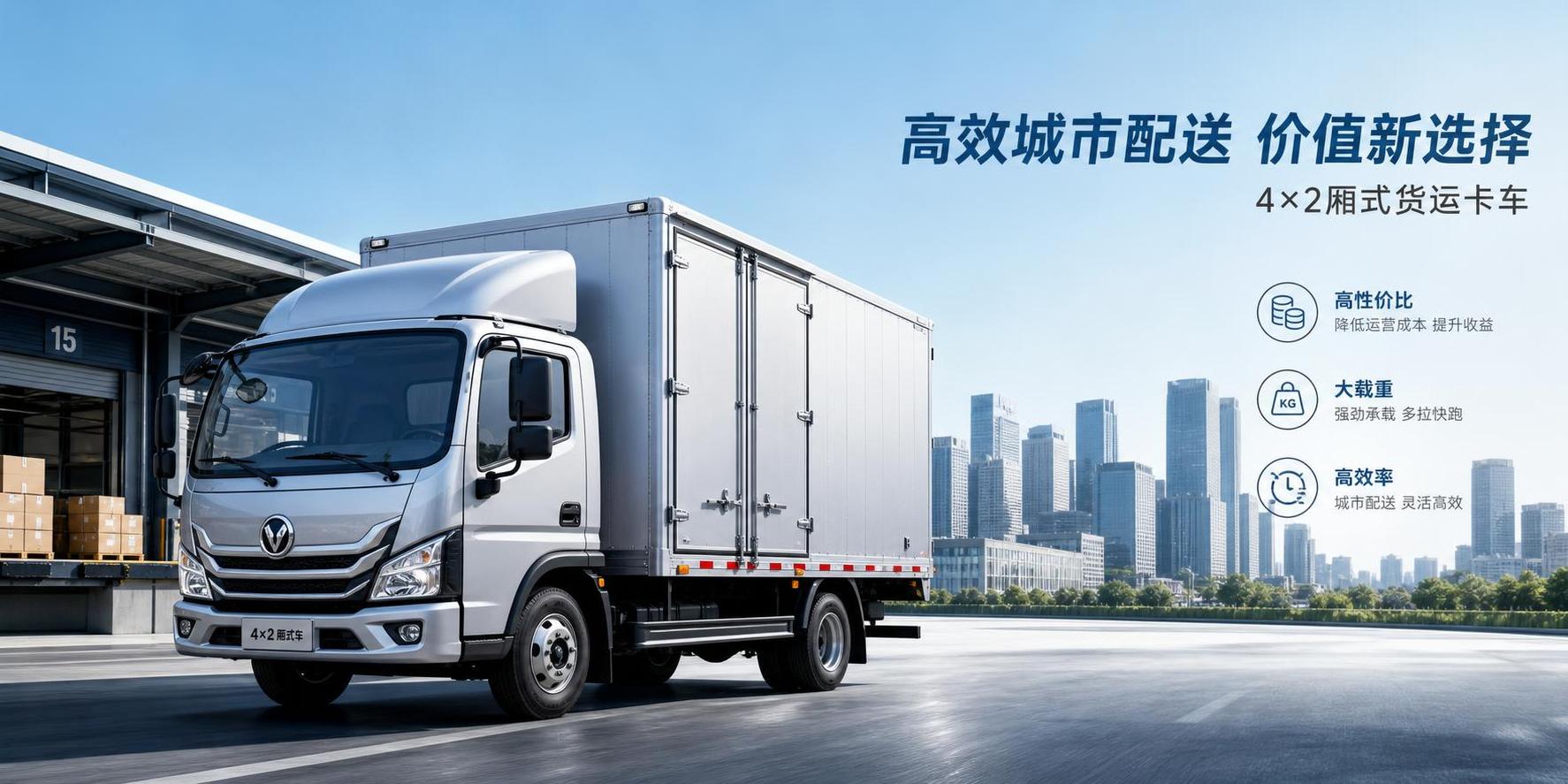
4_2 Cargo Truck Buying Guide: Cost, Capacity, and Urban Delivery Efficiency
Choosing the right 4_2 Cargo Truck is critical for balancing purchase cost, payload capacity, and last-mile delivery efficiency.
In urban logistics, a truck is not only a transport asset. It directly shapes route planning, fuel spending, delivery speed, and fleet uptime.
That is why a good 4_2 Cargo Truck buying decision should combine technical fit, operating cost, and supplier reliability.
This guide explains what matters most, where costs hide, and how to compare options with more confidence.
Why the 4_2 Cargo Truck Remains a Strong Urban Logistics Choice
A 4_2 Cargo Truck is often the sweet spot for city and regional distribution.
It offers useful payload, compact dimensions, and better maneuverability than larger rigid trucks.
From recent market changes, the clearest signal is this: operators need more drops per shift, not simply more gross vehicle weight.
That also means truck selection now depends on route density, road access, loading speed, and downtime risk.
In practice, a well-matched 4_2 Cargo Truck can improve delivery productivity without creating the parking, access, and compliance issues seen with bigger units.
- Better access to urban streets and retail zones
- Lower fuel use compared with heavier platforms
- Faster loading cycles for mixed delivery schedules
- More flexible body options for different cargo types
Start with Total Cost, Not Just Purchase Price
A low initial quote can look attractive, but it rarely tells the full story.
For a 4_2 Cargo Truck, total cost of ownership should be your main comparison tool.
The real cost picture includes acquisition, shipping, duties, fuel, maintenance, parts availability, and resale value.
A truck with a slightly higher upfront cost may still be the cheaper business decision over three to five years.
Key Cost Items to Compare
- Base vehicle price and body configuration cost
- Import taxes, customs processing, and logistics fees
- Fuel consumption under real city driving conditions
- Service intervals and expected maintenance spend
- Availability and lead time of wear parts
- Driver training needs and operating simplicity
More buyers now ask suppliers for lifecycle estimates instead of only unit quotations.
That is a smart move, especially when delivery fleets run daily under stop-and-go conditions.
How to Evaluate Payload and Cargo Capacity Correctly
Payload capacity is often misunderstood during the buying stage.
A 4_2 Cargo Truck should be matched to cargo density, loading pattern, and route restrictions.
If cargo is bulky but light, body volume matters more than maximum payload.
If cargo is dense, axle load distribution and legal road limits become more important.
Questions That Improve Capacity Matching
- What is the average payload per trip, not the peak load?
- How many stops does the route include each day?
- Is loading done by forklift, pallet jack, or manual labor?
- Do low bridges, narrow roads, or dock limits affect body size?
- Will special bodies be needed for cold chain, parcel, or retail goods?
This is where customization becomes valuable.
Body length, cargo box material, side opening design, tail lift options, and suspension tuning can all affect delivery efficiency.
A practical 4_2 Cargo Truck is not the biggest one available. It is the one that carries the right load with the fewest wasted trips.
Urban Delivery Efficiency Depends on More Than Engine Power
Many buyers focus first on horsepower. That matters, but it is only one part of the picture.
For urban use, a 4_2 Cargo Truck should be easy to drive, quick to load, and efficient during repeated stops.
Visibility, turning radius, brake response, cab comfort, and gearbox calibration can influence daily output more than raw engine numbers.
Features That Support Real Efficiency
- Compact wheelbase for tighter urban turns
- Fuel-efficient engine matched to stop-start traffic
- Comfortable cab for long daily shifts
- Durable clutch, brakes, and suspension components
- Easy access for routine inspections and service
- Body design that reduces loading and unloading time
The stronger signal in today’s market is operational speed.
Every minute saved at loading bays, side streets, and customer stops improves route profitability.
Brand Support, Supply Stability, and Export Service Matter
Vehicle specifications are important, but supplier capability can make or break the project.
A 4_2 Cargo Truck purchase often includes factory coordination, body customization, documentation, shipping schedules, and after-sales planning.
This is why many buyers prefer an exporter with brand authorization, stable inventory, and proven trade experience.
Shandong Livol Truck International Trade Co., Ltd. brings that kind of support.
Based in Shandong, China, the company is an official authorized domestic and overseas dealer for FOTON, SHACMAN, and SINOTRUK.
Its authorized 4S store network and vehicle inventory help support stable supply and faster delivery cycles.
In real business terms, that reduces procurement uncertainty.
A professional export team can also simplify selection, customization, customs clearance, logistics, and after-sales coordination.
What to Confirm with Any Supplier
- Authorization status for the truck brands offered
- Current inventory and realistic production lead times
- Customization capability for body and specification changes
- Export documentation accuracy and compliance support
- After-sales response process and parts coordination
A Simple Comparison Table for Faster Decisions
This type of side-by-side review usually produces better decisions than price-only bidding.
Common Buying Mistakes to Avoid
Even experienced teams can miss practical details when selecting a 4_2 Cargo Truck.
- Choosing capacity based on rare peak demand instead of average route demand
- Ignoring loading dock limitations and road access restrictions
- Underestimating maintenance and spare parts response time
- Comparing quoted price without including logistics and customs cost
- Overlooking driver comfort and stop-start usability
Most of these mistakes are avoidable with clearer route data and earlier supplier discussion.
Final Buying Checklist for a 4_2 Cargo Truck
- Define actual delivery routes, stop frequency, and cargo profile
- Compare total ownership cost, not just invoice price
- Confirm legal payload and practical body volume needs
- Review maneuverability and loading efficiency for city use
- Check supplier inventory, authorization, and export capability
- Ask about customization, spare parts, and after-sales support
A successful 4_2 Cargo Truck purchase is rarely about finding the cheapest unit.
It is about choosing a truck that fits your routes, protects your operating margin, and arrives with dependable service behind it.
If you are reviewing options for urban delivery or regional distribution, start with your operating reality, then match it with a reliable 4_2 Cargo Truck and a supplier that can support the full process from specification to final delivery.
Search Starts Here