
News
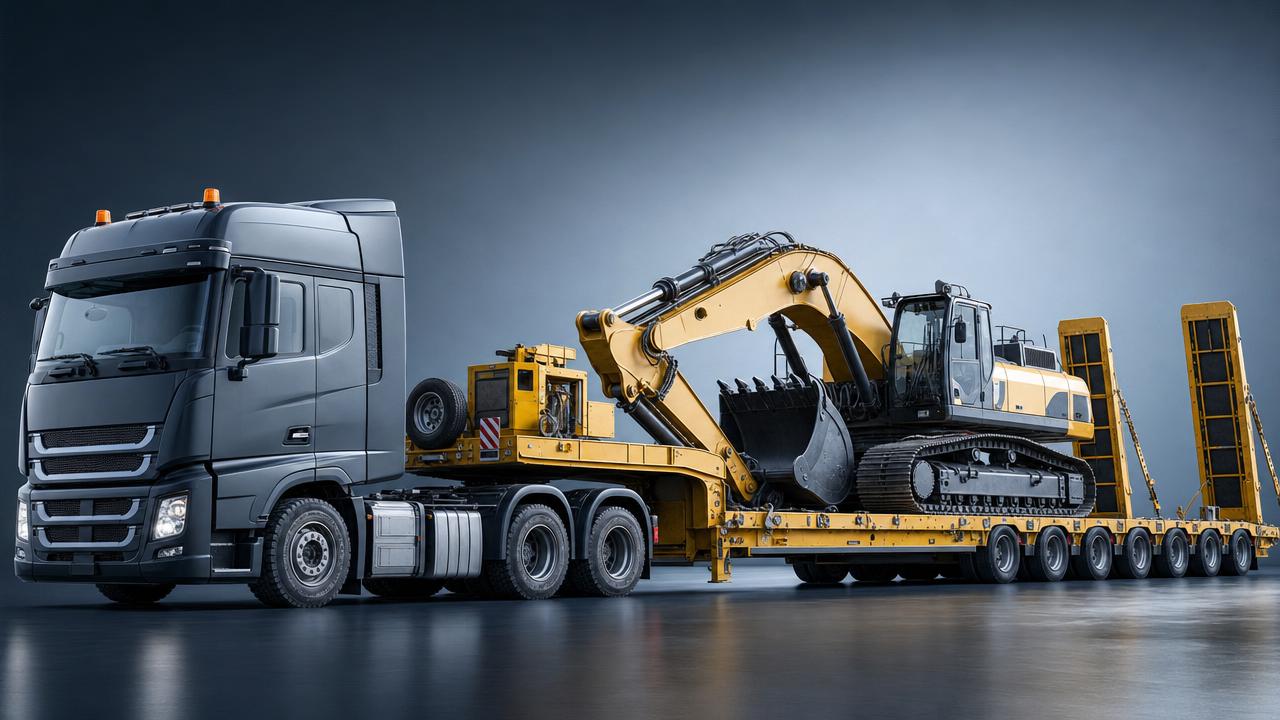
In 2026, the Low Plate trailer remains a practical solution for oversized load transport, especially for buyers focused on safety, cost control, and delivery efficiency. For commercial vehicle evaluators, understanding why this equipment still performs well in demanding engineering and logistics scenarios can support smarter sourcing decisions and long-term operational value.
Why does the Low Plate still matter for oversized transport planning?
For business evaluators in the engineering vehicle sector, equipment decisions are rarely about purchase price alone. The real question is whether a trailer can move heavy and oversized cargo safely, comply with road restrictions, reduce transport risk, and support predictable project timelines. This is why the Low Plate remains relevant. It offers a lower deck height than many standard trailer options, which directly improves load stability and route adaptability.
In practical terms, a Low Plate trailer is often chosen for moving excavators, wheel loaders, road machinery, transformers, steel structures, and other cargo with challenging dimensions or a high center of gravity. Even as new transport technologies enter the market, many buyers still return to the Low Plate because it is proven, flexible, and easier to integrate into mixed fleets.
- Lower cargo platform helps control total transport height under bridges, tunnels, and overhead infrastructure.
- Stable loading geometry reduces rollover risk when carrying engineering equipment with uneven weight distribution.
- Simple structural concept supports easier maintenance and practical use across different regional transport conditions.
What business evaluators usually care about first
Procurement teams and commercial reviewers usually assess three things early: whether the trailer matches target cargo, whether local compliance can be managed, and whether the total ownership cost makes sense over several years. A Low Plate trailer often performs well in all three areas because it is not an experimental solution. It is a field-tested platform suited to daily engineering logistics.
Which applications make the Low Plate a practical choice in 2026?
The Low Plate is not ideal for every load, but it remains highly practical in scenarios where height control, weight distribution, and loading convenience are critical. For engineering vehicle buyers, the strongest value appears when the trailer must serve repeated project transport rather than one-off deliveries.
Before selecting a configuration, evaluators should map the expected transport mix. The table below shows where a Low Plate trailer is commonly a strong fit and where additional review is needed.
The main takeaway is clear: the Low Plate delivers its strongest value where project logistics involve repeated movement of heavy equipment and oversized components. If your transport profile combines jobsite machinery, industrial cargo, and strict route limitations, this trailer type often brings better operational balance than a general-purpose flatbed.
Common high-value use cases
- Contractors moving earthmoving machines between urban and remote project sites.
- Regional distributors handling mixed oversized cargo under varying road conditions.
- Mining and infrastructure operators needing safer loading for heavy tracked equipment.
Low Plate vs other trailer options: what should buyers compare?
A sound procurement decision requires comparison. In many sourcing discussions, the Low Plate is weighed against standard flatbed trailers, high-bed designs, and in some cases detachable gooseneck lowbed solutions. The right answer depends on load profile, route restrictions, loading equipment, and budget discipline.
The comparison below helps evaluators identify where the Low Plate maintains practical advantages in 2026.
For many commercial buyers, the Low Plate sits in the most practical middle position. It is more specialized than a flatbed, but usually less complex and less expensive than premium heavy-haul alternatives. That balance is exactly why it continues to be selected in engineering logistics programs with controlled budgets and demanding delivery targets.
What technical points should be checked before buying a Low Plate?
A Low Plate trailer may look straightforward, but its performance depends heavily on specification discipline. Evaluators should not approve a unit based only on nominal payload or visible structure. Engineering transport often involves dynamic loads, uneven site access, and repeated loading cycles, which place stress on the deck, suspension, frame, and connection points.
Core specification checklist
- Deck height and usable platform length: confirm total transport height after loading, not just empty trailer dimensions.
- Axle configuration: match axle count and spacing to both cargo weight and local road load rules.
- Suspension type: evaluate leaf spring or other layouts based on road quality, maintenance preference, and payload consistency.
- Ramps and loading method: verify ramp capacity, surface grip, and angle suitability for tracked or wheeled machinery.
- Tie-down points and structural reinforcement: essential for oversized loads that generate shifting forces in transit.
Buyers should also ask whether the expected cargo weight is evenly distributed or concentrated over short sections of the deck. This affects frame design and axle selection. A trailer that handles one large excavator may not be equally suitable for dense industrial equipment if the load footprint changes significantly.
Typical evaluation dimensions for engineering transport
The table below is useful when comparing Low Plate options during internal review. It keeps attention on technical suitability rather than headline price.
This kind of structured review helps prevent a common sourcing error: buying a Low Plate that is technically adequate on paper but inefficient in actual site operations. When loading angles, axle loads, and route limitations are not reviewed together, hidden costs appear later in permit delays, maintenance issues, or cargo handling incidents.
How should buyers evaluate cost, risk, and long-term value?
A Low Plate trailer should be assessed as an operating asset, not only as a product. Total value comes from how often it can be deployed, how safely it handles cargo, how much downtime it causes, and how well it fits local transport rules. A slightly cheaper trailer can become more expensive if it forces route limitations, slower loading, or higher maintenance frequency.
Main cost factors beyond purchase price
- Permit and compliance costs for oversized transport in destination markets.
- Maintenance access to suspension, braking parts, tires, and wear components.
- Lost utilization if the trailer cannot handle the full range of target equipment.
- Loading and unloading time, which directly affects project fleet productivity.
For evaluators with limited budgets, the best decision is often a practical Low Plate configuration that balances structural durability, legal adaptability, and serviceability. This is especially true in markets where fleets need one trailer type to support multiple engineering tasks rather than a narrow heavy-haul specialization.
What compliance and export issues should not be overlooked?
Oversized transport equipment requires more than a good chassis. Cross-border buyers must also evaluate documentation, destination regulations, axle load compliance, braking compatibility, lighting requirements, and possible market-specific approvals. A Low Plate that is mechanically suitable but poorly documented can create customs delays or registration problems.
That is why sourcing support matters. Shandong Livol Truck International Trade Co., Ltd. combines commercial vehicle export experience with practical supply capability. As an official authorized domestic and overseas dealer for FOTON, SHACMAN, and SINOTRUK, and with a network of authorized 4S stores and stable inventory resources in China, the company is positioned to support customers who need dependable supply coordination rather than fragmented purchasing.
Why export process control affects trailer value
- Correct documentation reduces delays during customs clearance and destination processing.
- Configuration confirmation before shipment helps avoid mismatch with local operating conditions.
- Logistics planning supports faster dispatch and more predictable project startup schedules.
For buyers who need vehicle selection, customization, shipping coordination, and after-sales communication in one process, an experienced exporter reduces practical sourcing friction. That becomes especially important when the Low Plate trailer is part of a larger fleet package involving tractors, dump trucks, or project support vehicles.
What procurement mistakes are common with Low Plate trailers?
Mistake 1: judging only by rated load
Rated capacity is important, but it does not tell the full story. A Low Plate must also match the load footprint, center of gravity, and real route conditions. Buyers who ignore these points often approve a trailer that is under-optimized for daily work.
Mistake 2: ignoring loading geometry
Ramp angle, deck entry, and machine approach clearance all affect whether equipment can be loaded smoothly. If these details are missed, the operator may need additional support tools or face repeated loading difficulty at project sites.
Mistake 3: separating trailer purchase from service planning
A trailer should be supported by parts planning, documentation support, and technical communication. This is one reason buyers prefer suppliers with real export process experience and stable commercial vehicle resources.
FAQ about Low Plate selection in engineering transport
How do I know if a Low Plate is better than a flatbed for my project?
If your cargo includes tall machinery, tracked equipment, or loads with a high center of gravity, a Low Plate is often the better choice. Review transport height limits, loading method, and machine dimensions. If route restrictions and loading stability are frequent concerns, the Low Plate usually provides better operational security.
What should I confirm before asking for a quotation?
Prepare your main cargo dimensions, approximate operating weight, destination market requirements, preferred axle arrangement, and expected loading method. With these inputs, a supplier can recommend a more accurate Low Plate specification and reduce back-and-forth during quotation review.
Is a customized Low Plate worth considering?
Yes, especially when your fleet handles recurring equipment types or local road restrictions are strict. Customization may involve deck length, ramp design, reinforcement, or configuration details that improve fit for your actual use case. The key is to keep customization practical and tied to measurable operational needs.
How important is delivery capability in the buying decision?
It is critical when project mobilization timelines are tight. Even a well-specified Low Plate loses value if supply is unstable or export coordination is slow. Buyers should evaluate inventory support, documentation handling, shipping coordination, and communication responsiveness together.
Why choose us for Low Plate sourcing and integrated commercial vehicle support?
Shandong Livol Truck International Trade Co., Ltd. provides more than product supply. Based in Shandong, China, the company offers integrated support for commercial vehicle buyers who need practical sourcing outcomes. Its official authorized dealer status for FOTON, SHACMAN, and SINOTRUK, broad domestic channel resources, and sufficient inventory foundation help customers reduce uncertainty in procurement planning.
For business evaluators considering a Low Plate solution, the support value includes coordinated vehicle selection, customization discussion, export documentation, customs clearance assistance, and logistics planning. This is particularly useful when your procurement scope includes both trailers and tractors, or when project timing leaves little room for sourcing delays.
- Consult us to confirm Low Plate parameters based on your machinery dimensions and operating weight.
- Ask for model selection support if you need a matched tractor and trailer export package.
- Discuss delivery lead time, documentation requirements, destination compliance points, and practical customization options before placing an order.
- Request quotation communication based on your target market, budget range, and application scenario to shorten internal evaluation time.
If your team is reviewing Low Plate trailers for oversized loads in 2026, a focused technical and commercial discussion can quickly clarify the right configuration, the expected delivery schedule, and the most suitable export solution for your project or distribution plan.
Search Starts Here