
News
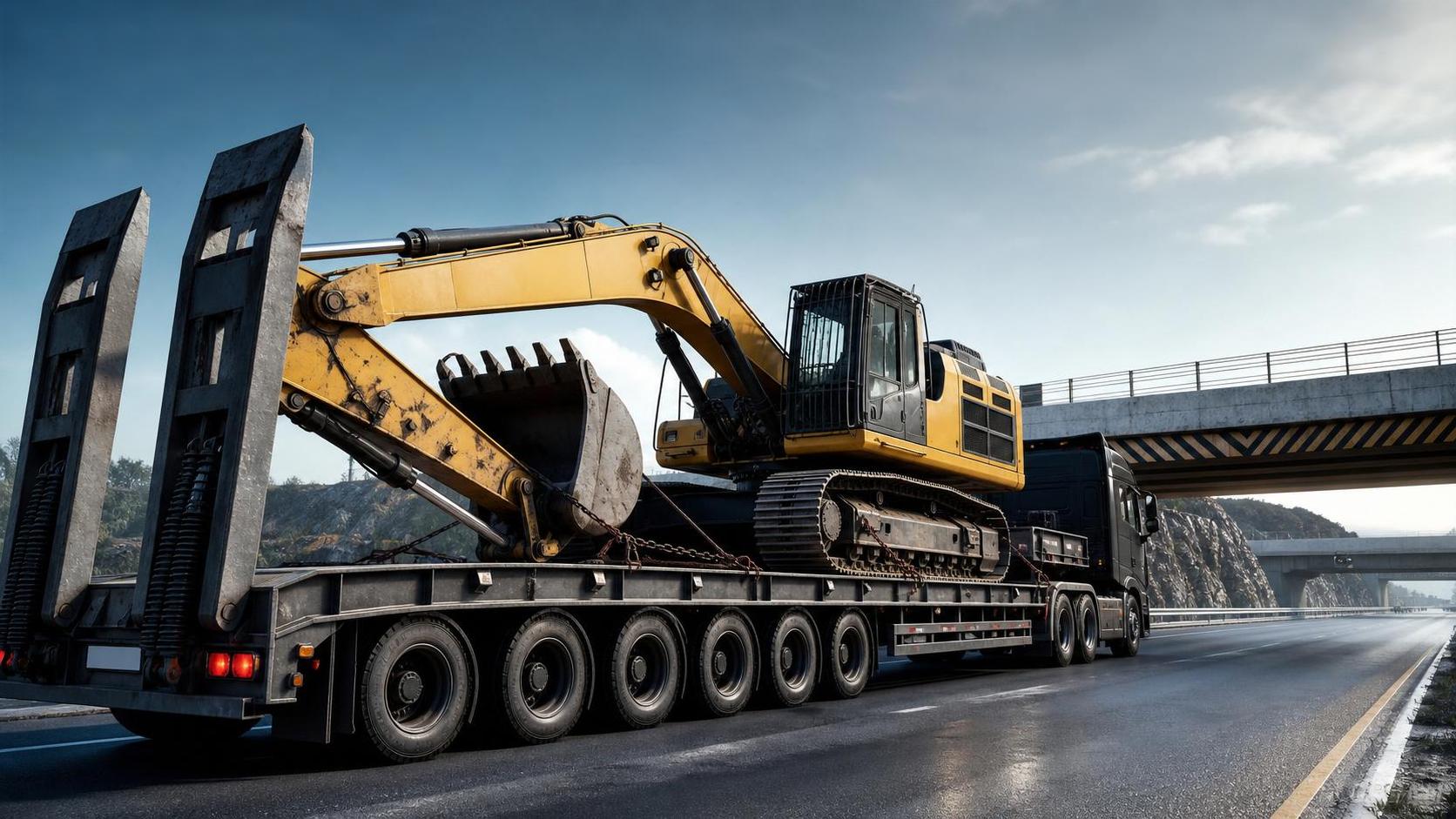
Low Plate Trailer Buying Guide: Capacity, Road Limits, and Cost
Choosing the right Low Plate trailer requires more than comparing prices.
Load capacity, road limits, axle setup, and operating cost all shape real purchasing value.
In commercial transport, a wrong specification can create delays, fines, and weak asset utilization.
That is why a Low Plate decision should be based on route reality, cargo profile, and lifecycle economics.
This guide breaks down the factors that matter most before you commit budget to a new trailer investment.
Why a Low Plate Trailer Is Chosen for Heavy Transport
A Low Plate trailer is designed for moving heavy, tall, or oversized equipment with better stability.
Its lower deck height helps reduce total transport height and improves road clearance management under bridges.
This matters in construction, mining, energy projects, and machinery relocation.
In practical business use, the Low Plate often supports excavators, transformers, rollers, and industrial modules.
Main business advantages
- Lower loading height for oversized cargo
- Better stability on uneven roads
- More flexibility for regional compliance planning
- Higher suitability for project cargo and machinery transport
Still, not every Low Plate configuration fits every job, and that is where buying discipline becomes important.
Capacity First: Match the Low Plate to the Real Load
Capacity is the first filter in any Low Plate purchasing review.
But rated payload alone is not enough.
You also need to assess weight distribution, cargo dimensions, center of gravity, and loading frequency.
A Low Plate used twice a month has a different value profile from one used daily on long-haul routes.
Questions to check before choosing capacity
- What is the heaviest regular cargo, not the occasional cargo?
- Does the load sit evenly, or does it create axle concentration?
- What are the cargo length, width, and height after securing?
- How often will loading ramps and deck structures face impact stress?
A common mistake is overbuying capacity for image or future possibility.
A heavier Low Plate can increase tare weight, fuel use, tire wear, and permit complexity.
On the other side, an undersized trailer creates operational risk and limits contract acceptance.
Typical capacity planning logic
Road Limits: The Low Plate Must Fit Legal Reality
Road regulation is often the hidden cost driver in a Low Plate purchase.
Limits differ by country, region, road class, axle group, and cargo type.
From recent market changes, enforcement is becoming more digital and less negotiable.
That means a compliant Low Plate is no longer a paperwork issue alone. It is a profitability issue.
Key legal checkpoints
- Gross vehicle weight limit
- Axle load distribution rules
- Overall height, width, and length restrictions
- Permit requirements for oversized cargo
- Escort, route timing, or bridge access conditions
In real operations, one Low Plate may be legal on one route and restricted on another.
This is especially true when moving between ports, industrial parks, and inland project areas.
Before purchase, map your top ten routes and compare them against likely loaded dimensions.
Why axle configuration matters
Axle count affects both legal loading and operating efficiency.
More axles may improve weight distribution, but they also raise maintenance points and tire cost.
A well-chosen Low Plate balances compliance, maneuverability, and service simplicity.
Cost Analysis: Look Beyond the Purchase Price
Price matters, but purchase price is only the visible part of Low Plate cost.
The better buying method is total cost of ownership.
This includes acquisition, operation, maintenance, downtime risk, and resale value.
A cheaper Low Plate can become more expensive within the first year if reliability is weak.
Main cost items to compare
- Base trailer price
- Freight, customs, and local registration
- Tire replacement frequency
- Suspension, brake, and axle service cost
- Fuel impact from tare weight
- Permit and compliance cost
- Downtime from parts delays
Another strong signal is parts availability.
If a Low Plate uses hard-to-source components, a minor failure can stop revenue for days.
That is why supply support should be part of the cost review, not a separate afterthought.
Simple cost evaluation framework
How to Evaluate Supplier Strength for a Low Plate Purchase
A strong Low Plate supplier reduces both buying risk and post-delivery friction.
This matters even more in cross-border procurement.
You need product fit, document accuracy, delivery stability, and after-sales responsiveness.
A capable exporter helps turn a Low Plate order into a controlled commercial process.
Shandong Livol Truck International Trade Co., Ltd., based in Shandong, China, offers that operational depth.
The company is an official authorized domestic and overseas dealer for FOTON, SHACMAN, and SINOTRUK.
It operates authorized 4S stores across China and maintains sufficient inventory for stable supply.
That inventory strength supports faster delivery and more predictable procurement planning.
Its professional export team provides vehicle selection, customization, documentation, customs clearance, and logistics support.
Strict quality control and efficient operations help reduce uncertainty in overseas orders.
For a Low Plate buyer, that means fewer gaps between technical selection and final delivery.
Supplier checklist before approval
- Ask for detailed specification sheets and axle brand details
- Confirm production capacity and inventory availability
- Review export document experience for your market
- Check after-sales response time and parts support method
- Evaluate whether customization matches your route and cargo needs
Practical Buying Mistakes to Avoid
Several mistakes appear again and again in Low Plate procurement.
Avoiding them can protect both capital and operational continuity.
- Buying only on price without route compliance review
- Using maximum theoretical load instead of regular operating load
- Ignoring local permit cost and approval time
- Overlooking spare parts and maintenance network support
- Choosing a generic Low Plate when cargo patterns are specialized
The more disciplined approach is to score each Low Plate option against a fixed business matrix.
Use weighted criteria such as payload fit, route legality, service access, and annual operating cost.
Final Decision: Choose the Low Plate That Performs in Real Business
The best Low Plate is not simply the cheapest or the largest.
It is the one that matches your cargo, stays compliant on your routes, and holds cost under control.
When you compare capacity, road limits, and lifecycle expense together, the buying picture becomes much clearer.
That also means supplier capability should be judged as part of asset value, not as a separate commercial detail.
If your next Low Plate purchase involves cross-border sourcing, stable inventory, export experience, and after-sales support can materially improve results.
Start with your routes, define your real load profile, build a full cost model, and only then compare offers.
That process leads to a Low Plate investment that performs well on paper and even better on the road.
Search Starts Here