
News
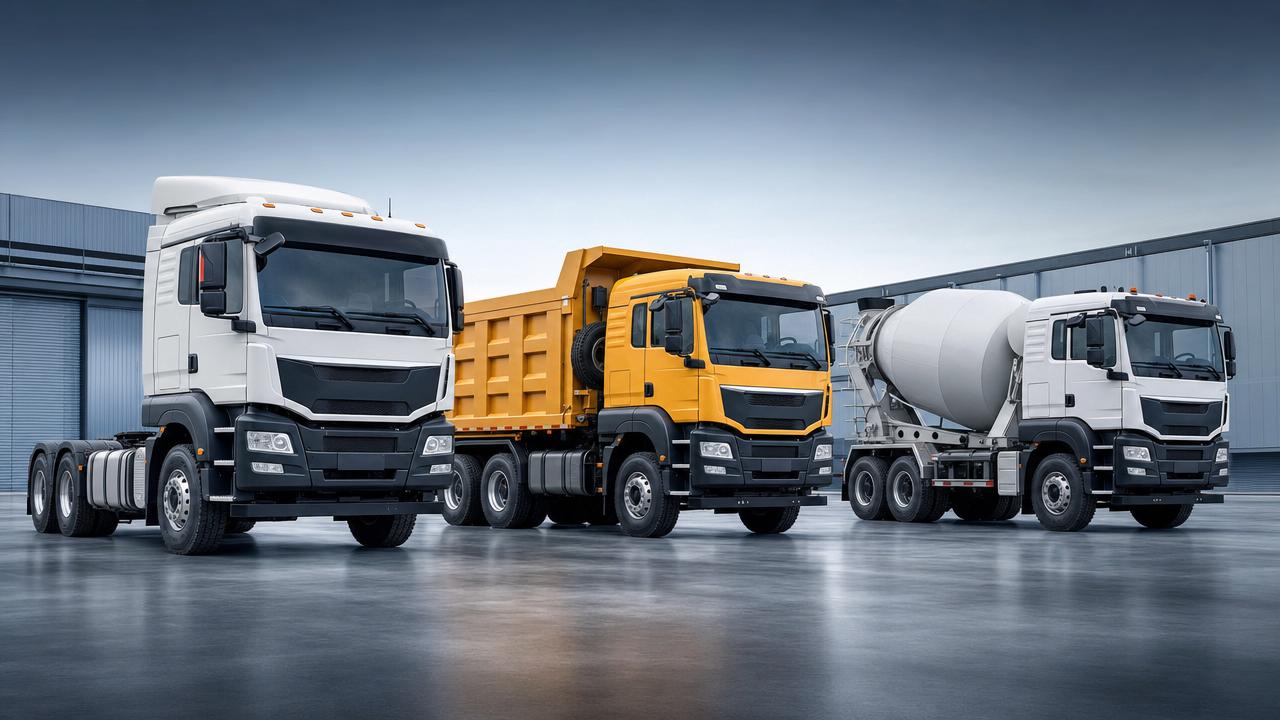
For dealers, distributors, and agents looking to compare commercial vehicle options faster, the Cangshan Vehicle Configuration List offers a practical way to evaluate key specifications, features, and model differences at a glance. By using this list effectively, buyers can streamline selection, improve decision-making efficiency, and identify the right FOTON, SHACMAN, or SINOTRUK vehicle for different market demands.
Why a checklist approach works better for model comparison
In commercial vehicle distribution, speed matters, but so does accuracy. A dealer may review multiple tractor trucks, dump trucks, cargo trucks, mixers, or special engineering vehicles in one purchasing cycle. If the comparison process depends only on brochures, verbal descriptions, or incomplete specification sheets, the result is often slow decision-making, inconsistent quotations, and a higher risk of selecting the wrong configuration for the target market.
The Cangshan Vehicle Configuration List is useful because it turns model selection into a structured review process. Instead of asking broad questions like “Which truck is better?” buyers can focus on decision-critical items such as engine power, axle ratio, loading capacity, cab features, emission standard, tire specification, and application suitability. For distributors handling FOTON, SHACMAN, and SINOTRUK products, this checklist method reduces confusion across similar-looking models and makes internal evaluation more consistent.
This is especially important in engineering vehicle business, where end-user requirements are rarely generic. Road conditions, payload expectations, local regulations, maintenance capability, and budget sensitivity all affect the ideal configuration. A clean, disciplined use of the Cangshan Vehicle Configuration List helps commercial vehicle traders compare not only models, but also fit-for-purpose value.
Start with these priority checks before comparing prices
Many buyers make the mistake of jumping directly to price. In reality, the Cangshan Vehicle Configuration List should first be used to confirm whether the compared models are truly equivalent. If not, a lower quoted price may simply reflect a lower specification.
- Confirm vehicle category first. Separate tractor units, dump trucks, cargo trucks, concrete mixers, municipal trucks, and other engineering vehicles. Comparing across categories wastes time and distorts pricing judgment.
- Check the exact drive type. A 4x2, 6x4, 8x4, or all-wheel-drive model serves very different operating conditions. This is one of the first filter items in any Cangshan Vehicle Configuration List review.
- Match the engine output to real operating needs. Horsepower alone is not enough; torque range, fuel type, and reliability under heavy loads matter more in engineering transport.
- Verify legal and market access requirements. Emission standards, left-hand or right-hand drive, safety requirements, and regional import rules should be checked before deeper comparison.
- Identify whether the list reflects standard stock units or customizable export configurations. This affects delivery time, procurement flexibility, and final landed cost.
For professional exporters such as Shandong Livol Truck International Trade Co., Ltd., this kind of early filtering is essential. With access to authorized resources from FOTON, SHACMAN, and SINOTRUK, and with broad inventory support across China, a qualified supplier can help dealers quickly distinguish between models that look similar on paper but differ significantly in operational value.
Core comparison checklist inside the Cangshan Vehicle Configuration List
To compare models more efficiently, dealers should review the Cangshan Vehicle Configuration List in a fixed sequence. This prevents important details from being overlooked and helps teams make repeatable judgments across brands and applications.
1. Powertrain and performance items
Start with engine brand, displacement, horsepower, torque, fuel consumption characteristics, and emission level. Then move to gearbox type, number of gears, clutch system, and axle ratio. For construction and engineering usage, these items directly affect climbing ability, load-handling efficiency, and operating cost. A strong-looking truck may underperform in mining roads or steep terrain if the transmission and axle ratio are not well matched.
2. Chassis and load-bearing structure
The Cangshan Vehicle Configuration List should clearly show wheelbase, frame thickness, front and rear axle capacity, suspension type, and gross vehicle weight rating. For engineering vehicles, chassis strength is not a secondary item. It is a key indicator of durability, especially for rough roads, overloaded routes, and high-frequency job cycles.
3. Body or upper-structure compatibility
If the unit is intended for dump, mixer, crane, tanker, or municipal conversion, the list should be checked for PTO compatibility, frame adaptation, body dimension limits, and hydraulic support requirements. Dealers often focus on the truck base and forget the integration side, which later creates costly modification issues.
4. Cab, safety, and driver usability
Cab type, sleeper arrangement, air conditioning, seat design, dashboard language, camera system, ABS, ESC, and braking technology should all be reviewed. In many developing markets, uptime and operator retention are strongly influenced by driver comfort and ease of operation. A detailed Cangshan Vehicle Configuration List helps buyers avoid selecting a configuration that is technically capable but commercially less attractive to fleet operators.
5. Serviceability and parts support
Check whether the model uses common parts, familiar engine platforms, and service-friendly layouts. This is a strategic issue for distributors. A vehicle that is slightly cheaper at purchase may become less competitive if spare parts turnover is slow or technician training becomes difficult. Exporters with strong after-sales coordination can help verify these points before shipment.
How to compare FOTON, SHACMAN, and SINOTRUK more efficiently
The Cangshan Vehicle Configuration List becomes even more valuable when comparing major Chinese commercial vehicle brands. FOTON, SHACMAN, and SINOTRUK each offer broad model ranges, but their strengths may differ by transport scenario, price positioning, and regional market acceptance.
A practical method is to compare by application first, not by brand first. For example, if the target use is urban construction material delivery, focus on payload, turning radius, fuel economy, and service convenience. If the target use is long-haul heavy engineering transport, then engine reliability, drivetrain strength, cab comfort, and axle durability should move higher in priority.
Dealers should also create an internal scorecard based on the Cangshan Vehicle Configuration List. Give each item a weight, such as 25% for powertrain, 20% for chassis, 15% for compliance, 15% for body adaptation, 15% for service support, and 10% for comfort and safety. This allows teams to compare FOTON, SHACMAN, and SINOTRUK models on the same logic instead of relying on subjective impressions.
Key differences to check by market and customer type
Not every buyer should read the Cangshan Vehicle Configuration List in the same way. The correct focus depends on the market, fleet maturity, and end-customer business model.
- For price-sensitive developing markets, prioritize durability, simple maintenance, mechanical reliability, and common spare parts over premium electronic features.
- For regulated urban markets, pay close attention to emissions, braking systems, dimensions, visibility features, and legal loading requirements.
- For mining, construction, and heavy engineering buyers, focus on frame strength, suspension robustness, tire specification, ground clearance, and transmission suitability.
- For fleet customers planning long-term procurement, evaluate standardization potential across multiple units. A well-used Cangshan Vehicle Configuration List can reveal whether several models can share maintenance logic and parts inventory.
- For agents introducing new brands into local channels, service documentation, training support, and availability of technical export assistance are critical review points.
Common blind spots that slow decisions or create post-sale problems
Even experienced buyers can misuse a Cangshan Vehicle Configuration List if they focus too narrowly. One common mistake is assuming that similar horsepower means similar real-world performance. In heavy-duty commercial vehicles, gearbox calibration, final drive ratio, and axle matching often matter just as much.
Another frequent blind spot is incomplete verification of optional items. Some lists include standard and optional features together without clear separation. Dealers should confirm which items are included in the base quotation and which require extra cost or longer production time.
A third risk is ignoring export execution details. The right configuration on paper still needs matching documents, customs readiness, production confirmation, inspection control, and logistics planning. A capable supplier with professional export experience can add value here by connecting technical selection with the full process from order confirmation to overseas delivery.
A practical workflow for using the Cangshan Vehicle Configuration List
To make the Cangshan Vehicle Configuration List truly effective, dealers and distributors should use a repeatable workflow rather than treating it as a static document.
- Step 1: Define the exact operating scenario, target payload, road condition, and regulatory environment.
- Step 2: Shortlist only relevant vehicle categories and drive types.
- Step 3: Compare technical items in the same order every time: engine, transmission, axle, chassis, tires, cab, compliance, and body adaptation.
- Step 4: Mark must-have items, preferred items, and optional items separately.
- Step 5: Confirm stock availability, customization lead time, and spare parts support before price negotiation.
- Step 6: Ask the exporter to explain any configuration codes, abbreviations, or market-specific differences that are unclear.
This process helps purchasing teams stay aligned internally and makes communication with suppliers faster and more precise. It also improves quote quality because fewer assumptions are left unresolved.
What to prepare before requesting a final recommendation
If you want a supplier to help interpret the Cangshan Vehicle Configuration List and recommend the right FOTON, SHACMAN, or SINOTRUK model, prepare a concise requirement brief first. Include expected use case, annual demand, preferred vehicle type, target budget, destination country, road conditions, required certifications, and whether body customization is needed. This turns a general inquiry into an actionable project.
A company such as Shandong Livol Truck International Trade Co., Ltd. can support this process more effectively because it combines authorized brand access, broad domestic inventory, export documentation experience, quality control, and after-sales coordination. For dealers, this means the comparison stage can move quickly from list review to real procurement planning.
Final decision guide for dealers, distributors, and agents
The Cangshan Vehicle Configuration List is not just a reference sheet. When used correctly, it becomes a decision tool that helps compare models more efficiently, reduce selection mistakes, and improve commercial confidence across engineering vehicle projects. The most effective approach is to check priority items first, compare equivalent configurations only, and align every technical choice with real market demand.
If you need to move from comparison to purchasing, the next discussion should focus on exact configuration confirmation, market suitability, optional equipment, delivery cycle, documentation requirements, spare parts planning, and cooperation model. With those points clarified early, the Cangshan Vehicle Configuration List can support faster, more accurate, and more profitable vehicle sourcing decisions.
Search Starts Here