
News
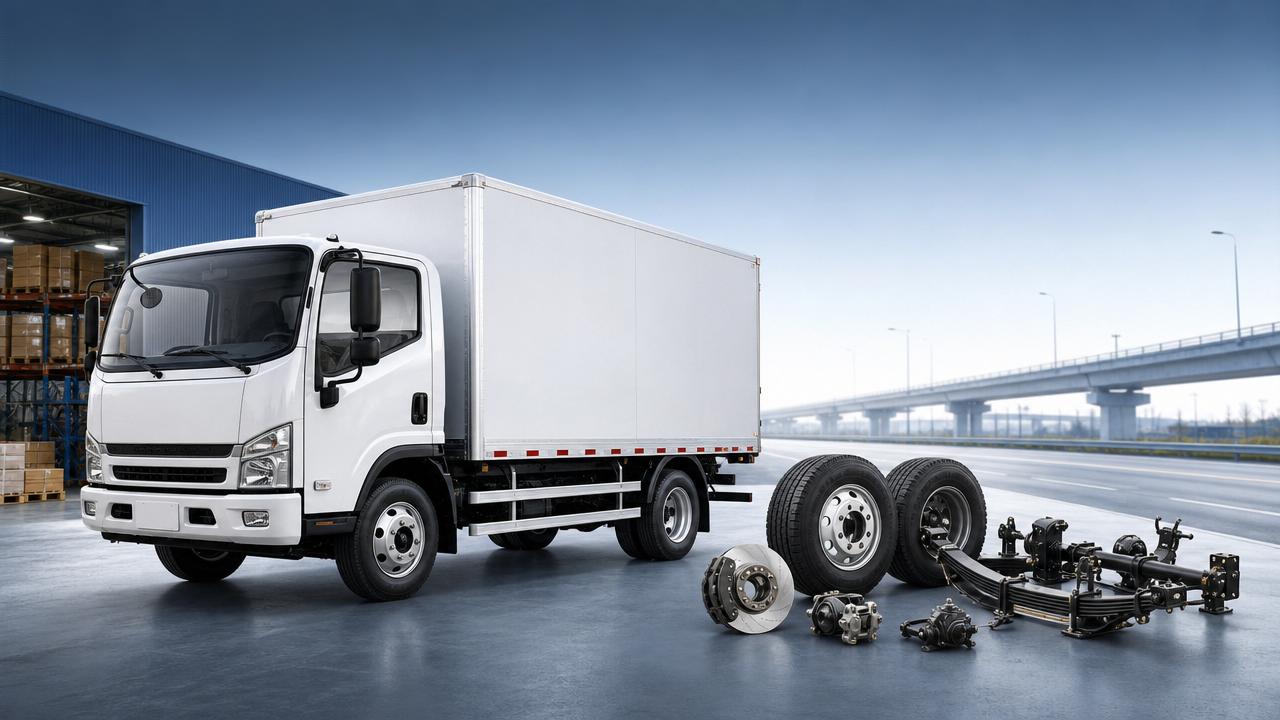
For after-sales maintenance teams, keeping a 4_2 Cargo Truck in reliable working condition is essential to daily transport efficiency, safety and cost control. From engine checks to brake response, tire wear and fluid management, the maintenance points that matter most directly affect uptime and long-term performance. Understanding these key service areas helps technicians reduce breakdown risks and support more stable fleet operations.
In real fleet service work, maintenance priorities are never exactly the same across every operating condition. A 4_2 Cargo Truck used for urban delivery faces frequent starts, stop-and-go braking and tight turning. A truck assigned to regional transport may spend long hours at stable speed but carry heavier continuous loads. Vehicles working on mixed road surfaces near construction zones or industrial parks are exposed to dust, vibration and faster wear on suspension and tires. For after-sales maintenance personnel, the most effective approach is not simply following a fixed checklist, but matching inspection focus to the actual business scenario.
That scenario-based method helps maintenance teams improve service accuracy, reduce unnecessary part replacement and catch failure risks before they become operational losses. It also supports better communication with fleet managers, drivers and parts planners. When service teams understand how a 4_2 Cargo Truck is used, they can make more practical decisions on inspection frequency, preventive maintenance intervals and component attention points.
Why Scenario-Based Maintenance Matters for a 4_2 Cargo Truck
A standard maintenance schedule is useful, but daily operations create very different wear patterns. The same 4_2 Cargo Truck model may show brake wear first in city logistics, clutch fatigue in congested routes, tire shoulder damage in rough access roads, or cooling system stress in hot-climate long-haul work. If technicians ignore these differences, they may service the wrong systems too often while missing the components that need urgent attention.
For engineering vehicle support and commercial fleet after-sales work, this matters even more because uptime directly affects customer trust and delivery commitments. A truck parked for unplanned repairs can delay supply to construction sites, warehouses, retailers or cross-regional cargo lines. Good maintenance is therefore not just technical work. It is part of transport continuity, operating cost control and customer service quality.
Typical Operating Scenarios and Their Different Maintenance Priorities
The table below helps after-sales teams quickly compare the most common operating scenarios for a 4_2 Cargo Truck and identify which inspection points deserve more attention.
Urban Delivery Scenario: Focus on Braking, Clutch and Steering Response
In city logistics, a 4_2 Cargo Truck often operates under constant acceleration and deceleration. This scenario puts the brake system under repeated thermal and mechanical stress. After-sales technicians should check brake pad thickness, disc or drum condition, brake fluid level and any delay in response. Uneven braking or increased pedal travel should never be treated as a minor issue in this environment.
The clutch system also deserves close attention. Frequent gear shifting in traffic shortens clutch life, especially if drivers ride the pedal or carry inconsistent loads. Maintenance teams should watch for slipping, abnormal free play, hard pedal feel and noise during engagement. When these symptoms appear early, adjustment or planned replacement is usually cheaper than waiting for roadside failure.
Steering and tire edge wear are another common city-route concern. Curbs, narrow corners and repeated parking maneuvers can gradually affect alignment. If a 4_2 Cargo Truck shows rapid shoulder wear, steering pull or unstable straight-line tracking, technicians should inspect toe setting, kingpin condition, tie rod wear and inflation consistency.
Regional Transport Scenario: Protect Engine Efficiency and Drivetrain Stability
For trucks running intercity or regional cargo routes, the maintenance focus shifts from frequent control wear to sustained thermal load and continuous mechanical stress. In this scenario, engine oil condition becomes a key indicator of service quality. Oil should be monitored not only by mileage but also by load severity, idling time and environmental temperature.
Cooling system reliability is especially important for a 4_2 Cargo Truck covering long distances with stable but heavy-duty output. Radiator cleanliness, coolant level, hose condition, fan operation and signs of leakage should be checked carefully. Small cooling issues often remain hidden during light duty but become serious during long route service.
Technicians should also pay attention to gearbox smoothness, differential noise, prop shaft bolts and universal joint lubrication. Long-haul vibration can loosen fasteners and accelerate drivetrain fatigue. A preventive inspection at the workshop is far less costly than a breakdown during cargo movement.
Construction-Linked or Rough-Road Use: Watch the Chassis and Filtration System
Although a 4_2 Cargo Truck is widely used in road logistics, many fleets also assign it to supply materials for industrial parks, warehouses under development or light engineering support routes. These applications expose the vehicle to dust, potholes, uneven loading surfaces and repeated shock. In such a scenario, chassis inspection is critical.
Suspension bushings, leaf springs, shock absorbers, U-bolts and frame connection points should be checked for cracks, looseness or deformation. Dust-heavy routes also require more frequent air filter inspection and replacement. A clogged filter can reduce engine efficiency, increase fuel consumption and eventually affect turbocharger and combustion performance.
Underbody inspections should not be delayed in these conditions. Brake lines, wiring harness routing, exhaust brackets and mudguard mounts may suffer impact damage. For after-sales teams supporting engineering vehicle users, these checks are practical, high-value actions that reduce repeated workshop returns.
High-Uptime Delivery Fleets: Build Maintenance Around Predictability
Some customers use a 4_2 Cargo Truck in operations where timing matters as much as load capacity, such as scheduled retail distribution, cold-chain support or contract delivery services. In these scenarios, the main risk is not always major component failure. Often, small neglected issues create route disruption, missed time windows and customer complaints.
For these fleets, after-sales maintenance should emphasize predictability. This means more frequent short inspections, fault code checks, battery health testing, lighting verification, belt condition review and early replacement of fast-wearing service items. The goal is to avoid unscheduled downtime, not just to complete repair after a fault appears.
Parts availability also becomes part of maintenance quality. A professional exporter and vehicle supply partner with stable stock, strong brand authorization and after-sales coordination can help customers keep a 4_2 Cargo Truck fleet moving by reducing waiting time for genuine service parts and technical support.
Core Daily Maintenance Points That Matter Across Most Scenarios
Even when applications differ, several checks remain essential for almost every 4_2 Cargo Truck in daily use. These should form the base layer of any workshop or field inspection routine.
- Engine oil level and signs of contamination or abnormal consumption
- Coolant level, leakage traces and radiator cleanliness
- Brake response, pad wear, air or hydraulic line condition
- Tire pressure, tread depth, sidewall condition and uneven wear pattern
- Battery terminals, charging condition and starting performance
- Steering free play and suspension noise during road test
- Gearbox and rear axle leakage, noise or shifting abnormality
- Lights, horn, wipers and basic electrical functions related to road safety
These points may sound basic, but in field service practice they are the most common source of avoidable downtime. Consistency is often more valuable than complexity.
How Different Fleet Sizes Should Adjust 4_2 Cargo Truck Maintenance
Maintenance planning should also reflect customer scale. Small operators may rely on one or two vehicles and feel every hour of downtime directly. Larger fleets can spread risk, but they face more pressure in standardization, records and parts planning.
Common Misjudgments After-Sales Teams Should Avoid
One common mistake is treating all mileage as equal. Ten thousand kilometers in city delivery is not the same as ten thousand kilometers on open highways. Another is focusing only on the engine while underestimating tires, brakes and steering, even though these components often fail first in demanding daily service.
A third misjudgment is delaying maintenance because the vehicle still runs. Many 4_2 Cargo Truck failures begin as small symptoms: minor oil seepage, unusual vibration, slower cold starting or uneven tire wear. If those signs are documented and addressed early, service cost stays manageable. If ignored, the repair becomes more expensive and may affect cargo commitments.
Practical Support Recommendations for Reliable Daily Operations
For after-sales maintenance personnel, the best results come from combining routine checks with application awareness. Record the actual route type, average load, road quality, idle time and driver feedback for each 4_2 Cargo Truck. Build inspection priorities from that information instead of relying only on fixed intervals. This method improves fault prediction and makes maintenance discussions with customers more convincing.
It is also helpful to work with a supplier that can support both vehicle quality and service continuity. Shandong Livol Truck International Trade Co., Ltd. provides commercial vehicle solutions backed by authorized access to FOTON, SHACMAN and SINOTRUK, broad domestic 4S resources, stable inventory and export experience. For overseas partners and fleet users, that combination supports not only truck procurement but also long-term parts supply, documentation coordination and practical after-sales response.
Conclusion: Match Maintenance Priorities to the Real Working Scene
A 4_2 Cargo Truck performs best when maintenance is aligned with how it is actually used. Urban distribution, regional hauling, rough-road support and high-uptime contract delivery all create different stress patterns. For after-sales teams, the key is to connect scene, wear point and service action. When brake checks, engine care, filtration, tires, cooling and chassis inspection are adjusted to real duty conditions, fleets gain better reliability, lower downtime and stronger cost control.
If you are evaluating maintenance standards, vehicle supply options or service support for a 4_2 Cargo Truck fleet, the next step is to confirm your actual operating scenario, mileage pattern, load profile and service response expectations. With those conditions clearly defined, it becomes much easier to build the right maintenance routine and choose a dependable commercial vehicle partner for long-term operation.
Search Starts Here