
News
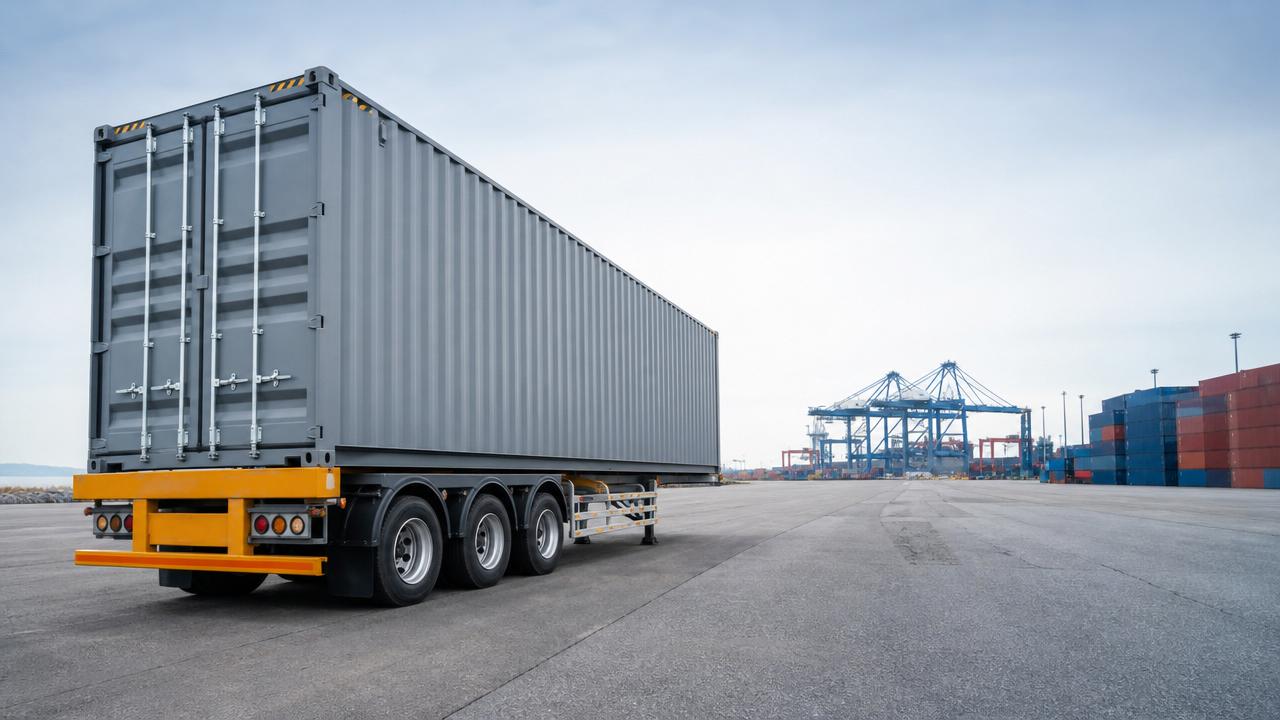
For businesses moving containers regularly, a Skeleton (Container) Semi-Trailer is often the better choice when the priority is payload efficiency, faster loading cycles, and lower operating cost. Instead of paying for trailer structure you do not need, you use a purpose-built platform designed to carry containers securely and efficiently across ports, depots, industrial zones, and long-haul routes.
For decision-makers, the real question is not whether a skeleton trailer is useful in theory. It is whether this trailer type fits your cargo mix, route conditions, compliance requirements, and fleet economics better than flatbed or platform alternatives. In many container-focused operations, the answer is yes.
What Searchers Usually Want to Know Before Choosing a Skeleton Trailer
When buyers search for a Skeleton (Container) Semi-Trailer, their intent is usually practical and commercial. They want to know when this trailer delivers better value, what operating scenarios justify the investment, and what trade-offs they should consider before purchasing.
Enterprise buyers also want clear answers on payload gain, turnaround efficiency, chassis strength, lock compatibility, maintenance cost, and route suitability. They are not looking for a textbook definition. They want a buying framework that supports a confident fleet decision.
When Is a Skeleton Semi-Trailer the Better Choice?
A skeleton semi-trailer is the better choice when your operation is centered on ISO containers rather than mixed cargo. Its open-frame design removes unnecessary deck structure, reducing tare weight and making container handling easier in high-frequency logistics environments.
This matters most in port drayage, inland container transport, intermodal distribution, bonded logistics, and export-import supply chains. If containers are loaded and unloaded by cranes, reach stackers, or yard equipment, a dedicated container chassis usually performs more efficiently than a general-purpose trailer.
It is also a strong option when you need predictable equipment utilization. If the same trailer is repeatedly assigned to 20ft, 40ft, or in some cases 45ft containers, the operational simplicity can improve scheduling and reduce handling delays.
Why Fleet Economics Often Favor This Trailer Type
For business leaders, the strongest argument is usually economic. A Skeleton (Container) Semi-Trailer typically weighs less than many flatbed or cargo-oriented alternatives. Lower tare weight can improve legal payload capacity, depending on local axle and road regulations.
That weight advantage directly affects transport economics. More efficient payload use can reduce per-container transport cost over time. In high-volume operations, even modest savings per trip can become significant across monthly or annual container movement.
The structure is also optimized for one main job: carrying containers. That specialization often translates into simpler loading alignment, fewer unnecessary trailer components, and less wasted capacity. For operations that do not need a solid deck, paying for extra structure adds cost without adding value.
There can also be maintenance advantages. A purpose-built container chassis has fewer cargo-deck-related parts than some alternative trailer types. While maintenance quality still depends on build standard and operating conditions, a simpler design can support easier inspection and service routines.
How a Skeleton Trailer Improves Operational Efficiency
Efficiency is not only about fuel or payload. It is also about cycle time. In container logistics, every delay at the port, yard, terminal, or warehouse affects truck utilization and customer service performance.
A skeleton trailer is designed for quick container placement and secure locking. When paired with the right twist locks, axle layout, and chassis dimensions, it can reduce the time needed for positioning and dispatch. That matters greatly for fleets handling repeated daily moves.
The open-frame structure can also make inspections and container alignment more straightforward. In practical terms, this can support smoother loading workflows, especially where terminal operations are fast-paced and equipment queues are expensive.
For companies managing multiple units, better turnaround often means improved asset productivity. A trailer that completes more efficient trips in the same working window may generate stronger returns than a more versatile but less specialized alternative.
Which Business Scenarios Benefit Most?
Not every transport company needs a skeleton semi-trailer. The best fit depends on cargo profile and operating model. Businesses with consistent container movement usually gain the clearest advantage.
Port transport operators are obvious candidates. If your trucks shuttle containers between ports, inland depots, and customer facilities, a container-focused chassis is usually more practical than a flatbed. The equipment matches the cargo and avoids unnecessary trailer mass.
Freight forwarders and logistics providers also benefit when they control container flows across recurring lanes. Predictable route structure makes it easier to standardize trailer specifications, train drivers, and manage maintenance more efficiently.
Manufacturers and exporters can gain value too, especially when they ship containerized goods frequently and want stable transport capacity. A dedicated Skeleton (Container) Semi-Trailer fleet can support better planning during peak shipping periods.
Intermodal transport companies are another strong fit. When a container moves between sea, rail, and road, compatibility and handling efficiency become critical. A properly specified skeleton trailer supports that transfer process more effectively than a multipurpose trailer in many cases.
When Another Trailer Type May Be Better
A skeleton trailer is not automatically the best choice for every fleet. If your operation frequently shifts between containers, palletized goods, construction materials, machinery, or irregular cargo, a flatbed or other multipurpose trailer may offer better overall flexibility.
It may also be less suitable if your routes involve severe off-road conditions where specific reinforced designs are required, or where loading infrastructure is limited. The benefits of a container chassis depend on the ability to load and secure containers efficiently within normal operating conditions.
Some operators also need a trailer that can earn revenue from non-container jobs during low shipping periods. In that case, the specialization of a skeleton trailer may reduce utilization unless the container volume is stable enough to justify dedicated equipment.
That is why the right question is not which trailer is best in general. It is which trailer creates the best balance between utilization, payload efficiency, route fit, and revenue flexibility for your actual business model.
What Enterprise Buyers Should Evaluate Before Purchasing
Decision-makers should begin with cargo reality, not product brochures. Review what share of your transport volume is containerized, which container sizes are most common, and whether your future contracts will increase container dependence.
Next, assess route and infrastructure conditions. Port roads, highways, inland depots, and industrial loading zones impose different demands on suspension, axle configuration, and chassis durability. A good trailer on the wrong route is still a poor investment.
Container size compatibility is another key factor. Some operations focus mainly on 40ft containers, while others need flexibility for 20ft, 40ft, or 45ft units. Extendable or multi-position configurations may be worth considering if your cargo mix changes often.
Buyers should also examine twist lock arrangement, frame material quality, braking system specification, landing gear durability, and corrosion protection. In coastal or humid environments, anti-rust treatment is not a minor detail. It directly affects service life and resale value.
Compliance matters as well. Weight limits, axle rules, lighting requirements, and road regulations vary across markets. An export supplier should understand destination-country requirements and help align specifications before shipment, not after problems arise.
How to Compare Total Cost of Ownership, Not Just Purchase Price
Many trailer decisions fail because buyers focus too heavily on initial price. For enterprise fleets, total cost of ownership is the more useful metric. A lower-cost unit is not truly cheaper if it sacrifices uptime, payload efficiency, or durability.
Start with the purchase cost, then compare expected service life, maintenance intervals, spare parts access, tire wear patterns, and suspension performance. Add the economic impact of tare weight, trip efficiency, and downtime risk. This gives a more realistic cost picture.
Also consider delivery speed and supply continuity. For buyers managing projects or fleet expansion, delayed equipment can cause operational loss that exceeds any savings from a lower headline price. Supplier reliability therefore becomes part of ownership economics.
After-sales service should be included too. Technical support, documentation quality, and replacement part coordination are especially important in overseas procurement. A competitive offer without service support can become expensive once the trailer enters daily operation.
Common Buyer Concerns and How to Address Them
One common concern is structural durability. Buyers often worry that a lighter open-frame trailer may be less robust. In reality, performance depends on design engineering, steel quality, welding standard, and reinforcement in high-stress areas, not on visual mass alone.
Another concern is adaptability. Some fleets fear becoming too specialized. This is a valid point, but it should be evaluated against actual transport patterns. If container movements already dominate utilization, specialization may improve profitability rather than limit it.
Maintenance support is also a frequent question in cross-border purchasing. Buyers should work with suppliers who can provide clear specifications, parts guidance, inspection advice, and practical service communication, especially for fleets operating far from the manufacturing base.
There is also concern about matching tractor heads and local regulations. A professional exporter should help confirm kingpin configuration, braking compatibility, axle selection, and legal compliance before order finalization. This reduces commissioning risk after delivery.
What to Look for in a Reliable Export Supplier
For international buyers, the trailer itself is only part of the decision. Supplier capability has a direct impact on procurement risk, delivery confidence, and long-term operating satisfaction. This is especially true for commercial vehicle and trailer imports.
Look for a supplier with proven export experience, stable factory coordination, quality control procedures, and the ability to manage documentation, customs, and logistics professionally. These capabilities reduce delays, miscommunication, and specification errors.
Shandong Livol Truck International Trade Co., Ltd. brings value here through strong commercial vehicle industry resources, global trade experience, and integrated export service support. With professional coordination across selection, customization, documentation, customs clearance, and logistics, buyers can reduce procurement complexity.
For enterprise customers, this matters because trailer purchasing is not just a product transaction. It is a supply chain decision. A reliable partner helps ensure that the selected Skeleton (Container) Semi-Trailer matches operational needs and arrives ready for practical use.
A Simple Decision Framework for Buyers
If more than half of your trailer utilization is dedicated to container transport, a skeleton semi-trailer deserves serious consideration. If container moves are frequent, repetitive, and time-sensitive, the case becomes even stronger.
If your business depends on maximizing legal payload, improving terminal turnaround, and reducing unnecessary trailer weight, this trailer type often creates measurable operational value. These benefits are especially relevant for port logistics, intermodal operators, and exporters.
However, if your fleet must frequently switch between very different cargo types, or if route conditions require broader cargo flexibility, another trailer type may produce better utilization. The right answer depends on where your revenue really comes from.
The smartest purchase decision comes from aligning equipment design with cargo reality, route demands, and total lifecycle economics. When those factors point toward container specialization, a Skeleton (Container) Semi-Trailer is often the better choice.
Conclusion
A Skeleton (Container) Semi-Trailer is not simply a lighter trailer. It is a strategic tool for container-focused transport businesses that want higher efficiency, better payload use, and smoother daily operations. For many enterprise buyers, that translates directly into stronger fleet economics.
If your operation regularly handles containers across ports, depots, industrial corridors, or intermodal routes, this trailer type can deliver clear business value. The key is to evaluate actual operating patterns, compare total ownership cost, and choose a supplier able to support the full export and delivery process professionally.
In short, when container transport is the core task, a dedicated skeleton trailer is often the more practical and cost-effective decision. It helps businesses move more efficiently, operate more predictably, and invest in equipment that fits the job instead of compromising around it.
Search Starts Here