
News
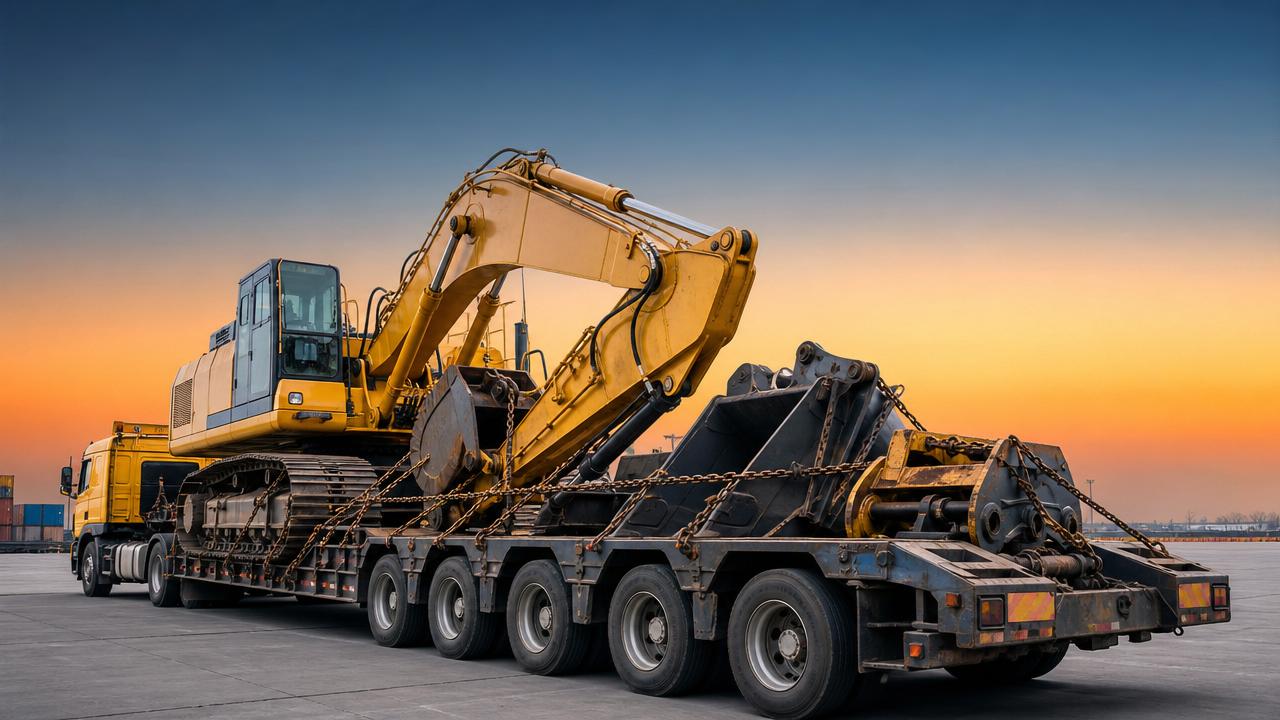
When transporting oversized machinery, a Low Plate trailer provides the base platform, but safety depends on disciplined execution at every stage. Loading, securing, routing, driving, inspection and unloading all affect cargo stability.
In engineering vehicle logistics, one mistake can damage expensive equipment, delay site schedules and create major road risks. Clear Low Plate transport safety points help reduce uncertainty and improve operational control.
This article explains the main Low Plate safety issues for oversized machinery moves, with practical guidance for planning teams, transport coordinators and quality control operations.
Low Plate transport and its role in oversized machinery moves
A Low Plate trailer is designed with a lower deck height to carry tall, heavy or irregular engineering equipment. The lower center of gravity improves balance and supports legal height control on public roads.
Common loads include excavators, rollers, pavers, cranes, drilling rigs, loaders and modular machinery. These machines often exceed standard transport dimensions or axle limits, requiring careful trailer matching.
Low Plate transport is not only about capacity. It also concerns deck strength, axle distribution, ramp angle, lashing points, suspension response and turning clearance during long-distance heavy haul operations.
For oversized machinery moves, the Low Plate should be selected according to total mass, machine footprint, ground clearance and route restrictions. Wrong specification choices often create preventable safety problems.
Core safety objective
The core objective is simple: keep the machine stable, controllable and legally compliant from departure to delivery, while protecting drivers, road users, cargo condition and transport efficiency.
Current safety focus in the engineering vehicle transport industry
Heavy equipment logistics has become more demanding because machinery sizes are increasing, delivery windows are tighter and compliance requirements are stricter across many export and domestic corridors.
The following signals explain why Low Plate safety management now receives greater attention:
Because of these factors, transport teams need a more systematic Low Plate control process rather than relying only on driver experience or last-minute decisions.
Safety value of a controlled Low Plate transport process
A controlled Low Plate process creates value beyond accident prevention. It improves delivery reliability, protects machine condition and reduces indirect costs linked to delay, rework, penalties and emergency recovery.
In engineering vehicle operations, transport risk often affects installation planning, jobsite sequencing and customer trust. Stable execution supports better project continuity and stronger logistics performance.
- Lower probability of cargo shift, tire failure or deck damage
- Better compliance with road permits and transport regulations
- Reduced maintenance exposure caused by improper loading angles
- Improved predictability for cross-regional or export-bound machinery movement
- Stronger traceability through inspection records and handover checks
For companies with global delivery responsibilities, disciplined Low Plate transport also supports professional service quality. This includes coordination across documentation, customs, inland haulage and final arrival readiness.
Shandong Livol Truck International Trade Co., Ltd. supports commercial vehicle export with strong supply capacity, authorized resources and practical logistics coordination experience. This background helps heavy transport planning stay organized and responsive.
Typical oversized machinery transported by Low Plate trailers
Not all equipment creates the same transport risks. Machine geometry, track type, attachment position and weight concentration determine which Low Plate safety points deserve the most attention.
This classification helps determine whether a standard Low Plate is sufficient or whether modular, extendable or multi-axle support is required.
Critical Low Plate safety points before loading
Pre-loading checks prevent many incidents that later appear to be driving problems. The transport unit, cargo unit and route data must be verified before machinery reaches the trailer.
1. Confirm dimensions and total transport mass
Measure machine length, width, height and operating weight accurately. Include attachments, fuel level and removable accessories. Incorrect data can invalidate permits and overload the Low Plate arrangement.
2. Inspect trailer condition
Check deck integrity, hydraulic systems, ramps, tires, brake lines, suspension and lashing points. A Low Plate with hidden structural weakness should never enter oversized machinery service.
3. Review route and site access
Survey bridges, slopes, turns, overhead lines, site gates and road surfaces. The best Low Plate loading plan may still fail if access geometry is ignored.
4. Prepare documentation and emergency tools
Keep permits, cargo data, inspection forms, escort requirements, communication contacts and emergency response equipment ready before dispatch starts.
Safe loading and securing practices for Low Plate operations
Loading is the highest-risk phase because the machine is moving onto a limited platform. Ground condition, alignment and ramp stability must be controlled carefully.
- Park the Low Plate on firm, level ground before opening ramps.
- Use a spotter to guide alignment and monitor edge clearance.
- Maintain slow, steady movement without sudden steering or braking.
- Place the machine to achieve correct axle distribution.
- Lower attachments fully and release unnecessary hydraulic height.
- Apply parking locks and use wheel chocks or track blocking.
- Secure with chains, binders and rated restraints matched to cargo mass.
Each Low Plate securing point should resist forward, rearward and lateral movement. Tie-down angles matter. Vertical restraint alone is not enough for heavy machinery under braking loads.
Recheck tension after initial movement. Chains and binders can settle once the machine weight compresses suspension and deck surfaces.
Road transit risks and driving control measures
A properly loaded Low Plate can still become unsafe if driving style ignores cargo dynamics. Oversized machinery changes braking distance, turning behavior and rollover sensitivity.
- Keep speed conservative, especially on curves, descents and uneven roads.
- Increase following distance to avoid harsh braking.
- Take wider turns while protecting trailer tail swing and inner wheel path.
- Stop regularly to inspect tire temperature, lashings and machine position.
- Monitor weather, especially rain, wind and reduced visibility.
Escort vehicles, warning signs, lighting and reflective markings should match local regulations. For cross-border or port-related movement, consistency between route permits and actual dimensions is essential.
Unloading controls and post-transport verification
Unloading should follow the same discipline as loading. Many incidents happen at destination because teams assume risk has already passed.
Inspect ground bearing condition, slope and clearance first. Remove restraints in a controlled order. Use a guide person and maintain straight-line movement when leaving the Low Plate deck.
After unloading, verify machine condition, inspect the Low Plate for stress damage and record any abnormal movement, chain wear or deck marking. These records improve future transport planning.
Practical checklist for stronger Low Plate transport safety
The following checklist supports repeatable control in oversized machinery moves:
- Match Low Plate specification to real cargo dimensions and weight
- Verify permits, route clearance and escort requirements
- Inspect trailer structure, brakes, tires and securing equipment
- Load on stable ground with supervised alignment
- Balance axle load and lower the cargo center of gravity
- Use rated restraints with proper angles and blocking
- Conduct en-route inspections at planned intervals
- Control speed, braking and cornering throughout transit
- Apply the same caution during unloading and final inspection
For engineering vehicle transport, strong Low Plate safety performance is built through preparation, verification and disciplined execution. Every step matters because heavy cargo risk compounds quickly once movement begins.
If a transport plan involves oversized machinery, review trailer suitability, route constraints and securing methods early. A professional supply and export partner can help coordinate vehicles, documents and logistics with greater confidence.
Search Starts Here