
News
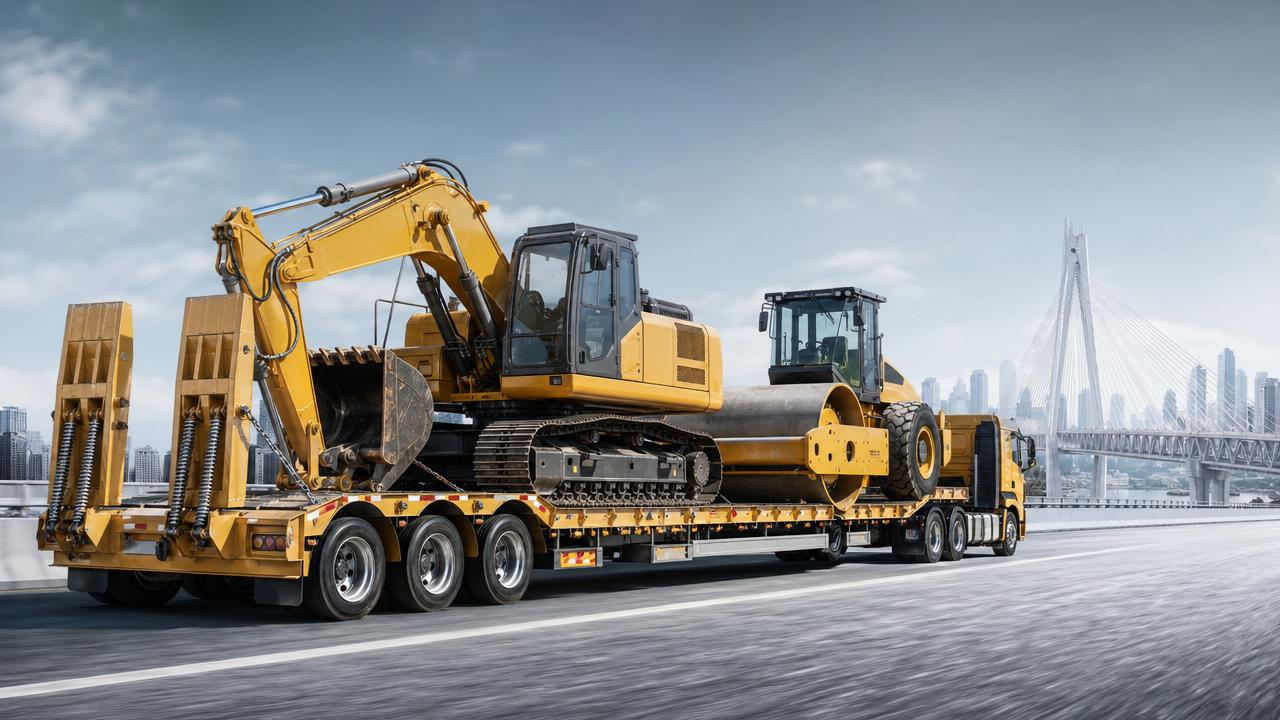
When evaluating transport options for oversized machinery, choosing the right trailer can directly affect safety, loading efficiency and total project cost. A Low Plate trailer is often the better choice for heavy or high-profile equipment that demands a lower center of gravity and easier road compliance. For procurement and assessment professionals, understanding where this solution delivers the most value is essential before making a fleet or logistics decision.
Why Scenario Differences Matter More Than Simple Trailer Specifications
In oversized machinery transport, the same trailer does not fit every operating environment. A unit that performs well for short-haul equipment relocation inside an industrial park may be inefficient or even unsuitable for intercity road transport, mountain routes, mine access roads, or export logistics projects. This is why a Low Plate decision should not be based only on payload figures, deck dimensions, or purchase price. It must be linked to the actual movement scenario, road restrictions, machinery shape, loading method, and project timeline.
For business evaluators, the key question is not simply whether a Low Plate trailer can carry the machine, but whether it can do so with lower operational risk and stronger commercial efficiency than alternative trailer types. In practical assessment, the trailer becomes part of a broader engineering vehicle solution that influences permits, escort requirements, fuel consumption, loading labor, turnaround speed, and machinery protection. A good match between trailer type and transport scenario can save time across the entire logistics chain.
Where a Low Plate Is Commonly the Better Choice
A Low Plate is particularly relevant when machinery is both large and operationally sensitive. Typical examples include excavators, bulldozers, wheel loaders, road rollers, pavers, drilling rigs, cranes with detachable components, and other engineering vehicles that are difficult to transport on standard flatbeds. The lower deck height improves stability and reduces the total transport height, which often helps with bridges, overhead lines, tunnels, and local road regulations.
It is also a strong option when loading frequency is high. Contractors moving equipment from one site to another need faster loading angles, easier ramp access, and reduced wear on undercarriage components. In these situations, a Low Plate can support both transport efficiency and machine protection. For cross-border or export projects, it may also simplify planning because route engineering becomes more predictable when cargo height is kept lower from the start.
Typical Application Scenarios and What Buyers Should Prioritize
1. Construction Contractors Moving Equipment Between Urban Projects
Urban construction often involves strict road limits, traffic timing windows, and dense roadside infrastructure. Here, a Low Plate is valuable because reducing loaded height can lower the risk of route conflict with overpasses, signage, or utility structures. Business evaluators should focus on deck height, turning adaptability, loading speed, and compatibility with common urban machinery such as compact excavators, road rollers, and asphalt equipment.
In this scenario, the best choice is not always the heaviest trailer. It is usually the one that balances compliance and rapid dispatch. A Low Plate with practical ramp design and secure tie-down points may outperform a larger but less agile trailer in city operations.
2. Mining and Quarry Operations on Mixed Road Conditions
Mining and quarry operators often transport wheel loaders, drilling units, crushing components, and support machinery over a mix of paved roads and rugged site entries. In these conditions, the Low Plate advantage comes from stable transport of heavy loads with a lower center of gravity, especially where road surfaces are uneven or where on-site loading areas are not perfectly prepared.
Assessment teams should check structural durability, suspension performance, axle layout, and ease of maintenance. A Low Plate used in mining support work must not only carry weight but also tolerate repeated stress cycles. Buyers should also verify whether the trailer can handle dirty environments and whether replacement parts are easy to source.
3. Road Construction Fleets Requiring Frequent Relocation
Road construction companies regularly move pavers, milling machines, compactors, and loaders between segments. These relocations are often time-sensitive because schedule delays immediately affect crew utilization and asphalt or concrete planning. In this scenario, a Low Plate trailer can add value through faster loading, more secure machine positioning, and smoother transport over medium distances.
Evaluators should pay attention to cycle efficiency: how quickly the machinery can be loaded, tied down, moved, unloaded, and returned for the next task. If the fleet works on multiple sites at the same time, trailer availability and dispatch flexibility may matter more than maximum payload alone.
4. International Export and Cross-Border Machinery Delivery
For exporters and overseas project suppliers, transport planning begins before the machine leaves the yard. A Low Plate is often the better choice when route compliance, port transfer, and inland delivery all need to be coordinated. Lower cargo height may reduce permit complexity and improve consistency across different transport stages.
Companies such as Shandong Livol Truck International Trade Co., Ltd. bring practical value here because trailer and vehicle selection is rarely separate from export execution. When a supplier understands vehicle inventory, customs documents, logistics scheduling, and engineering vehicle applications, the buyer gains a more reliable solution rather than a standalone product quote.
Scenario Comparison Table for Low Plate Evaluation
The table below helps procurement and assessment teams compare where a Low Plate trailer tends to offer the strongest advantage.
How Needs Differ by Buyer Type
Not every buyer evaluates a Low Plate in the same way. The right decision criteria depend on business model, transport frequency, and operational control.
- Fleet operators: usually prioritize utilization rate, maintenance cost, driver familiarity, and flexibility across different machinery categories.
- Contractors: often focus on rapid redeployment, loading convenience, and whether the trailer supports project schedule reliability.
- Export traders: need consistency in supply, specification clarity, and support with logistics and documentation.
- Project procurement teams: tend to compare total lifecycle value, not just the purchase price, including downtime risk and road compliance.
This distinction matters because a Low Plate that is ideal for a rental fleet may be too specialized for a company that moves machinery only a few times per quarter. Likewise, a lower-cost trailer may look attractive on paper but become expensive if it causes permit complications or repeated loading inefficiencies.
When a Low Plate May Be Better Than Other Trailer Options
A Low Plate is often stronger than a standard flatbed when the machinery has tall structures, heavy upper assemblies, or sensitive balance characteristics. It is also more practical when self-loading is important, because loading angles can be more favorable for tracked and wheeled engineering vehicles. Compared with choosing a larger trailer only for payload margin, a Low Plate may provide better real-world usability if road height restrictions are the actual constraint.
However, buyers should still compare alternatives carefully. If the cargo is not especially tall, if routes are simple, or if machinery movement is infrequent, another trailer format may offer better cost efficiency. The value of a Low Plate becomes strongest when route risk, loading frequency, equipment protection, and compliance pressure all exist together.
Common Misjudgments in Low Plate Selection
One common mistake is evaluating only static dimensions. In actual transport, machinery may have removable accessories, boom positions, weight concentration points, or attachment overhang that change the trailer requirement. A Low Plate should be assessed against real loading configurations, not brochure dimensions alone.
Another error is ignoring route variability. A trailer that works well on major highways may face problems at project entrances, temporary site roads, or loading areas with poor leveling. Business assessors should ask whether the Low Plate will operate in ideal conditions or in mixed environments where suspension, clearance, and approach angles matter more.
A third misjudgment is underestimating supply and service capability. For engineering vehicle operations, trailer value depends not only on specification but also on delivery stability, export handling, spare parts support, and after-sales responsiveness. This is especially important for overseas buyers who need a dependable supplier relationship rather than a one-time shipment.
Practical Checklist Before You Approve a Low Plate Purchase
- Confirm the actual machinery mix, including future additions to the fleet.
- Map the real transport routes, not only the main road segments.
- Compare loaded height, loading angle, and tie-down practicality.
- Review expected loading frequency and turnaround requirements.
- Assess lifecycle support, spare parts access, and supplier response capability.
- For export use, verify documentation support, customs coordination, and delivery planning.
A structured checklist helps procurement teams make a scenario-based judgment instead of a price-only decision. In many cases, the most suitable Low Plate is the one that removes the highest operational friction, not the one with the longest specification sheet.
FAQ for Assessment and Procurement Teams
Is a Low Plate always necessary for oversized machinery?
No. A Low Plate is most valuable when cargo height, heavy weight distribution, loading ease, and route compliance are important at the same time. If those pressures are low, another trailer may be more economical.
What industries benefit most from Low Plate transport?
Construction, mining, quarrying, road building, heavy equipment rental, and machinery export are among the most common sectors where a Low Plate creates measurable value.
What should international buyers look for beyond the trailer itself?
They should evaluate supplier credibility, inventory stability, documentation handling, shipping coordination, and after-sales support. These factors often influence project success more than small differences in specification.
Making the Right Low Plate Decision for Your Operating Scenario
For oversized machinery moves, a Low Plate becomes the better choice when the transport scenario demands lower loaded height, stronger stability, easier equipment loading, and smoother compliance across real operating routes. The more complex the project environment, the more important scenario-based evaluation becomes. Procurement professionals should compare not only trailer data, but also route realities, machine profiles, fleet usage patterns, and supplier service capability.
If your business handles engineering vehicles, machinery relocation, or export delivery, the next step is to match equipment type and route condition with a practical Low Plate configuration. Working with an experienced exporter such as Shandong Livol Truck International Trade Co., Ltd. can help buyers move from generic product comparison to a complete transport solution covering vehicle selection, customization, documentation, customs clearance, logistics, and after-sales support. That is often where the real commercial advantage is created.
Search Starts Here