
News
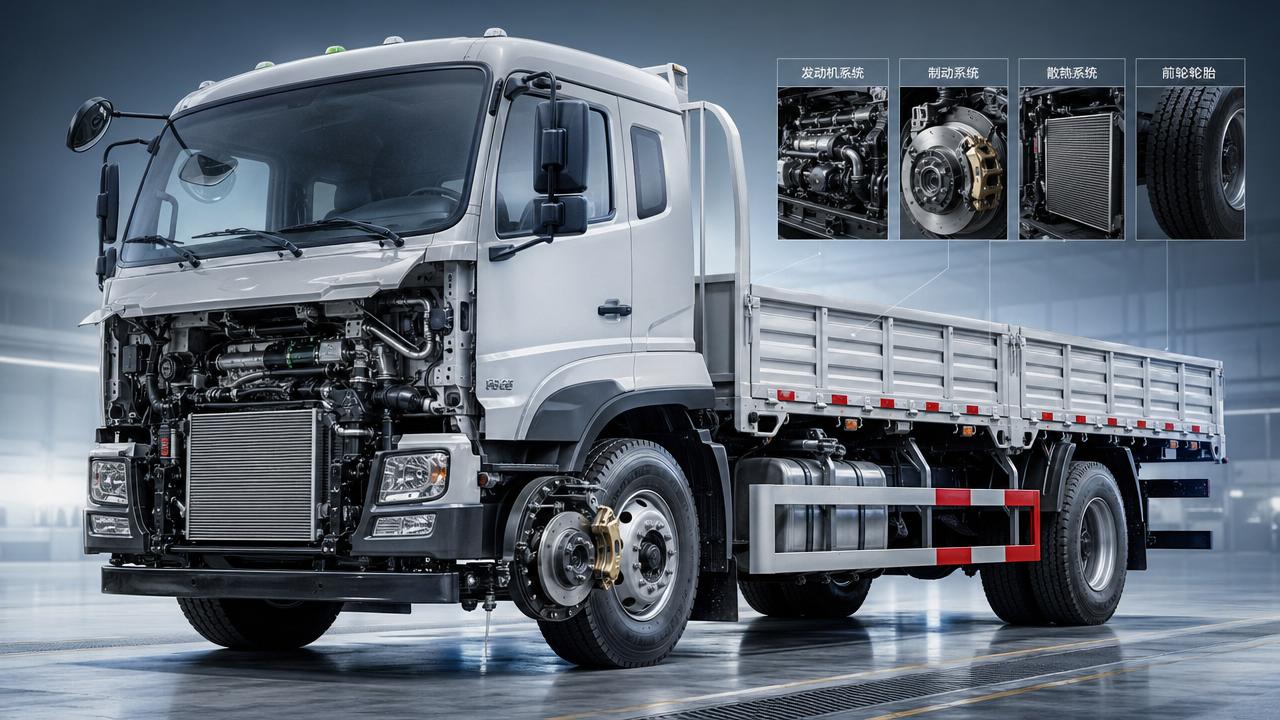
For after-sales maintenance teams, keeping a 4_2 Cargo Truck in reliable working condition means more than routine servicing. Small issues such as delayed oil changes, brake wear, cooling system neglect, and improper tire maintenance can quickly reduce vehicle efficiency and shorten service life. Understanding these common maintenance problems is the first step to preventing costly downtime, improving safety, and extending long-term truck performance.
Why do common maintenance mistakes damage a 4_2 Cargo Truck so quickly?
In engineering transport, a 4_2 Cargo Truck often works under stop-and-go conditions, uneven road surfaces, overloaded short-haul schedules, and long idling periods. These operating realities accelerate wear far faster than many standard maintenance plans assume. For after-sales teams, the challenge is not only fixing faults, but identifying the small maintenance gaps that quietly shorten service life.
A truck that appears mechanically sound may still suffer from gradual degradation in lubrication, braking response, suspension balance, cooling efficiency, and electrical reliability. When these problems are ignored, the result is not a single isolated failure. It is a chain reaction: higher fuel consumption, unstable handling, more unplanned workshop visits, and reduced resale value.
For fleets using FOTON, SHACMAN, SINOTRUK, or similar commercial platforms, maintenance quality also affects parts life, service intervals, and uptime planning. This matters especially for export markets, where spare parts lead time, workshop capability, and route conditions vary widely. A 4_2 Cargo Truck that is well maintained can serve reliably for years, while one with repeated basic maintenance neglect may experience major wear much earlier than expected.
- High daily utilization leaves less time for deep inspection, so minor issues accumulate between service cycles.
- Harsh engineering routes increase stress on brakes, tires, steering components, and cooling systems.
- Inconsistent service records make it difficult for after-sales teams to predict failures before they affect operations.
- Using unsuitable consumables or non-matching parts often creates hidden long-term damage rather than immediate breakdown.
Which maintenance issues most often shorten the service life of a 4_2 Cargo Truck?
The most common life-shortening problems are rarely dramatic at the beginning. They are routine items that receive incomplete attention. For after-sales maintenance personnel, prioritizing these areas can significantly improve durability and lower total operating cost.
1. Delayed engine oil and filter replacement
Engine oil does more than lubricate. It also carries heat, suspends contaminants, and protects internal surfaces from wear. In a 4_2 Cargo Truck operating in dusty construction or mixed road environments, oil contamination rises quickly. Delayed oil changes cause sludge buildup, poorer lubrication film strength, and faster wear of bearings, pistons, turbocharger components, and valve train parts.
2. Brake system wear that is noticed too late
Brake pads, drums or discs, air lines, valves, and brake fluid or air system components all need routine inspection. A truck may still stop, but uneven brake wear, contaminated linings, weak air pressure build-up, or overheated braking surfaces can reduce stopping stability. In engineering vehicle service, brake neglect is not only a safety problem. It also increases tire wear, suspension stress, and downtime after emergency repairs.
3. Cooling system neglect
Radiators, hoses, fans, belts, thermostats, and coolant quality all affect temperature control. Many operators only react when overheating appears on the dashboard. By then, the 4_2 Cargo Truck may already be suffering from reduced engine efficiency, gasket stress, warped components, or shortened turbo life. Poor coolant management is especially risky in hot climates, heavy traffic, and steep-haul applications.
4. Improper tire pressure and alignment
Tires directly affect fuel economy, steering accuracy, braking distance, and suspension loading. Underinflation raises rolling resistance and heat. Overinflation reduces contact patch stability. Misalignment leads to irregular shoulder wear, steering pull, and premature replacement. For a 4_2 Cargo Truck used in mixed paved and rough-road conditions, tire neglect can quickly increase operating cost.
5. Ignoring suspension and steering wear
Leaf springs, bushings, shock absorbers, kingpins, tie rod ends, and steering linkages wear gradually. When inspections are superficial, after-sales teams may miss looseness, cracking, or imbalance until handling becomes unstable. This not only reduces driving comfort but also adds stress to the chassis, tires, and body structure.
6. Electrical and battery maintenance gaps
Modern commercial vehicles rely on sensors, lighting circuits, starter systems, charging components, and control modules. Loose terminals, weak charging output, water ingress, or corroded connectors can create intermittent faults that are difficult to trace. In export markets or remote project sites, these electrical issues often become extended downtime events because diagnosis takes longer than the repair itself.
The table below helps after-sales teams identify how routine neglect translates into service-life reduction for a 4_2 Cargo Truck.
The pattern is clear: small maintenance omissions usually affect more than one system. For a 4_2 Cargo Truck, the fastest way to extend useful life is to manage interconnected wear instead of treating each symptom separately.
How should after-sales teams inspect a 4_2 Cargo Truck in real operating scenarios?
A workshop checklist is useful, but engineering vehicle maintenance works best when inspection routines reflect actual operating conditions. A truck used on urban distribution routes faces different stress than a truck moving building materials through uneven access roads. After-sales teams should combine mileage, engine hours, load profile, climate, and route quality when planning service intervals.
Practical inspection priorities by usage condition
- For dusty job sites, shorten air filter inspection intervals and check radiator fin blockage more often.
- For frequent stop-start transport, monitor brake wear, clutch condition, and transmission heat more closely.
- For hot-weather operations, verify coolant concentration, hose condition, fan belt tension, and thermostat performance.
- For rough-road routes, prioritize suspension bushings, fastener torque, tire sidewall damage, and steering play.
This approach improves diagnosis speed and prevents repeat failures. It also helps service managers explain maintenance value to fleet operators who focus mainly on vehicle availability and daily output.
The following table can be used as a field-oriented inspection guide for a 4_2 Cargo Truck across different engineering transport conditions.
By matching service checks to operating scenarios, after-sales teams can move from reactive repair to planned reliability management. That shift is often what separates a long-life 4_2 Cargo Truck from one with recurring downtime.
What maintenance planning mistakes increase cost even when the truck still runs?
Many fleets believe a truck is healthy as long as it starts, moves, and completes deliveries. This is a costly assumption. A 4_2 Cargo Truck can remain operational while its maintenance condition is already poor. At that stage, total cost rises quietly through fuel waste, tire replacement, overtime labor, road rescue fees, and shortened component life.
- Skipping preventive parts replacement and waiting for failure. This often turns low-cost workshop work into roadside breakdown recovery.
- Using a fixed calendar interval without considering load, route, temperature, and driver habits. The same service cycle does not suit every 4_2 Cargo Truck.
- Choosing low-price consumables without confirming compatibility. Poor filtration media, unstable rubber parts, or wrong-grade fluids may increase wear across multiple systems.
- Recording repairs without trend analysis. Repeated overheating, uneven tire wear, or recurring electrical faults usually point to an unresolved root cause.
For maintenance managers, the key metric is not just repair cost per visit. It is vehicle availability across the full operating cycle. A low-cost repair approach that increases downtime is rarely economical in commercial transport.
How can parts supply and service support help extend 4_2 Cargo Truck life?
Even strong workshop discipline is limited if parts supply is slow or service coordination is weak. This is especially important for overseas buyers and engineering fleets that depend on fast turnaround. After-sales teams need reliable access to suitable vehicles, matching parts, technical communication, and export-ready support.
Shandong Livol Truck International Trade Co., Ltd. supports global commercial vehicle customers with practical supply-side advantages. As an authorized domestic and overseas dealer for FOTON, SHACMAN, and SINOTRUK, the company can help customers reduce sourcing uncertainty when selecting or maintaining a 4_2 Cargo Truck for engineering transport use.
- Authorized brand channels help buyers align vehicle selection with actual application and service needs.
- A broad 4S store network and sufficient inventory support stable supply and faster delivery planning.
- An experienced export team can assist with documentation, customs clearance, and logistics coordination.
- Full-process support helps customers manage not only procurement, but also configuration matching and after-sales communication.
For after-sales departments, this matters because the right truck specification from the beginning often prevents later maintenance conflicts. Correct axle matching, engine suitability, cooling capacity, tire configuration, and route-based customization all contribute to longer service life.
What should buyers and after-sales teams check before choosing a 4_2 Cargo Truck?
Maintenance outcomes begin at the selection stage. A 4_2 Cargo Truck that is mismatched to its operating task will naturally suffer faster wear. Before purchase or replacement, technical and after-sales teams should review the vehicle from a life-cycle perspective rather than focusing only on initial price.
Selection checklist for durability-focused procurement
- Confirm typical payload, route gradient, and daily mileage to match engine and drivetrain requirements.
- Evaluate whether the cooling system capacity suits local climate and traffic density.
- Check brake configuration and maintenance accessibility for workshop efficiency.
- Review tire size, suspension design, and axle suitability for road conditions and cargo type.
- Ask about parts supply continuity, export documents, and available service coordination support.
A buyer who understands maintenance realities will usually make a better purchasing decision. For engineering transport fleets, selecting a 4_2 Cargo Truck with appropriate configuration can reduce maintenance pressure from the first year of service.
FAQ: what do after-sales teams often ask about 4_2 Cargo Truck service life?
How often should a 4_2 Cargo Truck be inspected if it works in harsh conditions?
There is no single interval that fits every truck. In harsh engineering use, inspections should be based on mileage, engine hours, and environmental severity. Dust, heavy stop-start work, high ambient temperature, and rough roads all justify shorter inspection cycles for filters, brakes, tires, suspension, and cooling components.
Is delayed oil service really that serious if the engine still sounds normal?
Yes. Many lubrication problems develop before noise or visible smoke appears. By the time performance symptoms become obvious, internal wear may already be advanced. On a 4_2 Cargo Truck, delayed oil and filter service often leads to faster turbo wear, reduced combustion efficiency, and shorter engine life.
What is the most overlooked factor in truck life extension?
Trend tracking. Many workshops repair repeated faults one visit at a time without reviewing service history. If the same 4_2 Cargo Truck shows recurring tire wear, brake imbalance, overheating, or battery failure, the problem is usually systemic. Root-cause analysis is more valuable than repeated symptom repair.
Can the right supplier reduce maintenance risk?
Yes. A supplier with authorized brand access, available inventory, export experience, and professional communication can help customers choose suitable configurations and reduce delays in vehicle and parts coordination. This is particularly useful when fleet managers need quick delivery, customization, and practical after-sales support.
Why choose us for 4_2 Cargo Truck selection and support?
If your team is evaluating a 4_2 Cargo Truck for engineering transport, or if you need a more reliable supply and support partner for fleet maintenance planning, Shandong Livol Truck International Trade Co., Ltd. can help you move faster with clearer technical coordination.
You can contact us to discuss practical topics such as vehicle parameter confirmation, product selection for specific load and route conditions, delivery schedule expectations, customization options, export documentation, certification-related requirements, logistics planning, and quotation comparison. If your after-sales team needs support aligning FOTON, SHACMAN, or SINOTRUK platform choices with long-term maintenance goals, our team can help you review suitable options based on real operating scenarios.
For buyers who want stable supply, faster response, and a more complete commercial vehicle export process, early communication can prevent many maintenance and sourcing problems before they affect uptime. That is often the most efficient way to protect the service life of a 4_2 Cargo Truck.
Search Starts Here