
News
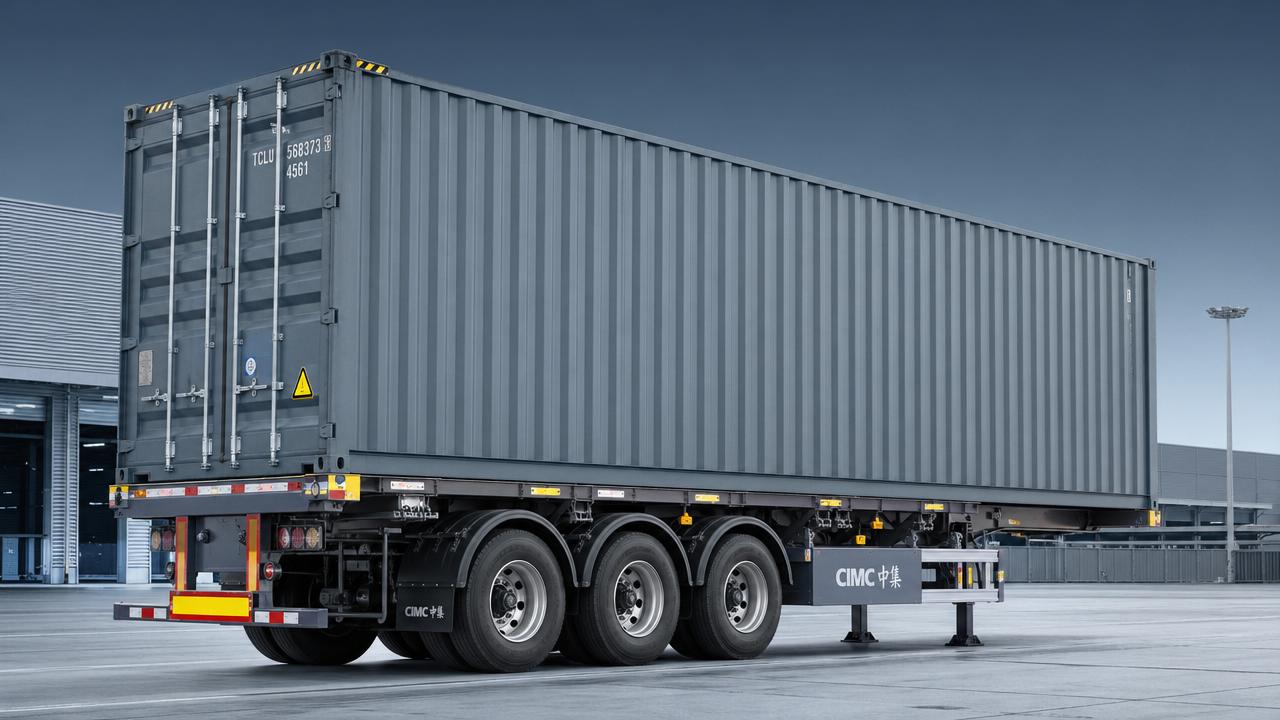
When specifying a Skeleton (Container) Semi-Trailer, safety review should go far beyond basic load capacity. For quality control and safety management teams, key checks such as frame strength, twist lock security, axle configuration, braking performance and compliance standards directly affect transport reliability and operational risk. A clear specification process helps prevent failures, improve fleet safety and support long-term container hauling efficiency.
What should quality and safety teams review first in a Skeleton (Container) Semi-Trailer?
A Skeleton (Container) Semi-Trailer is designed to carry standard containers with a lightweight open frame instead of a full cargo deck. That simple structure makes loading efficient, but it also means the trailer depends heavily on correct engineering, accurate weight distribution and secure container locking. For quality control personnel, the main challenge is not only whether the trailer can carry a container, but whether it can do so safely across road grades, terminal operations, repeated loading cycles and cross-border transport requirements.
Safety managers usually face three common risks during specification. First, procurement documents often focus on price and nominal payload while overlooking fatigue resistance and braking redundancy. Second, actual operating conditions may differ from brochure assumptions, especially where road quality is poor, overload risk exists or mixed container sizes are used. Third, trailers may be purchased for international routes where local rules on dimensions, axle loads, lighting or reflective markings differ.
- Confirm the real container mix, such as 20 ft, 40 ft or mixed operations, before choosing wheelbase and locking layout.
- Review route conditions, including port roads, industrial sites, gradients, turning radius and pavement quality.
- Check local compliance requirements for axle loads, lighting systems, underrun protection and braking regulations.
- Assess inspection access, spare parts support and maintenance intervals, because safety performance depends on long-term serviceability.
For engineering vehicle fleets and container logistics operators, these checks should be completed before commercial negotiation is finalized. A low initial purchase cost can quickly be offset by frame cracks, uneven tire wear, unstable braking or detention caused by regulatory nonconformity.
Which structural points matter most for safe container transport?
The frame is the core safety system of any Skeleton (Container) Semi-Trailer. Because the trailer supports concentrated loads at container corner castings, stress is not distributed like on a flatbed. This makes main beam design, cross-member arrangement and welding quality critical. A trailer that looks strong on paper may still fail early if the frame lacks reinforcement around locking points, landing gear zones or suspension brackets.
Frame and weld review checklist
- Main beam section and material grade should match expected payload, dynamic loading and road severity rather than only static weight.
- Cross-member spacing should support torsional stiffness and reduce stress concentration during uneven ground loading.
- Weld continuity, penetration consistency and finish quality should be inspected carefully around suspension mounts and twist lock bases.
- Landing gear mounting zones should resist repeated impact from coupling, uncoupling and yard handling.
Twist locks require equal attention. If the locking system has poor fit tolerance, insufficient corrosion resistance or weak retention under vibration, container movement may occur during braking, lane change or rough road travel. Safety teams should verify lock type, operation convenience, maintenance access and confirmation method for fully engaged locking status.
The table below helps quality control teams review the main structural elements of a Skeleton (Container) Semi-Trailer in a practical, inspection-oriented way.
This type of structured review is more useful than relying on a simple payload figure. It helps purchasing, maintenance and HSE teams speak the same language when evaluating a Skeleton (Container) Semi-Trailer for real operating conditions.
How do axle configuration, suspension and brakes affect operational safety?
Axle selection is often treated as a load issue only, but it is equally a safety and compliance issue. The number of axles, their spacing and their rated capacity determine legal road use, braking behavior, turning performance and tire wear. For a Skeleton (Container) Semi-Trailer used in engineering vehicle environments, where road surfaces may be uneven and vehicle dispatch is intensive, axle and suspension design should be matched to route reality rather than generic sales specification.
Key specification questions
- Will the trailer mainly carry a single container size, or does the fleet require flexible use across multiple lengths?
- Are axle load limits on the target market strict enough to require a different configuration than the domestic standard?
- Is the trailer expected to travel mostly on highways, inside ports, on construction-adjacent roads or a mix of all three?
- What inspection capability does the fleet have for brake chambers, slack adjusters, hoses and ABS-related components?
Suspension choice also matters. Mechanical suspension may be valued for durability and easier maintenance in rough-service fleets, while air suspension can support cargo protection and ride stability where higher road speed and stricter road regulations apply. Neither is universally better. The correct choice depends on maintenance discipline, road profile and cost of downtime.
Braking systems deserve a separate safety review. Teams should verify brake response consistency, compatibility with the tractor unit, air line layout protection, parking brake reliability and whether anti-lock features are required by destination regulations. Inadequate brake matching between tractor and Skeleton (Container) Semi-Trailer can increase stopping distance or create instability during emergency braking.
The comparison below supports trailer selection decisions where safety management, maintenance practicality and route conditions all need to be balanced.
This comparison does not replace engineering verification, but it helps safety managers avoid a common mistake: buying a trailer configuration that looks advanced but does not match local maintenance capability or transport conditions.
What compliance points are often missed during specification?
A Skeleton (Container) Semi-Trailer may meet operational needs yet still create shipment delays or registration issues if compliance details are not reviewed early. In export projects, safety teams should ask not only whether the trailer is structurally sound, but whether it can be accepted in the target country without modification. This includes dimension limits, axle regulations, reflective markings, lighting layout, side and rear protection and documentation consistency.
Areas to verify before order confirmation
- Overall dimensions must be suitable for legal road operation and yard maneuvering in the destination market.
- Lighting and reflective elements should align with local visibility requirements and inspection practice.
- Brake and air line arrangements should be compatible with the tractor units used by the customer.
- VIN, data plate details and export documents should match the final technical configuration to avoid customs or registration disputes.
For buyers working across multiple countries, this is where an experienced exporter adds value. Shandong Livol Truck International Trade Co., Ltd. supports customers through vehicle selection, customization, documentation, customs clearance and logistics. That matters because a technically acceptable Skeleton (Container) Semi-Trailer can still become a project risk if documentation, shipping preparation and destination compliance are handled separately without coordination.
How should procurement teams compare specifications instead of only comparing price?
Price-based comparison is one of the biggest causes of hidden safety cost in trailer procurement. Two Skeleton (Container) Semi-Trailer offers may look similar in payload and dimensions, but differ materially in steel usage logic, welding control, component sourcing, lock system reliability and after-sales support. For quality control managers, a defensible procurement decision should be based on risk-adjusted value rather than purchase price alone.
The table below can be used as a simple internal review sheet during technical evaluation and supplier comparison.
This approach is especially important when delivery schedules are tight. A supplier with practical export experience and stable commercial vehicle resources can reduce the risk of technical misunderstanding between the factory, freight forwarder and end customer.
Common mistakes when specifying a Skeleton (Container) Semi-Trailer
Mistake 1: Treating container hauling as a simple payload problem
Container transport creates concentrated corner loads, vibration, repeated twist lock engagement and frequent terminal handling. A trailer selected only by payload number may still underperform in durability or operational stability.
Mistake 2: Ignoring the tractor-trailer system match
Even a well-built Skeleton (Container) Semi-Trailer can become unsafe if kingpin height, brake logic, electrical connectors or axle load distribution do not fit the tractor fleet. System compatibility should be reviewed as one package.
Mistake 3: Underestimating maintenance reality
Some fleets operate in regions where spare parts, trained mechanics or regular brake inspection tools are limited. In such cases, a simpler and more robust specification may be safer over time than a more complex setup with weak service support.
Mistake 4: Leaving compliance review until shipment stage
This often leads to rework, delayed customs handling or unexpected modifications. Compliance checks should be integrated into the technical confirmation phase, not treated as a final paperwork step.
FAQ for buyers, QC teams and safety managers
How do I choose the right Skeleton (Container) Semi-Trailer for mixed container operations?
Start by listing the percentage of 20 ft and 40 ft loads, route conditions and legal axle limits. Then confirm whether the locking arrangement and frame geometry support flexible use without compromising load balance. Mixed-use fleets should pay extra attention to lock positions, wheelbase logic and axle distribution.
Which safety point is most often underestimated?
Twist lock integrity is often underestimated because it is visually simple. In practice, lock fit, wear resistance, corrosion exposure and positive engagement confirmation are central to container retention safety. A weak locking system can create a major risk even when the frame and axles are adequate.
What should be checked before approving mass purchase?
Review drawings, key component lists, lock layout, axle and suspension specification, brake configuration, protective devices, lighting details and export documentation alignment. It is also wise to confirm the supplier’s delivery capability, spare parts support and ability to coordinate customization for the destination market.
Is a higher-capacity configuration always safer?
Not always. Overspecification can increase tare weight, affect operational efficiency or create unnecessary maintenance complexity. Safety comes from correct matching between payload, route, regulations, tractor compatibility and maintenance resources, not from choosing the highest specification in every category.
Why work with us when reviewing Skeleton (Container) Semi-Trailer specifications?
For buyers responsible for quality, compliance and delivery deadlines, supplier capability is part of the safety equation. Shandong Livol Truck International Trade Co., Ltd., based in Shandong, China, is a professional commercial vehicle exporter with strong industry strength and broad export experience. As the official authorized domestic and overseas dealer for FOTON, SHACMAN and SINOTRUK, the company operates authorized 4S stores across China and maintains sufficient vehicle inventory to support stable supply and faster delivery planning.
For Skeleton (Container) Semi-Trailer projects, this means customers can discuss more than price. Our team can support parameter confirmation, matching the trailer to tractor use, reviewing route and container scenarios, clarifying customization points, checking documentation requirements and coordinating export logistics. That full-process support helps reduce procurement errors that often appear between technical selection and overseas delivery.
- Need help confirming frame, axle or twist lock configuration for your operating environment? We can assist with specification review.
- Need a quotation with delivery timing, customization scope and export documentation coordination? We can prepare a practical proposal.
- Need to compare different Skeleton (Container) Semi-Trailer options for compliance, durability and lifecycle risk? We can support your evaluation process.
If your team is planning a new trailer purchase, replacement program or export fleet project, contact us to discuss product selection, technical parameters, certification-related concerns, delivery schedule, customization options and quotation details. A safer specification starts with a clearer review process.
Search Starts Here