
News
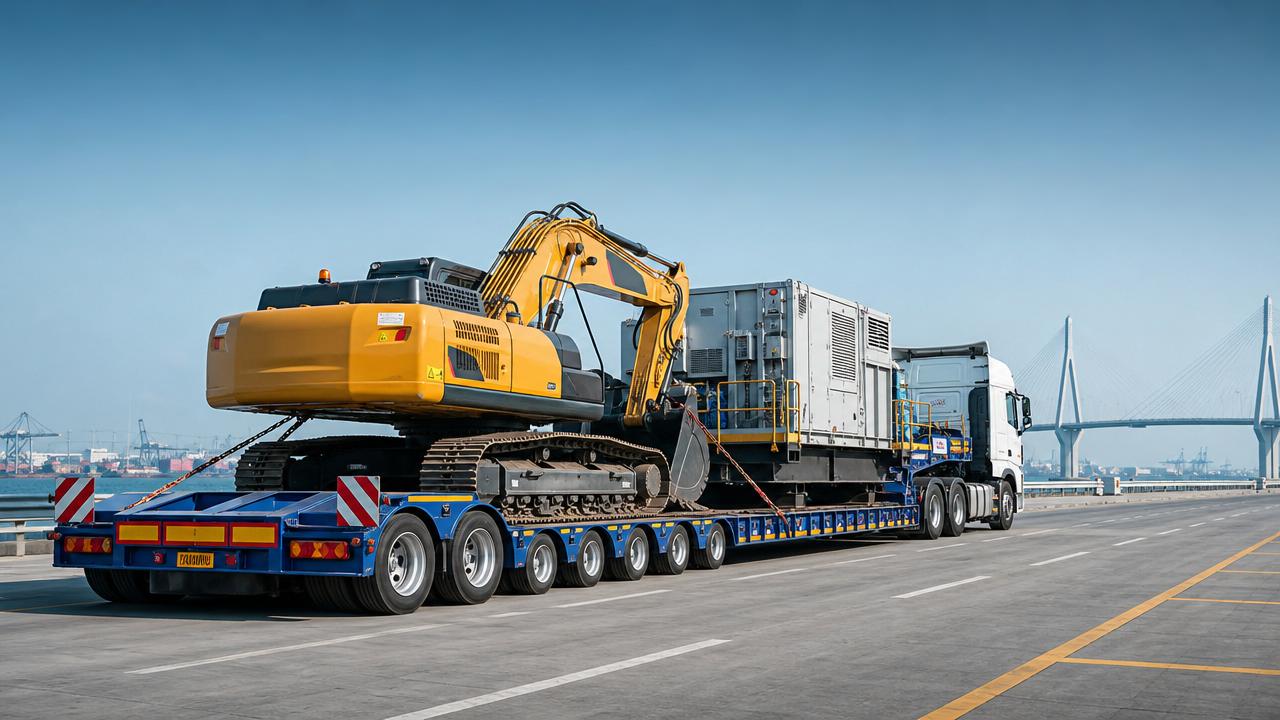
For business decision-makers moving oversized machinery or project cargo, choosing the right trailer directly affects cost, safety and delivery efficiency. A Low Plate trailer is often the smarter option when height limits, load stability and road compliance become critical. Understanding when this configuration outperforms standard transport solutions helps companies reduce risk, improve logistics planning and support more reliable heavy-duty operations.
The core search intent behind this topic is practical comparison. Readers want to know when a Low Plate trailer is the better transport decision, what business value it creates, and how to judge suitability before booking equipment.
For enterprise buyers, the biggest concerns are usually route legality, cargo safety, total transport cost, loading efficiency, and whether the trailer can reduce operational risk for heavy or irregular equipment.
The most useful content, therefore, is not a generic trailer definition. Decision-makers need clear use cases, selection criteria, cost implications, compliance considerations, and procurement guidance they can apply to real oversized load projects.
This article focuses on those high-value questions first. It emphasizes business decisions, logistics outcomes, and risk control, while keeping technical explanations practical and directly tied to transport planning.
What Makes a Low Plate Trailer Different in Oversized Transport
A Low Plate trailer is designed with a lower deck height than many conventional flatbed or standard semi-trailer configurations. That lower loading platform creates immediate advantages for transporting oversized or tall cargo.
In oversized transport, every centimeter matters. A lower deck can help keep the total loaded height within road limits, bridge clearances, and permit conditions, especially when moving construction, mining, or industrial equipment.
Low Plate trailers are also valued for their stable center of gravity. When carrying large machinery, generators, transformers, steel structures, or tracked equipment, improved stability can translate into lower rollover risk and safer road performance.
For businesses, this is not just a technical detail. It affects route options, escort requirements, permitting complexity, loading methods, insurance exposure, and the likelihood of delays caused by clearance or safety issues.
Compared with a standard flatbed, a Low Plate setup often gives operators more flexibility for heavy-duty cargo that is too tall, too wide, or too awkwardly shaped for conventional transport arrangements.
When a Low Plate Trailer Is the Better Choice
The best time to choose a Low Plate trailer is when cargo dimensions or transport conditions create operational pressure that a standard trailer cannot handle efficiently or legally.
One common trigger is cargo height. If the machine or structure is already tall before loading, a lower deck may be the difference between a workable shipment and a route that requires major detours.
This is especially important for excavators, loaders, road rollers, pavers, drilling rigs, crushers, and modular industrial equipment. Such cargo often exceeds practical height limits when loaded on ordinary trailers.
A second trigger is load stability. Heavy equipment with uneven weight distribution can become more difficult to secure and more vulnerable to movement on a higher platform.
Using a Low Plate trailer lowers the center of gravity and often improves securement confidence. That matters during braking, cornering, uneven road surfaces, and long-distance export or inland delivery operations.
A third reason is easier loading and unloading. Many oversized machines are self-propelled or loaded with ramps. A lower platform can simplify ramp angles, reduce loading stress, and improve safety for the equipment and crew.
It can also be the better choice when the route includes bridges, tunnels, overhead signs, urban access restrictions, or temporary infrastructure conditions that leave little room for excess overall height.
In short, the Low Plate option becomes more attractive as cargo becomes taller, heavier, less balanced, more valuable, or more difficult to move without route and compliance issues.
Why Decision-Makers Often Gain Better Business Outcomes
Many companies initially compare trailers mainly by rental or purchase price. That is understandable, but it can be a costly way to evaluate specialized transport for oversized loads.
The real business question is total transport outcome. A Low Plate trailer may reduce permit complications, route changes, escort costs, cargo handling risks, and loading time. Those savings often outweigh a higher equipment rate.
If a lower trailer avoids the need to dismantle machinery before transport, the savings can be substantial. Disassembly and reassembly increase labor cost, downtime, and the risk of damage or commissioning delays at destination.
For project-driven businesses, time has direct financial value. Delays in moving a key machine can hold up construction schedules, mining operations, plant installation, or infrastructure work with high downstream costs.
A more suitable trailer can also improve delivery predictability. Reliable transport planning helps procurement teams, operations managers, and site coordinators align labor, cranes, permits, and installation schedules more accurately.
From a risk-management perspective, using the wrong trailer for oversized cargo can expose the business to fines, road restrictions, load shifts, cargo damage, and reputational problems with customers or project owners.
That is why experienced buyers assess equipment suitability through a total-cost and total-risk lens, rather than selecting solely on the lowest visible transport quote.
How to Judge Whether a Low Plate Trailer Fits Your Cargo
Decision-makers do not need to be trailer engineers, but they do need a structured way to evaluate fit. The first step is to collect complete cargo data before comparing transport options.
Key inputs include cargo length, width, height, weight, axle load distribution, center of gravity, ground clearance, loading method, and whether the equipment is wheeled, tracked, modular, or fixed-frame.
Next, assess route constraints. Total loaded height is often decisive, but turning radius, road width, bridge ratings, gradients, and site access conditions can also influence whether a Low Plate configuration is preferred.
It is also important to review the cargo’s operational sensitivity. High-value machinery, precision equipment, or assets with fragile components may justify a trailer choice that offers better stability and gentler handling.
Loading and unloading conditions should not be overlooked. If the origin or destination lacks advanced lifting equipment, the lower deck height of a Low Plate trailer may make field operations safer and simpler.
Finally, check legal and regulatory requirements in every transit jurisdiction. The right trailer can support permit approval, but it does not replace the need for proper dimensional review and route planning.
When these factors are evaluated together, the trailer decision becomes far more accurate and commercially rational than choosing by habit or availability alone.
Common Cargo Types That Benefit Most from Low Plate Transport
Not every shipment needs a Low Plate trailer. However, several categories of oversized cargo consistently benefit from this design in real-world logistics operations.
Construction machinery is one of the most common examples. Excavators, bulldozers, graders, asphalt equipment, and compactors often have dimensions and weight profiles that match Low Plate transport very well.
Mining equipment also frequently requires lower deck transport. Even when machines can be partially dismantled, keeping major components lower to the ground helps maintain compliance and handling stability.
Agricultural and forestry machinery can be another strong fit, especially for large harvesters or specialized equipment with unusual height or broad operating structures.
Industrial project cargo such as tanks, transformers, generators, pressure vessels, and fabricated steel assemblies may also benefit, especially where route clearance limits are tight.
For export-focused buyers, Low Plate trailers can support inland movement from factory to port or from port to job site, helping reduce handling complexity for large, high-value equipment.
The more irregular, tall, or heavy the cargo becomes, the more likely it is that a Low Plate solution deserves serious evaluation.
Key Risks of Choosing a Standard Trailer When a Low Plate Is Needed
The wrong trailer choice usually does not fail in theory. It fails in execution, when the cargo reaches a bridge, a permit office, a loading ramp, or a difficult last-mile access point.
One major risk is height non-compliance. A cargo unit that seems manageable at origin may exceed legal or practical clearance once loaded, forcing route changes, reloading, or costly project delays.
Another risk is unstable transport behavior. With oversized machinery, a higher loading platform can increase sway, reduce confidence in emergency braking, and place more stress on tie-down planning.
Loading itself can also become more hazardous. Steeper ramp angles, difficult machine positioning, and poor weight distribution increase the chance of operator error or equipment damage.
There is also a commercial risk. If delivery is delayed because the trailer configuration was unsuitable, the problem can affect installation teams, site productivity, customer trust, and future contract opportunities.
For international or multi-region logistics, non-compliant transport can create customs timing issues, demurrage exposure, and coordination problems across shipping, port, and inland transport stakeholders.
These risks explain why specialized trailer selection should be treated as a strategic logistics decision, not an afterthought in freight booking.
Questions Procurement Teams Should Ask Before Ordering
Before confirming a Low Plate trailer, procurement and logistics teams should ask several practical questions that clarify technical fit and supplier capability.
First, what are the exact cargo dimensions and weights in transport condition, not just product brochure specifications? Real shipment measurements are essential for reliable planning.
Second, what is the full route environment? This includes road class, bridges, tunnels, local restrictions, loading sites, discharge sites, and whether permits or escorts will be required.
Third, what deck height, axle arrangement, and payload capacity are needed to carry the load safely and legally? These details influence stability, compliance, and road wear distribution.
Fourth, how will loading and unloading be performed? Buyers should confirm ramp design, compatibility with self-propelled equipment, and any site limitations affecting access or maneuvering.
Fifth, what support can the supplier provide beyond the trailer itself? For many buyers, export documentation, technical consultation, spare parts availability, and after-sales service matter significantly.
Finally, what is the total lifecycle or project value of the solution? A reliable supplier who helps prevent delays and supports ongoing operations may offer better value than a lower initial price.
What to Look for in a Reliable Trailer Export Partner
For enterprise buyers sourcing from China or managing international equipment logistics, supplier reliability is as important as trailer specification. A strong export partner reduces uncertainty across the entire process.
Look for a company with proven commercial vehicle experience, stable supply capability, and familiarity with oversized transport requirements. Inventory strength and authorized distribution networks can improve delivery confidence.
Technical communication also matters. A capable supplier should be able to discuss payload needs, customization options, compliance concerns, and operating conditions in clear business terms.
Export execution is another differentiator. Documentation accuracy, customs coordination, logistics planning, and after-sales responsiveness all affect whether the procurement process remains smooth after the order is placed.
Shandong Livol Truck International Trade Co., Ltd. brings these advantages to global customers through strong industry resources, authorized brand channels, and practical overseas trade experience.
As an official authorized domestic and overseas dealer for FOTON, SHACMAN and SINOTRUK, the company supports customers with vehicle selection, customization, documentation, customs clearance, logistics, and after-sales service.
For decision-makers seeking dependable transport equipment and integrated export support, that full-process capability can be especially valuable when oversized cargo projects leave little room for error.
Final Decision: Choose Based on Transport Reality, Not Habit
A Low Plate trailer is the better choice when oversized cargo creates real height, stability, loading, or compliance challenges that standard trailers cannot solve efficiently.
For business decision-makers, the value lies in reducing operational risk while improving transport feasibility, schedule reliability, and total project economics. In many cases, that makes the choice strategically sound, not just technically suitable.
The most effective approach is to evaluate cargo dimensions, route limits, loading conditions, and business consequences together. When those factors point to greater control and lower risk, a Low Plate solution usually justifies itself.
If your company regularly moves large machinery or project cargo, making the right trailer decision early can protect both budget and performance. In oversized logistics, the correct platform is often what keeps the whole project moving.
Search Starts Here