
News
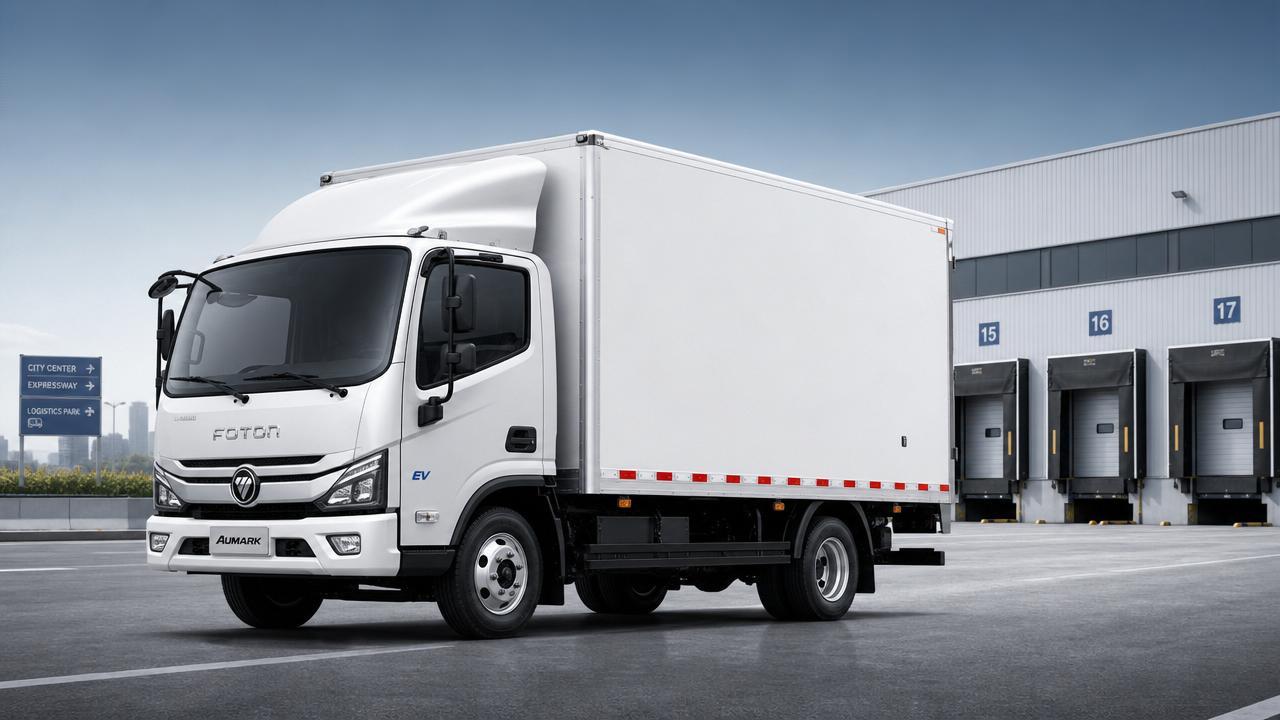
As regional logistics networks evolve in 2026, the 4_2 Cargo Truck is becoming a key choice for distributors and fleet partners seeking better payload balance, fuel efficiency, and urban delivery flexibility. For dealers, agents, and distributors, understanding the latest configuration trends is essential to matching market demand, improving inventory planning, and offering competitive transport solutions across diverse regional distribution scenarios.
Definition and Market Position of the 4_2 Cargo Truck
The 4_2 Cargo Truck refers to a two-axle commercial vehicle with one driven rear axle and one steering front axle.
In regional distribution, this layout offers a practical balance between payload capacity, maneuverability, and operating cost.
Compared with light-duty vans, a 4_2 Cargo Truck supports larger box bodies and higher loading efficiency.
Compared with heavier multi-axle trucks, it remains easier to route through mixed urban and suburban roads.
This configuration is widely used for retail replenishment, industrial parts delivery, agricultural supply movement, and cold-chain transfer.
In 2026, buyers focus less on a single specification and more on complete transport suitability.
That includes wheelbase, engine output, transmission matching, cargo body form, and digital fleet support.
A well-configured 4_2 Cargo Truck is no longer just a transport tool.
It becomes a regional distribution asset designed for route density, local regulations, delivery speed, and maintenance control.
Key Industry Signals Shaping 2026 Configurations
Several market signals are influencing how the 4_2 Cargo Truck is specified for regional operations in 2026.
- Shorter delivery windows are pushing demand for faster loading and unloading designs.
- Fuel economy remains critical because route frequency is rising across regional distribution networks.
- Emission policy upgrades are encouraging cleaner diesel systems and selected alternative power solutions.
- Urban access controls favor compact dimensions, better turning radius, and quieter operation.
- Maintenance planning is shifting toward telematics, predictive alerts, and standardized service parts.
- Body customization demand is increasing for e-commerce, beverage, food, medical, and construction materials transport.
These signals explain why the 4_2 Cargo Truck market is becoming more configuration-driven than volume-driven.
Product planning now depends on route use cases, not only on nominal gross vehicle weight.
Core Configuration Trends for the 4_2 Cargo Truck in 2026
Powertrain Matching Is Becoming More Precise
The 4_2 Cargo Truck in 2026 is increasingly matched to specific route intensity and cargo density.
Medium-horsepower diesel engines remain mainstream for regional distribution because they combine torque, range, and refueling convenience.
However, the focus is moving toward engine-transmission-axle coordination rather than high horsepower alone.
AMT solutions are also gaining ground where driver comfort and stop-and-go efficiency matter.
Chassis and Wheelbase Choices Are More Scenario-Based
Wheelbase selection now directly reflects loading length, turning space, and axle load distribution needs.
A shorter wheelbase 4_2 Cargo Truck fits dense streets and frequent dock access.
A longer wheelbase supports larger cargo boxes for intercity retail and bulk parcel movement.
Suspension tuning is also changing, with many operators preferring stronger rear support and better ride stability.
Cargo Body Diversification Continues
The body style of a 4_2 Cargo Truck is now one of the main differentiators in regional distribution projects.
- Box bodies for parcel, retail, and electronics delivery
- Curtain-side bodies for palletized cargo and faster side loading
- Refrigerated bodies for food, dairy, and pharmaceutical transport
- Stake or dropside bodies for building materials and agricultural supplies
This body flexibility increases the commercial value of the 4_2 Cargo Truck across different regional economies.
Cab Safety and Driver Support Features Are Expanding
In 2026, more 4_2 Cargo Truck configurations include camera systems, brake assistance, tire pressure monitoring, and fatigue alerts.
Cab ergonomics also matter more because regional routes often involve repeated entry, exit, and urban traffic exposure.
A practical cab helps reduce downtime, supports retention, and improves daily route consistency.
Digital Fleet Visibility Is Becoming Standard
A modern 4_2 Cargo Truck increasingly includes GPS tracking, fuel monitoring, service reminders, and remote diagnostics interfaces.
These functions support route planning, unauthorized use control, and preventive maintenance scheduling.
For export markets, digital support can also simplify after-sales communication and parts planning.
Business Value in Regional Distribution Operations
The right 4_2 Cargo Truck configuration creates measurable value beyond basic transportation capacity.
First, it improves route efficiency by matching cargo volume to delivery frequency.
Second, it reduces cost leakage caused by over-specification or under-utilization.
Third, it supports higher fleet uptime through better parts commonality and maintainable systems.
Fourth, it makes stock planning easier when a limited range of practical specifications covers most local transport needs.
For engineering vehicle supply chains, this matters where cargo often shifts between city edges, warehouses, worksites, and retail points.
Typical Configuration Paths by Distribution Scenario
Not every 4_2 Cargo Truck should be configured the same way.
Regional distribution performance depends on how closely the truck matches its operating environment.
Practical Selection Considerations for 2026
When evaluating a 4_2 Cargo Truck, practical configuration discipline is more useful than chasing maximum specifications.
- Map average route distance, stop frequency, and road conditions before choosing engine and gearbox.
- Confirm cargo dimensions and loading method before deciding wheelbase and body structure.
- Check local axle load, emissions, and access restrictions before final specification approval.
- Prioritize maintainability, service coverage, and parts supply for long-term fleet stability.
- Use telematics-ready models when route density and uptime visibility are important.
Reliable supply capability also matters when selecting a 4_2 Cargo Truck export partner.
Shandong Livol Truck International Trade Co., Ltd. offers access to authorized FOTON, SHACMAN, and SINOTRUK resources.
With authorized 4S networks, stable inventory, and export experience, vehicle matching becomes more efficient and controllable.
Integrated support for customization, documentation, customs clearance, and logistics helps reduce transaction friction.
Next-Step Direction for Regional Distribution Planning
In 2026, the 4_2 Cargo Truck remains one of the most adaptable commercial vehicle solutions for regional distribution.
Its value depends on configuration accuracy, not only on vehicle category.
A route-focused approach can improve operating efficiency, support flexible delivery models, and control lifecycle cost.
Review current route structures, cargo types, and service expectations before finalizing the next 4_2 Cargo Truck plan.
If a tailored specification and stable export supply are required, a professional commercial vehicle partner can help convert demand into practical fleet deployment.
Search Starts Here