
News
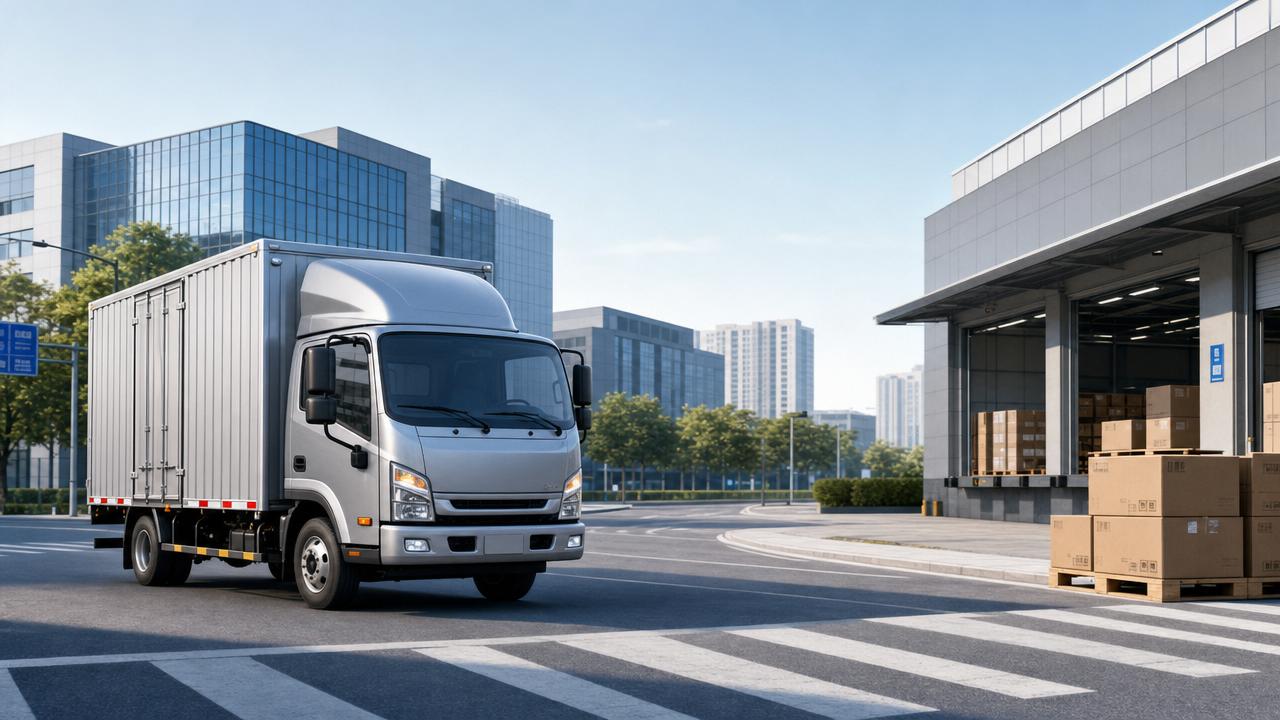
In urban delivery, choosing the right 4_2 Cargo Truck means balancing fuel efficiency with payload capacity. For drivers and fleet operators, this trade-off directly affects delivery speed, operating costs and daily reliability. Understanding how truck design, load planning and route conditions work together can help improve performance while reducing expenses in demanding city logistics.
What Operators Really Need to Know About Fuel and Payload
When users search for a 4_2 Cargo Truck for city work, they usually want a practical answer to one question: how much load can the truck carry without causing fuel costs to rise too sharply?
For operators, this is not just a technical topic. It affects daily earnings, route planning, time on the road, maintenance stress and how efficiently the truck performs in stop-and-go urban traffic.
The short answer is simple. A higher payload can improve delivery productivity, but if the truck is oversized, overloaded or poorly matched to the route, fuel consumption and wear will increase quickly.
The best choice is rarely the truck with the highest rated capacity. It is the truck whose engine, body size, axle setup and cargo volume match the real delivery pattern of the operator.
Why This Trade-Off Matters More in Urban Delivery
Urban distribution is different from long-haul transport. A city truck faces constant starts, stops, traffic lights, narrow roads, low-speed driving and frequent unloading, all of which affect fuel use.
In these conditions, every extra kilogram matters more than many operators expect. Carrying unnecessary weight means the engine works harder during acceleration, which is where much urban fuel is consumed.
At the same time, running with too little payload capacity also creates losses. If the truck cannot carry enough goods per trip, operators may need more runs, more labor time and more total fuel.
That is why the fuel and payload balance is so important for a 4_2 Cargo Truck. Efficiency in the city depends on total delivered volume per day, not just liters per 100 kilometers.
How Payload Directly Changes Fuel Consumption
Payload affects fuel use in a direct and mechanical way. The more weight a truck carries, the more power is needed to move, accelerate and climb ramps, bridges and urban gradients.
On flat roads at stable speed, the increase may seem moderate. In dense city traffic, however, repeated acceleration under load can raise consumption much more noticeably than operators first assume.
A fully loaded 4_2 Cargo Truck may still be efficient if it operates near its designed working range. Problems begin when actual cargo regularly pushes beyond the truck’s ideal load profile.
Overloading does not only burn more fuel. It also increases brake wear, tire heat, suspension stress and transmission load, creating hidden operating costs that can exceed the fuel penalty itself.
Why Bigger Payload Is Not Always Better
Many buyers think choosing a larger truck automatically improves delivery efficiency. In practice, a larger body or higher rated load can become a disadvantage in urban logistics.
A bigger truck often has higher tare weight, which means more of the gross vehicle weight is consumed by the vehicle itself instead of the cargo. It may also be harder to maneuver.
In crowded streets, a truck that is too large may lose time at loading bays, residential lanes, market areas or underground access points. Delays reduce practical productivity even if the paper payload looks better.
For operators handling light but bulky goods, cargo volume may be more important than maximum payload. For dense goods, axle capacity and legal loading limits become the more critical factor.
How to Match a 4_2 Cargo Truck to Your Real Delivery Pattern
To choose wisely, operators should start with actual daily cargo data rather than brand preference or engine size alone. Look at average load weight, maximum load peaks and cargo space usage.
If most trips carry only 50 to 60 percent of a truck’s rated payload, the truck may be oversized for the task. That means extra fuel is being spent to move unused capacity.
If the truck regularly returns for second or third trips because it fills too quickly, then payload or cargo volume may be insufficient, even if fuel economy per trip looks acceptable.
A good decision comes from comparing three things together: average trip distance, average delivered weight and how many delivery stops are made on each route.
Questions Drivers and Fleet Users Should Ask Before Choosing
Operators can make better decisions by asking practical questions. Are deliveries mainly food, beverages, hardware, parcels, household goods or mixed cargo? Each type creates a different payload pattern.
They should also ask whether routes involve steep ramps, dense commercial zones, suburban expansion areas or strict low-emission city controls. Route difficulty often changes fuel performance more than expected.
Loading style matters too. Is the truck loaded once and unloaded gradually, or repeatedly reloaded during the day? Frequent handling changes the ideal body type and working weight.
Even delivery timing matters. Trucks operating in off-peak hours may gain more from stable speed and fewer stops, while rush-hour trucks benefit more from lower weight and easier maneuverability.
Design Factors That Influence the Fuel-Payload Balance
Not all 4_2 Cargo Truck models behave the same under load. Several design factors determine whether a truck remains economical when carrying urban delivery payloads.
Engine calibration is one key factor. An engine tuned for low-speed torque can perform better in city conditions because it reduces strain during repeated starts with moderate or heavy loads.
Transmission ratios are also important. Proper gearing helps the truck stay in an efficient operating range instead of forcing frequent high-rev acceleration in traffic.
Chassis weight deserves close attention. A lighter but durable chassis can improve effective payload while helping reduce fuel use. However, it still must be strong enough for repeated commercial duty.
Body material also matters. Depending on cargo type, using a lighter box body or optimized cargo structure may improve payload efficiency without changing the legal gross vehicle weight.
How Route Conditions Affect the Best Truck Choice
The same truck can perform very differently depending on route design. A truck that is economical on outer-ring roads may become inefficient in old city centers with constant stop-start movement.
Short routes with many stops usually reward lower tare weight and responsive drivability. Longer urban-perimeter routes may allow a slightly larger payload without severe fuel penalties.
If routes include loading docks with height limits, tight reverse parking or frequent U-turns, compact dimensions may save more time and fuel than a higher nominal load rating.
For operators crossing mixed urban and suburban zones, a balanced specification often works best: enough payload for productivity, but still compact enough for maneuverability and legal access.
Legal Loading Limits and Why They Should Never Be Ignored
Some users try to improve trip efficiency by loading above the practical or legal limit. In urban delivery, this is usually a costly mistake rather than a profitable shortcut.
Overloaded trucks consume more fuel, brake less effectively and suffer faster component wear. They also increase the risk of roadside penalties, delivery delays and safety incidents.
In some markets, repeated overload violations can affect operating licenses, insurance claims or fleet reputation. These risks can easily outweigh the income from carrying a little extra cargo.
A well-selected 4_2 Cargo Truck should help operators stay compliant while still meeting delivery targets. Legal payload is not just a rule; it is a core part of sustainable operating efficiency.
Simple Ways Operators Can Improve Fuel Efficiency Without Losing Payload Value
Not every improvement requires buying a new truck. Operators can often reduce fuel use through better loading discipline, route planning and driving habits while keeping useful payload capacity.
First, avoid carrying unnecessary tools, packaging waste or unused accessories. Reducing dead weight improves urban fuel efficiency because the truck accelerates more easily at every stop.
Second, distribute cargo correctly. Poor weight distribution increases rolling resistance, affects handling and may place extra load on one axle, making the truck work less efficiently.
Third, plan stop sequences carefully. A route with fewer turns, less congestion and smoother unloading order can reduce idling and repeated acceleration, especially in dense delivery areas.
Finally, train drivers in smooth throttle use, predictive braking and limited idling. In city operation, these habits often create visible fuel savings without reducing payload at all.
When a Higher-Payload Truck Makes Sense
A larger or stronger 4_2 Cargo Truck makes sense when the business regularly transports dense goods, long daily volumes or routes where extra trips are clearly more expensive than extra fuel per trip.
Examples include beverage delivery, construction materials, agricultural inputs, packaged consumer products or wholesale distribution where each trip carries close to maximum useful weight.
In such cases, a truck with better payload capacity may lower cost per delivered ton, even if fuel use per kilometer is slightly higher. The key metric is total delivery efficiency.
It also makes sense when stable loading patterns justify the specification. If heavy loading is occasional rather than daily, the operator may be better served by a more balanced configuration.
When a Lighter, More Efficient Configuration Is the Better Choice
For parcel delivery, retail replenishment, light industrial goods or urban mixed cargo, a lighter truck may generate better real-world economics than a heavier specification.
These operations often depend more on access, turnaround speed and multi-stop flexibility than on raw payload. A truck that saves fuel and moves quickly through city streets can outperform a larger unit.
If the cargo cubes out before it weighs out, then volume efficiency matters more than axle capacity. In that case, the best solution may be a smart body design rather than a heavier chassis.
Operators should remember that urban logistics is often a time business as much as a transport business. The fastest legal and reliable delivery pattern usually wins over maximum theoretical load.
How to Evaluate Total Operating Cost, Not Just Fuel Burn
Fuel is one major cost, but it should not be the only factor when evaluating a 4_2 Cargo Truck. Operators should compare total operating cost across the real working cycle.
This means looking at fuel consumption, tire wear, brake life, clutch stress, maintenance intervals, route productivity and the number of trips required to complete daily demand.
A truck with slightly higher fuel use may still be the better business tool if it reduces second trips, improves on-time delivery and carries payload more reliably under city conditions.
On the other hand, a lower-fuel truck may save more overall if the loads are light and the route rewards agility. The right answer comes from operating data, not assumptions.
Why Reliable Supply and Correct Specification Matter for Export Buyers
For overseas customers, selecting the right truck is not only about model preference. Reliable supply, correct specification and export support are also essential to operational success.
Shandong Livol Truck International Trade Co., Ltd. provides access to authorized commercial vehicle solutions from FOTON, SHACMAN and SINOTRUK, supported by professional export service and stable inventory.
For buyers comparing urban delivery truck options, this matters because the correct fuel-payload balance often depends on customization, body selection, documentation accuracy and practical application advice.
With full-process support covering vehicle selection, customization, customs clearance and logistics, operators can obtain trucks better matched to local city delivery conditions and business needs.
Final Takeaway
The best 4_2 Cargo Truck for urban delivery is not simply the one with the biggest payload or the lowest advertised fuel figure. It is the truck that fits the real work.
Operators should focus on actual route conditions, average load profile, cargo density, delivery frequency and legal limits. These factors determine whether a truck creates savings or hidden costs.
When payload and fuel efficiency are properly balanced, the result is better daily productivity, lower operating pressure and more dependable performance in demanding city logistics.
In practical terms, choose a truck that carries what you truly need, not what looks best on paper. That is the clearest path to efficient and profitable urban delivery.
Search Starts Here