
News
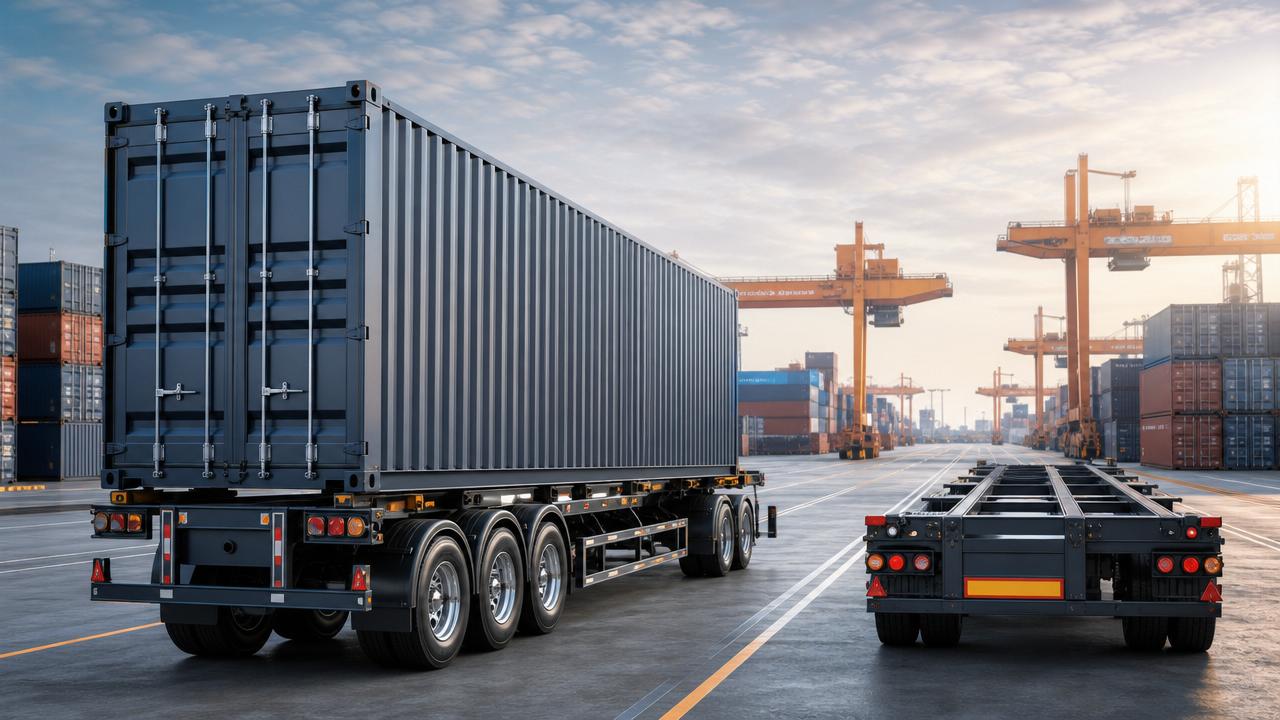
For port haulage buyers, the short answer is this: a Skeleton (Container) Semi-Trailer is usually the better fit when your core job is moving standard ISO containers in and out of ports quickly, safely, and at lower handling cost. A flatbed is more flexible for mixed cargo, oversized freight, or situations where containers are only part of the operation. For procurement teams, the right choice depends less on headline payload figures and more on turnaround time, loading method, compliance, asset utilization, and total operating cost.
That is why the comparison matters. On paper, both trailer types can move freight. In real port operations, however, the difference affects crane compatibility, container locking security, yard efficiency, driver workflow, maintenance exposure, and how many trips a fleet can complete in a day.
If your buying decision is tied to container drayage, port-to-warehouse runs, intermodal transfer, or terminal shuttle work, this guide will help you evaluate which trailer configuration creates better business value. Instead of discussing both options in equal and abstract terms, the focus here is on what procurement professionals actually need: suitability, cost control, reliability, and fit for intended duty cycles.
What Procurement Teams Usually Need to Know First
Most buyers searching for “Skeleton Semi-Trailer vs Flatbed” are not looking for a general transport definition. They want to know which equipment performs better in port haulage, where loading speed, container safety, and route repetition matter more than broad cargo versatility.
In practice, the first question is simple: are you mainly moving containers, or do you need one trailer to serve many different cargo types? If container haulage is the main revenue stream, a skeleton trailer usually delivers the clearer operational advantage.
The second question is financial. Buyers want to understand not only purchase price, but also return on use. A lower-cost trailer that delays loading, increases cargo handling, or causes mismatch with port procedures can become more expensive over time.
The third concern is risk. Procurement teams need to reduce claims, loading mistakes, non-compliance exposure, and avoidable damage. In containerized transport, the trailer’s structure and locking design directly influence those risks.
Why Skeleton (Container) Semi-Trailers Are Purpose-Built for Port Haulage
A Skeleton (Container) Semi-Trailer is designed specifically to carry shipping containers. Its open frame structure reduces unnecessary deck material, lowers tare weight in many configurations, and aligns with standard container dimensions and terminal operating methods.
Its biggest operational strength is compatibility. Ports, depots, and intermodal yards are built around standardized container handling. When a trailer is equipped with correct twist locks and layout positions for 20ft, 40ft, or sometimes 45ft containers, loading becomes faster and more predictable.
Because the container sits in a dedicated frame rather than on a full platform, operators can reduce the need for extra cargo securing methods in normal container moves. This saves time, improves consistency, and limits human error during busy port dispatch cycles.
For procurement managers, this purpose-built design often translates into measurable gains: shorter loading time, faster release from terminals, better fleet turnover, and reduced manual intervention. In high-frequency port routes, those gains are often more valuable than broad cargo flexibility.
Where Flatbeds Still Make Sense
A flatbed is the more versatile option when your transport profile changes frequently. It can carry containers, machinery, building materials, pallets, steel, and other irregular cargo, especially when top or side loading is needed outside strictly containerized workflows.
That flexibility can be useful for companies serving mixed logistics contracts rather than dedicated port container transport. If the same trailer must handle a container today, construction material tomorrow, and a non-standard load next week, a flatbed may improve overall asset utilization.
However, versatility is not always efficiency. In port haulage, a flatbed often requires more attention to cargo positioning and securing when carrying containers. If the trailer is not optimized for repeated container operations, loading and unloading workflows may be slower or less standardized.
So flatbeds are not “worse” in general. They are simply better when business needs broad cargo adaptability. For companies whose core task is container drayage, that flexibility may not create enough value to offset operational compromises.
Loading Efficiency: The Real Decision Point in Port Work
For port operations, loading efficiency is often the deciding factor. Trucks lose money when they wait too long in terminals, queue for handling, or require extra steps to secure cargo. This is where skeleton trailers usually outperform flatbeds.
With a skeleton configuration, the terminal team can place the container directly onto the trailer frame in the intended position. Twist locks are engaged, and the unit is ready for dispatch with minimal extra adjustment. The process is familiar to ports worldwide.
On a flatbed, the loading process may still be workable, but it can involve more positioning checks and securing attention depending on the trailer setup and local regulations. Those additional minutes may seem minor on one trip, but they accumulate quickly across a fleet.
For procurement, this means the trailer should be evaluated not only as equipment, but as a time-saving tool. In repetitive port shuttle work, the trailer that reduces handling time usually contributes more to daily revenue than the trailer with wider but less-used versatility.
Container Security and Compliance Considerations
Container security is another major reason buyers often prefer a Skeleton (Container) Semi-Trailer for port haulage. Standardized twist lock systems are built specifically to hold containers in place during transport, braking, turning, and road vibration.
That dedicated securing method reduces dependence on improvised or variable tie-down practices. For procurement teams, this matters because every inconsistency creates exposure: cargo damage claims, safety incidents, inspection issues, or delays caused by non-compliant loading.
In contrast, a flatbed carrying containers may require more careful confirmation of securing arrangements, especially if the trailer is not designed primarily for container lock integration. The issue is not that flatbeds cannot transport containers, but that the process can be less optimized.
For port-to-inland movements, especially over repeated routes and high trip volumes, a purpose-built frame with reliable locking points improves both safety and operating discipline. That consistency is valuable when managing drivers across multiple shifts or depots.
Total Cost of Ownership Matters More Than Purchase Price
Procurement teams should avoid choosing only by initial trailer price. A flatbed may appear attractive if one unit can theoretically serve more use cases, but the actual return depends on how often those extra use cases occur in your business.
If 80% or 90% of your transport activity is container movement, a skeleton trailer often creates lower operating cost per trip. Faster loading, less manual securing, better suitability to port routines, and stronger container fit all support that outcome.
Total cost of ownership should include fuel impact, maintenance exposure, loading labor, damage risk, trip cycle time, and utilization rate. Even a small improvement in average turnaround time can produce significant annual value in busy haulage fleets.
Buyers should also consider hidden costs from mismatch. Using a flatbed in a container-dominant operation may not fail operationally, but it can quietly reduce efficiency every day. Over the service life of the trailer, those losses often exceed any short-term purchase savings.
Route Type and Cargo Profile Should Guide the Final Choice
The right trailer depends heavily on actual route conditions and freight profile. If you are serving ports, container yards, bonded warehouses, rail terminals, and distribution centers with standard box containers, skeleton trailers are generally the stronger operational match.
If your routes combine container movements with open cargo, project materials, or non-containerized loads, then a flatbed may offer better scheduling flexibility. The key is to measure what the fleet does most often, not what it might do occasionally.
Procurement decisions should be based on shipment mix over time. Look at monthly order history, average trip distance, loading equipment available at origin and destination, and whether contracts require standardized container transport performance.
A common buying mistake is choosing a “universal” trailer for convenience, then discovering that the main business line suffers from lower productivity. In port logistics, specialization often creates stronger returns than generalization.
Questions Buyers Should Ask Before Ordering
Before selecting between a skeleton trailer and a flatbed, buyers should ask a few practical questions. What percentage of your annual loads are standard containers? How many daily trips must each unit complete to hit target profitability?
Also ask whether your operating environment includes strict terminal schedules, driver shortages, or pressure to shorten dwell time. If yes, equipment that simplifies handling and reduces loading variability becomes even more valuable.
Another important point is container specification coverage. Do you need 20ft only, 40ft only, or multi-position capability? The correct Skeleton (Container) Semi-Trailer configuration should match your dominant container sizes and legal road requirements.
Finally, consider after-sales support and parts availability. Port haulage fleets depend on uptime. Reliable supply, technical guidance, and service responsiveness are often just as important as the trailer design itself.
How a Professional Export Supplier Adds Value to Procurement
For international buyers, the trailer itself is only part of the purchase decision. The supplier’s ability to support specification matching, documentation, delivery scheduling, and after-sales follow-up can directly affect project success.
Shandong Livol Truck International Trade Co., Ltd. provides commercial vehicle export solutions backed by strong industry resources, stable supply capability, and practical experience in overseas business. As an authorized dealer for FOTON, SHACMAN, and SINOTRUK, the company supports buyers with vehicle selection, customization, export documentation, customs clearance, and logistics coordination.
For procurement professionals, that matters because buying the wrong configuration is expensive, but buying the right configuration from a weak supplier can also create delays and operational problems. A dependable export partner helps reduce both technical and transaction risk.
When sourcing a Skeleton (Container) Semi-Trailer for port haulage, buyers should work with suppliers who understand not only product specifications, but also how those specifications perform in real port and intermodal environments.
Final Verdict: Which Fits Port Haulage Better?
For most dedicated port container operations, the answer is clear: the Skeleton (Container) Semi-Trailer is the better fit. It is designed for container handling efficiency, secure positioning, streamlined port workflow, and repeatable high-frequency operations.
A flatbed remains a valuable choice when your business depends on mixed freight and broad transport flexibility. But if your priority is moving standard containers with maximum efficiency and minimum handling friction, a skeleton trailer usually offers better long-term value.
Procurement teams should therefore make the decision based on operational reality, not generic capability. Measure cargo mix, trip cycle pressure, loading method, and compliance needs. In container-led port haulage, specialization wins more often than versatility.
In short, choose a flatbed when your business needs one trailer for many cargo types. Choose a skeleton trailer when container movement is the core task. For port haulage buyers seeking efficiency, consistency, and stronger return on equipment, the skeleton option is typically the smarter investment.
Search Starts Here