
News
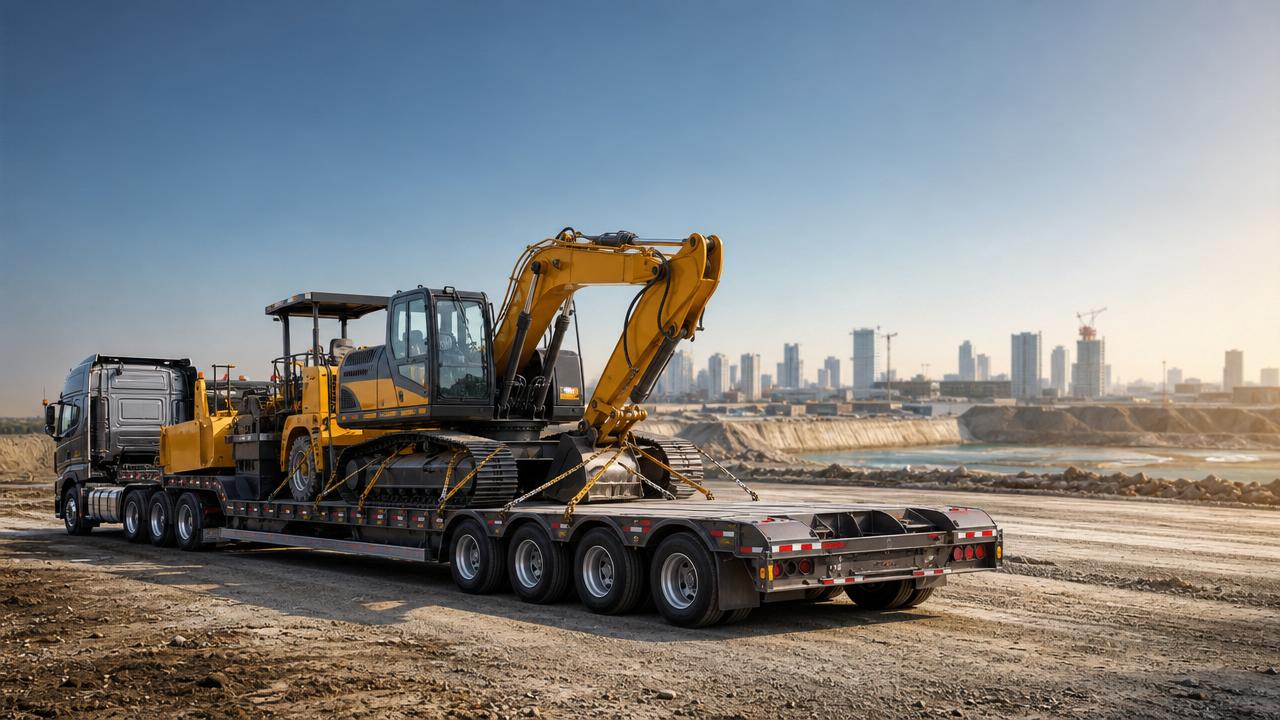
Choosing the right Flatbed Semi-Trailer now means more than checking a payload number. In engineering transport, load capacity directly shapes stability, turnaround speed, fuel use, and site safety.
As projects become tighter and equipment heavier, technical evaluation has shifted toward real working efficiency. Axle layout, frame strength, deck size, and load distribution now decide whether a trailer supports smooth operations.
This change matters across construction, infrastructure, mining support, and machinery delivery. A well-matched Flatbed Semi-Trailer helps reduce idle time, prevent overload risk, and improve compliance on complex routes.
Load capacity is becoming a jobsite efficiency indicator
In the past, many transport decisions focused on maximum tonnage alone. Today, operators look deeper at how rated capacity performs under repeated loading, uneven terrain, and mixed equipment movement.
Engineering vehicles and machines are larger, taller, and more specialized. That trend pushes the Flatbed Semi-Trailer from a basic carrier into a critical efficiency tool within project logistics.
A trailer with unsuitable capacity can slow crane scheduling, create axle overloading, or force partial loading. Those issues increase transport cycles and reduce productive hours at the jobsite.
Why technical evaluation standards are rising
Transport planning now considers road restrictions, regional regulations, and machine dimensions together. As a result, true usable capacity has become more important than headline capacity.
- Heavier excavators and road equipment demand stronger load-bearing structures.
- Longer transport routes increase stress on suspension, tires, and frame members.
- Project schedules require fewer trips and faster loading cycles.
- Compliance checks now focus more on axle loads and safety margins.
Key specs behind Flatbed Semi-Trailer load capacity performance
Not every high-capacity trailer performs equally in field conditions. The most reliable Flatbed Semi-Trailer combines structural design, axle balance, and deck geometry in a workable configuration.
Axle configuration shapes legal and practical payload
Axle count and spacing affect both carrying ability and road compliance. A three-axle setup may suit medium equipment, while four-axle or specialized layouts support heavier engineering loads.
Proper axle distribution also reduces concentrated stress. That helps protect tires, suspension parts, and braking consistency during repeated site-to-site hauling.
Frame strength decides durability under repeated heavy work
High-tensile steel, cross-member spacing, and main beam height all influence real-world load handling. A stronger frame improves resistance to bending, twisting, and fatigue under uneven machine placement.
For engineering transport, frame design matters more than a simple brochure number. It affects long-term maintenance cost and the consistency of load capacity across demanding operating cycles.
Deck dimensions affect usable loading space
Deck length, width, and floor height determine whether equipment can be positioned safely. If dimensions are mismatched, available capacity may not translate into practical payload.
A Flatbed Semi-Trailer with the right deck allows better center-of-gravity control. That improves stability during acceleration, braking, and cornering on mixed road surfaces.
Payload distribution is a hidden efficiency factor
The same machine weight can produce very different results depending on placement. Balanced loading helps maintain kingpin load, axle harmony, and safer traction for the tractor unit.
Poor distribution often causes instability before rated capacity is reached. That is why experienced teams review machine footprint, contact points, and loading sequence carefully.
What is driving demand for better-matched Flatbed Semi-Trailer solutions
Several practical forces are changing how load capacity is judged. These drivers are pushing buyers and operators to compare trailers by total transport performance, not by nominal payload alone.
- Project intensity: Tighter schedules reward higher utilization and fewer trips.
- Machine diversification: Transport now includes excavators, pavers, rollers, and modular equipment.
- Compliance pressure: Authorities increasingly monitor axle loads and dimensions.
- Operating cost control: Fuel, tires, and maintenance require more precise equipment matching.
- Safety standards: Better braking and stability margins are expected on difficult routes.
This is why the modern Flatbed Semi-Trailer is evaluated as part of a transport system. Tractor matching, route profile, cargo type, and turnaround targets all influence the ideal specification.
How load capacity choices affect engineering transport results
When trailer capacity aligns with task demands, transport becomes more predictable. Loading takes less time, equipment arrives in better condition, and route planning remains flexible.
When capacity is mismatched, problems spread quickly. Delays appear in dispatching, machine transfer, maintenance scheduling, and site handover timing.
Impact on transport cycle efficiency
A properly specified Flatbed Semi-Trailer reduces reloads and avoids split shipments. That improves daily cycle counts and increases effective use of both tractors and drivers.
Impact on equipment protection
Stable support points and balanced deck loading reduce machine movement in transit. This helps protect tracks, tires, hydraulic parts, and attachment interfaces from avoidable vibration stress.
Impact on compliance and risk control
Correct load sharing lowers exposure to inspections, penalties, and route restrictions. It also helps maintain safer braking response, especially on descents and uneven access roads.
The most important checks before selecting a Flatbed Semi-Trailer
Selection should focus on operating reality, not only catalog figures. The following points help identify whether a Flatbed Semi-Trailer can deliver reliable engineering transport performance.
- Confirm typical cargo weight, footprint, and center-of-gravity pattern.
- Check axle rating, suspension type, and braking compatibility.
- Review main beam material, weld quality, and reinforcement design.
- Match deck dimensions to loading method and equipment approach angle.
- Verify regional road regulations and legal load limits.
- Estimate maintenance access, spare parts availability, and service response.
These checks are especially useful where operations involve heavy engineering vehicles, rough roads, or frequent intercity dispatch. Small specification errors can create large recurring operating losses.
A practical direction for stronger long-term transport performance
Reliable supply and technical support are also becoming part of trailer efficiency. Shandong Livol Truck International Trade Co., Ltd. supports global customers with vehicle selection, customization, export documentation, customs clearance, and logistics coordination.
As an authorized dealer for FOTON, SHACMAN, and SINOTRUK, the company offers stable inventory, professional quality control, and responsive after-sales support for commercial vehicle export projects.
For engineering transport, the right Flatbed Semi-Trailer should be judged by how well it supports real jobsites. Capacity, balance, structure, and service readiness must work together.
Review current cargo profiles, compare route demands, and verify structural specifications before making the next equipment decision. A better-matched trailer can improve safety, compliance, and total operational efficiency from the first deployment.
Search Starts Here