
News
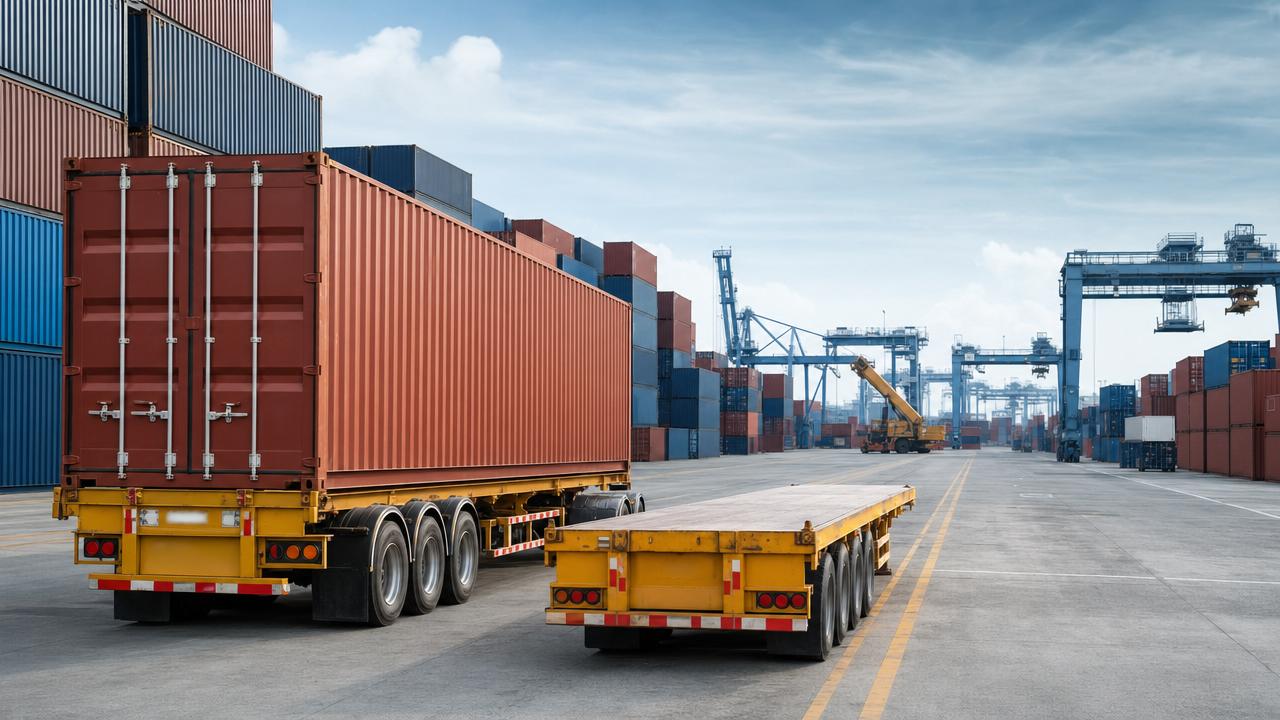
Choosing between a Skeleton (Container) Semi-Trailer and a flatbed can directly affect container transport efficiency, safety and operating costs. For procurement professionals, understanding the structural differences, loading suitability and long-term value of each option is essential. This article compares both trailer types to help you identify the better fit for container haulage and smarter fleet investment.
In container haulage, a poor trailer match can increase loading time by 15%–30%, raise fuel consumption, and create avoidable compliance risks. For buyers managing fleet renewal, tender evaluation, or route-specific equipment planning, the decision is not only about purchase price. It also involves payload efficiency, operational flexibility, maintenance cycles, driver safety, and delivery consistency.
For most dedicated container logistics tasks, the Skeleton (Container) Semi-Trailer is engineered for the job. However, flatbeds still have value in mixed cargo operations. The key is to align the trailer structure with the actual loading pattern, container sizes, road conditions, and total cost of ownership over a 3–5 year service period.
Understanding the Structural Difference
A Skeleton (Container) Semi-Trailer is built specifically for carrying ISO containers, usually 20ft, 40ft, or one 20ft plus one 20ft combination depending on axle layout and local regulations. Its open frame design reduces self-weight and integrates twist locks at fixed positions to secure containers directly to the chassis.
A flatbed trailer, by contrast, uses a full deck platform. It can transport containers, steel, machinery, pipes, pallets, and oversized cargo. When carrying containers, a flatbed often requires additional locking devices or temporary securing arrangements, which can add handling steps and reduce loading speed.
Why structure matters in daily operations
The lighter frame of a Skeleton (Container) Semi-Trailer can improve payload utilization. In practical procurement terms, even a self-weight reduction of 800 kg to 2,000 kg can matter when operators move high-volume container loads on long routes. Lower tare weight may also improve fuel economy over repeated trips.
The flatbed’s broader versatility is useful if container transport accounts for less than 50% of the fleet workload. But if the operation is port-to-yard, depot-to-warehouse, or intermodal container transfer on a daily basis, the dedicated design of a Skeleton (Container) Semi-Trailer usually delivers better speed and lower handling complexity.
The following comparison highlights where each trailer type fits best in engineering vehicle and commercial transport operations.
For procurement teams, this means the structure should follow cargo reality rather than purchasing habit. If the trailer spends 70%–90% of its time under containers, a Skeleton (Container) Semi-Trailer generally creates a clearer operational advantage. If the fleet must frequently switch between machinery, building materials, and containers, a flatbed may justify the compromise.
Which Trailer Fits Container Haulage Better?
Container handling speed and yard efficiency
At ports, dry ports, and inland container depots, turnaround time is a measurable cost factor. A Skeleton (Container) Semi-Trailer usually allows faster alignment with crane or reach stacker operations because the twist lock positions match standard container corner castings. That can reduce repositioning time and lower the risk of improper load seating.
In practical yard operations, saving even 8–12 minutes per loading cycle becomes significant across 4–6 daily trips per unit. For fleets with 20 or more trailers, those time gains can support better asset utilization without increasing driver hours or dispatch pressure.
Safety and cargo stability
Safety is another strong point. Because the Skeleton (Container) Semi-Trailer secures a container at purpose-built locking points, it reduces reliance on improvised fastening methods. In contrast, container movement on a flatbed can become a concern if the deck hardware, locking arrangement, or operator practice is inconsistent.
This is particularly important on rough roads, braking-intensive urban delivery routes, and export corridors with mixed pavement quality. A stable container connection supports safer cornering, braking, and lane changes, especially when handling loaded 40ft boxes or repeated long-haul cycles exceeding 300 km per trip.
When flatbeds still make sense
Flatbeds remain useful for buyers serving project cargo, construction materials, and machinery transport in addition to containers. In regions where container volumes fluctuate seasonally, a flatbed can reduce idle time by supporting more cargo types. This flexibility can be valuable for operators with low route predictability or less than 3 container trips per day.
The matrix below helps procurement teams match trailer choice with actual haulage patterns.
The table shows that for dedicated container haulage, the Skeleton (Container) Semi-Trailer is usually the more efficient and lower-risk choice. Flatbeds are stronger when versatility is the priority, but they often sacrifice some speed, consistency, and container-specific safety advantages.
Procurement Criteria That Matter Most
1. Cargo profile and route design
Start with data from the last 6–12 months. What percentage of trips involved 20ft containers, 40ft containers, empty returns, or non-container freight? If container loads exceed around 60% of the annual workload, buyers usually gain more value from a dedicated Skeleton (Container) Semi-Trailer fleet segment.
2. Regulatory and axle considerations
Trailer choice should also reflect local axle load rules, bridge limits, and road permit standards. Common configurations include 2-axle and 3-axle layouts. A 3-axle design is often selected for heavier duty applications or routes with stricter load distribution requirements, while a 2-axle version may suit lighter or shorter-haul container work.
3. Chassis durability and maintenance intervals
Durability depends on beam design, welding quality, suspension selection, and anti-corrosion treatment. In coastal operations or high-humidity regions, corrosion protection becomes critical because trailers face repeated exposure to salt, water, and dust. Buyers should review inspection points for the chassis, lock assemblies, landing gear, brake system, and electrical connectors at intervals such as every 10,000–20,000 km.
A practical 6-point evaluation checklist
- Confirm supported container sizes: 20ft, 40ft, or dual 20ft arrangement.
- Verify axle quantity and suspension suitability for the target road condition.
- Check twist lock layout, ease of operation, and spare part availability.
- Review chassis material, paint system, and rust-prevention treatment.
- Assess service lead time for wear parts such as brake shoes, lamps, and seals.
- Compare expected uptime over a 3-year to 5-year ownership period, not only the initial unit price.
The next table summarizes common procurement decision points for container-focused fleets.
A disciplined procurement review often shows that the lowest unit price is not the lowest operating cost. For container specialists, the Skeleton (Container) Semi-Trailer frequently provides stronger lifecycle value because its design removes extra steps that a flatbed would still require in daily use.
Operational Risks, Misconceptions, and How to Avoid Them
Common buying misconception: one trailer can do everything well
Many buyers try to maximize flexibility by choosing flatbeds for all tasks. This can work in small fleets, but for container-heavy operations it often creates hidden inefficiencies. More manual securing steps, higher deck weight, and less standardized loading practices can quietly reduce trip output over time.
Risk of under-specification
Another risk is under-specifying the trailer for the route. Poor road surfaces, overloading tendencies, and coastal corrosion can shorten service life if axle rating, suspension type, or coating quality are selected only on price. A buyer should map road class, average payload, and annual mileage before finalizing the technical sheet.
Recommended risk-control steps
- Define the top 3 cargo patterns before requesting quotation.
- Confirm local compliance rules for dimensions, axle loads, and braking requirements.
- Request a pre-shipment inspection checklist covering locks, wiring, tires, and welding points.
- Plan spare parts support for at least the first 12 months of operation.
- Evaluate supplier response time for documents, shipping arrangements, and after-sales support.
These steps are especially relevant in cross-border purchasing, where documentation accuracy and logistics coordination can affect delivery schedules by 1–3 weeks. Procurement managers should work with suppliers that understand both product matching and export execution.
Supplier Support and Fleet Implementation
Why export capability matters in trailer procurement
Selecting the right trailer is only part of the result. Procurement performance also depends on whether the supplier can support specification confirmation, inventory coordination, export documents, customs procedures, and shipment timing. For buyers sourcing from China, practical execution can be as important as the chassis itself.
Shandong Livol Truck International Trade Co., Ltd., based in Shandong, China, provides commercial vehicle export support with a professional team and full-process coordination. As an official authorized domestic and overseas dealer for FOTON, SHACMAN and SINOTRUK, the company operates multiple authorized 4S stores across China and maintains sufficient inventory for more stable supply and faster delivery arrangements.
What procurement teams should expect from a reliable partner
For a Skeleton (Container) Semi-Trailer purchase, buyers should expect at least 5 service layers: product selection, technical customization, documentation handling, customs coordination, and logistics planning. This reduces the risk of mismatched specifications and helps the trailer enter operation faster after arrival.
A reliable exporter should also be able to support pre-sales clarification on axle configuration, suspension options, tire selection, and route suitability. That is important when fleets are scaling by 5 units, 10 units, or larger phased orders and need consistent configuration across batches.
Implementation advice for first-time buyers
- Start with route-based specification matching rather than a generic product list.
- Separate dedicated container routes from mixed freight routes in the tender document.
- Ask for a parts and service recommendation with the quotation package.
- Review delivery timing in stages: order confirmation, production or stock release, and shipment booking.
For most container-first operations, the Skeleton (Container) Semi-Trailer is the better fit because it aligns with standard container geometry, improves loading efficiency, supports safer securing, and reduces unnecessary structural weight. A flatbed remains useful when cargo variety is high, but it is usually a compromise solution for dedicated box transport.
If your team is comparing trailer options for port logistics, inland container movement, or fleet renewal, working with an experienced export partner can shorten the decision cycle and reduce implementation risk. Contact Shandong Livol Truck International Trade Co., Ltd. today to discuss your required configuration, request a tailored procurement solution, and learn more about container haulage equipment options that match your route, budget, and delivery schedule.
Search Starts Here