
News
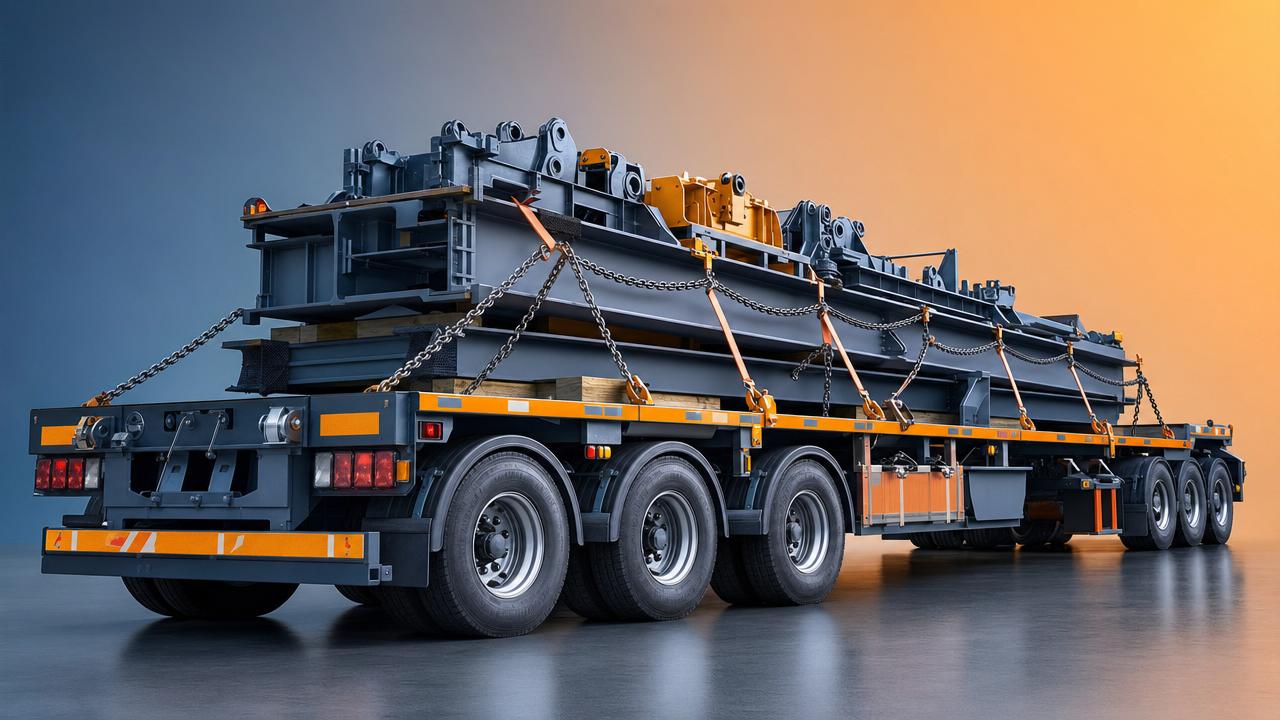
Understanding Flatbed Semi-Trailer load limits is essential for operators who want to move cargo safely, legally, and efficiently. From weight distribution problems to unsecured loads, small mistakes can lead to serious transport risks, equipment damage, and costly delays. This guide explains the most common cargo errors and practical ways to avoid them, helping you improve daily hauling performance and protect both vehicles and goods.
For daily users and transport operators in the engineering vehicle sector, a Flatbed Semi-Trailer is not just a platform for moving steel, machinery, pipes, precast parts, or construction equipment. It is a load-bearing system where axle ratings, deck condition, tie-down strength, and cargo placement must work together within clear limits.
When these details are ignored, the result is often overloading on one axle, unstable braking, tire heat buildup, cargo shift during cornering, or damage during loading and unloading. In practical operations, avoiding 5 to 6 common mistakes can reduce downtime, improve trip planning, and support safer delivery over both short-haul and long-haul routes.
For fleets sourcing commercial vehicles and trailer solutions from experienced exporters such as Shandong Livol Truck International Trade Co., Ltd., understanding these operating basics also helps buyers choose the right trailer configuration, tractor match, and support service before delivery.
Why Flatbed Semi-Trailer Load Limits Matter in Real Transport Work
Load limits define how much a Flatbed Semi-Trailer can carry without exceeding structural, axle, suspension, tire, and legal road restrictions. Operators often focus only on total cargo weight, but safe loading depends on at least 4 linked factors: gross vehicle weight, axle distribution, center of gravity, and cargo securement.
In engineering transport, flatbeds may haul excavator attachments, rebar bundles, concrete panels, generators, scaffolding systems, or roadwork equipment. These loads differ greatly in density and shape. A 20-ton steel load and a 20-ton machine load may create very different pressure points on the trailer deck and very different stability risks.
Key load-limit factors operators should check
- Rated payload of the trailer and tractor combination
- Axle load sharing across steer, drive, and trailer axles
- Deck length and cargo contact area
- Tire load rating and inflation condition
- Road law limits in destination and transit regions
- Securement points, chains, straps, and blocking capacity
A common operating mistake is assuming the manufacturer’s rated payload is the only number that matters. In reality, operators should verify actual loading condition before every departure. Even a load that is 2 to 3 tons below the theoretical maximum can still be unsafe if 60% of the weight sits too far forward or too far to one side.
The table below shows how different cargo characteristics affect loading decisions on a Flatbed Semi-Trailer in engineering applications.
The main takeaway is that load limits are not only about tonnage. Shape, density, footprint, and movement tendency all influence whether a Flatbed Semi-Trailer can carry a load safely over a full route.
How poor weight distribution affects vehicle control
If too much cargo weight is placed forward, steer axle response may change and drive axle load can rise beyond the preferred range. If too much weight sits rearward, trailer sway may increase and braking performance may decline. Left-to-right imbalance can also create tire overload on one side, especially on rough roads or during emergency lane correction.
Practical warning signs before departure
- Trailer deck visibly leaning to one side
- Suspension compressed unevenly
- Gaps between cargo and blocking materials
- Front or rear axle group appearing overloaded
- Straps at different tension levels after initial fastening
The Most Common Cargo Mistakes on a Flatbed Semi-Trailer
Most cargo incidents do not come from rare failures. They usually come from repeated, preventable loading errors. For operators, identifying these mistakes early is one of the fastest ways to improve safety and reduce claims, especially in engineering logistics where loads are irregular and loading sites are often busy or uneven.
Mistake 1: Exceeding payload or axle limits
The first and most obvious mistake is overloading the Flatbed Semi-Trailer. Sometimes the gross weight is too high. In other cases, total weight is acceptable but one axle group exceeds its limit. This can happen when heavy items are loaded in a tight cluster over a short deck section.
Even a 5% to 10% overload can accelerate tire wear, increase braking distance, and place extra stress on suspension components. In hot weather or long downhill runs, those effects become more serious.
Mistake 2: Ignoring center of gravity height
Operators often pay attention to weight but underestimate cargo height. Tall loads with a high center of gravity behave differently in turns, crosswinds, and sudden braking. A machine body, stacked formwork, or bundled frames can become unstable even when total weight is within legal range.
As a practical rule, when cargo height rises, cornering speed should be reduced and tie-down planning should become more conservative. High loads usually require more than 4 restraint points, depending on length and movement risk.
Mistake 3: Using too few tie-downs or the wrong securement method
A Flatbed Semi-Trailer may have enough deck space, but that does not guarantee adequate securement. Straps are often used where chains are more suitable, or operators rely on top-down pressure without blocking forward movement. Smooth metal surfaces, vibration, and weather can reduce friction during transport.
For dense or rolling cargo, direct restraint and blocking usually provide better control than friction alone. Operators should inspect anchor points, webbing condition, chain wear, and tension devices before each trip, not only at periodic maintenance intervals.
Mistake 4: Poor deck preparation
Wet decks, oil contamination, worn timber, bent side rails, or damaged lashing points create avoidable risks. A trailer deck should be treated as a working safety surface. If friction is reduced by water, mud, or grease, cargo movement may start with only minor brake input.
Many operators skip deck inspection because loading windows are short. However, a 5-minute check for cracks, loose boards, exposed metal edges, and debris can prevent much larger losses later.
Mistake 5: Failing to recheck after departure
Cargo securement changes during the first part of the trip. Straps settle, timber compresses, and equipment shifts slightly under vibration. A best-practice approach is to stop after 30 to 50 km, or earlier on rough roads, to retighten restraints and confirm no movement has started.
The table below summarizes frequent Flatbed Semi-Trailer cargo mistakes and the direct operational consequences they create.
These mistakes are common because they happen under time pressure. The solution is not complicated technology alone. It is consistent loading discipline, basic measurement, and repeatable checking procedures.
A Practical Loading Process for Operators
A reliable loading process helps operators use a Flatbed Semi-Trailer more safely across different cargo types. In field conditions, a simple 5-step routine is often more effective than relying on memory or habit.
Step 1: Confirm cargo data before loading
Check cargo weight, dimensions, lifting points, and whether the load is dense, fragile, tall, rolling, or uneven. If the exact weight is unavailable, estimate conservatively and verify before road departure. Operators should avoid loading based only on visual judgment.
Step 2: Inspect trailer condition
Inspect the Flatbed Semi-Trailer deck, tires, air lines, lighting, locking devices, and lashing points. A fast check should cover at least 6 items: deck integrity, anchor points, tire condition, brake response, suspension level, and available securement gear.
Step 3: Place cargo for balanced axle loading
Position the load so weight is spread along the deck and centered left to right. Heavy items should rest on structurally strong deck zones, not weak edges or unsupported areas. If carrying multiple pieces, separate them to distribute weight instead of clustering all mass in one section.
Step 4: Secure for forward, rearward, and lateral movement
Securement should resist movement in all directions. This usually combines direct tie-down, downward restraint, blocking, and friction aids. Operators should also protect straps from sharp edges and make sure chain angles are effective rather than nearly horizontal.
Step 5: Reinspect during the trip
After the first 30 to 50 km, perform a walk-around inspection. On long routes, repeat checks at fuel stops, rest breaks, or every 150 to 250 km depending on road quality and cargo type.
Field checklist for daily use
- Verify gross load and axle balance
- Check deck cleanliness and contact points
- Use suitable chains, straps, blocks, and edge guards
- Confirm all restraint devices are tensioned evenly
- Inspect again after early-road settlement
Choosing the Right Flatbed Semi-Trailer for Engineering Cargo
Safe loading starts with selecting a trailer suitable for the actual job. Operators and fleet buyers should not choose a Flatbed Semi-Trailer based on price alone. Cargo profile, route condition, tractor match, and service support all influence long-term value.
For engineering vehicle applications, the most useful selection criteria usually include 4 areas: payload range, deck configuration, axle setup, and after-sales parts support. A trailer working on highways with packaged steel will not have the same needs as one carrying mixed construction equipment into project sites.
What buyers and operators should compare
- Deck length and usable loading area
- Axle count and suspension suitability for road conditions
- Lashing point quantity and accessibility
- Compatibility with tractor head and legal route requirements
- Spare parts availability and delivery responsiveness
An exporter with strong inventory, authorized dealership resources, and full-process trade service can make this decision easier. Shandong Livol Truck International Trade Co., Ltd. supports customers with vehicle selection, customization, documentation, customs clearance, and logistics coordination, which is especially valuable for buyers handling multi-unit orders or cross-border project delivery schedules.
Because the company is an authorized dealer for FOTON, SHACMAN, and SINOTRUK and operates multiple 4S stores across China, buyers can align tractor and trailer planning more efficiently. That reduces the risk of mismatched configurations and helps operators receive equipment that fits actual workload conditions from day one.
Service factors that affect operating reliability
For fleets, procurement should also consider support after delivery. Practical concerns include spare parts lead time, technical communication speed, document accuracy, and whether customization requests can be handled before shipment. A delay of 7 to 15 days in the wrong component can interrupt fleet utilization far more than a small difference in initial purchase cost.
Final Advice for Safer and More Efficient Flatbed Operations
Using a Flatbed Semi-Trailer safely comes down to disciplined loading, realistic weight planning, and consistent cargo inspection. Operators who control axle balance, securement quality, deck condition, and post-departure checks can reduce avoidable risk across daily engineering transport tasks.
The most frequent cargo mistakes are also the most preventable: overloading, poor weight distribution, weak restraint methods, and skipped inspections. Correcting these issues improves braking stability, protects tires and suspension, lowers cargo damage risk, and supports more reliable trip completion.
If you are sourcing commercial vehicles or need a Flatbed Semi-Trailer solution matched to engineering cargo, route conditions, and export requirements, Shandong Livol Truck International Trade Co., Ltd. can help with practical product selection and integrated delivery support. Contact us now to discuss your operating needs, get a customized solution, or learn more about available vehicle and trailer options.
Search Starts Here