
News
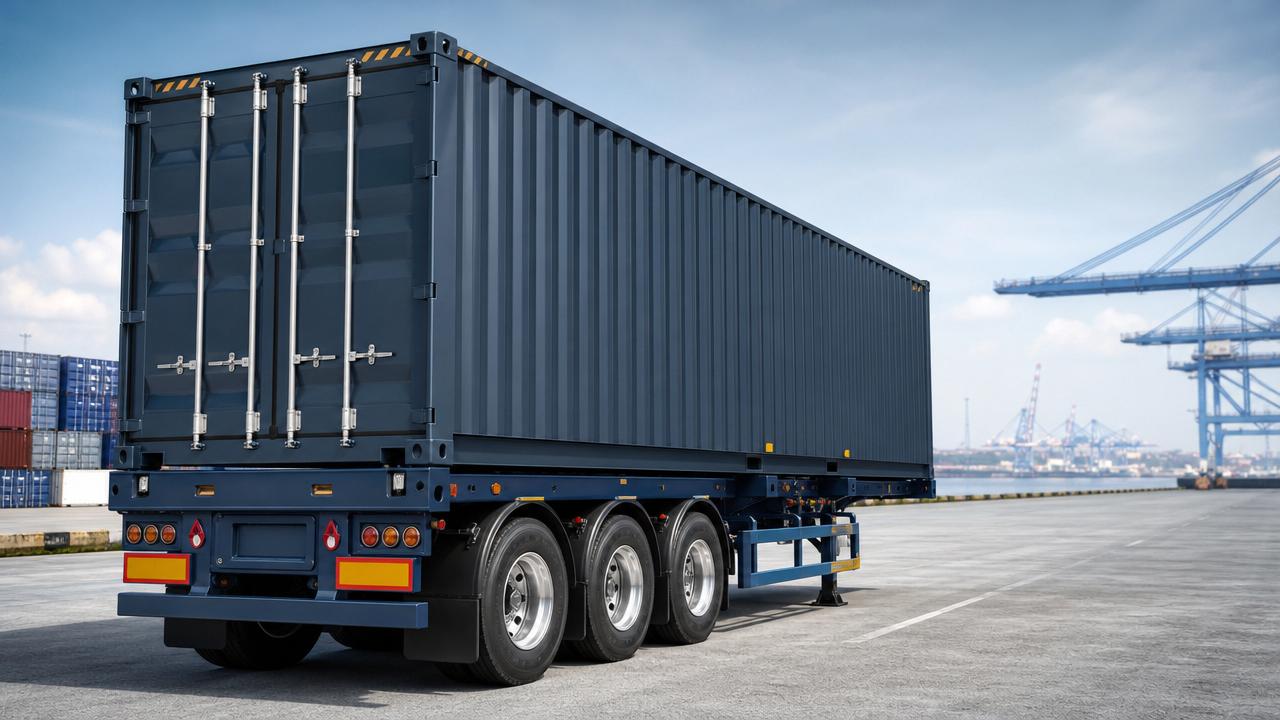
Choosing a Skeleton (Container) Semi-Trailer for port container hauling affects payload, turnaround time, tire wear, maintenance frequency, and regulatory compliance. In busy terminals, the right trailer reduces downtime and supports stable container movement across short shuttle routes and regional highways.
This guide explains how to evaluate a Skeleton (Container) Semi-Trailer by axle layout, frame strength, twist locks, braking system, corrosion protection, and service support. It also highlights common buying mistakes and practical checkpoints before placing an order.
What is a Skeleton (Container) Semi-Trailer, and why is it widely used in ports?
A Skeleton (Container) Semi-Trailer is a chassis-style trailer designed to carry ISO containers without a full cargo platform. Its open structure lowers tare weight and improves loading efficiency for container transport.
In port operations, speed matters. A skeleton trailer allows fast container placement, easy locking, and simple inspection. That is why it is a common solution for terminal transfer, depot movement, and inland drayage.
Compared with flatbed alternatives, a Skeleton (Container) Semi-Trailer is more specialized. It is optimized for container dimensions, axle load distribution, and repeated docking under high-frequency operating conditions.
- Suitable for 20ft, 40ft, and sometimes 45ft containers
- Lower self-weight can improve legal payload efficiency
- Fast container securing through twist lock systems
- Ideal for port, yard, logistics park, and highway transfer tasks
How do axle configuration and load capacity affect trailer selection?
Axle configuration is one of the first checkpoints when selecting a Skeleton (Container) Semi-Trailer. Common versions include 2-axle, 3-axle, and multi-axle designs for different legal loads and road conditions.
A 2-axle trailer may suit lighter or shorter-distance applications. A 3-axle model is often preferred for heavier container transport because it offers better load sharing and stronger operational flexibility.
Load capacity should never be judged by axle count alone. Suspension rating, axle brand, brake chamber specification, tire size, and frame section thickness all influence the real working capability.
Key checks for axle and load matching
- Confirm the maximum gross combination weight on target routes
- Check legal axle load limits in destination countries
- Match suspension type to road surface and operating frequency
- Verify tire load index and heat resistance for port duty
- Review kingpin rating and landing gear strength
For mixed port and highway use, a 3-axle Skeleton (Container) Semi-Trailer usually balances compliance, durability, and resale value. However, local transport laws should guide the final specification.
Which structural features determine durability in harsh port environments?
Port work is demanding. Salt air, standing water, uneven pavement, and repeated crane loading can stress the trailer frame. Structural durability is therefore a major factor in long-term operating cost.
A reliable Skeleton (Container) Semi-Trailer should use high-strength steel with proper beam design. Main beam height, flange thickness, cross member spacing, and welding quality directly affect fatigue resistance.
Twist locks must be accurately positioned and robust enough for repeated use. Poor lock alignment may cause loading delays, unsafe securing, and accelerated wear around container contact points.
Important durability details
- Shot blasting before painting for better coating adhesion
- Anti-corrosion primer and durable topcoat for coastal operation
- Reinforced gooseneck and rear structure for repeated impact loads
- Heavy-duty mechanical or air suspension options
- Protected air lines and electrical wiring against abrasion
If the trailer works mainly inside ports, corrosion protection may matter as much as rated payload. Strong paint systems and careful fabrication often produce lower life-cycle cost than a cheaper initial purchase.
How can container type and route conditions change the best specification?
Not every Skeleton (Container) Semi-Trailer fits every route. The best choice depends on container lengths, cargo density, terminal equipment, road quality, and whether operations involve highways, depots, or industrial sites.
For frequent 20ft heavy container movement, concentrated load strength becomes critical. For 40ft or 45ft containers, frame length, lock placement, and stability during lane changes become more important.
On rough roads, suspension and tire specification deserve extra attention. Air suspension may protect cargo and equipment, while mechanical suspension can be simpler and easier to maintain in some markets.
A route-based specification review can prevent overbuying or under-specifying. It also helps align the Skeleton (Container) Semi-Trailer with actual operating economics rather than just brochure figures.
What safety, compliance, and maintenance points should be checked before ordering?
Safety and compliance should be checked early, not after production starts. Brake system compatibility, lighting standards, reflective markings, ABS requirements, and axle certification may vary by destination market.
A Skeleton (Container) Semi-Trailer that looks suitable on paper may still create registration or customs problems if documentation and technical standards are incomplete. Always confirm local approval requirements before finalizing configuration.
Pre-order checklist
- Confirm dimensions and container compatibility
- Verify axle, suspension, and brake brand specifications
- Check ABS or EBS requirements for the destination
- Review steel grade and key thickness details
- Request paint process and anti-corrosion description
- Confirm spare parts availability and service response
- Check production lead time and shipping arrangement
Maintenance access also matters. Easy inspection of brake components, air lines, wiring, and locking devices saves labor time and helps keep the trailer available for daily port movement.
What common mistakes increase total cost when buying a Skeleton (Container) Semi-Trailer?
The most common mistake is focusing only on purchase price. A cheaper Skeleton (Container) Semi-Trailer may use lower-grade steel, weaker coating, or non-standard components that lead to higher repair and downtime costs.
Another mistake is ignoring service and parts support. Even a strong trailer becomes a poor asset if replacement parts are hard to source or technical support is slow during active operations.
Some buyers also select an overly universal specification. That can reduce efficiency in real use, especially when the work is dominated by one container size or one route pattern.
How does supplier strength influence the final decision?
A strong supplier improves more than product delivery. It supports configuration accuracy, documentation quality, logistics coordination, and after-sales communication across the full export process.
Shandong Livol Truck International Trade Co., Ltd., based in Shandong, China, provides integrated commercial vehicle export services backed by industry strength and global trade experience. Stable supply and fast delivery help reduce procurement uncertainty.
As the official authorized domestic and overseas dealer for FOTON, SHACMAN, and SINOTRUK, the company operates many authorized 4S stores across China and maintains sufficient inventory for dependable fulfillment.
Its professional export team supports vehicle selection, customization, documentation, customs clearance, logistics, strict quality control, and after-sales follow-up. That full-process capability is valuable when sourcing a Skeleton (Container) Semi-Trailer for international deployment.
The best Skeleton (Container) Semi-Trailer is not simply the lowest-priced chassis. It is the one that fits container type, route conditions, legal requirements, and maintenance reality while remaining durable in port service.
Before ordering, compare axle layout, structural design, coating process, safety systems, and supplier support as one package. A careful review now can lower downtime, protect payload efficiency, and improve long-term transport value.
If you need a dependable Skeleton (Container) Semi-Trailer solution for port container hauling, the next practical step is to confirm route data, container mix, compliance standards, and preferred configuration with an experienced export partner.
Search Starts Here