
News
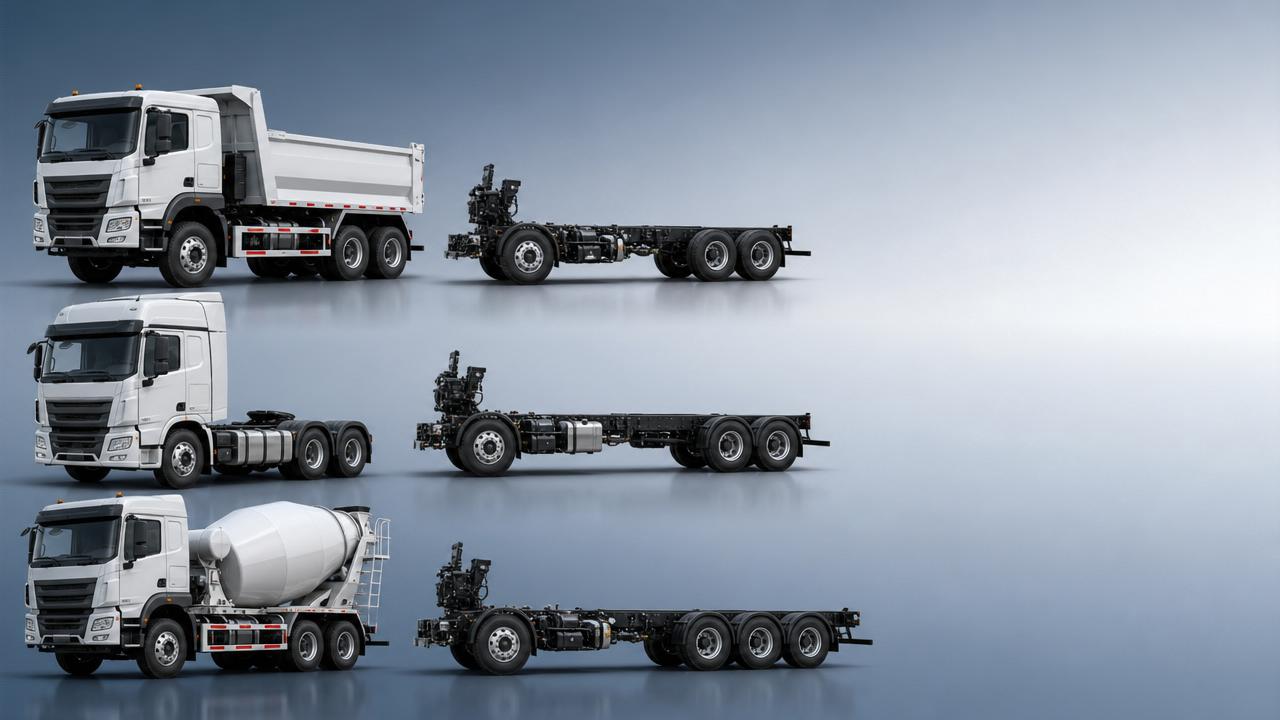
For dealers, distributors, and agents handling multiple truck options, the Cangshan Vehicle Configuration List is a practical tool for faster and more accurate model matching. By clearly comparing key specifications, configurations, and application scenarios, it helps reduce selection time, improve customer response efficiency, and support better purchasing decisions. Understanding how to read this list can streamline your sourcing process and strengthen your competitiveness in the commercial vehicle market.
In the engineering vehicle business, speed matters, but incorrect model selection can create much bigger costs than a delayed quote. A unit that looks suitable on paper may fail under axle load limits, terrain conditions, body fitment requirements, or local compliance expectations. For channel partners working with dump trucks, cargo trucks, tractor heads, mixer chassis, and other commercial vehicles, the Cangshan Vehicle Configuration List becomes more than a simple spec sheet. It is a decision tool that helps connect customer demand with the right vehicle platform in 3 to 5 review steps instead of repeated back-and-forth clarification.
This is especially important when handling multiple Chinese truck brands and configurations. Shandong Livol Truck International Trade Co., Ltd., based in Shandong, China, supports global buyers as an authorized domestic and overseas dealer for FOTON, SHACMAN, and SINOTRUK. With authorized 4S store resources, stable inventory, export coordination, customization support, and after-sales service, the company helps partners move from model inquiry to shipment planning with greater efficiency and less risk.
Why the Cangshan Vehicle Configuration List Matters in Engineering Vehicle Sourcing
In many export transactions, the first bottleneck is not pricing but configuration understanding. Dealers often receive customer requests that mention only 4 to 6 points, such as payload, drive type, engine power, cabin preference, and budget range. However, actual model matching may involve 10 to 15 technical variables, including wheelbase, suspension, axle ratio, emission route, PTO need, fuel tank capacity, and upper-body compatibility. The Cangshan Vehicle Configuration List helps organize these variables in one place.
For engineering vehicles, mismatched specifications can affect delivery cycles, operating life, and end-user satisfaction. A dump truck for quarry work, for example, may need a stronger frame, reinforced suspension, and a drivetrain calibrated for frequent climbs. A city construction support truck may instead prioritize turning radius, legal gross vehicle weight, and ease of maintenance. Reading the list correctly allows a distributor to match use case before discussing optional extras.
What the list usually includes
Although formats vary, a practical Cangshan Vehicle Configuration List often groups information into 6 major sections: vehicle identity, chassis structure, powertrain, cab and comfort, functional configuration, and application notes. If a sales team can read these sections quickly, first-round model screening may be reduced from 2 hours to 20 to 30 minutes, especially when comparing 3 or more candidate vehicles.
- Basic vehicle code, model family, drive form such as 4x2, 6x4, or 8x4
- Engine brand, horsepower range, torque output, and emission level
- Transmission type, gear count, axle ratio, and suspension structure
- Wheelbase, frame size, tire specification, and rated loading basis
- Cabin layout, seat count, air conditioning, sleeper, and visibility aids
- Application remarks for mining, municipal work, highway logistics, or mixed-road projects
The cost of reading it incorrectly
A wrong interpretation can create at least 4 common issues: unsuitable upper-body installation, insufficient engine reserve, poor road adaptation, and difficult spare parts planning. Even a 1-item misunderstanding, such as confusing legal payload with practical haul capacity, may lead to customer complaints, modification delays of 7 to 15 days, or additional inland handling expenses. For distributors, that is a direct margin risk.
The table below shows how key fields in the Cangshan Vehicle Configuration List influence model matching in everyday engineering vehicle sales.
The most useful insight is that no single field should be read in isolation. In the Cangshan Vehicle Configuration List, axle layout, wheelbase, engine output, and intended application must be reviewed together. That combined reading is what enables faster model matching and more reliable quoting.
How to Read the Cangshan Vehicle Configuration List Step by Step
For channel partners, a repeatable reading method is more valuable than memorizing dozens of codes. A practical approach is to start with application conditions, then move to structural compatibility, and only after that compare comfort and optional features. This sequence reduces errors when screening 5 to 10 candidate units for one tender or local stocking decision.
Step 1: Confirm operating scenario before checking options
Ask 4 basic questions first: what cargo or body type is needed, what road condition is expected, what daily distance is typical, and what legal or local market restrictions apply. An 8x4 dump truck for infrastructure hauling may require very different setup choices than a 6x4 tractor head for regional cement transport. The Cangshan Vehicle Configuration List is useful only when read against the actual duty cycle.
Quick scenario screening points
- Road condition: paved, mixed, site access, quarry, or mountain route
- Load profile: light, standard, or frequent overload risk
- Operating radius: under 100 km, 100 to 300 km, or over 300 km per day
- Body requirement: tipper, mixer, tank, cargo bed, or special engineering attachment
Step 2: Read chassis dimensions and load-bearing fields carefully
This is where many mismatches happen. Dealers may focus on engine horsepower first, but body integration usually depends on wheelbase, frame section, front and rear axle ratings, and suspension construction. If the Cangshan Vehicle Configuration List shows a wheelbase that does not align with the intended upper body, the unit may need redesign or may not be suitable at all.
For example, a short wheelbase may improve maneuverability in confined sites, but it can limit body length or shift weight distribution. A reinforced leaf spring setup may be desirable for heavy loading, while some municipal use cases may value ride stability and access convenience more than maximum ruggedness.
Step 3: Evaluate powertrain as a route and workload system
When reviewing the Cangshan Vehicle Configuration List, engine power should be linked to torque, transmission gearing, and axle ratio. In engineering vehicles, 20 to 40 horsepower difference may be less important than whether the drivetrain is tuned for low-speed traction or road-speed efficiency. Steep site exits, soft ground, and stop-start hauling all change the selection logic.
Likewise, fuel strategy matters. A customer with long cross-border routes may prefer larger tank capacity and easier maintenance access. A local site contractor may place more value on simplicity, common spare parts, and faster service turnarounds within 24 to 72 hours.
Step 4: Check cab, electrical, and operation-support details
Although secondary to load and drivetrain, cab and control details still affect operating efficiency. Features such as air conditioning, sleeper arrangement, camera systems, PTO interface, and dashboard language may influence driver acceptance and maintenance convenience. In export business, these details often determine whether the delivered truck fits the local market without post-arrival modifications.
The comparison table below can be used as a practical reading checklist when reviewing a Cangshan Vehicle Configuration List for engineering applications.
Using a checklist like this can improve first-pass selection accuracy and shorten internal decision time. For multi-brand sourcing, it also creates a common language between the sales team, technical coordinators, and the end buyer.
How Dealers Can Use the List for Faster Multi-Brand Model Matching
In practice, the Cangshan Vehicle Configuration List is most effective when used as part of a structured comparison process. Dealers comparing FOTON, SHACMAN, and SINOTRUK platforms should avoid choosing by horsepower or sticker price alone. Instead, build a 4-layer filter: application fit, legal and structural fit, serviceability, and delivery feasibility. This method can narrow 8 or 12 options down to 2 or 3 workable models much faster.
Build a shortlist by application, not by catalog sequence
The strongest candidates often come from different sections of a catalog than expected. A vehicle listed under general cargo or standard haul may still be suitable for an engineering project if the chassis and PTO provisions match the body plan. Conversely, some rugged-looking units may be excessive for urban support work, adding fuel and maintenance cost without creating customer value.
Recommended 5-point screening framework
- Payload and body compatibility
- Terrain and traction requirement
- Maintenance access and spare parts planning
- Delivery lead time and inventory status
- Budget fit over purchase plus operating cycle
Use the list to improve quotation speed and customer response
A well-read Cangshan Vehicle Configuration List can reduce repeated clarification emails and improve response quality in the first quotation round. Instead of sending one general offer, distributors can provide 2 or 3 clearly differentiated alternatives: economy configuration, standard working configuration, and heavy-duty site configuration. This increases professionalism and makes it easier for the customer to decide.
For example, one option may prioritize lower initial cost with a standard cab and basic suspension, while another may include reinforced chassis features and higher output for demanding routes. Presenting choices this way allows the buyer to compare operational logic, not just selling price.
Integrate sourcing, documentation, and logistics planning early
Model matching is only one part of a successful export transaction. Once the right configuration is identified, the next 3 stages usually involve customization confirmation, export documentation, and delivery coordination. Depending on stock status and body adaptation needs, practical lead times may range from 7 to 15 days for available units and 3 to 6 weeks for more customized combinations.
This is where an experienced exporter adds value. Shandong Livol Truck International Trade Co., Ltd. supports partners through vehicle selection, customization, document handling, customs coordination, and logistics execution. For dealers serving overseas projects, that full-process support reduces the risk of choosing a suitable truck but losing time in the handover phase.
Common Mistakes, Risk Points, and Better Buying Decisions
Even experienced distributors can misread a specification list when working under time pressure. The most common errors do not come from lack of technical knowledge, but from skipping cross-checks. A reliable buying decision should balance at least 4 dimensions: technical fit, market demand, support readiness, and delivery certainty.
Mistake 1: Treating all 6x4 or 8x4 models as directly comparable
The same drive formula does not guarantee the same working result. Within one drive layout, frame reinforcement, gearbox matching, suspension type, and tire setup may differ significantly. The Cangshan Vehicle Configuration List should therefore be read line by line, especially in applications involving stone, sand, aggregates, concrete, or steep construction access roads.
Mistake 2: Focusing on purchase price before service structure
A lower-cost unit may not be the better business choice if parts supply is weak or local technicians are unfamiliar with the configuration. Downtime of even 3 to 5 days can outweigh a small initial savings advantage. Distributors should map spare parts turnover, service training needs, and common wear-item access before finalizing the order mix.
Mistake 3: Ignoring delivery and customization timing
Some buyers approve a model based on an ideal specification, but later discover that the exact configuration requires additional lead time for body adaptation or export document preparation. A practical decision should confirm 3 items early: stock availability, customization scope, and shipment window. This is particularly important when supplying project-based customers with fixed mobilization dates.
Risk-control checklist before order confirmation
- Verify the intended application against the exact configuration line, not only the model family name.
- Confirm wheelbase, axle ratings, and body integration requirements in writing.
- Review service parts strategy for the first 6 to 12 months of operation.
- Check export documents, customs requirements, and delivery schedule before deposit.
- Keep 2 backup options in case the preferred configuration changes in stock status.
What stronger distributors do differently
High-performing channel partners do not simply forward catalogs. They translate the Cangshan Vehicle Configuration List into a buying recommendation with clear trade-offs. They explain why one model suits rough loading cycles, why another works better for mixed road transport, and where future maintenance costs may differ. This consultative approach improves trust and raises conversion quality, especially in markets where buyers compare several Chinese truck offers at the same time.
Reading the Cangshan Vehicle Configuration List well means understanding how technical fields connect to real operating conditions, customer priorities, and export execution. For dealers, distributors, and agents, that skill shortens model screening, improves quote accuracy, and reduces avoidable risk across sourcing, customization, and delivery. With strong brand resources, reliable supply capability, and full-process export support, Shandong Livol Truck International Trade Co., Ltd. can help you turn specification data into practical vehicle decisions. Contact us now to discuss your target market, request a tailored model recommendation, or learn more about integrated commercial vehicle export solutions.
Search Starts Here