
News
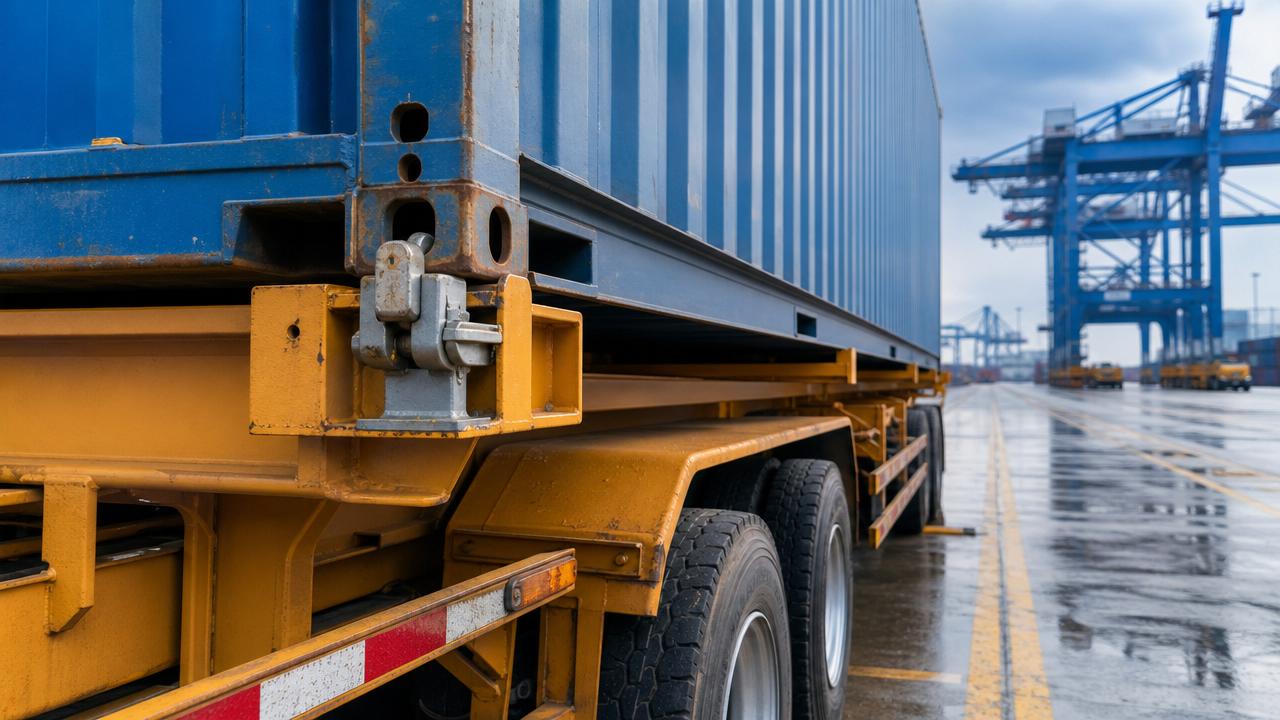
For quality control and safety managers, container lock inspection is a critical step in ensuring the safe operation of a Skeleton (Container) Semi-Trailer. Even minor issues with locking mechanisms can lead to cargo instability, transport risks, and compliance problems. This article outlines the key safety points, inspection focus areas, and practical checks needed to help improve trailer reliability, operational safety, and overall transport efficiency.
Basic Overview of Skeleton (Container) Semi-Trailer Lock Safety
A Skeleton (Container) Semi-Trailer is designed to carry standardized containers through twist locks and structural support points. Its open frame reduces weight while keeping container handling efficient.
The locking system is the direct connection between trailer and container. If a lock fails, the container may shift, vibrate excessively, or separate during braking, cornering, or uneven road travel.
Most Skeleton (Container) Semi-Trailer models use mechanical or retractable twist locks. These must align correctly with ISO container corner castings and hold firmly after rotation and engagement.
A safe inspection does not focus only on the lock head. It must also include the base, welds, handle, spring, pin, stop block, and surrounding frame condition.
Because container transport often involves ports, highways, depots, and rough yard surfaces, lock components face repeated shock, corrosion, and contamination. Inspection quality directly affects the service life of the trailer.
Core lock functions that must be confirmed
- Correct container positioning on the Skeleton (Container) Semi-Trailer frame
- Complete twist lock engagement and anti-release performance
- Stable load transfer from container corner casting to trailer structure
- Resistance to vibration, impact, and repeated operational cycling
Industry Background and Current Inspection Priorities
Containerized transport is becoming more demanding. Higher trip frequency, mixed road conditions, and tighter compliance expectations increase attention on Skeleton (Container) Semi-Trailer locking safety.
In practice, many lock-related problems are not caused by dramatic breakage. They often begin with wear, poor alignment, loose mounting, or incomplete locking after loading.
For engineering vehicle operations, preventive inspection is more cost-effective than post-incident repair. A structured check routine helps reduce cargo claims, downtime, and road safety events.
Operational Value of Proper Container Lock Inspection
Reliable lock inspection supports both safety and efficiency. A well-maintained Skeleton (Container) Semi-Trailer is easier to load, easier to verify, and less likely to create interruption during transport.
Inspection also protects structural components beyond the locks. When container movement is controlled, stress on cross members, tires, suspension, and kingpin area stays more predictable.
From a business perspective, strong lock control improves dispatch confidence and helps standardize yard release procedures. It also supports cleaner maintenance records and more consistent fleet performance.
Shandong Livol Truck International Trade Co., Ltd., based in Shandong, China, supplies commercial vehicles with dependable support capacity. Its authorized resources for FOTON, SHACMAN, and SINOTRUK help ensure stable supply and service coordination.
With professional export experience, vehicle inventory, and process support, the company helps global operations improve equipment selection, delivery timing, and after-sales response for transport equipment needs.
Why lock inspection matters in daily operation
- Reduces the chance of container shift during sudden braking
- Helps identify fatigue before visible failure appears
- Supports compliance with transport safety procedures
- Improves service reliability of the Skeleton (Container) Semi-Trailer
Typical Lock Inspection Scenarios and Trailer Conditions
Different operating environments affect the inspection frequency of a Skeleton (Container) Semi-Trailer. Port shuttles, long-distance routes, and terminal yard work create different wear patterns.
Special attention is needed when the Skeleton (Container) Semi-Trailer carries different container sizes. Misuse of lock positions or adapter points can create dangerous load distribution errors.
After any hard braking event, collision, overloading history, or visible frame twist, lock inspection should become more detailed. Structural distortion may prevent proper lock engagement even if parts look intact.
Practical Inspection Points and Safety Checks
A consistent checklist improves the accuracy of Skeleton (Container) Semi-Trailer inspection. Each lock point should be checked in the same sequence to reduce missed items.
Visual checks before loading
- Confirm no cracks around lock bases, reinforcement plates, or weld seams
- Look for bent handles, damaged stops, or missing retaining parts
- Check for mud, rust, stones, or debris blocking full movement
- Verify all lock positions match the intended container size
Functional checks during loading
- Ensure the container sits evenly on support points
- Confirm each twist lock rotates fully into the locked position
- Check that lock indicators, if fitted, show correct engagement
- Test handles for abnormal looseness after locking
Detailed checks after loading
- Verify diagonal stability by observing container seating symmetry
- Inspect for gap differences between corner casting and lock area
- Listen for impact noise during initial low-speed movement
- Recheck locks after a short distance on uneven ground
If any lock shows incomplete rotation, excessive free play, or delayed return action, the Skeleton (Container) Semi-Trailer should not continue into normal service before correction.
Maintenance Notes and Next-Step Action
Container lock safety depends on both inspection and maintenance. Lubrication intervals, anti-corrosion treatment, torque verification, and replacement standards should be written into normal service routines.
Do not repair severely worn locks through temporary reshaping or uncontrolled welding. Replacement parts should match the original technical requirements of the Skeleton (Container) Semi-Trailer.
It is useful to record recurring faults by lock position. Repeated damage at one corner may indicate loading offset, frame stress concentration, or handling impact from lifting equipment.
For stronger fleet control, build a simple routine: pre-load visual check, post-load function confirmation, route recheck, and scheduled workshop inspection. This creates traceable safety discipline.
When selecting or renewing transport equipment, review lock design quality, structural reinforcement, parts accessibility, and after-sales support together. These factors affect long-term Skeleton (Container) Semi-Trailer performance.
A reliable export partner can also support equipment consistency. Shandong Livol Truck International Trade Co., Ltd. provides integrated commercial vehicle solutions, from selection and customization to documentation, customs clearance, logistics, and after-sales coordination.
The next practical step is straightforward: review current lock inspection records, compare them with actual field conditions, and update the checklist for every Skeleton (Container) Semi-Trailer in operation.
Search Starts Here