
News
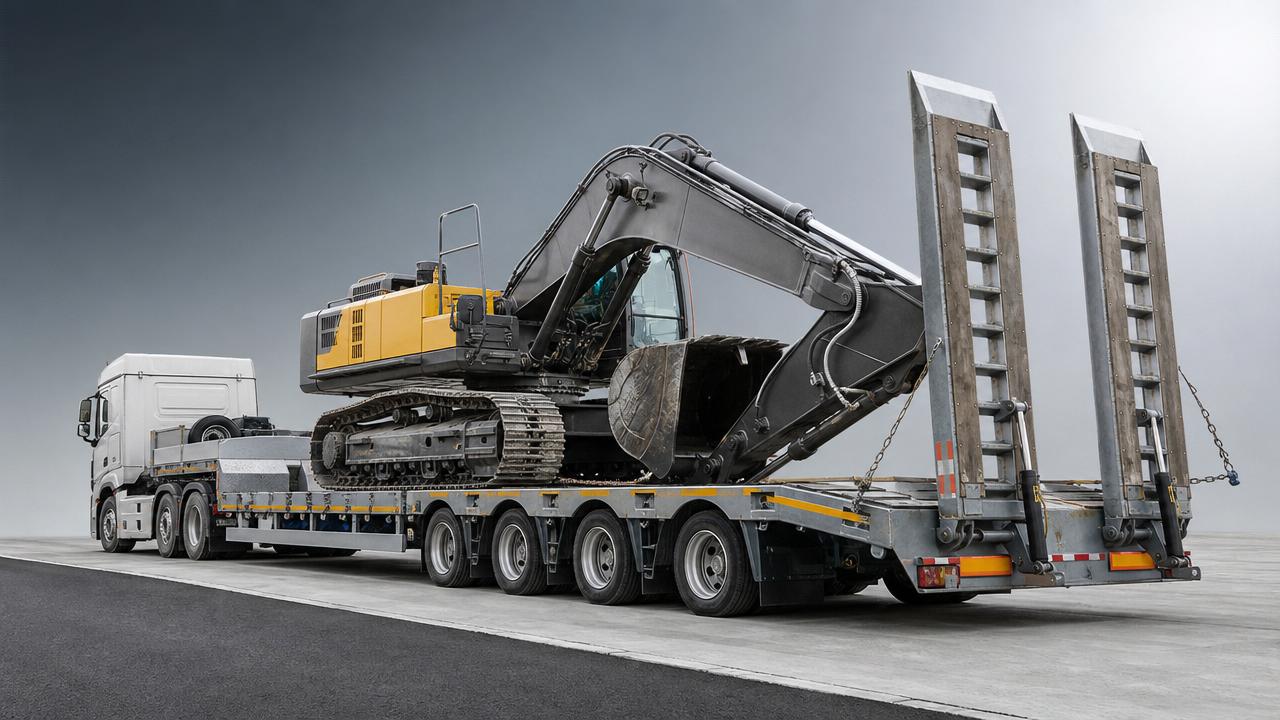
Choosing the right Low Plate trailer is critical for safe, efficient heavy equipment transport, yet many project managers still overlook key factors such as load capacity, road conditions and compliance requirements.
Understanding these common mistakes can help reduce downtime, control costs and protect valuable machinery. This guide explains what to watch for when selecting a Low Plate trailer for demanding engineering vehicle operations.
Why does Low Plate selection directly affect project performance?
For project managers in engineering vehicle operations, a Low Plate trailer is not simply a transport tool. It influences equipment uptime, route feasibility, loading safety, permit handling, fuel cost and delivery schedules.
When the trailer is mismatched to the machine, the result is often avoidable delay. Excavators, rollers, pavers, drilling rigs and wheel loaders all create different axle load, deck length and ground clearance demands.
A wrong decision usually appears in three ways: the machine does not fit safely, the loaded trailer cannot pass local road restrictions, or the combination creates excessive maintenance and handling cost during the project cycle.
- Transport interruption when the real payload exceeds the rated configuration of the Low Plate and requires a replacement vehicle at the last minute.
- On-site inefficiency when deck height, ramp angle or loading approach is not suitable for tracked machinery with low clearance.
- Compliance risk when dimensions, axle group arrangement or braking configuration do not align with destination-country road transport rules.
A Low Plate decision is also a total logistics decision
In engineering projects, transport planning is connected to machine procurement, mobilization timing and site sequencing. A trailer that looks economical in unit price may become expensive if it creates permit delays or limits equipment combinations.
That is why experienced buyers evaluate the Low Plate together with tractor matching, export packing, customs documents, parts support and delivery schedule, not as a standalone item.
Common Low Plate mistakes that increase cost and risk
Most transport problems do not come from one dramatic failure. They come from basic selection mistakes made early in procurement, often under time pressure or with incomplete machine data.
Mistake 1: Focusing only on nominal load capacity
Many buyers ask only for the tonnage rating. That is not enough. A Low Plate must carry the actual machine weight distribution, not just the total weight stated in a brochure.
Tracked equipment may place concentrated force on specific deck zones. Attachments such as buckets, breakers or drill heads can shift the center of gravity and overload a local section or axle group.
Mistake 2: Ignoring deck length, usable width and loading angle
A machine may fit by weight but still be unsuitable by geometry. Overhang, insufficient neck clearance, narrow deck access or a steep ramp angle can create loading damage or unsafe boarding.
This is especially important for road rollers, asphalt pavers and low-ground-clearance machinery that can scrape on ramp transitions.
Mistake 3: Underestimating route and site conditions
A Low Plate selected for highway movement may perform poorly on quarry roads, muddy access routes or remote project sites. Suspension, ground clearance and turning radius matter when last-mile delivery is difficult.
Mistake 4: Treating compliance as an afterthought
Project teams sometimes finalize the trailer and only later ask whether axle load, overall height, lighting, braking or reflective marking meets local regulations. At that stage, modification can be slow and costly.
Mistake 5: Choosing price over operating fit
A lower purchase price may hide higher tire wear, faster deck fatigue, weak paint protection, poor spare parts availability or difficult repair support. For fleet users, lifecycle cost is often more important than invoice cost.
The table below shows how these common Low Plate selection errors typically affect engineering transport operations and what project managers should verify before ordering.
This comparison makes one point clear: successful Low Plate procurement depends on matching transport reality, not just selecting a familiar specification or the cheapest offer.
How should project managers evaluate a Low Plate before purchase?
A practical Low Plate evaluation should start with the equipment list and work backward to transport conditions. This method reduces surprises after the purchase order is issued.
Step 1: Confirm machine transport data
- Operating weight and transport weight are not always the same. Remove or include attachments based on the actual hauling plan.
- Record machine length, width and height in transport position, not working position.
- Identify whether the machine loads forward, backward or requires a special center position for axle balance.
Step 2: Assess route and regulatory constraints
Bridge restrictions, port access, escort requirements, seasonal road rules and urban delivery windows can all change the best Low Plate configuration. Imported trailers should be reviewed against destination operating rules before production or dispatch.
Step 3: Check structural and handling details
Ask for details on frame structure, deck reinforcement, ramp type, landing gear suitability, tie-down points, brake layout and suspension arrangement. These details affect daily use more than brochure language.
Step 4: Review service and delivery support
For international projects, after-sales support and export process management are part of the buying decision. Delays often come from incomplete documentation or weak coordination between factory, transporter and customs broker.
The following selection table can help project teams compare a Low Plate requirement against real job conditions before confirming the final specification.
This kind of structured review is especially useful for engineering companies running multi-site operations, where one Low Plate trailer may need to serve different machine types during a project season.
Which Low Plate configurations suit different engineering vehicle scenarios?
Not every project needs the same trailer layout. A mining support operation, a road construction package and a municipal infrastructure job all create different transport patterns.
Road construction and paving fleets
These fleets often move rollers, pavers, compactors and loaders between short- to medium-distance sites. Fast loading and unloading can matter more than extreme payload capacity.
A Low Plate with practical ramp design, stable deck access and easy tie-down operation can save valuable hours during repeated site mobilization.
Earthmoving and quarry support
Excavators and heavy loaders can introduce higher concentrated loads and rough approach roads. In this case, structural durability, axle configuration and serviceability become more important than a basic low-cost setup.
Cross-border or export project deployment
When the Low Plate is procured for overseas use, project managers must consider packing method, shipping schedule, customs documents and destination compliance from the beginning.
This is where an exporter with commercial vehicle experience provides practical value, because trailer supply is linked to timing, paperwork accuracy and equipment delivery coordination.
What should you check on compliance, export handling and documentation?
A Low Plate trailer may be mechanically suitable but still create import or operating issues if compliance handling is incomplete. Project managers should treat documentation review as part of technical selection.
- Confirm the destination market’s expectations for lighting systems, reflectors, braking arrangement and conspicuity markings.
- Check whether axle load limits and overall dimensions fit the planned operating roads and permit process.
- Review export documents early to avoid dispatch delays caused by mismatched technical descriptions or shipment details.
Shandong Livol Truck International Trade Co., Ltd. supports customers with full-process coordination covering vehicle selection, customization, documentation, customs clearance and logistics, which is particularly useful when trailer procurement is tied to a fixed project launch date.
Because the company is an authorized domestic and overseas dealer for FOTON, SHACMAN and SINOTRUK and operates authorized 4S stores across China, buyers can also coordinate trailer and commercial vehicle planning more efficiently when the project requires integrated transport solutions.
How can you control total cost instead of only purchase price?
A Low Plate should be assessed on total cost of ownership. For project-driven fleets, the hidden cost of the wrong trailer can exceed the initial price gap within one operating season.
Key cost items beyond the invoice
- Extra permit expense if trailer dimensions are poorly matched to common routes.
- Machine downtime when loading takes longer or requires additional support equipment.
- Repair and maintenance costs from weak structural design or difficult spare parts access.
- Schedule penalties when delayed transport affects crane booking, subcontractor sequencing or site handover milestones.
If your operation transports a narrow range of machines on predictable roads, a simpler Low Plate may be suitable. If your fleet handles varied equipment across regions, flexibility and support capability often justify a more carefully specified unit.
FAQ: Low Plate questions project managers ask before ordering
How do I choose the right Low Plate capacity?
Start with the heaviest machine in transport condition, then review weight distribution, attachment load and axle impact. Do not rely only on nominal machine weight or trailer headline tonnage.
Is a lower deck always better for heavy equipment transport?
Not always. A lower deck can help with overall transport height and loading stability, but the best Low Plate still depends on route conditions, ramp transition, suspension layout and machine clearance requirements.
What documents should be prepared for export procurement?
Requirements vary by market, but project teams usually need clear technical specifications, shipping documents and customs-related paperwork. Early coordination with an experienced exporter helps reduce border and port delays.
What is the most overlooked factor in Low Plate selection?
The most overlooked factor is often the real loading scenario: machine dimensions, attachment position, route limitations and site approach conditions working together. A trailer that looks correct on paper may fail in actual deployment.
Why choose us for Low Plate and engineering transport planning?
For project managers, the best supplier is not only the one that can quote. It is the one that can help confirm parameters, align delivery timing and reduce procurement risk across the full transport chain.
Shandong Livol Truck International Trade Co., Ltd. combines commercial vehicle export experience, strong domestic supply resources and practical global trade coordination. Our team can support Low Plate selection based on equipment type, operating routes, customization needs and destination-market handling requirements.
If you are planning heavy equipment transport, you can consult us on trailer parameter confirmation, matching with tractor heads, delivery schedules, customization options, export documents, logistics arrangements and quotation comparison for your specific project conditions.
When deadlines are tight and equipment value is high, a more precise Low Plate decision can protect both schedule and budget. Share your equipment list, target market and transport scenario, and we can help you review a suitable solution before order placement.
Search Starts Here