
News
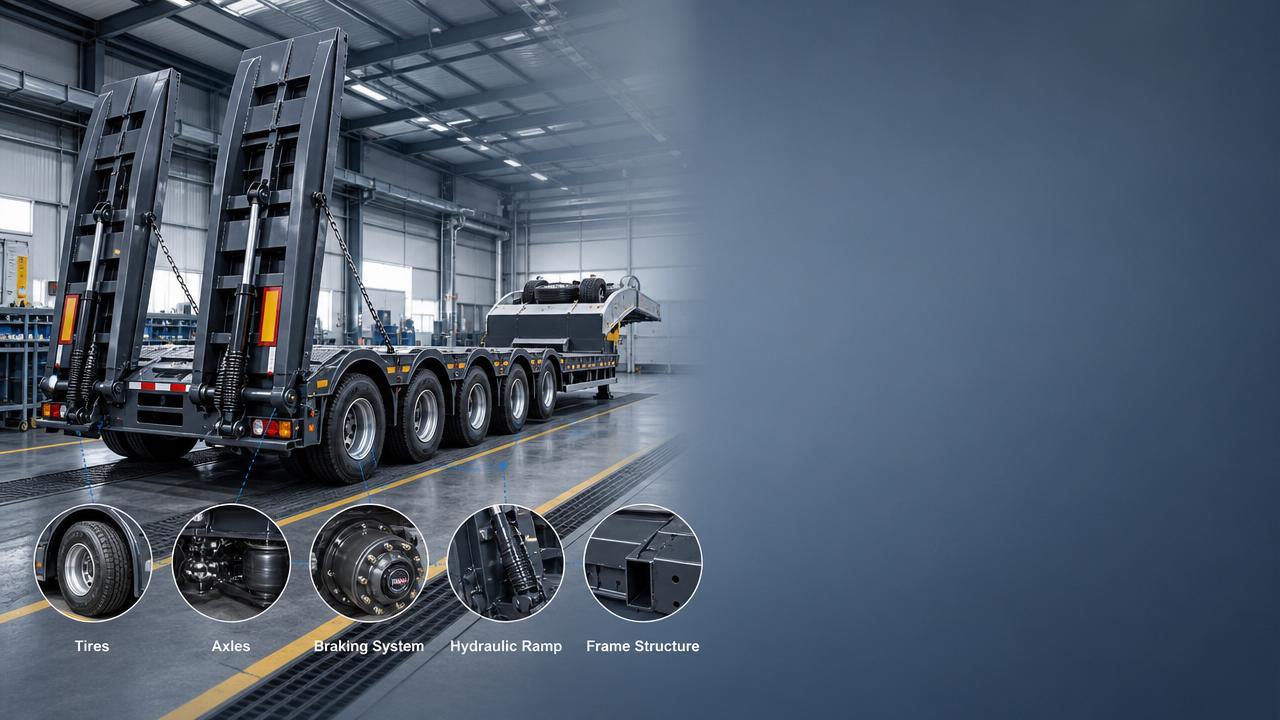
For after-sales maintenance teams, a reliable Low Plate trailer starts with disciplined inspection and preventive care. A practical maintenance checklist helps reduce unexpected failures, shorten service interruptions, and protect transport efficiency in demanding engineering vehicle operations. From tires and brakes to hydraulics, frame structure, and electrical systems, consistent checks can greatly lower downtime risks while extending trailer service life and ensuring safer heavy-equipment delivery.
What after-sales teams really need from a Low Plate maintenance checklist
The core search intent behind this topic is practical rather than theoretical. Maintenance personnel want a Low Plate trailer checklist they can use to prevent breakdowns, avoid repeated faults, and keep engineering transport operations running.
They are usually not looking for generic trailer advice. They need inspection priorities, service intervals, common failure points, and field-ready actions that reduce downtime risks under heavy loads, rough roads, and frequent loading cycles.
For after-sales teams, the most important question is simple: which checks truly prevent transport interruption? A useful answer must focus on components that fail most often and on warning signs that appear before major damage happens.
That is why a strong maintenance program for a Low Plate trailer should prioritize tires, axles, suspension, braking performance, hydraulic parts, the gooseneck or deck structure, electrical connections, and all load-bearing points.
Why Low Plate trailers face higher downtime pressure in engineering transport
A Low Plate trailer often works in harsher conditions than standard road trailers. It carries excavators, rollers, loaders, and other heavy equipment, usually across mixed road surfaces and job sites with dust, mud, and uneven ground.
These conditions accelerate wear on tires, suspension, kingpin assemblies, ramps, and hydraulic systems. Even a small defect, such as uneven tire wear or a leaking hydraulic hose, can quickly become a transport-stopping problem.
Another issue is that many failures begin as alignment problems, loose fasteners, poor lubrication, or fatigue cracks. If these early signs are missed, the trailer may require emergency repair instead of scheduled service.
For after-sales maintenance teams, fewer downtime risks come from two things: consistent inspections and correct repair decisions. A checklist only works when it is tied to actual operating conditions and known component stress points.
Daily pre-operation checks that prevent the most common service interruptions
The daily inspection is the most cost-effective maintenance step for any Low Plate unit. It takes limited time, but it can catch the defects most likely to cause roadside failure or loading delay.
Start with tires. Check inflation pressure, tread wear, sidewall cuts, embedded debris, and uneven wear patterns. Uneven wear may indicate overload, poor alignment, axle issues, or suspension imbalance.
Inspect wheel nuts and rims for looseness, cracks, deformation, and rust trails around stud holes. These signs often point to movement at the wheel mounting surface and should never be ignored.
Next, check the brake system visually and functionally. Look for air leaks, damaged hoses, abnormal chamber movement, worn linings, and delayed brake response. In engineering transport, braking consistency matters more than simple brake presence.
Review the air system for pressure build-up time, reservoir drainage condition, and moisture contamination. Water in the air system can increase corrosion risk and affect braking reliability, especially in variable climates.
Inspect lights, reflectors, wiring plugs, and side markers. Electrical issues may seem minor, but they create legal, safety, and dispatch problems that can stop delivery just as effectively as a mechanical fault.
Check the deck, ramps, lashing points, and support members for cracks, bends, and missing fasteners. Heavy equipment loading places repeated stress on these components, especially where ramps connect and where concentrated loads are applied.
If the Low Plate has a hydraulic ramp or detachable gooseneck, inspect hoses, cylinders, fittings, locking devices, and oil levels. Small leaks often become sudden failures during loading, when hydraulic demand is highest.
Weekly and monthly inspections that catch hidden wear before failure
Daily checks are essential, but they are not enough. A Low Plate trailer used in demanding engineering vehicle transport also needs deeper weekly and monthly inspections to detect hidden wear and structural fatigue.
During weekly inspection, lift or position the trailer safely to check axle components, bushings, equalizers, suspension arms, U-bolts, and weld areas. Look for movement marks, elongation, loose mounting points, and rubber deterioration.
Pay close attention to the suspension because it directly affects load stability, tire life, and frame stress. A worn suspension part can trigger repeated tire replacement and poor tracking long before the root cause is identified.
Measure brake lining thickness, inspect drums or discs for scoring and heat damage, and confirm that left-right brake performance is balanced. Unbalanced braking increases stopping distance and accelerates component wear.
Grease all scheduled lubrication points according to manufacturer recommendations. Kingpins, landing gear mechanisms, ramp hinges, and other high-friction parts can fail early if lubrication intervals are extended under dirty site conditions.
Inspect the frame carefully around cross members, weld seams, neck transitions, axle mounting zones, and ramp hinge areas. Use cleaning and adequate lighting because dirt often hides early cracks and corrosion.
Monthly inspections should also include torque verification for critical fasteners. High-vibration operation can gradually reduce clamp force, especially on suspension, wheel-end, and structural connection points.
How to maintain the hydraulic system without waiting for a visible breakdown
Hydraulic-related downtime is common on Low Plate trailers equipped with lifting ramps or detachable systems. The mistake many teams make is waiting until a leak becomes severe or movement becomes obviously weak.
Instead, monitor the hydraulic system for slower cycle times, jerky motion, abnormal noise, pressure loss after holding, and temperature changes during repeated operation. These are early indicators of wear or contamination.
Check hydraulic oil level and condition at regular intervals. Darkened oil, foam, metallic particles, or water contamination suggest that the system may be wearing internally or drawing in outside contaminants.
Inspect hoses for abrasion, blistering, cracking, and improper routing. A hose rubbing against metal may survive for weeks before sudden rupture, so prevention depends on early repositioning or replacement.
Examine cylinder rods for pitting, scoring, or seal leakage. If a rod surface is damaged, replacing seals alone may not solve the problem, and repeat oil leakage can quickly follow.
Also test all locking and safety mechanisms associated with hydraulic movement. A Low Plate trailer may still move normally while its safety lock becomes unreliable, creating major loading risk even before a complete system failure.
Structural inspection matters more than many teams expect
For engineering transport, structural integrity is not a background issue. It is one of the main factors behind downtime, safety incidents, and expensive repair cycles on a Low Plate trailer.
The low deck design, concentrated wheel loads, and repeated ramp loading create stress concentration in specific zones. Common problem areas include gooseneck joints, deck transitions, ramp hinges, outrigger areas, and reinforced beam sections.
Maintenance personnel should look for fresh paint cracking, rust lines near welds, local deformation, unusual gaps, and signs that load surfaces are no longer even. These are often more meaningful than dirt-covered visible cracks.
Do not treat minor deformation as only cosmetic. Changes in structural geometry can affect axle alignment, load distribution, and ramp contact angles, eventually causing secondary failures across tires, suspension, and loading mechanisms.
If a crack is found, the correct response is not simply quick welding in the field. Teams should evaluate crack length, location, load path impact, and whether reinforcing measures or factory-level repair standards are required.
Electrical and air system faults are small on paper but large in downtime impact
After-sales teams often focus first on the visible heavy components, yet many delivery delays start with basic electrical or pneumatic issues. These faults may be cheaper to fix, but they can still stop operation completely.
Inspect connectors for corrosion, loose pins, water ingress, and damaged insulation. Engineering site conditions are harsh on trailer wiring, especially near the front connection area and moving ramp sections.
Secure cable routing so that wires are protected from pinch points, sharp edges, and repetitive flexing. Recurrent lighting faults often come from harness movement, not from the lamp unit itself.
For the air system, drain tanks on schedule and check valves, hoses, couplings, and seals for leakage. Pressure loss that seems slow in the workshop can become critical after long-distance driving or repeated brake applications.
Build a habit of checking both system function and component condition. If teams only react to complete failure, they miss the gradual symptoms that make preventive maintenance effective.
Common maintenance mistakes that increase Low Plate downtime risks
One common mistake is replacing failed parts without identifying the operating cause. For example, repeated tire failure may actually come from overload patterns, suspension wear, or poor axle alignment.
Another mistake is using a fixed maintenance cycle without considering route quality, cargo type, loading frequency, and regional climate. A Low Plate working on mining access roads needs more frequent inspection than one on smooth paved routes.
Some teams also focus too much on visible components and ignore documentation. Without service records, recurring defects are harder to trace, and trend-based decisions become guesswork instead of professional maintenance management.
Delayed tightening, poor lubrication discipline, and temporary repairs that become permanent are also major contributors to downtime. These practices reduce short-term workshop time but increase long-term failure frequency.
Finally, many avoid structural inspection unless there is an obvious issue. This is risky because structural fatigue usually develops gradually and is far cheaper to address before it spreads.
A practical checklist framework for after-sales maintenance teams
To reduce downtime effectively, structure your Low Plate checklist by inspection frequency. This keeps the process usable in real workshops and prevents important items from being missed during busy service periods.
For daily checks, include tires, wheel fasteners, brake response, air leaks, lights, electrical plugs, hydraulic leakage, ramps, locking devices, and obvious structural damage or missing hardware.
For weekly checks, add suspension wear points, axle condition, lubrication points, hose routing, brake lining inspection, landing gear operation, and deck surface integrity around load contact areas.
For monthly checks, include torque verification, alignment review, deeper frame and weld inspection, hydraulic oil condition, cylinder performance, reservoir contamination, and complete pneumatic system sealing assessment.
For quarterly or mileage-based service, conduct more detailed non-destructive inspection if heavy usage justifies it, and review recurring repair records to identify patterns before they create repeated operational downtime.
This framework works best when paired with sign-off responsibility, defect severity levels, and clear rules on what requires immediate repair, monitored operation, or scheduled replacement at the next service window.
How reliable supply and after-sales support improve maintenance outcomes
Even the best checklist loses value if parts are unavailable or technical support is slow. For commercial vehicle operators, maintenance efficiency depends not only on workshop skill but also on stable parts access and correct service guidance.
Shandong Livol Truck International Trade Co., Ltd. supports global customers with professional export capability, strong vehicle supply resources, and integrated service experience across engineering and commercial vehicle applications.
As an official authorized domestic and overseas dealer for FOTON, SHACMAN, and SINOTRUK, the company operates a wide network of authorized 4S stores across China and maintains sufficient inventory for stable supply and faster delivery.
For customers managing Low Plate trailer fleets together with tractors and engineering transport vehicles, dependable documentation, customization support, logistics coordination, and after-sales response can reduce total maintenance disruption significantly.
That broader support matters because downtime is rarely caused by only one issue. It usually involves service timing, technical diagnosis, replacement part speed, and the quality of communication across the maintenance process.
Conclusion: disciplined maintenance is the most effective downtime control tool
If the goal is fewer downtime risks, the answer is not more reactive repair. It is a disciplined, repeatable Low Plate maintenance checklist focused on the parts and failure patterns that matter most in engineering transport.
After-sales maintenance teams should prioritize daily inspection quality, scheduled deep checks, hydraulic and structural monitoring, and accurate recordkeeping. These actions prevent small defects from becoming transport-stopping failures.
A well-maintained Low Plate trailer delivers more than compliance. It improves loading safety, protects cargo movement, lowers emergency repair cost, and extends service life under demanding heavy-equipment transport conditions.
In practice, fewer breakdowns come from consistency. When inspection standards, parts support, and repair decisions all improve together, Low Plate trailer availability becomes more predictable and transport operations become far more reliable.
Search Starts Here