
News
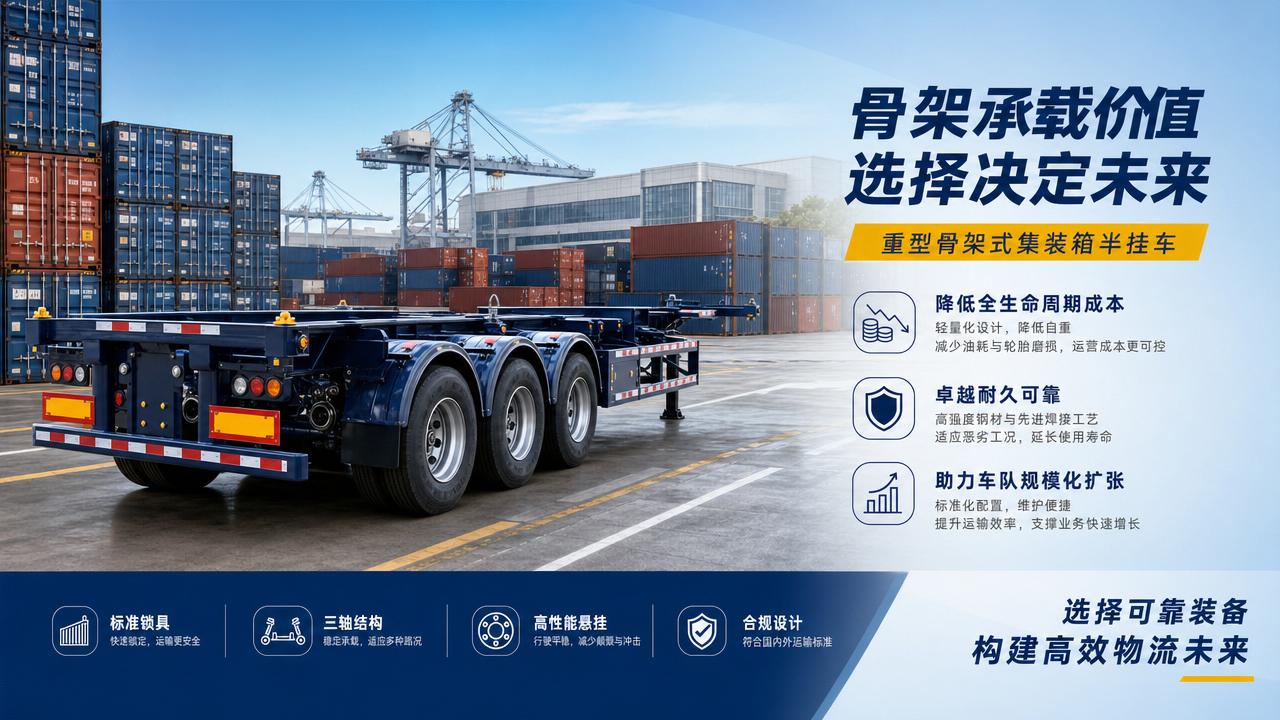
Before expanding your fleet, understanding the real cost structure of a Skeleton (Container) Semi-Trailer is critical. Purchase price alone rarely reflects total ownership cost.
In engineering vehicle operations, container transport efficiency depends on chassis strength, axle layout, compliance readiness, maintenance intervals, and supplier delivery stability.
A low initial quote can hide long-term expenses through tire wear, frame fatigue, downtime, and delayed parts support. These risks grow quickly during fleet expansion.
This guide explains the main financial risks behind a Skeleton (Container) Semi-Trailer purchase, how to compare options, and what to verify before ordering at scale.
What makes a Skeleton (Container) Semi-Trailer cost more over time?
The biggest mistake is focusing only on invoice price. A Skeleton (Container) Semi-Trailer creates costs throughout its operating life.
These costs usually include preventive maintenance, unscheduled repairs, spare parts lead time, chassis corrosion protection, and legal compliance in destination markets.
Frame material quality matters immediately. If steel grade, cross-member welding, or anti-rust treatment are weak, repair frequency rises under heavy container cycles.
Axle and suspension selection also changes operating cost. A cheaper setup may increase tire scrub, reduce stability, and create earlier failures on uneven port or construction routes.
Landing gear, twist locks, brake chambers, and electrical harnesses seem minor. In reality, these are common downtime triggers in daily container movement.
For engineering vehicle fleets, downtime often costs more than repairs. Missed dispatch windows can affect project schedules, port turnover, and cash flow.
Hidden ownership cost drivers
- Accelerated tire wear from poor axle alignment
- Frame cracking from overload or weak welding quality
- Brake imbalance causing compliance failures
- Rust damage from inadequate surface treatment
- Slow spare parts replacement due to weak export support
How do chassis design and axle configuration affect financial risk?
A Skeleton (Container) Semi-Trailer must match route conditions, container weight patterns, and loading frequency. Wrong configuration creates direct and recurring cost pressure.
The chassis is the core asset. A stronger beam structure usually costs more initially but protects against fatigue under repeated terminal and highway cycles.
Axle number affects payload distribution, regulation compliance, and maintenance cost. A 2-axle trailer may reduce purchase cost but limit flexibility on heavier operations.
A 3-axle Skeleton (Container) Semi-Trailer often offers better load sharing. However, it adds tire count, brake service points, and suspension components.
Suspension choice matters too. Mechanical suspension is simple and durable, while air suspension can improve cargo protection and ride quality but increases maintenance complexity.
Container locking layout is another risk area. Poorly positioned twist locks may slow loading cycles or create safety concerns with mixed container sizes.
Key design checks before ordering
- Confirm rated payload against actual operating loads
- Verify axle brand, capacity, and service availability
- Inspect beam dimensions and welding consistency
- Check anti-corrosion coating specifications
- Review compatibility with 20ft, 40ft, or mixed containers
Which maintenance and downtime risks are most often underestimated?
Maintenance risk is often underestimated because many trailer components look standard. Yet service intervals and component life vary significantly between suppliers.
Brake systems are a frequent source of hidden cost. Inconsistent chamber quality, weak valves, or poor pipe routing can lead to repeated failures.
Electrical faults are another recurring issue. Lighting harnesses exposed to moisture, vibration, and road debris often fail sooner than expected.
Tire-related expenses escalate when axle geometry is inaccurate. Uneven wear reduces casing life and increases roadside replacement risk.
Landing gear and kingpin wear should not be ignored. These parts face heavy operational stress during high-frequency loading and yard movement.
For a Skeleton (Container) Semi-Trailer fleet, spare parts access can determine whether downtime lasts hours or weeks. Export support capability is therefore part of cost control.
Maintenance warning signs
- No clear maintenance schedule from supplier
- Unspecified consumables and replacement parts list
- No after-sales response time commitment
- No documentation for axle, brake, or suspension brands
How can compliance, logistics, and delivery timing increase total cost?
A Skeleton (Container) Semi-Trailer may be technically suitable but commercially risky if it does not align with destination regulations and shipping schedules.
Regulatory issues may involve axle load limits, lighting rules, reflective markings, braking standards, and dimensional restrictions. Non-compliance creates delay, modification cost, or rejection.
Documentation quality matters in international trade. Missing certificates, incorrect specifications, or customs errors can extend delivery cycles and increase demurrage.
Production lead time is another overlooked cost factor. Expansion plans often depend on synchronized deployment, not random unit arrivals.
If supply is unstable, mixed trailer specifications may enter one fleet. That creates parts complexity, inconsistent maintenance, and training inefficiency.
A reliable exporter can reduce these risks through inventory availability, coordinated logistics, quality inspection, and full-process document support.
Shandong Livol Truck International Trade Co., Ltd. offers this type of support through strong export experience, authorized vehicle resources, and stable supply capability.
What should be compared before choosing a Skeleton (Container) Semi-Trailer supplier?
Supplier comparison should go beyond unit quotation. The right evaluation model includes technical quality, delivery capacity, export service, and long-term support.
Start with manufacturing consistency. Ask for welding details, steel specifications, coating process, and component brand lists.
Then review operational support. A supplier should explain spare parts planning, documentation handling, inspection procedures, and claims response.
Inventory and delivery assurance are equally important. During fleet expansion, delayed trailers can postpone route activation and weaken return on investment.
An experienced commercial vehicle exporter brings additional value by coordinating customization, customs clearance, and shipping execution under one process.
FAQ: What are the most practical pre-expansion checks?
Is the cheapest Skeleton (Container) Semi-Trailer usually the best value?
Usually not. Lower upfront price can be offset by higher maintenance, shorter component life, and weaker delivery or parts support.
How many axles should be selected?
It depends on payload, route regulations, and operating surface conditions. Match axle count to real load distribution, not average assumptions.
Why does anti-corrosion treatment matter so much?
Port humidity, road chemicals, and heavy use accelerate rust. Better coating reduces structural degradation and repainting or repair expense.
What documents should be confirmed before shipment?
Confirm technical specifications, inspection records, customs documents, and any market-specific compliance certificates required at destination.
How can supply reliability affect operating cost?
Unstable delivery disrupts rollout plans, creates mixed fleet standards, and complicates maintenance, training, and spare parts stocking.
Conclusion: How should expansion decisions be made with lower risk?
A Skeleton (Container) Semi-Trailer should be evaluated as a long-life operating asset, not only as a purchase item. Total cost depends on design, durability, support, and compliance.
Before expanding, compare chassis structure, axle configuration, maintenance exposure, export documentation, and supplier delivery consistency in one decision framework.
For engineering vehicle operations, the most profitable choice is often the trailer that reduces downtime, protects tire life, and arrives with complete support.
If you need a dependable export partner for commercial vehicles and tailored transport solutions, Shandong Livol Truck International Trade Co., Ltd. can support selection, customization, logistics, and after-sales coordination.
Search Starts Here