
News
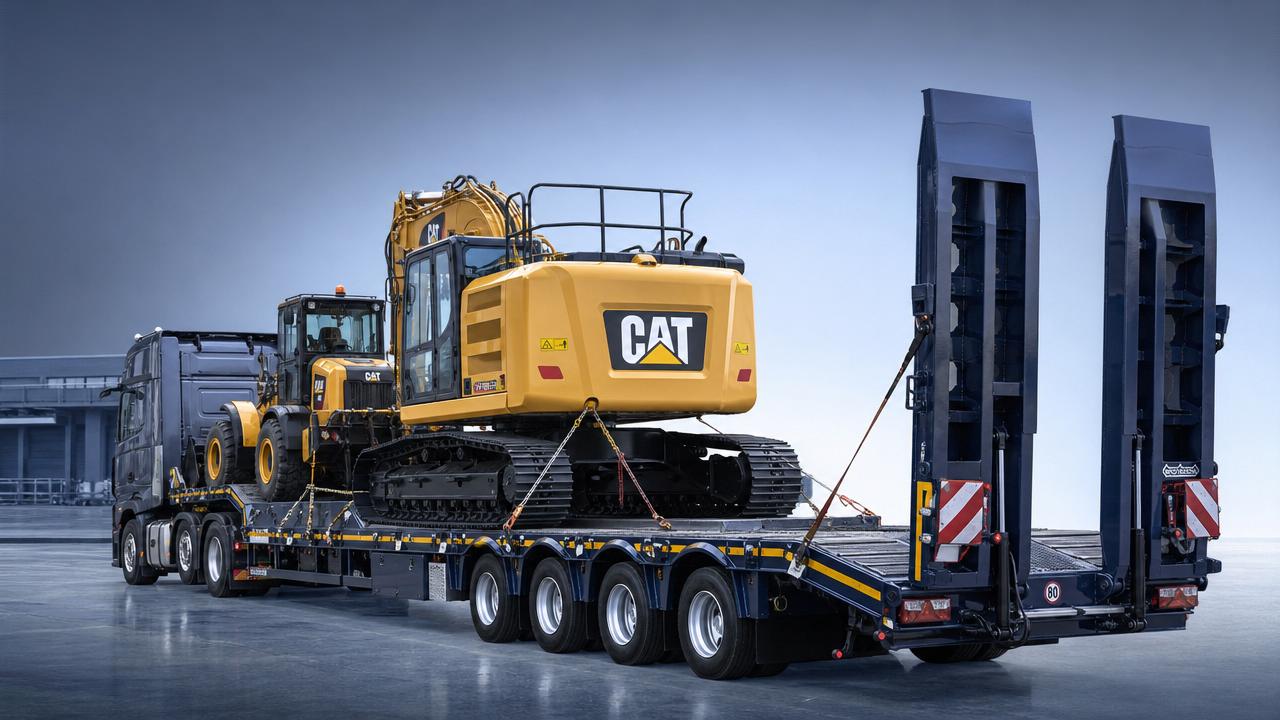
Choosing the right Flatbed Semi-Trailer for heavy equipment loads is critical for safe transport, stable operations, and lower lifetime cost.
In engineering vehicle applications, the wrong trailer can cause overloading, poor balance, tire wear, permit trouble, and delivery delays.
This guide answers the most common buying questions and explains how to compare specifications, operating needs, and supplier support before ordering.
What is a Flatbed Semi-Trailer, and why is it widely used for heavy equipment loads?
A Flatbed Semi-Trailer is an open-deck transport trailer designed for cargo that is oversized, heavy, or difficult to load into enclosed bodies.
For engineering vehicles, it is commonly used to move excavators, loaders, rollers, steel structures, generators, and construction machinery.
Its open platform allows side, rear, and crane loading.
That flexibility improves handling at ports, yards, mines, and project sites with limited loading infrastructure.
Compared with box trailers, a Flatbed Semi-Trailer offers easier cargo securing, simpler inspection, and better accommodation for tall or irregular equipment.
However, open-deck transport also demands stronger attention to lashing points, weight distribution, and weather exposure.
- Open deck for oversized machinery
- Fast loading and unloading
- Flexible tie-down arrangement
- Suitable for cross-border and port operations
How do load capacity and deck dimensions affect Flatbed Semi-Trailer selection?
Capacity is the first technical filter when selecting a Flatbed Semi-Trailer.
It must match actual operating weight, not only brochure weight or nominal machine size.
Heavy equipment often includes attachments, extra fuel, buckets, breakers, or counterweights that increase transport mass.
A safe decision starts with the heaviest realistic load.
Deck length matters because axle spacing and cargo center of gravity must stay balanced.
If the deck is too short, the machine may overload one axle group.
If it is too long, dead weight and turning difficulty increase.
Deck width is also important for tracked and wheeled equipment.
Oversized width may require escorts or permits in some markets.
Check these dimensions before buying:
- Rated payload and gross combination weight
- Usable deck length and width
- Deck height from the ground
- Loading angle with ramps fitted
- Weight concentration at equipment contact points
A practical approach is to create a load list for the next three to five years.
That avoids buying a trailer that is cheap today but restrictive tomorrow.
Which axle configuration, suspension, and frame design are best for demanding engineering transport?
Axle configuration influences payload stability, road compliance, maintenance cost, and tire life.
A two-axle trailer may suit lighter equipment and shorter regional routes.
Three-axle and multi-axle models usually fit heavier engineering machines and higher legal load distribution requirements.
Suspension choice also affects performance.
Mechanical suspension is simple, durable, and often easier to service in remote areas.
Air suspension can improve ride quality and cargo protection, especially on longer paved routes.
For mixed road conditions, frame strength becomes a priority.
Look at the main beam design, cross-member spacing, welding quality, and high-stress reinforcement zones.
A robust Flatbed Semi-Trailer should resist twisting during off-center loading and rough site entry.
What loading features should a Flatbed Semi-Trailer have for excavators, loaders, and other machinery?
Loading efficiency is not only about speed.
It is about safety, repeatability, and reduced damage risk during daily operation.
For heavy machinery, ramp design is a major buying point.
Spring-assisted, hydraulic, or foldable ramps should match equipment track width, approach angle, and loading frequency.
The deck surface needs enough grip for steel tracks, muddy tires, or wet conditions.
Anti-slip steel plate or hardwood flooring may be selected depending on machinery type and local service preferences.
Tie-down systems deserve close inspection.
A quality Flatbed Semi-Trailer should include strong lashing rings, side posts if needed, and secure anchor points placed along the real load path.
Consider adding these practical options:
- Rear ramps sized for tracked machinery
- Toolbox for chains, binders, and accessories
- Outriggers for wider cargo support
- Twist locks for mixed container use
- Wear plates at frequent wheel contact areas
These details improve real-world usability much more than a simple specification sheet suggests.
How can you compare compliance, durability, and total cost before ordering?
A low purchase price does not always mean lower transport cost.
The best Flatbed Semi-Trailer is compliant, durable, serviceable, and suited to the destination market.
Start with road regulations.
Check axle load limits, lighting rules, reflective markings, braking systems, and dimensions allowed in the operating country.
Brake components, tires, landing gear, and kingpin quality directly affect uptime.
Paint and anti-corrosion treatment also matter if the trailer will serve coastal, humid, or mining environments.
Ask for material details, inspection records, and photos of production stages.
When evaluating cost, compare more than the invoice amount.
What common mistakes should be avoided when buying a Flatbed Semi-Trailer?
One common mistake is choosing by rated tonnage alone.
Without checking deck length, axle spacing, and center of gravity, the trailer may still be unsuitable.
Another mistake is ignoring the loading environment.
A trailer used on quarry roads needs different reinforcement than one used mainly on highways.
Some buyers also overlook spare part availability.
Even a strong Flatbed Semi-Trailer becomes expensive if standard service parts are hard to source locally.
The most avoidable errors include:
- Underestimating real cargo weight
- Ignoring permit and road law limits
- Accepting weak tie-down arrangements
- Overlooking corrosion protection
- Choosing nonstandard components without support
A specification review based on actual routes and actual machines prevents most of these problems.
How can a reliable exporter help with custom Flatbed Semi-Trailer sourcing?
For international orders, supplier capability is as important as trailer specification.
Shandong Livol Truck International Trade Co., Ltd. is based in Shandong, China, and focuses on dependable commercial vehicle export solutions.
With strong industry resources and global trade experience, the company supports vehicle selection, customization, documentation, customs clearance, and logistics coordination.
As the official authorized domestic and overseas dealer for FOTON, SHACMAN, and SINOTRUK, it maintains broad supply capability and stable delivery support.
A professional team can help align the Flatbed Semi-Trailer with destination regulations, cargo profile, and expected operating conditions.
That reduces sourcing risk and shortens the path from inquiry to operation.
FAQ summary: what should be checked before making the final decision?
Selecting a Flatbed Semi-Trailer for heavy equipment loads requires more than checking price and tonnage.
The right choice combines correct capacity, practical deck design, reliable structure, legal compliance, and dependable supplier support.
If you are planning a new purchase, prepare your equipment list, route conditions, and local compliance requirements first.
Then compare a customized Flatbed Semi-Trailer solution that can deliver safe transport and long-term operating value.
Search Starts Here