
News
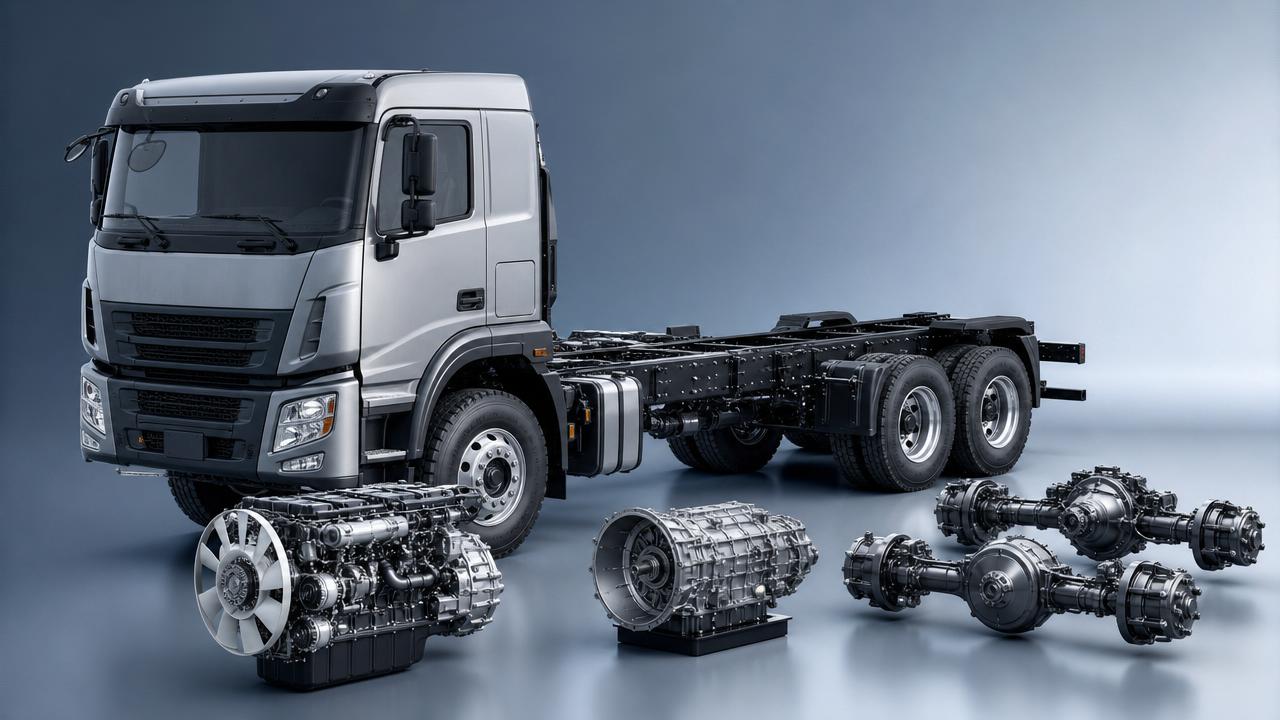
For technical evaluators comparing heavy-duty options in 2026, a clear Cangshan Vehicle Configuration List is essential for accurate specification review and decision-making.
From chassis structure and powertrain matching to payload capacity, axle layout, and serviceability, the right comparison framework reduces procurement risk and improves lifecycle performance.
This article focuses on the real evaluation points behind a Cangshan Vehicle Configuration List, helping readers compare configurations based on duty requirements, operating conditions, compliance, and export readiness.
What Technical Evaluators Actually Need from a Cangshan Vehicle Configuration List
The core search intent behind “Cangshan Vehicle Configuration List” is not just to view a model sheet. Evaluators want comparable technical data that supports shortlisting and procurement decisions.
In practice, they are trying to answer several questions quickly: Is the configuration structurally suitable, is the drivetrain properly matched, and will the truck perform reliably in local conditions?
They also need to identify hidden differences that are not obvious in basic brochures. Two vehicles may look similar on paper, yet differ significantly in axle rating, frame strength, or service accessibility.
That is why a useful configuration list should go beyond headline figures. It should provide enough detail to judge work suitability, maintenance implications, and lifecycle cost risk.
For 2026 heavy-duty evaluation, the most valuable comparison points are chassis design, engine and transmission matching, axle layout, suspension, braking systems, dimensions, payload engineering, and supportability.
Start with Application Fit, Not Just Maximum Numbers
A common evaluation mistake is to compare only maximum horsepower, gross weight, or cargo volume. For technical assessors, application fit is more important than isolated top-end figures.
If the vehicle will work in mining, construction haulage, municipal support, or regional logistics, the ideal configuration priorities will differ. Duty cycle must define the comparison framework from the beginning.
For example, a truck intended for steep grades and overloaded site access may need stronger low-speed torque, reinforced suspension, and higher cooling capacity rather than just a larger rated payload.
Likewise, vehicles for long-distance road transport may place more value on fuel efficiency, gearbox ratios, driver comfort, and service intervals than on extreme chassis reinforcement.
When reviewing a Cangshan Vehicle Configuration List, evaluators should map every specification back to actual operating scenarios. This helps prevent overspecification, underspecification, and procurement mismatches.
Chassis and Frame Structure: The First Layer of Technical Screening
The chassis is one of the most important sections in any heavy-duty configuration list because it directly affects durability, loading stability, and adaptation to harsh road conditions.
Technical evaluators should review frame section dimensions, material grade, reinforcement zones, cross-member structure, and overall torsional resistance, especially for off-road or uneven terrain applications.
A stronger frame is not only about heavier steel. Proper structural design matters for load distribution, body integration, and long-term resistance to fatigue cracking under repeated stress cycles.
Pay attention to wheelbase options as well. Wheelbase affects turning radius, body fitment flexibility, axle loading distribution, and stability under full payload or mixed-road conditions.
Ground clearance and approach or departure angles may also be critical if the truck is expected to enter construction sites, quarries, or infrastructure projects with poor surface conditions.
If body installation is part of the project scope, the chassis review should also include PTO compatibility, mounting points, electrical interface readiness, and body-builder adaptation convenience.
Powertrain Matching Matters More Than Engine Power Alone
One of the most misunderstood items in a Cangshan Vehicle Configuration List is engine output. Horsepower alone does not determine whether a heavy-duty truck is well configured.
Technical evaluators should assess the complete powertrain match: engine displacement, torque curve, emission level, transmission type, gear ratios, rear axle ratio, and tire rolling characteristics.
A properly matched drivetrain determines gradeability, acceleration under load, fuel economy, thermal behavior, and drivability in stop-start, highway, or mixed construction environments.
Torque availability at working engine speed is often more important than peak horsepower. For heavy start-stop duty, strong low-end torque can improve performance and reduce clutch stress.
Transmission choice also changes operating efficiency. Manual gearboxes may offer cost simplicity, while automated manual transmissions can support consistency, driver ease, and fuel control in fleets.
Rear axle ratio should never be reviewed in isolation. It must be compared together with transmission gearing and tire size to confirm whether the truck is optimized for speed, traction, or loadability.
Cooling system capacity is another practical checkpoint. In hot climates, mountainous routes, or overload-prone operations, insufficient thermal management becomes a major reliability risk.
Axle Layout, Load Ratings, and Suspension Define Real Working Capacity
For technical assessment, the nominal payload is less useful than the underlying load-bearing system. Evaluators should closely compare axle configuration, axle ratings, and suspension architecture.
Whether the truck uses 4x2, 6x4, 8x4, or another layout changes traction, turning behavior, legal load distribution, and body application suitability.
Front and rear axle rated capacities should be reviewed against expected actual operating weight, not only catalog payload assumptions. This is especially important where road conditions encourage dynamic overload stress.
Suspension type also deserves serious attention. Leaf spring systems may offer ruggedness and ease of maintenance, while air suspension can improve ride quality and cargo protection in certain transport cases.
For dump, mixer, or engineering support applications, suspension durability under repeated shock loads is often more important than ride comfort. Equalizer balance and bushing robustness become relevant checkpoints.
Technical evaluators should also review tire specification, ply rating, and rim matching because tire suitability directly affects traction, fuel consumption, wear rates, and legal road compliance.
Brake, Safety, and Control Systems Should Be Evaluated for the Actual Region of Use
Safety systems in a Cangshan Vehicle Configuration List should be reviewed from both a specification and application perspective. The key issue is not feature count, but operational relevance.
Core braking details include service brake type, drum or disc arrangement, ABS, EBS availability, parking brake design, and auxiliary braking systems such as engine brake or retarder compatibility.
In mountainous regions or heavy descending duty, auxiliary braking capacity can significantly reduce liner wear and improve safety margins. This should be treated as a high-priority comparison item.
Steering system design, turning radius, and control stability also matter, especially for urban engineering access, site maneuvering, or long wheelbase applications with constrained turning conditions.
Evaluators should confirm whether lighting, reflective markings, underrun protection, warning systems, and electronic control features meet destination market requirements and customer safety expectations.
If the export market has specific regulations, configuration review must include compliance alignment early. Retrofitting after shipment can increase cost, delay deployment, and create avoidable certification risk.
Dimensions, Weight Distribution, and Body Compatibility Affect Fleet Usability
Vehicle dimensions are often treated as routine brochure data, but for technical evaluators they directly influence route access, body design, loading efficiency, and legal operability.
Overall length, width, height, front overhang, rear overhang, and axle spacing should be reviewed against local transport regulations and site constraints.
Gross vehicle weight rating, kerb weight, and axle-by-axle weight distribution are equally important. They determine whether the truck can deliver usable payload without breaching local legal limits.
Body compatibility should also be checked in detail. For dump bodies, tankers, flatbeds, cargo boxes, and special engineering modules, mounting envelope and center-of-gravity effects matter greatly.
Even a strong chassis can become operationally inefficient if the body design creates poor balance, excessive rear overhang stress, or difficult maintenance access.
For project-based procurement, technical teams should ask for dimensional drawings and body integration references, not just a simplified configuration summary.
Serviceability and Parts Support Are Critical Evaluation Factors in 2026
Technical assessors increasingly look beyond purchase specifications and toward uptime performance. A vehicle that appears attractive initially may become costly if maintenance access is poor.
That makes serviceability a major part of the Cangshan Vehicle Configuration List review process. Engine layout, filter access, electrical routing, harness protection, and diagnostic interface availability all matter.
Standardized components can simplify parts stocking and technician training. Vehicles with widely supported engine, gearbox, and axle systems are often easier to maintain across dispersed fleets.
It is also wise to compare service intervals, lubrication requirements, and wear-part consumption expectations. These factors affect total operating cost more than many buyers initially expect.
For export projects, spare parts planning should be discussed before order confirmation. Technical teams should confirm recommended fast-moving parts lists, packaging plans, and replenishment lead times.
After-sales capability is another risk-control item. Professional exporters with authorized brand channels are better positioned to coordinate technical documentation, parts support, and issue escalation.
How to Compare Configuration Lists More Accurately Across Suppliers
Configuration comparison becomes difficult when suppliers use different terminology or omit key engineering details. A structured comparison template helps evaluators avoid misleading one-line summaries.
Start by standardizing the comparison sheet into major groups: chassis, engine, transmission, axle, suspension, tires, brakes, dimensions, weights, cab, electrical systems, and body adaptation items.
Then classify each item as mandatory, preferred, or optional based on application need. This prevents less important features from distracting attention away from high-risk technical requirements.
Where data is incomplete, request clarification in measurable terms. Instead of accepting “heavy-duty axle,” ask for model code, rated capacity, reduction type, and maintenance specification.
It is also useful to compare not only the vehicle itself but the completeness of deliverables. Technical manuals, homologation support, parts lists, and pre-shipment inspection records can influence decision quality.
A well-prepared Cangshan Vehicle Configuration List should therefore support engineering review, cost review, compliance review, and operational deployment planning at the same time.
Why Export Execution Quality Matters Alongside Vehicle Specs
Even when the vehicle configuration is correct, project outcomes can still suffer if export execution is weak. Technical suitability and supply-chain reliability should be evaluated together.
For overseas buyers, documentation accuracy, customs handling, packaging control, and logistics coordination all affect whether a configured truck reaches the site ready for use.
That is why many professional buyers prefer suppliers with authorized brand access, stable stock, and a proven export team rather than relying only on nominal vehicle price.
Shandong Livol Truck International Trade Co., Ltd. operates as an authorized dealer for FOTON, SHACMAN, and SINOTRUK, with broad domestic 4S coverage and available inventory resources.
For technical evaluators, this matters because configuration confirmation, customization communication, pre-delivery inspection, and after-sales coordination are easier when the exporter has direct brand and supply support.
Full-process service, including vehicle selection, customization, documentation, customs clearance, and logistics, can reduce avoidable risk in international engineering vehicle procurement.
Practical Conclusion for 2026 Technical Evaluation
A useful Cangshan Vehicle Configuration List is not just a catalog reference. It is a decision tool that helps technical evaluators judge structural suitability, drivetrain logic, payload integrity, and maintenance practicality.
The best comparison approach starts with the real duty cycle, then checks whether chassis strength, powertrain matching, axle system, suspension, braking, dimensions, and compliance all support that mission.
Evaluators should also look beyond paper specifications to serviceability, parts readiness, and export execution quality. These factors strongly influence uptime, deployment speed, and total lifecycle value.
In 2026, the safest procurement decisions will come from detailed, application-based comparison rather than headline-number selection. A disciplined review process turns a configuration list into a reliable engineering filter.
For organizations sourcing Chinese heavy-duty vehicles for international projects, combining a strong technical review with professional export support is often the most practical path to lower risk and better fleet performance.
Search Starts Here