
News
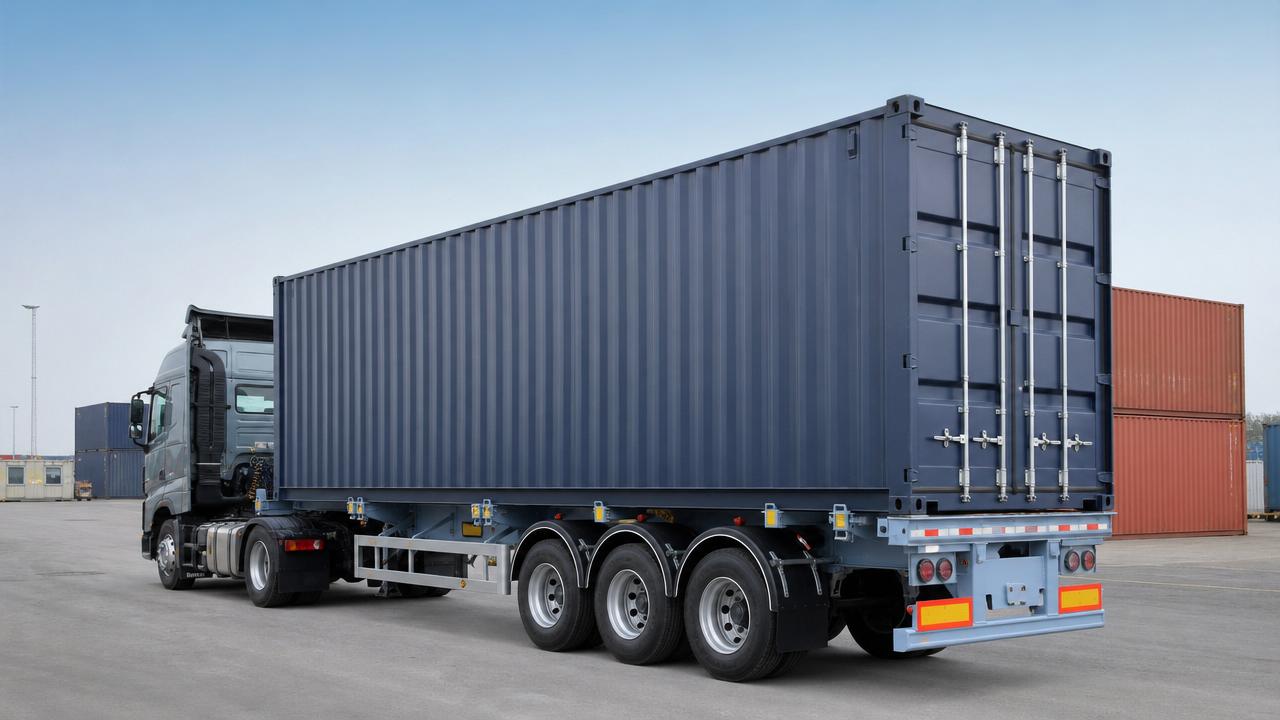
Choosing the right Skeleton (Container) Semi-Trailer directly affects payload efficiency, container security, and route compatibility. For procurement professionals, understanding load capacity, twist lock configuration, and operating road conditions is essential to reducing transport risk and improving fleet performance. This guide explains the key selection factors to help you source a trailer that fits your application, budget, and long-term operational goals.
In container transport, a poor trailer match can create avoidable costs at several points: underutilized payload, container movement on rough roads, axle overload risks, and downtime caused by premature wear. For buyers managing fleet expansion, project cargo support, port drayage, or regional logistics, selection should go beyond price and focus on operating fit.
A Skeleton (Container) Semi-Trailer is not a generic product. Chassis structure, axle layout, locking positions, kingpin load distribution, and suspension choice all affect how well the trailer performs across 20ft, 40ft, or mixed container applications. The right specification can improve loading flexibility over a 3- to 5-year service cycle and reduce maintenance interruptions.
For international procurement teams, supplier capability also matters. Shandong Livol Truck International Trade Co., Ltd., based in Shandong, China, supplies commercial vehicles with full-process export support covering selection, customization, documentation, customs clearance, and logistics, helping buyers reduce coordination risk and shorten delivery lead times.
Why Trailer Selection Starts with Application Mapping
Before comparing prices, procurement teams should define 4 basic operating variables: container size mix, average payload, route condition, and annual trip frequency. These factors determine whether a standard skeleton trailer is sufficient or whether reinforced beams, additional locking points, or a different axle arrangement will create better long-term value.
Typical Operating Scenarios
Port-to-warehouse transport often favors fast loading, frequent short trips, and compatibility with both 20ft and 40ft containers. Cross-border or inland routes usually place more emphasis on suspension durability, axle reliability, and compliance with road weight limits over distances of 300 to 1,000 km per trip.
Construction logistics and engineering support can be harsher. Uneven road surfaces, temporary access roads, and overloaded cargo requests create higher stress on the main beam and twist lock area. In these cases, a procurement decision based only on initial unit cost can increase repair frequency within the first 12 to 24 months.
Questions Buyers Should Clarify Early
- Will the trailer carry mainly 20ft containers, 40ft containers, or alternating loads?
- Is the route primarily paved highway, mixed regional roads, or rough industrial access?
- What is the target gross payload range, such as 25–35 tons or above?
- How many trips per month are expected per unit: 20, 40, or more?
- Are local regulations limiting axle loads, overall length, or suspension type?
The table below helps procurement teams connect operating scenario with specification logic. This approach reduces the risk of ordering a Skeleton (Container) Semi-Trailer that performs well on paper but poorly in actual service conditions.
The key takeaway is simple: application fit should define specification selection. A trailer intended for 50 short port trips per month may need very different priorities from a unit running 8 long inland trips on mixed roads, even if both carry standard containers.
Payload Planning: More Than a Maximum Number
Payload is usually the first data point buyers request, but the practical issue is not only maximum capacity. Procurement teams should evaluate legal road limits, axle distribution, tare weight, and cargo density together. A trailer with a high nominal capacity but poor load balance can create compliance or tire wear problems during daily operation.
Understand Gross Combination and Tare Weight
For a Skeleton (Container) Semi-Trailer, lower tare weight can improve payload efficiency, especially in markets where every additional 300–500 kg matters. However, reducing weight too aggressively may weaken structural reserve on rough routes. Buyers should compare tare weight against beam section design, steel grade, and intended loading intensity rather than treating low weight as an automatic advantage.
In many practical procurement discussions, payload planning is best handled in 3 layers: legal payload target, routine operating payload, and occasional peak load. If routine loads are 28–32 tons but peak demand sometimes reaches 35 tons, the trailer specification should support the actual working pattern, not only average conditions.
Common Payload Risks
- Choosing a light chassis for roads with frequent potholes or uneven ramps.
- Ignoring kingpin load impact on tractor matching.
- Using one trailer design for both dense 20ft cargo and lighter 40ft cargo without checking load concentration.
- Focusing on axle rating alone while overlooking tire and suspension limitations.
The following comparison table shows how payload requirements typically affect core trailer decisions. It helps buyers avoid a one-size-fits-all approach when sourcing a Skeleton (Container) Semi-Trailer for different duty cycles.
For procurement, the most useful metric is often cost per operational ton moved over 12 months, not just trailer price. A more suitable payload configuration can reduce tire replacement frequency, welding repairs, and downtime, creating better fleet economics over the service life.
Twist Locks: The Small Components with Major Safety Impact
Twist locks are one of the most overlooked purchasing details in a Skeleton (Container) Semi-Trailer. Yet they directly affect container stability, loading speed, and operational safety. If lock positions do not match your container mix or if lock strength is insufficient for route conditions, the entire trailer can become a weak point in the transport chain.
Fixed vs. Adjustable Lock Layouts
For fleets carrying mostly one container size, fixed twist lock layouts may be acceptable and cost-efficient. For mixed fleets handling 20ft and 40ft containers on a rotating basis, adjustable or multi-position lock configurations usually provide better operational flexibility. This is especially useful when dispatch planning changes week by week.
Procurement teams should ask at least 5 questions here: how many lock positions are included, what container lengths they support, whether locks are manual or lift-assist, how they resist corrosion, and how easily they can be inspected or replaced in field service.
Lock Configuration Priorities
- Reliable engagement under repeated loading cycles.
- Compatibility with standard container corner casting positions.
- Simple operation for loading crews in high-turnover yards.
- Resistance to mud, water, rust, and impact deformation.
- Clear maintenance access during routine inspections every 1–3 months.
The table below outlines typical twist lock choices and where they fit best. For buyers, this supports a practical discussion with the supplier before finalizing trailer drawings or export documentation.
In many fleets, twist lock durability is a hidden cost driver. A well-matched lock system can reduce rework, improve loading confidence, and lower the chance of damage claims caused by poor container restraint during transit.
Route Fit: Matching Chassis Design to Road Reality
A trailer that performs well on smooth port roads may not perform equally well on mountain corridors, industrial zones, or unpaved site access. Route fit is where suspension, axle spacing, tire specification, and frame reinforcement become critical purchasing variables. For procurement teams, route analysis should be treated as seriously as payload planning.
Road Conditions and Suspension Choice
Mechanical suspension is widely selected for durability, simple maintenance, and cost control. It often fits regions where service infrastructure is basic and field repair speed matters. Air suspension may support better ride protection and compliance in some markets, but it can add complexity and should be chosen with local maintenance capacity in mind.
For routes with frequent potholes, overloaded ramps, or quarry access segments, buyers should check beam reinforcement, cross-member design, and lock mounting strength. If more than 20% of monthly distance is on broken or uneven road, structural durability deserves higher weighting in the selection process.
Route Fit Checklist
- Map the average trip length, such as under 100 km, 100–500 km, or above 500 km.
- Estimate the rough-road share of operation, for example 10%, 20%, or 30%.
- Confirm bridge, port, and national axle limit rules on the target route.
- Review available spare parts support for axles, tires, and locks.
- Match the trailer to the tractor unit’s fifth wheel height and load distribution.
Procurement mistakes often happen when route assumptions are too general. “Highway use” may still include damaged industrial approaches, congested city terminals, and seasonal flooding. These route details affect how a Skeleton (Container) Semi-Trailer ages over its first 50,000 to 100,000 km.
Procurement Evaluation: From Technical Review to Supplier Execution
Selecting the right trailer is only part of the buying decision. International buyers also need confidence in specification confirmation, inventory availability, export handling, and after-sales coordination. A technically suitable trailer can still become a procurement problem if drawings, packing, documents, or delivery milestones are poorly managed.
What to Verify Before Purchase Order Release
At minimum, buyers should confirm 6 items before issuing a purchase order: container sizes to be supported, target payload range, axle and suspension configuration, lock arrangement, tractor compatibility, and required export documents. This reduces variation risk and shortens the approval cycle between technical, operations, and finance teams.
Lead time planning is equally important. Depending on stock status, customization depth, and destination market requirements, export supply can move on a fast-delivery basis or require several production and shipping stages. Buyers should clarify not only shipment timing, but also inspection points and packaging expectations.
Practical Supplier Evaluation Points
- Can the supplier explain specification trade-offs clearly, not just quote a price?
- Is there support for customization based on route, payload, and container mix?
- Can the supplier coordinate documentation, customs clearance, and logistics?
- Is after-sales communication structured for spare parts and technical follow-up?
- Does inventory capacity support stable supply for batch procurement?
Shandong Livol Truck International Trade Co., Ltd. supports commercial vehicle export with authorized dealership resources, broad domestic network coverage, and full-process service. For procurement teams sourcing a Skeleton (Container) Semi-Trailer alongside tractors or other engineering vehicle solutions, this integrated coordination can reduce cross-vendor complexity and improve delivery planning.
Common Buying Mistakes and How to Avoid Them
Mistake 1: Buying Only on Price
A low initial purchase price may hide weaker lock assemblies, lighter structural sections, or less suitable suspension. If the trailer enters hard service, repair costs within 12 months can erase the apparent savings. Procurement teams should evaluate acquisition cost together with maintenance frequency and expected service intensity.
Mistake 2: Ignoring Container Mix
If dispatch includes both 20ft and 40ft containers, fixed layout assumptions can reduce utilization. A more flexible Skeleton (Container) Semi-Trailer may cost more upfront, but it can improve weekly scheduling efficiency and reduce idle equipment time.
Mistake 3: Underestimating Road Severity
Routes are often described as “mostly paved,” yet repeated terminal ramps, rough loading yards, and damaged secondary roads generate high cumulative stress. Buyers should request specifications based on actual route conditions, not idealized road descriptions.
Mistake 4: Leaving Technical Details Out of the Contract
Clear purchase documentation should include trailer type, lock positions, axle configuration, suspension type, required compatibility, and inspection expectations. This is especially important in cross-border orders where small differences in interpretation can create delivery disputes or operational mismatch.
Final Selection Advice for Procurement Teams
The best Skeleton (Container) Semi-Trailer is the one that matches your real operating pattern across payload, lock configuration, and route conditions. Buyers should assess at least 4 dimensions together: legal and practical payload, container handling flexibility, road severity, and supplier execution capability.
When these factors are aligned, the trailer becomes a productive asset rather than a recurring operating issue. A fit-for-purpose specification can improve fleet utilization, reduce preventable maintenance, and support more stable transport planning across daily, monthly, and annual operations.
If you are evaluating Skeleton (Container) Semi-Trailer options for port logistics, inland container transport, or engineering vehicle fleet support, Shandong Livol Truck International Trade Co., Ltd. can help you review specifications, customization points, export requirements, and delivery arrangements. Contact us today to get a tailored solution, discuss product details, and explore a sourcing plan that fits your market and route conditions.
Search Starts Here