
News
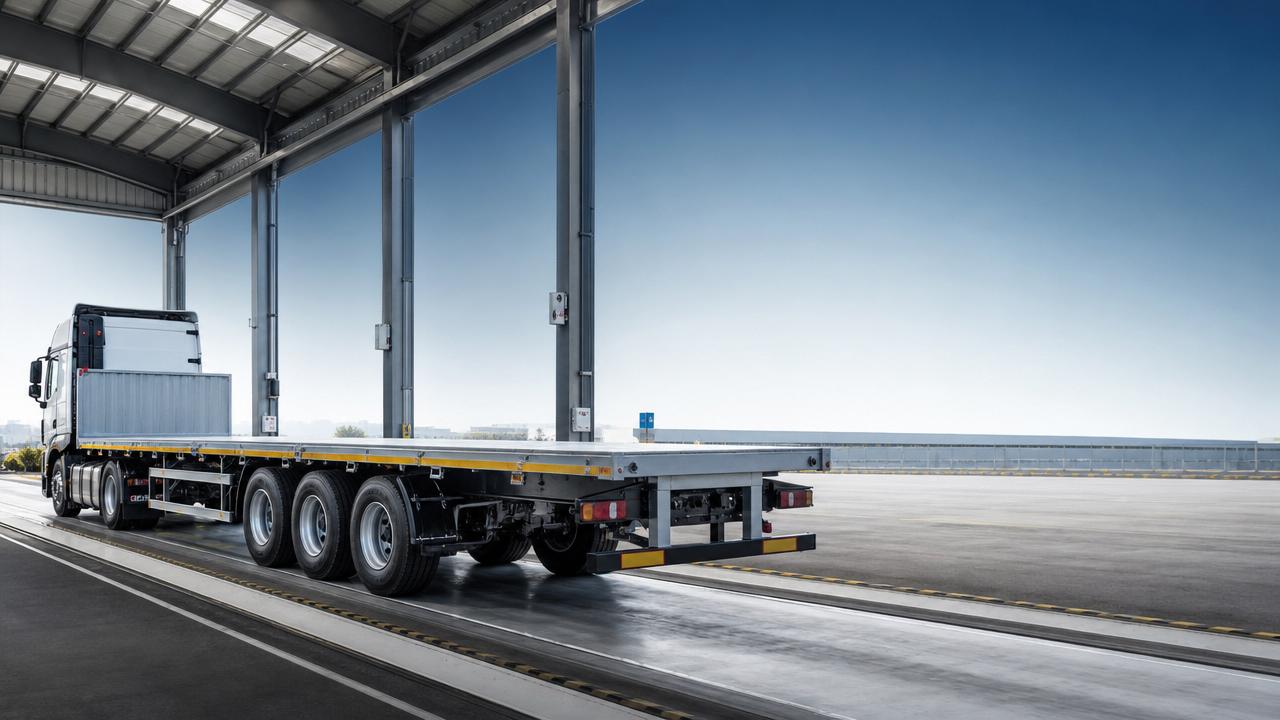
As 2026 approaches, Flatbed Semi-Trailer regulations and design standards are changing in ways that directly affect fleet investment, compliance costs, and transport efficiency. For business evaluators, understanding new weight rules, structural upgrades, and sourcing trends is essential for making informed purchasing decisions. This overview highlights the key market shifts shaping flatbed trailer value, operational reliability, and global procurement strategy.
For companies moving steel, machinery, construction materials, timber, and oversized cargo, the Flatbed Semi-Trailer remains one of the most adaptable assets in the engineering vehicle sector. Yet in 2026, buying decisions will depend less on headline price and more on payload efficiency, tare weight, axle compliance, deck durability, and export support.
Business evaluators are now expected to compare lifecycle value across 3 to 5 years, estimate route-specific legal payload limits, and assess whether a trailer design can support both current cargo profiles and future regulation changes. This makes specification review, supplier capability, and delivery reliability more important than ever.
Why 2026 Weight Rules Matter More Than Before
Weight compliance has always affected freight economics, but 2026 is bringing tighter enforcement and more detailed inspection practices across many regions. For a Flatbed Semi-Trailer, even a 300 kg to 800 kg tare weight difference can influence annual revenue when fleets run high-frequency routes.
In practical terms, business evaluators should focus on 4 linked variables: axle load limits, gross combination weight, trailer deadweight, and cargo distribution. A trailer that looks cost-effective at purchase may reduce legal payload or increase tire and suspension wear if the frame design is not optimized.
Key compliance pressures shaping trailer selection
Many transport markets are moving toward stricter weighbridge control, digital toll integration, and roadside checks supported by portable axle sensors. As a result, operators can no longer rely on nominal specifications alone. They need verified empty weight, accurate axle spacing, and stable load transfer under braking and turning.
- Single overload events can trigger fines, route delays, or insurance disputes.
- Improper axle distribution may reduce legal payload even when total gross weight appears acceptable.
- A heavy trailer can cut annual transport efficiency by 2% to 6% on repetitive bulk routes.
- Overbuilt structures may improve perceived strength but hurt payload returns in normal-duty applications.
Typical evaluation checkpoints
When reviewing a Flatbed Semi-Trailer for 2026 procurement, buyers should request at least 6 basic weight-related details: certified tare weight, axle rating, suspension type, kingpin load distribution, deck height, and frame material thickness. These factors directly affect route legality and cargo suitability.
The table below outlines common weight-rule considerations that often influence procurement decisions across regional and cross-border operations.
The main takeaway is that compliance value starts with design accuracy. A lighter Flatbed Semi-Trailer is not automatically better, and a heavier one is not automatically stronger. The right configuration is the one that aligns structure, legal thresholds, and cargo behavior on real routes.
Design Changes Reshaping the Flatbed Semi-Trailer Market
Design changes in 2026 are being driven by two competing goals: higher payload efficiency and better structural durability. For business evaluators, this means looking beyond visible dimensions and comparing how frame sections, deck materials, reinforcement points, and running gear are engineered.
In many markets, the preferred Flatbed Semi-Trailer is shifting from purely heavy-duty construction to balanced designs that cut unnecessary mass while preserving bending resistance and torsional stability. That balance often determines whether the trailer performs reliably over 200,000 km to 500,000 km service intervals.
Structural trends buyers should track
Common upgrades include optimized main beam geometry, selective reinforcement at high-stress zones, improved cross-member layouts, and better anti-corrosion preparation. These changes matter because flatbed applications frequently involve uneven loading, forklift impact, and repeated tie-down stress.
- High-strength steel is increasingly used to reduce deadweight without removing key support zones.
- Cross-member spacing is being refined to improve deck support for concentrated loads.
- Landing gear and kingpin areas are receiving more localized reinforcement.
- Surface treatment quality is becoming a stronger indicator of export durability.
Material and deck decisions
Deck configuration should match cargo reality. Steel plate decks may suit abrasive or point-load cargo, while wood-and-steel combinations are still common where load securing flexibility matters. Evaluators should compare maintenance intervals, replacement ease, and slip resistance rather than selecting solely by initial cost.
The following comparison shows how common design choices can affect performance, compliance, and long-term operating value.
For procurement teams, the best design is usually not the most complex option. It is the specification that fits cargo density, road condition, loading method, and service support. A well-matched Flatbed Semi-Trailer will usually outperform an overconfigured unit in total cost per kilometer.
Procurement Criteria for Business Evaluators in 2026
A strong trailer purchase decision should be based on a repeatable evaluation model. In B2B transport operations, the most reliable framework usually includes 5 dimensions: compliance fit, payload efficiency, durability, delivery assurance, and after-sales responsiveness.
This is especially important when sourcing internationally. A Flatbed Semi-Trailer may meet basic production standards, yet still create delays if documentation, configuration confirmation, or spare parts planning are incomplete before shipment.
A practical 5-step review process
- Define cargo type, route class, and legal weight threshold.
- Confirm target payload and acceptable tare weight range.
- Review frame, suspension, axle, and deck configuration.
- Check production lead time, export documents, and logistics plan.
- Verify parts support, inspection standards, and warranty response.
Questions that reduce procurement risk
Before approval, evaluators should ask at least 7 direct questions: What is the actual tare weight? Which cargo is the deck designed for? What is the axle brand and rating? How is corrosion protection handled? What documents are included? What is the normal delivery cycle? How are after-sales parts supplied?
Typical lead times can range from 2 to 6 weeks for available configurations and longer for custom builds. That makes inventory depth and supplier coordination a serious commercial factor, especially for projects that depend on synchronized tractor and trailer arrival.
Why supplier structure matters
In international procurement, supplier capability often decides whether a trailer order proceeds smoothly or creates hidden cost. Buyers need partners that can support configuration selection, technical communication, customs paperwork, and shipment planning with clear timing and accountability.
Shandong Livol Truck International Trade Co., Ltd., based in Shandong, China, provides a supply model that is relevant for business evaluators comparing stability and execution capacity. As an official authorized domestic and overseas dealer for FOTON, SHACMAN, and SINOTRUK, the company operates authorized 4S stores across China and maintains vehicle inventory to support stable supply and faster delivery scheduling.
Its export team supports full-process coordination covering vehicle and trailer selection, customization, documentation, customs clearance, and logistics. For buyers managing multi-country projects or engineering transport fleets, this type of integrated support can reduce communication gaps and shorten the approval-to-shipment cycle.
Risk Control, Maintenance Planning, and Long-Term Value
A Flatbed Semi-Trailer should be evaluated as a working asset, not just a delivered product. Long-term value depends on how well the structure resists fatigue, how quickly wear items can be replaced, and how consistently the trailer stays within compliance after months of use.
Maintenance planning should start before purchase. For example, fleets running mixed road conditions may need more frequent checks on suspension bushings, brake components, and deck fasteners every 10,000 km to 20,000 km, while intensive heavy-load use may require shorter inspection intervals.
Common mistakes that reduce trailer value
- Choosing the lowest tare weight without checking frame reinforcement for actual cargo density.
- Ignoring deck wear patterns in forklift-loaded operations.
- Buying for current route limits only, without considering 12 to 24 months of regulation changes.
- Approving a supplier without confirming spare parts access and export documentation quality.
Useful post-purchase control points
A practical acceptance routine should include 6 checks: weld appearance, axle alignment, suspension mounting, deck flatness, coating coverage, and basic dimensional verification. These points help identify issues early, before the trailer enters full commercial service.
Over a 3-year to 5-year operating period, small differences in design quality can compound into major financial effects through tire life, downtime frequency, and repair planning. That is why engineering vehicle buyers increasingly compare total ownership logic rather than only invoice value.
FAQ for evaluators reviewing 2026 flatbed options
The table below addresses common decision questions that arise when selecting a Flatbed Semi-Trailer for compliance-focused transport operations.
These answers reinforce a simple procurement principle: the right Flatbed Semi-Trailer is the one that supports compliant loading, predictable maintenance, and dependable delivery execution across the full operating cycle.
In 2026, the most successful flatbed trailer investments will come from disciplined evaluation of weight rules, design efficiency, route suitability, and supplier execution. For business evaluators in the engineering vehicle sector, the goal is not just to buy a trailer, but to secure a transport asset that protects legal payload, service uptime, and long-term commercial value.
Shandong Livol Truck International Trade Co., Ltd. combines commercial vehicle supply strength, authorized brand resources, export coordination experience, and responsive service support for global buyers seeking dependable procurement solutions. If you are reviewing Flatbed Semi-Trailer options for 2026 projects, contact us now to discuss specifications, request a customized solution, or learn more about efficient export-ready transport equipment.
Search Starts Here