
News
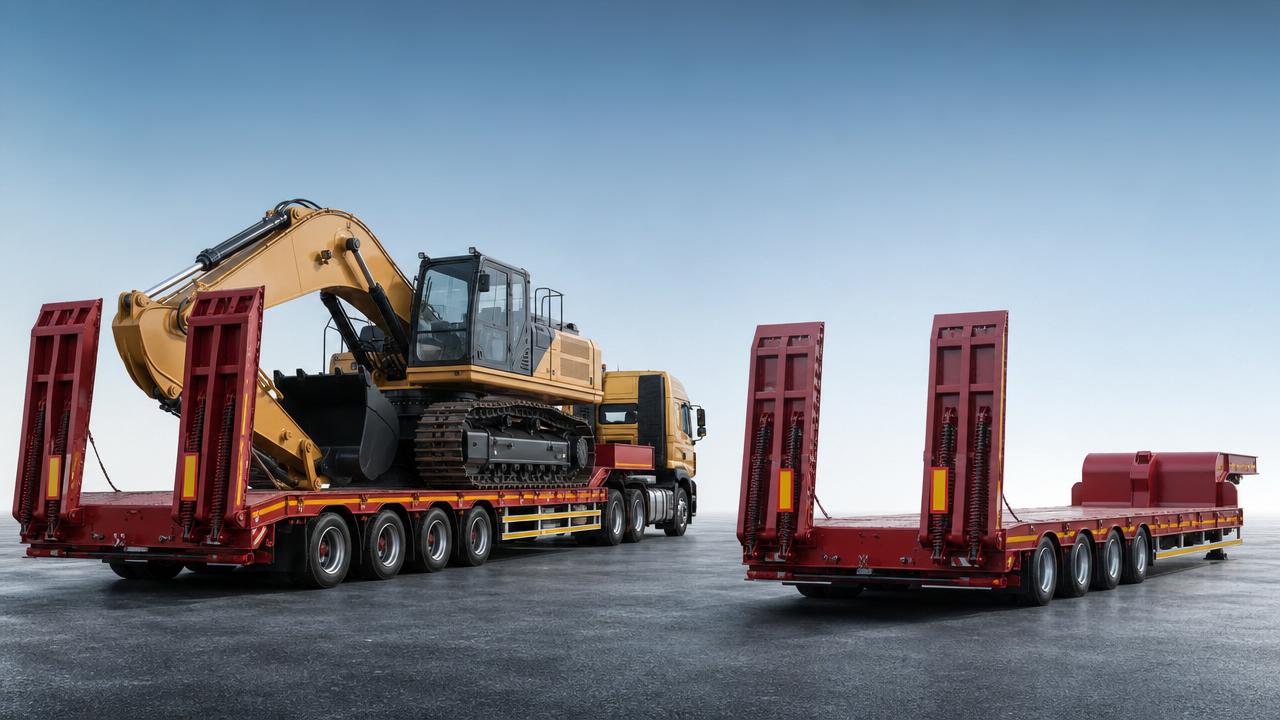
Choosing between a Flatbed Semi-Trailer and a low plate trailer can directly affect equipment safety, loading efficiency, and project timelines. For project managers handling heavy equipment transport, understanding the real differences in capacity, ground clearance, and jobsite suitability is essential. This guide compares both options to help you select the most practical solution for demanding engineering vehicle and machinery delivery tasks.
For most heavy equipment transport tasks, the short answer is simple. A low plate trailer is usually better for taller, heavier, and less road-friendly machinery. A Flatbed Semi-Trailer is often better for general cargo, smaller equipment, and projects that need faster loading flexibility.
That overall judgment matters because project managers are rarely comparing trailers in theory. They are trying to prevent transport delays, avoid permit problems, protect expensive machinery, and keep site operations moving without unnecessary cost.
In practice, the best choice depends on machine dimensions, route limits, loading conditions, unloading surfaces, and how often the trailer will be used across different job types. The wrong selection can raise cost even if the trailer looks cheaper at first.
What Project Managers Usually Need to Know First
If your equipment is heavy, tall, or has a high center of gravity, a low plate trailer is usually the safer and more efficient option. If your loads are more varied and not extremely oversized, a Flatbed Semi-Trailer may offer better operating flexibility.
This is the core search intent behind comparing these two trailer types. Buyers want a practical answer to one question: which trailer reduces transport risk while still supporting schedule, compliance, and cost control in real engineering projects?
For engineering vehicle transport, the decision is not only about carrying capacity. It also involves deck height, loading angle, axle configuration, route accessibility, and whether the trailer fits the equipment mix used across multiple projects.
Flatbed Semi-Trailer: Where It Performs Best
A Flatbed Semi-Trailer has an open, level cargo deck without enclosed sides or roof. Its main strengths are convenience, loading flexibility, and compatibility with many cargo types, including construction materials, medium equipment, and containerized goods.
For project teams, this kind of trailer works well when equipment is not extremely tall or overweight. It is commonly used for transporting compact rollers, smaller excavators, skid steer loaders, steel components, pipes, and packaged machinery.
One major advantage is easy access from multiple sides. Forklifts, cranes, and side-loading operations can often work faster on a flatbed. That can improve turnaround time when a project site needs mixed deliveries rather than one dedicated heavy machine move.
Another advantage is operational versatility. A Flatbed Semi-Trailer can support broader logistics needs beyond machinery transport, making it attractive for contractors or fleet planners who want one trailer type for many routine assignments.
However, the flat deck height can create limitations. Taller deck height increases total loaded height, which can become a serious problem when transporting high equipment under bridges, wires, or regional road restrictions.
Loading and unloading can also be more demanding for tracked or wheeled equipment. Since the deck sits higher, the ramp angle may be steeper. That can affect safety, especially for heavy machines with low ground clearance or unstable climbing geometry.
Low Plate Trailer: Why It Is Often Preferred for Heavy Equipment
A low plate trailer, often understood in global markets as a lowbed or low-loader type, is designed with a much lower cargo deck. That lower platform is the reason it performs better in many heavy equipment transport scenarios.
The first and most important benefit is reduced total transport height. This allows taller machinery to travel more safely and legally on more routes. For project managers, that can mean fewer detours, fewer permit complications, and less delivery uncertainty.
The second benefit is better loading stability. Because the deck is lower to the ground, the ramp angle is typically easier for self-propelled equipment to climb. This reduces risk during loading, especially for excavators, graders, bulldozers, and road machinery.
The third advantage is improved center of gravity control. Heavy machines carried lower are generally more stable in transit. This matters on uneven roads, long-distance cross-border shipments, and routes with curves, slopes, or sudden traffic changes.
Low plate trailers are usually the stronger choice for oversized and concentrated loads. They are commonly selected for crawler excavators, mining equipment, wheel loaders, pavers, cranes, and other engineering machines that exceed normal deck height limits.
Their main trade-off is lower general-purpose flexibility. A low plate trailer is highly effective for heavy machinery, but it may not be the most efficient option for mixed cargo operations or standard freight tasks that do not require a low deck.
Height, Weight, and Ground Clearance: The Three Factors That Decide Most Cases
In real procurement or dispatch decisions, three technical factors solve most of the comparison: equipment height, equipment weight, and equipment ground clearance. If you assess these correctly, the trailer choice becomes much clearer.
If the machine is tall, the low plate trailer gains an immediate advantage. Lower deck height means lower total transport height, which reduces the chance of violating bridge or overhead restrictions. This is often the deciding factor in regulated transport corridors.
If the machine is very heavy, you must look beyond total tonnage and review axle distribution, deck structure, and legal road load limits. In many cases, low plate trailers are better engineered for concentrated heavy equipment loads than standard flatbeds.
If the machine has low ground clearance, the loading process becomes critical. A steeper flatbed ramp can cause underbody contact or unstable loading. A low plate trailer generally offers a gentler approach angle and lowers loading risk.
Project managers should also consider the machine’s center of gravity. Tall, top-heavy equipment placed on a higher flatbed deck creates more transport instability than the same machine positioned lower on a low plate trailer.
When a Flatbed Semi-Trailer Is the More Practical Business Choice
Although low plate trailers are often better for heavy machinery, that does not mean they are always the better investment. In many fleets, the Flatbed Semi-Trailer delivers stronger overall utilization and better cost efficiency.
If your projects transport a combination of medium equipment, steel, precast components, pallets, and site materials, a flatbed may generate more operating value across the year. It can serve more jobs without sitting idle between specialized assignments.
It may also simplify dispatching. Many transport teams already have loading tools, securing routines, and route familiarity for flatbeds. If the cargo stays within normal size and weight limits, using a Flatbed Semi-Trailer can reduce planning complexity.
For contractors managing multiple short-haul urban or regional deliveries, the flatbed’s loading convenience can save time. Crane loading from the side, forklift access, and faster cargo changeover may outweigh the need for a lower deck.
In other words, if your equipment is not unusually tall, not too heavy, and not difficult to load, a flatbed can be the more economical and scalable choice for day-to-day engineering logistics.
When a Low Plate Trailer Prevents Expensive Project Mistakes
The true value of a low plate trailer often appears when something could go wrong. It protects projects from avoidable failures such as route rejection, permit delay, loading damage, tip risk, and unsafe unloading at rough sites.
For example, a project may try to save money by using a standard flatbed for an excavator that technically fits by weight. But if total loaded height exceeds a route limit, the shipment may be delayed, rerouted, or blocked entirely.
Another common issue is loading damage. Machines with low chassis clearance or long wheelbase geometry may scrape during ramp climbing. Even minor damage creates repair cost, downtime, and arguments over handling responsibility.
There is also the risk of poor unloading conditions. Remote project sites rarely offer ideal pavement. A lower, more stable trailer platform can reduce operator stress and improve unloading safety when the ground is uneven or weather conditions are poor.
For high-value machinery, preventing one serious transport incident can justify the use of a low plate trailer many times over. That is why experienced project leaders often prioritize risk reduction over nominal trailer rental savings.
How to Evaluate Trailer Choice by Project Scenario
The best way to choose is to match trailer type to project reality instead of comparing specifications in isolation. Start with equipment dimensions, then review route restrictions, loading method, site terrain, and delivery frequency.
If you are transporting one large excavator, one crawler dozer, or one asphalt paver to a demanding site, a low plate trailer is usually the correct decision. The lower deck supports both legal compliance and safer machine handling.
If you are moving smaller machines plus construction materials between multiple locations in the same week, a Flatbed Semi-Trailer may create better logistics efficiency. It handles changing cargo types with less specialization.
For cross-border or export-oriented operations, route uncertainty matters even more. Regulations, road quality, and inspection practices vary widely by market. In such cases, lower loaded height and stronger equipment stability can be decisive advantages.
For rental fleets, EPC contractors, and infrastructure developers, utilization planning is also important. If most assignments involve oversized machinery, choose the trailer that fits that core demand. If assignments are diverse, flexibility may be worth more.
A Simple Decision Framework for Buyers and Fleet Planners
Use this practical framework when deciding between a Flatbed Semi-Trailer and a low plate trailer. First, ask whether the equipment is height-sensitive. If yes, the low plate option moves to the front immediately.
Second, check whether the machine is heavy in a concentrated way, not just heavy overall. Tracked equipment and large engineering vehicles often impose load patterns that require stronger support and more suitable axle distribution.
Third, review how the machine will be loaded. If self-loading by ramp is required, deck height and ramp angle become critical. This often favors the low plate design, especially for machines with low clearance or difficult balance.
Fourth, consider your route and compliance exposure. Bridges, tunnels, overhead utilities, escort rules, and local transport permits can all change the economics of the move. A lower deck often improves route feasibility.
Fifth, think about utilization across twelve months, not one shipment. If the trailer will support mixed logistics operations, a Flatbed Semi-Trailer may produce better return on investment. If it will mainly carry heavy machinery, go specialized.
Why Supplier Capability Matters as Much as Trailer Type
Even the right trailer design can underperform if the supplier lacks configuration knowledge, export experience, or after-sales support. For project managers, choosing a capable partner reduces errors before the trailer ever reaches the road.
A professional exporter should help assess payload type, recommend axle and deck configuration, confirm compliance requirements, and coordinate documentation, customs, and logistics. This is especially important for international engineering equipment transport programs.
Shandong Livol Truck International Trade Co., Ltd. supports customers with vehicle selection, customization, export documentation, customs clearance, logistics coordination, and professional service throughout the delivery process.
With official authorization for FOTON, SHACMAN, and SINOTRUK, plus broad domestic network resources and stable inventory, the company can support commercial vehicle and trailer procurement with stronger supply reliability and faster response.
For buyers managing engineering transport needs across different regions, supplier strength helps reduce procurement uncertainty. That is especially valuable when trailer choice affects project startup timing, equipment safety, and long-term fleet performance.
Final Verdict: Which Fits Heavy Equipment Transport Better?
If the job is truly heavy equipment transport, especially for tall, heavy, or low-clearance machinery, the low plate trailer usually fits better. It improves loading safety, lowers transport height, and reduces operational risk on demanding routes.
If your operations involve more general engineering logistics, mixed cargo, and medium-size equipment that stays within normal transport limits, a Flatbed Semi-Trailer can be the more practical and economical solution.
The key is not to ask which trailer is better in general. Ask which trailer better protects your schedule, your machinery, your route compliance, and your cost structure in the specific project conditions you manage.
For project managers, that is the decision standard that matters most. The right trailer is the one that delivers equipment safely, legally, and on time with the least total project risk.
Search Starts Here