News
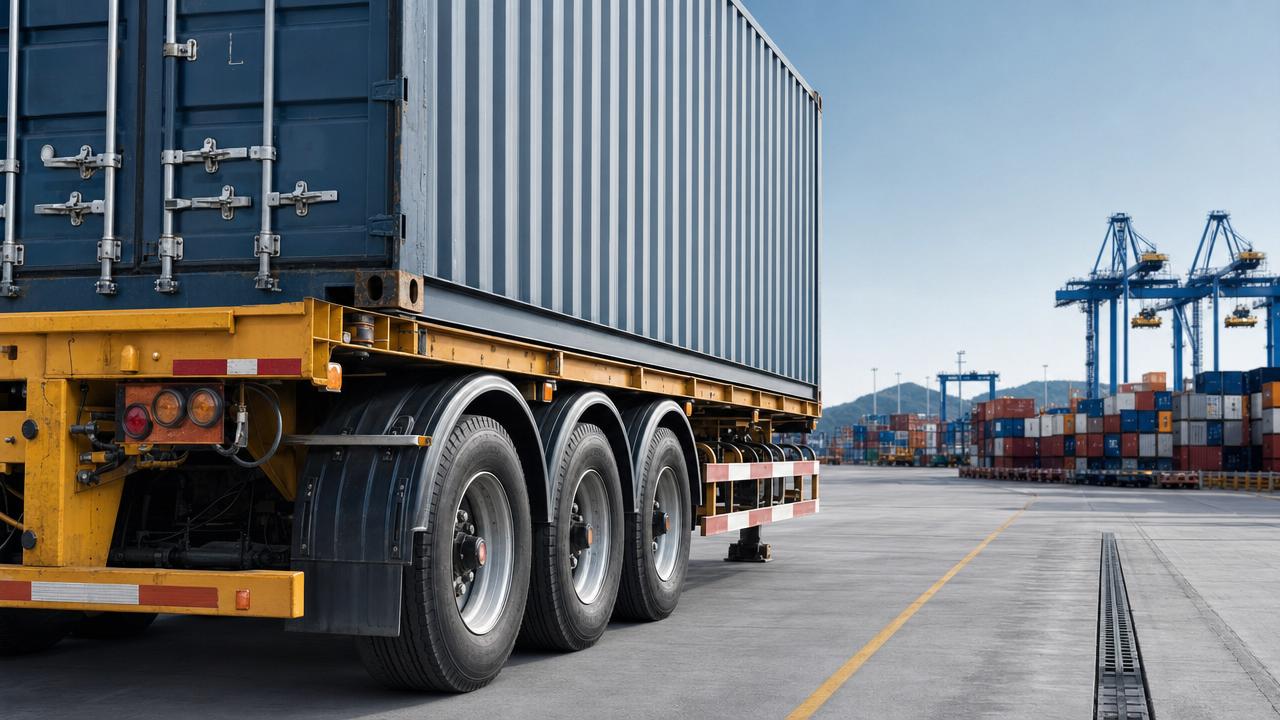
For quality control and safety managers, every Skeleton (Container) Semi-Trailer must be checked with a clear, practical load safety process before entering operation. From twist lock condition and chassis integrity to weight distribution, braking performance, and documentation, each detail affects cargo security and road compliance. This checklist-focused guide helps teams identify risks early, standardize inspection routines, and improve transport reliability when handling containerized freight in demanding engineering vehicle operations.
Why Load Safety Checks Matter Before a Skeleton (Container) Semi-Trailer Enters Service
A Skeleton (Container) Semi-Trailer is designed to carry ISO containers with a lighter open-frame structure, but that efficiency also requires disciplined inspection.
For engineering vehicle fleets, the trailer may operate across ports, construction logistics yards, mines, industrial parks, and long-distance corridors with changing road conditions.
Quality control teams must confirm that the trailer can secure the container, transfer load forces correctly, and maintain braking stability under real operating conditions.
Core Risks Safety Managers Need to Control
- Container movement caused by damaged twist locks, improper locking sequence, worn locating components, or operator failure during loading.
- Chassis fatigue around cross members, kingpin areas, suspension brackets, and weld zones after repeated heavy-duty transport cycles.
- Uneven axle loading that increases tire temperature, reduces braking balance, and raises the risk of roadside compliance penalties.
- Documentation gaps, including missing inspection records, unclear maintenance logs, and incomplete export or customs documents.
A practical checklist converts these risks into visible control points, helping supervisors make consistent go or no-go decisions before dispatch.
Pre-Loading Checklist for a Skeleton (Container) Semi-Trailer
Before loading, inspectors should verify mechanical condition, safety devices, and operating readiness instead of relying only on visual appearance.
The following checklist supports routine yard inspection and can be adapted for port terminals, cross-border freight, and engineering project logistics.
This table is most useful when inspectors record results with photos, defect categories, corrective actions, and the signature of the responsible supervisor.
For a Skeleton (Container) Semi-Trailer exported to different regions, checklist wording should also reflect local axle load, lighting, and roadworthiness rules.
How to Control Container Position, Weight Distribution, and Road Stability
Load safety is not only about locking the container; it is also about ensuring that weight acts through the trailer as intended.
A Skeleton (Container) Semi-Trailer carrying a 20-foot container may create different axle loading from a 40-foot or 45-foot container.
Operational Checks During Loading
- Confirm container size and gross weight before crane or reach stacker operation begins, especially for mixed port assignments.
- Align corner castings with twist locks before lowering, avoiding side impact against the locking heads or chassis edges.
- Check that all engaged locks are visually confirmed from safe positions and recorded before the driver leaves the yard.
- Verify landing gear clearance, air suspension height, and coupling condition after loading, not only before loading.
If the container cargo is not evenly distributed internally, the Skeleton (Container) Semi-Trailer may still show abnormal tire loading despite correct placement.
Safety managers should require cargo weight declarations and avoid accepting containers with unclear internal distribution for demanding mountain or construction routes.
Technical Parameters Quality Teams Should Confirm Before Procurement
Procurement decisions become safer when quality control teams define measurable requirements before comparing trailer quotations or delivery schedules.
The table below highlights practical parameters for a Skeleton (Container) Semi-Trailer used in engineering vehicle operations and export projects.
Instead of choosing only by price, buyers should connect every parameter with inspection workload, spare parts availability, and operational risk.
Shandong Livol Truck helps customers clarify these details before shipment, reducing mismatch between ordered trailers and real working conditions.
Which Configuration Fits Your Engineering Vehicle Scenario?
Different projects require different trailer configurations, and a single Skeleton (Container) Semi-Trailer specification may not suit every route.
Safety managers should compare site conditions, inspection capacity, and driver skill before approving a configuration for fleet purchase.
This comparison helps buyers avoid over-specification for simple routes and under-specification for heavy-duty engineering environments.
For urgent projects, existing inventory and confirmed specification matching are often more valuable than a low quotation with uncertain delivery.
Compliance, Documentation, and Inspection Records
A safe Skeleton (Container) Semi-Trailer should be supported by complete documents, traceable inspection records, and maintenance evidence.
Export customers should review general roadworthiness requirements, container transport practices, axle load rules, lighting expectations, and customs documentation for the destination market.
Documents Commonly Reviewed by Buyers
- Commercial documents such as invoice, packing information, contract details, and shipment-related records required for customs clearance.
- Vehicle identification information, specification sheets, and configuration confirmation linked to the actual trailer delivered.
- Inspection records covering structure, braking, tire condition, lighting, twist locks, and basic functional testing before shipment.
- Maintenance recommendations, spare parts lists, and after-sales contact channels for fleet teams in the destination country.
Shandong Livol Truck provides full-process export support, including vehicle selection, customization coordination, documentation, customs clearance, and logistics assistance.
This support is especially useful when safety managers must report procurement decisions to both operational leaders and compliance departments.
Common Mistakes That Increase Load Safety Risk
Many trailer incidents begin with small omissions that appear acceptable during busy yard operations but become serious on public roads.
A Skeleton (Container) Semi-Trailer should never be treated as a simple frame without critical safety systems and inspection requirements.
Mistakes to Eliminate from Daily Procedures
- Assuming all twist locks are engaged without physical or visual verification from designated inspection positions.
- Checking brake air pressure only before loading and ignoring pressure behavior after container weight is applied.
- Accepting unknown container weight declarations because the route is familiar or the transport distance is short.
- Using price as the only procurement factor while ignoring axle rating, suspension design, and serviceability.
- Failing to train drivers and inspectors on defect escalation, quarantine procedures, and repair approval responsibility.
The best checklist is not the longest one; it is the one that operators actually follow under time pressure.
FAQ for Skeleton (Container) Semi-Trailer Buyers and Safety Teams
How often should a Skeleton (Container) Semi-Trailer be inspected?
Daily pre-use checks are recommended for twist locks, brakes, tires, lights, coupling, and visible frame condition before dispatch.
More detailed inspections should follow fleet mileage, operating severity, local requirements, and maintenance history, especially after rough-road operations.
What should buyers check first when comparing quotations?
Confirm container compatibility, rated payload, axle configuration, brake system, suspension type, tire specification, delivery time, and export documentation scope.
A lower price may increase total cost if the Skeleton (Container) Semi-Trailer requires early modification or causes compliance delays.
Is air suspension always better than leaf spring suspension?
Not always. Air suspension can improve ride quality and cargo protection, but it may require stronger maintenance capacity.
Leaf spring suspension is often preferred for rugged engineering sites where durability, simple repair, and parts availability are priorities.
Can the trailer be customized for destination market requirements?
Many configuration elements can be discussed, including container size layout, suspension, tires, lighting, braking interface, paint, and spare parts planning.
Final feasibility depends on technical requirements, regulatory expectations, production availability, and confirmed order specifications.
Why Choose Shandong Livol Truck for Your Trailer Procurement
Shandong Livol Truck International Trade Co., Ltd. is based in Shandong, China and focuses on reliable commercial vehicle export solutions.
The company is an official authorized domestic and overseas dealer for FOTON, SHACMAN, and SINOTRUK, with extensive 4S store resources across China.
For Skeleton (Container) Semi-Trailer procurement, our team can help confirm parameters, compare configurations, coordinate customization, and prepare export documents.
Sufficient vehicle inventory and established supply channels support stable delivery planning, which is important for projects with tight mobilization schedules.
Our export team assists with vehicle selection, documentation, customs clearance, logistics coordination, quality control, and after-sales communication for overseas customers.
What You Can Discuss With Our Team
- Parameter confirmation for container size, payload expectation, axle arrangement, suspension type, braking interface, and tire specification.
- Product selection for port logistics, engineering construction transport, warehouse shuttle operations, or cross-border container freight.
- Delivery cycle planning based on stock availability, customization scope, documentation preparation, and international shipping route.
- Compliance discussion for destination market road rules, inspection expectations, lighting requirements, and export document preparation.
- Quotation communication with clear configuration details, optional items, logistics assumptions, and after-sales support arrangements.
If your team needs a Skeleton (Container) Semi-Trailer for safe, compliant container transport, contact Shandong Livol Truck with your route, load, and deadline requirements.
We will help you review technical options, confirm practical inspection priorities, and build an export solution aligned with your operational risk controls.
Search Starts Here