
News
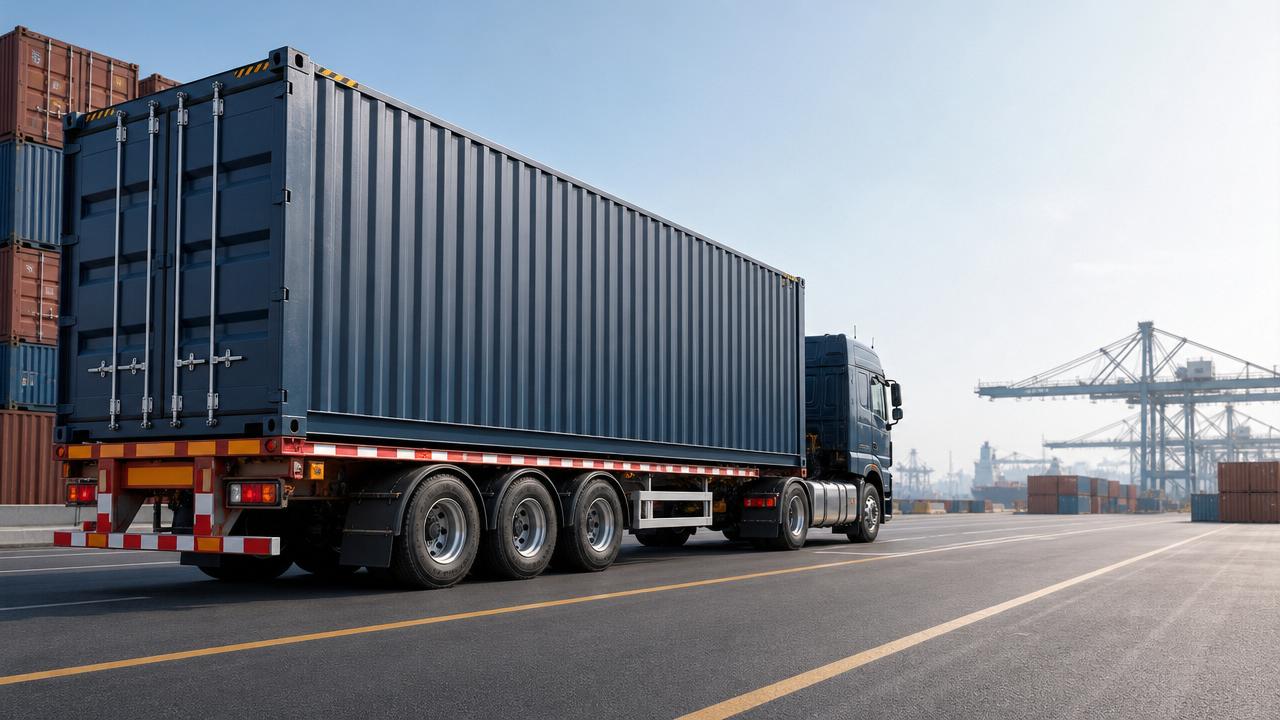
Port haulage looks simple from a distance: pick up a box, move it, return quickly. In practice, cycle time depends heavily on trailer specification. A well-matched Skeleton (Container) Semi-Trailer supports smoother gate operations, safer loading, better axle balance and lower downtime across dense container traffic.
For container movement between terminals, yards, depots and nearby industrial sites, the trailer is not just a frame on wheels. It is a working platform that must match port roads, container types, tractor heads, maintenance capacity and local weight rules.
Why specification matters more in port haulage
Port logistics puts trailers through a demanding rhythm. Short-distance runs are frequent, waiting time is unpredictable, and loading alignment must be precise. Small design differences can create repeated delays over hundreds of moves.
A Skeleton (Container) Semi-Trailer is built to carry ISO containers through a lighter, open-frame structure. That saves tare weight and improves access for twist lock positioning, inspection and maintenance.
In busy ports, the main concern is not only rated payload. Operators also watch landing gear strength, kingpin layout, brake response, cross-member durability and compatibility with 20ft, 40ft or mixed container tasks.
This is where engineering vehicle selection becomes a project issue, not just a transport purchase. If trailer specification is wrong, scheduling efficiency drops and asset utilization follows.
Understanding the basic structure
A Skeleton (Container) Semi-Trailer uses a reinforced chassis without a full deck. The frame carries the container through key load points, usually with twist locks, outriggers and cross-beams positioned to support standard box dimensions.
Most units for port work are designed around one of three layouts: 20ft dedicated, 40ft dedicated, or extendable and multi-position models. Each option changes load distribution, maneuverability and operating flexibility.
The simpler the trailer looks, the more important the unseen details become. Welding quality, steel grade, anti-corrosion treatment and suspension geometry often decide service life under repeated heavy cycles.
Core components worth checking
- Main beam design and steel thickness
- Twist lock arrangement and locking reliability
- Axle configuration and load rating
- Mechanical or air suspension selection
- Brake system, ABS and air line protection
- Landing gear capacity for uneven terminal surfaces
- Lighting, reflective markings and wiring sealing
The key specs that influence daily performance
Not every specification has equal value in port haulage. Some parameters affect long-term cost directly, while others mainly influence operating convenience. The best choice depends on route pattern and container mix.
For high-frequency terminal shuttles, strong structural integrity usually matters more than cosmetic configuration. For mixed routes beyond the port, brake performance and suspension comfort may deserve greater attention.
Axle layout and legal loading
A common mistake is choosing the trailer only by nominal payload. Legal axle loading varies by country and route. A 3-axle Skeleton (Container) Semi-Trailer may be necessary even for short port movements if road transfer is included.
Axle spacing also affects turning radius and tire wear. In tight terminal lanes, poor geometry can slow movement and increase contact risk with curbs or stacked equipment.
Twist locks and container positioning
Twist locks are easy to overlook until loading errors occur. Manual or retractable locks should engage quickly and hold firmly after repeated use. Poor lock quality leads to delays, unsafe movement and more inspection time.
If operations include both 20ft and 40ft containers, verify center loading support. Concentrated weight from a 20ft loaded container can stress the frame differently than a 40ft empty repositioning move.
Durability under port conditions
Ports are harsh environments. Salt air, standing water, steel-to-steel contact and continuous reversing create wear that appears early on low-quality units. Coating quality and welding consistency deserve close review.
Look for shot blasting, anti-rust primer and durable topcoat systems. Sealed wiring and protected air pipes also reduce avoidable failures in wet or corrosive zones.
A Skeleton (Container) Semi-Trailer should also be evaluated for maintenance access. Brake chamber replacement, axle service and lock inspection should not require excessive disassembly. Time in the workshop is lost earning time.
Parts standardization matters
Fast-moving equipment needs dependable spare parts. Standardized axles, suspension parts and brake components reduce downtime, especially for fleets working near ports with strict dispatch windows.
This is one reason supplier capability matters alongside trailer design. Stable inventory, export documentation support and after-sales coordination help keep engineering vehicle procurement practical, not theoretical.
Matching the trailer to the wider transport setup
The trailer must fit the tractor unit, route condition and loading equipment. Fifth wheel height, kingpin specification, air and electrical connections, and braking response should be checked as one system.
Where fleets use FOTON, SHACMAN or SINOTRUK tractors, compatibility planning can be simplified by working with an exporter that understands both tractor and trailer configuration. That reduces mismatch during delivery and deployment.
Shandong Livol Truck International Trade Co., Ltd. operates within this broader commercial vehicle context. With authorized channels, stock resources and export experience, it is positioned to support combined vehicle selection rather than isolated unit supply.
That matters in cross-border projects. Documentation, customs procedures and logistics planning affect actual lead time just as much as factory production. Port equipment decisions are rarely only about hardware.
Typical port haulage scenarios
Different operating patterns call for different trailer priorities. A single Skeleton (Container) Semi-Trailer design will not suit every container workflow equally well.
- Terminal-to-yard shuttles favor robust frames, easy lock operation and high cycle durability.
- Port-to-factory short hauls require legal road compliance and balanced axle loading.
- Mixed container fleets benefit from multi-position lock layouts and flexible chassis options.
- Cross-border container routes need stronger attention to standards, parts supply and service support.
If container movement includes rough access roads, landing gear strength and rear protection also become more important than they appear in catalog comparisons.
A practical way to evaluate options
A useful evaluation starts with actual operating data. Container size mix, average payload, road distance, turning space, axle limits and maintenance resources should be listed before comparing quotations.
Then compare the following points in detail:
- Chassis material and beam reinforcement design
- Lock configuration for current and future container use
- Axle brand, suspension setup and brake components
- Corrosion protection suited to coastal environments
- Documentation, lead time and spare parts availability
- Support for customization, inspection and after-sales response
The strongest choice is usually the one that reduces friction across the whole process: loading, movement, compliance, maintenance and replenishment. That is the real value of a well-selected Skeleton (Container) Semi-Trailer.
Before finalizing a specification, align the trailer with route conditions, tractor compatibility and expected container mix. A short technical review now can prevent years of avoidable delay, repair cost and utilization loss.
Search Starts Here