
News
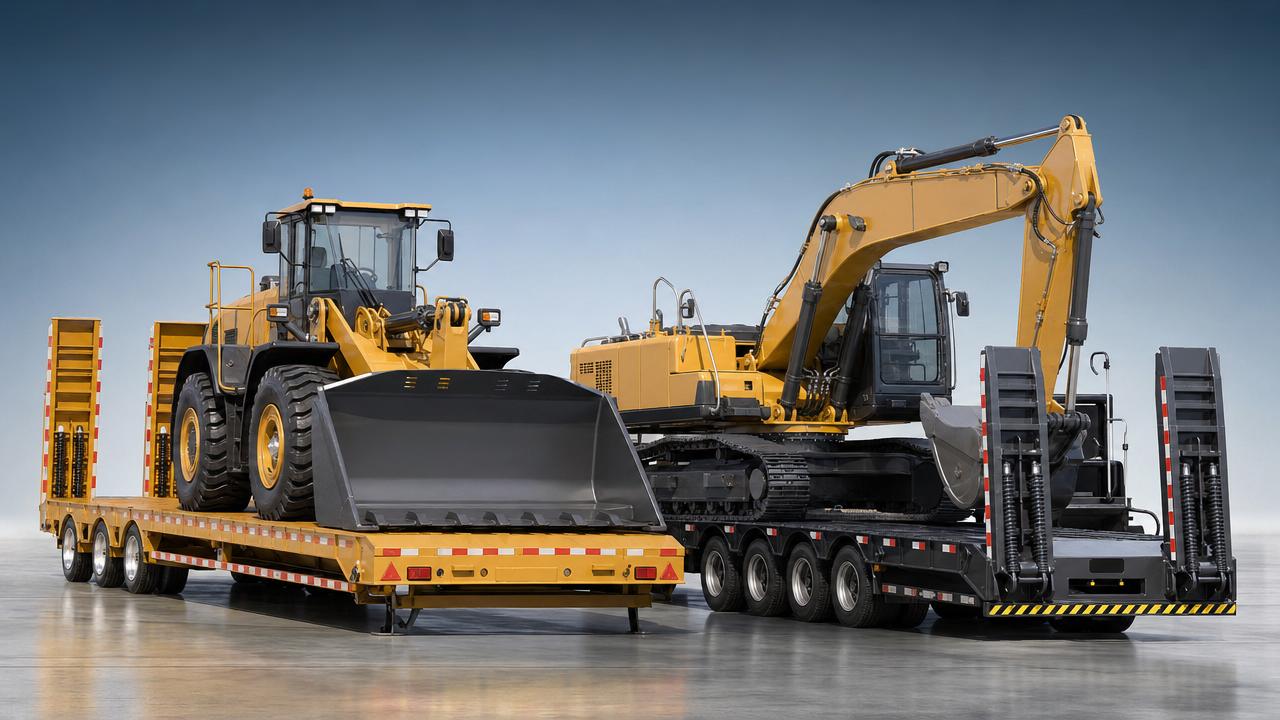
Choosing between a Flatbed Semi-Trailer and a low plate trailer is not just a matter of deck shape. It directly affects loading safety, route access, axle stress, and whether the equipment can be transported without rework.
In engineering vehicle transport, the wrong trailer often creates hidden costs. These include escort requirements, tire overload, unstable center of gravity, and slow loading at project sites.
A practical evaluation should focus on structure first, then equipment dimensions, then route restrictions, and finally operating rhythm. That order usually leads to better decisions than comparing price alone.
This article looks closely at where a Flatbed Semi-Trailer works better, where a low plate has a clear advantage, and what should be checked before final selection.
Start with the real structural difference
A Flatbed Semi-Trailer has a relatively straight and higher deck. It is simple, flexible, and widely used for machinery, steel, containers, and general oversized cargo.
A low plate trailer, often called a lowbed in many markets, has a dropped deck between the gooseneck and rear axles. That lower platform improves height clearance and loading stability for tall equipment.
So the first question is simple. Is your equipment mainly limited by height, or by loading flexibility and daily operational convenience?
Quick comparison points that matter most
- A Flatbed Semi-Trailer usually offers easier side loading, better cargo versatility, and lower maintenance complexity. It fits mixed transport tasks well when equipment height stays within road limits.
- A low plate trailer lowers the cargo deck and center of gravity. That makes it more suitable for excavators, rollers, and machines that would exceed legal height on a standard flatbed.
- Flatbed designs often support faster loading for palletized or irregular freight. Low plate designs are more specialized and usually perform best when heavy equipment dimensions are consistent.
- If route conditions include bridges, tunnels, plant gates, or overhead lines, deck height becomes a decisive factor. In these cases, low plate options often reduce operational risk.
- If the transport task changes frequently between machinery and general cargo, a Flatbed Semi-Trailer often creates better annual utilization and fewer idle days.
Check equipment dimensions before checking trailer price
This is where many selection errors begin. A trailer can look suitable on paper, but once the machine is loaded, legal height, axle position, and ramp angle may all become problems.
For technical evaluation, four dimensions matter more than anything else: operating weight, overall height, track or wheelbase, and ground clearance during loading.
- Measure transport height in actual shipping condition, not working condition. Folded booms, removed attachments, and tire pressure can all change whether a Flatbed Semi-Trailer remains compliant.
- Check loading angle for low-clearance machines. Some pavers, graders, and road equipment may scrape during ramp climbing even when total weight is fully acceptable.
- Review axle load distribution after positioning. A machine may fit physically, but poor placement can overload one axle group and reduce braking stability on uneven roads.
- Confirm tie-down points match the machine structure. This is especially important when using a Flatbed Semi-Trailer for tracked equipment with concentrated securing loads.
- If attachments are shipped together, include their position in the layout drawing. Side-mounted buckets or arms often change width and shift balance more than expected.
When a Flatbed Semi-Trailer makes more sense
A Flatbed Semi-Trailer is often the better choice when machinery is not extremely tall and the transport schedule includes different cargo categories throughout the month.
It also works well when loading must happen from the side by crane or forklift, or when destination sites lack ideal approach conditions for dedicated lowbed ramps.
Typical fit-for-use situations
For compact wheel loaders, smaller rollers, generator sets, steel structures, and mixed site cargo, a Flatbed Semi-Trailer often delivers better daily flexibility. That matters when transport plans change quickly.
It is also easier to standardize across fleets. Spare parts, maintenance routines, and driver familiarity are usually simpler than with specialized low plate configurations.
- Choose a Flatbed Semi-Trailer when the operation values cargo versatility over minimum deck height. This is common in engineering support fleets handling machinery one day and materials the next.
- It is a strong option when route height limits are manageable but loading methods vary. Side access and open deck space can save time at projects with imperfect handling equipment.
- If maintenance simplicity matters, flatbed structures are easier to inspect and repair. That can improve uptime in export markets where specialized service access is uneven.
When low plate transport clearly wins
Low plate trailers become the clear answer when transported machines are tall, heavy, and sensitive to stability during loading and road travel.
Excavators with high upper structures, bulldozers, large road rollers, and some mining support equipment are typical examples. Lower deck height reduces legal risk and improves confidence on rough access roads.
In these jobs, using a Flatbed Semi-Trailer may still be technically possible, but it often creates route restrictions or requires partial disassembly that slows the whole operation.
- Use a low plate trailer when total loaded height is the main constraint. Lower deck position can make the difference between standard transport and expensive permit-based movement.
- It also suits heavy tracked equipment better in many cases. The lower center of gravity helps stability during braking, turning, and uneven site entry conditions.
- Where loading ramps are frequent and machinery dimensions are repeatable, a low plate trailer can improve consistency, reduce operator guesswork, and lower the chance of contact damage.
Common mistakes that distort the selection result
One common mistake is comparing only nominal payload. Real transport suitability depends on more than rated tonnage. Deck height, neck structure, suspension type, and axle spacing all influence final performance.
Another mistake is ignoring the full route. A Flatbed Semi-Trailer may look perfect inside the yard but fail at toll stations, site gates, ferry access, or bridges with strict geometry limits.
Risk points worth checking early
- Do not rely only on brochure dimensions. Actual loaded height changes with tire wear, suspension compression, and attachment position, especially for machines near regulatory limits.
- Check deck strength for concentrated loads, not just total mass. Tracked machines may create local stress that exceeds what a general-purpose Flatbed Semi-Trailer deck handles comfortably.
- Review ramp capacity and angle together. A strong ramp can still fail operationally if the approach angle causes belly contact during loading.
- Do not ignore local compliance rules on width markers, escort needs, and axle group distribution. These details often affect cost more than the trailer price difference itself.
How to make the final choice more practical
A useful method is to score the transport task across five items: height compliance, loading angle, cargo variety, route complexity, and annual utilization rate.
If three or more items favor flexibility, a Flatbed Semi-Trailer usually gives better long-term value. If three or more favor low height and stability, the low plate is normally the safer fit.
This is also where supplier capability matters. Trailer selection is rarely isolated from export execution, spare parts support, and lead time reliability.
Shandong Livol Truck International Trade Co., Ltd., based in Shandong, China, supports commercial vehicle export with stable supply, customization coordination, documentation handling, customs clearance, and logistics follow-through.
As an authorized dealer for FOTON, SHACMAN, and SINOTRUK, Livol combines vehicle resources, nationwide 4S network support, and export experience that helps turn technical selection into an executable delivery plan.
- Prepare one equipment sheet per machine, including weight, transport height, attachment layout, and loading method. This makes trailer matching faster and reduces repeated technical clarification.
- Ask for axle layout, deck dimensions, and tie-down configuration together, not separately. A trailer should be evaluated as a full transport system, not just by model name.
- If export delivery is involved, confirm customization lead time, spare parts access, and documentation support early. These practical details often decide project readiness more than specifications alone.
A simple conclusion for real-world decisions
If the transport task includes varied cargo, frequent side loading, and manageable equipment height, a Flatbed Semi-Trailer is often the more economical and flexible choice.
If the job centers on tall, heavy machinery where height compliance and low center of gravity are critical, the low plate trailer usually fits better.
The best decision comes from matching the trailer to the equipment, route, and operating rhythm at the same time. Start with actual machine data, verify route limits, then compare trailer structures in that order.
Once those checks are clear, choosing between a Flatbed Semi-Trailer and a low plate becomes much less uncertain and much more practical.
Search Starts Here