
News
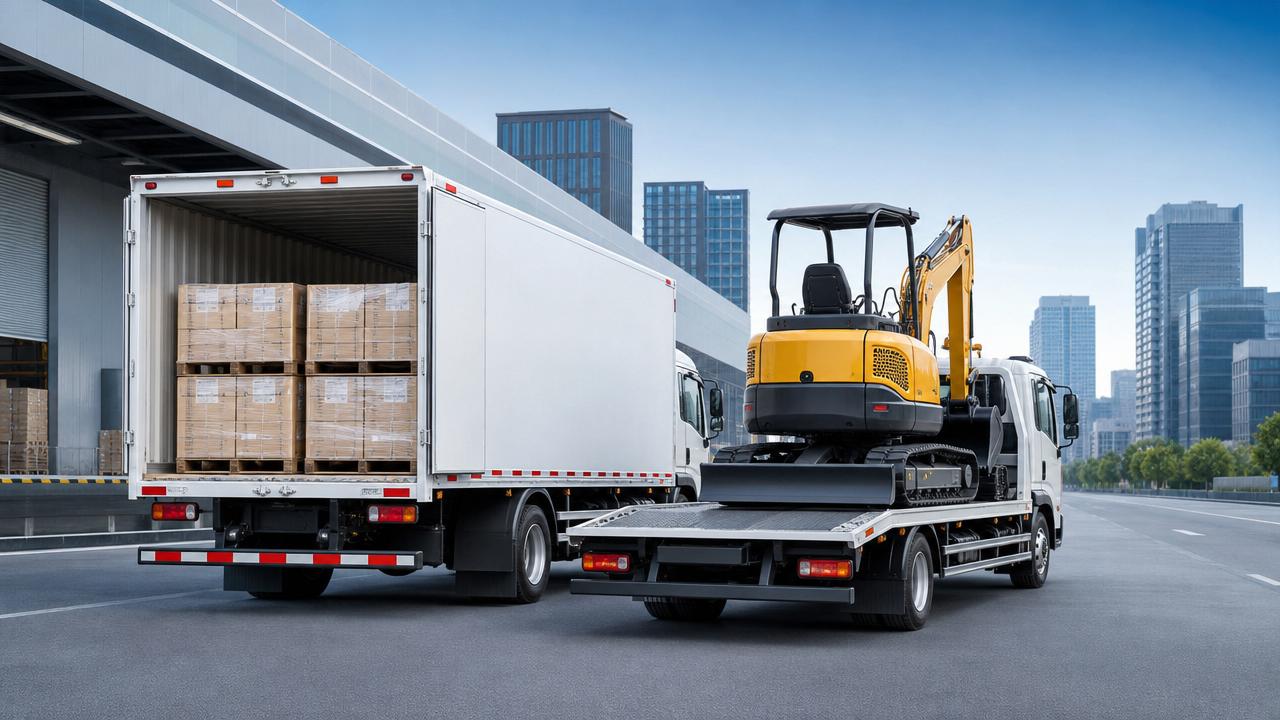
For project managers handling fast-paced city logistics, choosing between a 4_2 Cargo Truck and a low plate vehicle can directly affect delivery efficiency, access flexibility and operating cost.
In urban delivery scenarios where route limits, loading demands and turnaround time matter, the right vehicle choice is more than a transport decision—it is a project performance decision.
This article explores which option fits urban delivery better, what trade-offs matter most, and how fleet planners can make a more practical decision.
What Project Managers Really Need to Know First
If the job is standard urban distribution, a 4_2 Cargo Truck is usually the better all-around choice. It balances payload, road access, operating efficiency, and fleet versatility.
A low plate vehicle becomes the better option when cargo is oversized, heavy, irregular, or easier to load from a lower deck. It is more specialized, not always more efficient.
So the real question is not which vehicle is universally better. It is which one matches your cargo profile, delivery route, loading process, and city restrictions.
Understanding the Difference Between a 4_2 Cargo Truck and a Low Plate Vehicle
A 4_2 Cargo Truck usually refers to a two-axle truck with one driven rear axle. In city logistics, it is widely used for retail supply, construction materials, equipment parts, and packaged goods.
Its main strength is balance. It offers useful payload capacity, stable road performance, and easier maneuverability than larger multi-axle trucks operating in dense city environments.
A low plate vehicle, by contrast, typically has a lower cargo deck height. This design helps with loading heavy machinery, pallets, tall equipment, or goods needing lower center-of-gravity transport.
Low plate vehicles can simplify loading and unloading in some scenarios, especially where forklifts, ramps, or heavy handling equipment are involved. But they may not be ideal for every urban route.
Which Vehicle Performs Better in Urban Delivery Conditions?
For most city delivery operations, the 4_2 Cargo Truck performs better overall. That is because urban logistics depends heavily on route compliance, tight turning, loading frequency, and quick stop-and-go movement.
Project managers often work against delivery windows, street access controls, and limited unloading space. A standard cargo truck usually fits these constraints better than a more specialized low plate design.
The 4_2 Cargo Truck also supports more predictable scheduling. It can move between warehouses, project sites, distributor points, and urban commercial zones without requiring too much route adjustment.
A low plate vehicle may perform better only when the urban delivery task involves special cargo handling. If cargo shape or machine loading is the main challenge, deck height becomes a major advantage.
How Road Access and Urban Restrictions Change the Decision
Urban delivery is not only about carrying goods. It is also about getting access at the right time, through the right roads, without adding avoidable delays or compliance issues.
Many cities impose width, height, axle load, emissions, and time-window restrictions. These rules can make a direct difference in which vehicle can enter commercial centers, job sites, and narrow delivery corridors.
A 4_2 Cargo Truck generally has stronger compatibility with city access requirements. Its dimensions and conventional operating profile often make route approval and driver planning simpler.
Low plate vehicles may face practical limits in certain urban environments. Their operating benefits during loading do not always translate into better mobility on narrow roads or congested delivery approaches.
For project managers, this means route analysis should come before purchase or fleet allocation. A vehicle that loads faster but reaches fewer destinations may reduce total project efficiency.
Loading Efficiency: Where Low Plate Vehicles Can Win
Low plate vehicles have a clear advantage when loading height is the main operational bottleneck. If your cargo includes compact machines, generators, steel structures, or fragile heavy items, lower deck access matters.
Less loading height can reduce handling complexity, improve safety, and shorten the time needed for forklifts or cranes to position cargo. In high-frequency loading environments, this can be valuable.
For some engineering and project supply tasks, that loading advantage offsets the vehicle’s lower flexibility in city movement. This is especially true when each trip carries high-value or difficult cargo.
However, if cargo is standard palletized goods, boxed supplies, or regular construction materials, a 4_2 Cargo Truck usually delivers enough loading efficiency without sacrificing route adaptability.
Operating Cost Is Not Just Fuel Cost
When comparing vehicles for urban delivery, many buyers focus first on fuel use. But project managers should look at the full operating cost, not only what happens at the pump.
Total cost includes loading time, delivery frequency, route detours, driver productivity, maintenance needs, tire wear, compliance risk, and utilization across multiple project types.
A 4_2 Cargo Truck often produces better total value because it can be used more frequently across different assignments. Higher utilization usually improves return on investment over time.
Low plate vehicles may deliver strong value in specialized tasks, but they can become underused if daily cargo does not require their specific loading advantage. Idle capacity increases hidden cost.
For commercial fleet planning, the question is simple: will this vehicle earn consistently across many jobs, or only solve a narrow operational issue?
Which Option Reduces Delivery Delays and Project Risk?
Project managers care about reliability because delivery delays affect labor scheduling, site coordination, customer commitments, and often contract performance. Vehicle choice has a direct effect on that risk.
A 4_2 Cargo Truck generally reduces delay risk in mixed urban operations. It is easier to assign, easier to reroute, and better suited to varied delivery points across the city.
This flexibility matters when project conditions change quickly. Emergency material transfers, schedule compression, or last-minute destination changes are easier to manage with a standard urban-capable truck.
Low plate vehicles reduce risk in a different way. They help when cargo handling itself is the primary source of delay, especially where loading mistakes or difficult unloading conditions create operational bottlenecks.
So the risk question should be framed correctly. Are your delays caused by city mobility and scheduling, or by cargo handling and loading setup?
Best Fit by Urban Delivery Scenario
A 4_2 Cargo Truck is usually the best fit for retail replenishment, packaged construction materials, spare parts distribution, municipal supply movement, and regular multi-stop city delivery.
It is also a strong choice for engineering support fleets that need one vehicle type to serve several roles, from warehouse dispatch to project site replenishment and contractor supply transfer.
A low plate vehicle is a better fit for short-haul movement of compact machines, power units, metal frames, industrial components, and cargo requiring safer low-height loading.
It also makes sense when receiving or delivery points lack advanced loading infrastructure. In such cases, easier deck access can improve turnaround and reduce handling risk.
If your fleet serves both standard distribution and occasional heavy handling tasks, a mixed fleet strategy may be the most cost-effective answer rather than choosing only one type.
How to Make the Right Choice for Fleet Planning
Start with cargo reality, not brochure specifications. Review what you actually deliver over the last six to twelve months, including dimensions, weight, loading method, and unloading conditions.
Then map your route environment. Look at road width, city entry limits, bridge and height restrictions, stop frequency, and whether deliveries are point-to-point or multi-stop.
Next, calculate utilization potential. A 4_2 Cargo Truck may serve more departments and more contract types, while a low plate vehicle may create higher value only in specialized missions.
Also assess loading infrastructure. If your facilities already use forklifts, docks, and standard pallet systems, the advantage of a low plate design may be smaller than expected.
Finally, consider business growth. If your future contracts are likely to involve urban infrastructure, engineering equipment, or machine transport, a low plate unit may support long-term expansion.
Why Supplier Capability Matters as Much as Vehicle Type
Even the right vehicle category can become a poor investment if the supplier cannot support configuration accuracy, delivery reliability, export process control, or after-sales responsiveness.
For international buyers and project fleets, dependable sourcing is critical. Vehicle specification, spare parts availability, documentation accuracy, and shipping coordination all affect project timelines.
Shandong Livol Truck International Trade Co., Ltd. offers commercial vehicle export solutions backed by strong industry resources and years of global trade experience.
As an officially authorized domestic and overseas dealer for FOTON, SHACMAN, and SINOTRUK, the company supports customers with vehicle selection, customization, documentation, customs clearance, and logistics.
Its broad authorized 4S network, stable inventory, and professional export team help reduce sourcing uncertainty for buyers managing demanding project schedules and cross-border delivery requirements.
Final Verdict: Which Fits Urban Delivery Better?
For most urban delivery needs, the 4_2 Cargo Truck is the better fit. It offers the strongest combination of access flexibility, operational efficiency, fleet utilization, and lower scheduling risk.
A low plate vehicle is the better choice when cargo characteristics make loading height, handling safety, or equipment transport the priority. In those cases, specialization creates real value.
For project managers, the best decision comes from matching vehicle type to delivery pattern, not from choosing based on payload alone or assuming specialized equipment is always superior.
If your operation is centered on frequent city movement, varied routes, and standard goods, prioritize a 4_2 Cargo Truck. If your delivery challenge starts at the loading point, consider a low plate vehicle.
The most effective fleet decisions improve not only transport, but also project speed, reliability, and cost control. That is why vehicle selection should be treated as a strategic planning decision.
Search Starts Here