
News
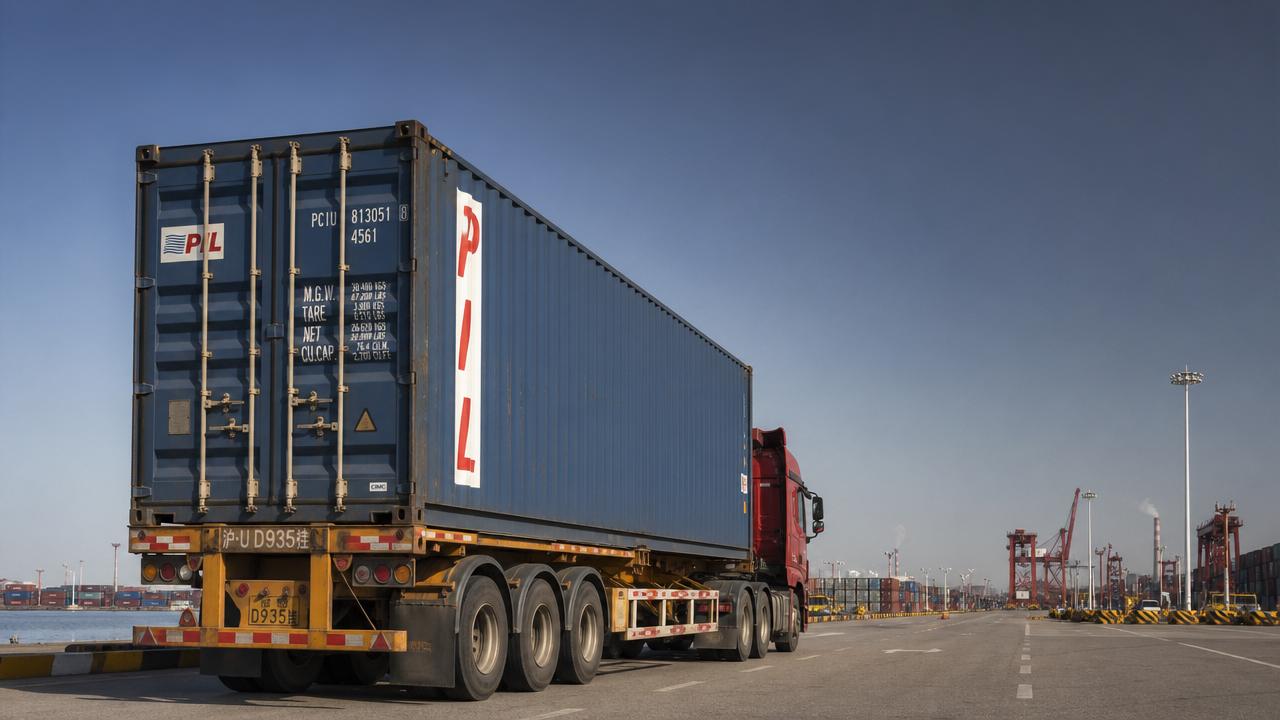
For port haulage operations, selecting the right Skeleton (Container) Semi-Trailer directly affects loading efficiency, vehicle utilization, and long-term operating costs.
Technical evaluation should go beyond rated payload and include frame strength, axle layout, kingpin position, twist-lock arrangement, braking system, and container compatibility.
This guide explains how to match a Skeleton (Container) Semi-Trailer with port terminals, depots, short-haul corridors, and container transfer yards.
Port Haulage Conditions Define the Right Skeleton (Container) Semi-Trailer
Container transport inside and around ports is different from long-distance highway freight.
A Skeleton (Container) Semi-Trailer used in port haulage usually faces frequent starts, tight turns, repeated loading, and intensive daily cycles.
In terminal operations, maneuverability and fast container locking can be more important than maximum cruising speed.
In depot transfer, structural durability and easy maintenance may decide lifecycle value.
For short-distance road movement, braking performance, axle compliance, and tire wear must be assessed together.
The best Skeleton (Container) Semi-Trailer is therefore not a universal specification, but a scene-matched transport tool.
Terminal-to-Yard Movement: Prioritize Fast Locking and Maneuverability
Terminal-to-yard routes are usually short, repetitive, and time-sensitive.
A Skeleton (Container) Semi-Trailer in this scenario should support quick container positioning and reliable twist-lock engagement.
The twist-lock layout must match 20ft and 40ft containers commonly handled in port rotation.
If 45ft containers appear often, rear extension design and regulatory length limits need early confirmation.
Short turning radius matters when tractors move between container stacks, weighbridges, and gate lanes.
A lighter Skeleton (Container) Semi-Trailer can improve fuel economy, but the frame must still handle repeated impact loads.
Key checks for terminal use
- Confirm twist-lock positions for 20ft, 40ft, and possible 45ft containers.
- Check kingpin setting for tractor compatibility and turning clearance.
- Review rear protection, side guards, and lamp protection in crowded yards.
- Evaluate landing gear operation during frequent drop-and-pick tasks.
Depot and Empty Container Handling: Control Weight and Operating Cost
Empty container transport places different pressure on equipment selection.
The load is lighter, but trips may be frequent and margins are often tight.
A Skeleton (Container) Semi-Trailer for empty container depots should balance tare weight, tire specification, and maintenance simplicity.
A reduced self-weight helps improve fuel consumption and daily vehicle utilization.
However, overly light structures may deform faster under rough yard surfaces or incorrect loading practices.
For depot operations, frame welding quality, cross-member spacing, and anti-corrosion coating deserve close attention.
A durable Skeleton (Container) Semi-Trailer reduces downtime, especially when workshop capacity is limited.
Loaded Container Shuttle: Focus on Frame Strength and Axle Configuration
Loaded container shuttle routes often connect terminals, factories, bonded warehouses, and inland depots.
This scenario requires stronger attention to payload distribution and road compliance.
A Skeleton (Container) Semi-Trailer carrying heavy 20ft containers must manage concentrated load positions.
Many 20ft containers carry dense cargo, which can stress the central frame section.
For this reason, main beam material, flange thickness, and web plate height are critical specifications.
Axle selection should reflect local gross weight rules, route distance, and road surface conditions.
A three-axle Skeleton (Container) Semi-Trailer is common for heavy container movement and broader operating flexibility.
Frame details that affect durability
- High-strength steel improves resistance to bending and torsion.
- Reinforced cross-members help distribute container corner loads.
- Quality welding reduces cracking during repeated heavy cycles.
- Surface treatment protects the trailer in coastal port environments.
Short-Distance Road Haulage: Match Braking, Suspension, and Compliance
Many port operations include short public-road sections.
In this case, a Skeleton (Container) Semi-Trailer must satisfy both operational efficiency and road safety requirements.
Braking system configuration is a key decision point.
Air braking with ABS is widely preferred for stable control under loaded and empty conditions.
Suspension choice also changes performance.
Mechanical suspension offers simplicity and durability for rough surfaces.
Air suspension can improve cargo protection and reduce vibration, but maintenance conditions should be considered.
The selected Skeleton (Container) Semi-Trailer should also match lighting, underrun protection, tire size, and local registration rules.
Specification Differences by Operating Scenario
The table below summarizes practical differences when comparing Skeleton (Container) Semi-Trailer options for port-related transport.
Core Specs to Confirm Before Selection
A Skeleton (Container) Semi-Trailer comparison should use measurable specifications instead of general descriptions.
This prevents mismatches after arrival and supports smoother fleet integration.
- Container compatibility: 20ft, 40ft, 45ft, or multi-position design.
- Rated payload: matched with container cargo density and legal limits.
- Axle configuration: two-axle or three-axle, depending on route load rules.
- Kingpin specification: commonly 2-inch or 3.5-inch, based on tractor fifth wheel.
- Suspension type: mechanical or air suspension, based on road conditions.
- Brake system: air brake, ABS, chamber quality, and pipeline protection.
- Tire and rim: selected for load, heat, and road surface requirements.
- Paint and anti-rust process: especially important in humid coastal ports.
Scene-Based Matching Recommendations
A practical matching process starts with route mapping.
List container types, average trip distance, loading frequency, road class, and legal restrictions.
Then compare the Skeleton (Container) Semi-Trailer against the most demanding working condition, not only the average condition.
If speed of turnover is the main target
Choose a Skeleton (Container) Semi-Trailer with easy-access twist locks, stable landing gear, and good turning clearance.
This supports faster movement between quay cranes, stack areas, and gate checkpoints.
If heavy containers are frequent
Prioritize a reinforced frame, suitable axle rating, and proven suspension components.
This reduces bending risk when dense cargo is loaded in a 20ft container.
If coastal corrosion is a concern
Inspect shot blasting, primer, topcoat, and hidden welding areas.
A Skeleton (Container) Semi-Trailer used near seawater needs better coating than standard inland equipment.
Common Misjudgments in Port Trailer Selection
One common mistake is choosing only by lowest initial price.
A cheaper Skeleton (Container) Semi-Trailer may cost more if downtime, repairs, and tire wear increase.
Another mistake is ignoring tractor compatibility.
Incorrect kingpin height or fifth-wheel matching can reduce stability and create coupling problems.
Some evaluations also overlook road legality.
Overall length, axle load, lighting, and side protection may vary by destination market.
A final misjudgment is underestimating after-sales support and spare parts availability.
For intensive port haulage, fast parts response can protect daily transport capacity.
Why Work with Shandong Livol Truck
Shandong Livol Truck International Trade Co., Ltd. is based in Shandong, China.
The company is a professional commercial vehicle exporter with strong industry strength and global trade experience.
As an authorized dealer for FOTON, SHACMAN, and SINOTRUK, it maintains reliable supply channels and sufficient vehicle inventory.
Its export team supports vehicle selection, customization, documentation, customs clearance, and logistics coordination.
For a Skeleton (Container) Semi-Trailer project, this helps connect technical requirements with practical delivery execution.
Strict quality control and professional after-sales support also improve confidence in long-term fleet operation.
Next Step: Build a Trailer Specification Around the Route
Before confirming a Skeleton (Container) Semi-Trailer, prepare container types, route distance, loading weight, road conditions, and destination regulations.
These details help define frame strength, axle quantity, suspension choice, braking configuration, and twist-lock layout.
A scene-based specification reduces operational risk and avoids paying for unsuitable features.
For port haulage, the right Skeleton (Container) Semi-Trailer should improve loading efficiency, safety, durability, and cost control together.
Share the intended application and container mix to receive a matched configuration and export solution from Shandong Livol Truck.
Search Starts Here