
News
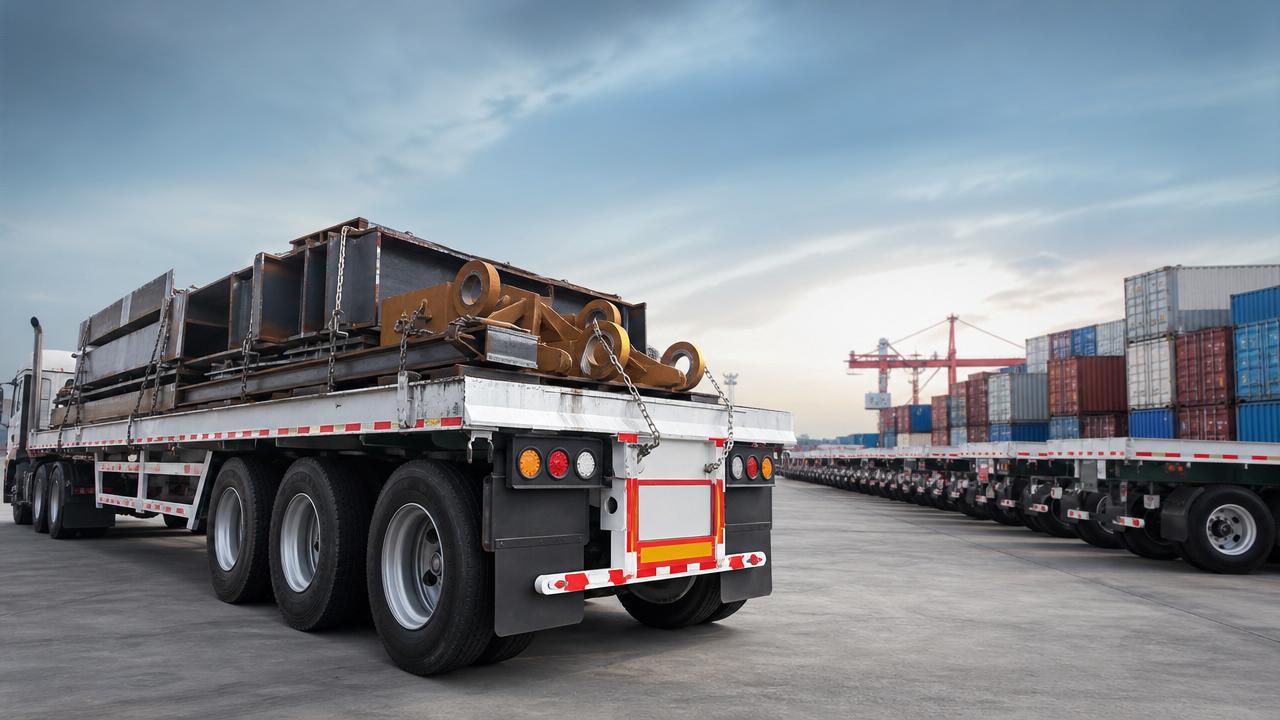
Flatbed Semi-Trailer Cost Factors Before Fleet Purchase
Choosing the right Flatbed Semi-Trailer is not only about the initial purchase price.
It directly affects fleet efficiency, cargo flexibility, maintenance budgets, and long-term return on investment.
For comparing suppliers, understanding key cost factors before ordering helps avoid hidden expenses and improves operational performance.
This guide explains major pricing and value elements behind a Flatbed Semi-Trailer fleet purchase.
Basic Understanding of Flatbed Semi-Trailer Value
A Flatbed Semi-Trailer is an open cargo platform designed for flexible loading from the top, rear, or sides.
It is widely used for steel, machinery, construction materials, containers, pipes, timber, and oversized industrial goods.
Unlike enclosed trailers, it offers faster loading and broader cargo compatibility across engineering vehicle operations.
However, the price of a Flatbed Semi-Trailer depends on more than length and axle quantity.
Structure, steel quality, suspension, braking system, surface treatment, tire selection, and customization all influence total cost.
A lower purchase price may seem attractive, but weak durability can raise maintenance and downtime expenses.
A higher-specification Flatbed Semi-Trailer may deliver better payload stability and longer service life.
Core Cost Logic
The real cost includes acquisition, transport, registration, operation, service, spare parts, and resale value.
For engineering vehicle fleets, downtime cost is often more important than small differences in factory quotation.
- Initial trailer price and required configuration.
- Expected loading environment and road conditions.
- Maintenance frequency and parts availability.
- Compliance with local transport regulations.
- Long-term fuel influence through weight and rolling resistance.
Industry Background and Current Purchase Concerns
Global infrastructure, mining, energy, logistics, and manufacturing projects continue to require reliable heavy cargo transport.
This makes the Flatbed Semi-Trailer a practical asset for mixed-load engineering transport.
Recent market attention focuses on stronger frames, lighter structures, stable supply, and export documentation accuracy.
Delivery speed has also become important because project timelines often depend on equipment arrival.
A Flatbed Semi-Trailer used on highways has different cost priorities from one used near mines or construction sites.
Therefore, quotation comparison should always include route, cargo type, climate, and service intensity.
Major Price Factors in a Flatbed Semi-Trailer
Frame Material and Structural Design
The frame is the cost center of every Flatbed Semi-Trailer.
High-strength steel, reinforced beams, and optimized welding improve load capacity and fatigue resistance.
A strong main beam reduces deformation when carrying heavy machinery, steel coils, or construction equipment.
Lighter structures may reduce fuel consumption, but must not sacrifice safety under real operating loads.
Dimensions and Payload Configuration
Length, deck height, platform thickness, and rated payload directly influence manufacturing cost.
Common lengths include 40 ft, 45 ft, and custom sizes for special transport needs.
A Flatbed Semi-Trailer built for heavy-duty cargo usually needs stronger cross members and thicker deck plates.
Over-specification increases capital cost, while under-specification increases failure risk.
Axles, Suspension, and Braking System
Axle brand, axle count, suspension type, and brake components affect both price and operational safety.
Mechanical suspension is often economical and robust for heavy construction transport.
Air suspension may improve cargo protection and road comfort, but it raises initial and maintenance cost.
A reliable braking system is essential for safe operation under full load and long-distance service.
Tires, Landing Gear, and Accessories
Tires strongly affect running cost, fuel consumption, and roadside failure probability.
Better tires may cost more, but they can reduce replacement frequency and improve stability.
Landing gear, kingpin, toolboxes, twist locks, side stakes, and rope hooks should match cargo requirements.
These details may appear minor, yet they influence daily loading speed and driver convenience.
Surface Treatment and Corrosion Protection
Painting, sandblasting, primer quality, and anti-corrosion treatment affect service life in harsh environments.
A Flatbed Semi-Trailer operating near ports, coastal areas, or mining zones needs stronger corrosion resistance.
Poor surface treatment may reduce upfront cost but shorten useful life significantly.
Business Value Beyond the Purchase Price
A well-selected Flatbed Semi-Trailer supports higher utilization across different cargo tasks.
Flexible loading reduces waiting time at warehouses, construction yards, ports, and industrial plants.
The right configuration helps improve trip productivity and lowers the cost per transported ton.
Long-term value comes from balancing durability, weight, maintenance access, and resale potential.
A Flatbed Semi-Trailer should be evaluated as a working asset, not only as a product quotation.
The strongest purchase decision connects specification with actual route conditions and revenue expectations.
Typical Application Scenarios and Configuration Priorities
Different engineering vehicle applications require different Flatbed Semi-Trailer specifications.
The following reference helps align cost with operational purpose.
For mixed operations, a balanced Flatbed Semi-Trailer may deliver better value than a narrowly specialized unit.
For repetitive heavy loads, a stronger customized platform may reduce lifetime cost.
Supplier, Export, and After-Sales Factors
Supplier capability has a direct influence on the delivered cost of a Flatbed Semi-Trailer.
Stable production, quality inspection, documentation, and logistics coordination reduce uncertainty in international purchasing.
Shandong Livol Truck International Trade Co., Ltd. is based in Shandong, China.
The company exports commercial vehicles with strong industry resources and global trade experience.
It is an authorized domestic and overseas dealer for FOTON, SHACMAN, and SINOTRUK.
Large authorized 4S store operations and sufficient inventory support stable supply and fast delivery.
Full-process service covers vehicle selection, customization, documentation, customs clearance, and logistics.
This integrated support helps reduce communication errors and shipment delays during Flatbed Semi-Trailer procurement.
Professional after-sales coordination also matters when spare parts, technical guidance, or maintenance advice are needed.
Practical Checks Before Confirming an Order
A clear checklist can prevent expensive specification mistakes.
It also makes supplier quotation comparison more transparent.
- Confirm legal axle load limits in the destination market.
- Define maximum cargo weight, size, and loading frequency.
- Match suspension type with road quality and cargo sensitivity.
- Compare tire brands, sizes, and expected replacement cost.
- Check welding quality, beam thickness, and deck material.
- Review painting process and corrosion protection standards.
- Verify spare parts access and after-sales support process.
- Include sea freight, insurance, duties, and inland delivery cost.
A Flatbed Semi-Trailer quotation should show the main components, not only a total price.
Clear specifications reduce dispute risk and improve final delivery consistency.
Cost Control Recommendations for Fleet Purchasing
Cost control begins with choosing the correct specification level.
The lowest price is rarely the best value when heavy-duty engineering transport is involved.
- Standardize common configurations to simplify maintenance and parts storage.
- Use reinforced designs only where operating conditions truly require them.
- Select reliable components with accessible replacement channels.
- Plan batch delivery based on project schedules and storage capacity.
- Evaluate total landed cost instead of factory price alone.
A carefully specified Flatbed Semi-Trailer can reduce operating friction across many years of service.
Better planning also improves maintenance consistency and resale confidence.
Next Step for a Reliable Flatbed Semi-Trailer Purchase
Before placing an order, prepare route details, cargo profile, payload expectation, and destination compliance requirements.
These details help build a Flatbed Semi-Trailer configuration that matches real operating conditions.
Shandong Livol Truck International Trade Co., Ltd. can support selection, customization, documentation, shipment, and after-sales coordination.
With authorized brand resources and export experience, the company helps turn trailer purchase plans into practical fleet solutions.
For cost-effective fleet expansion, request a detailed Flatbed Semi-Trailer quotation based on actual cargo and route needs.
Search Starts Here