News
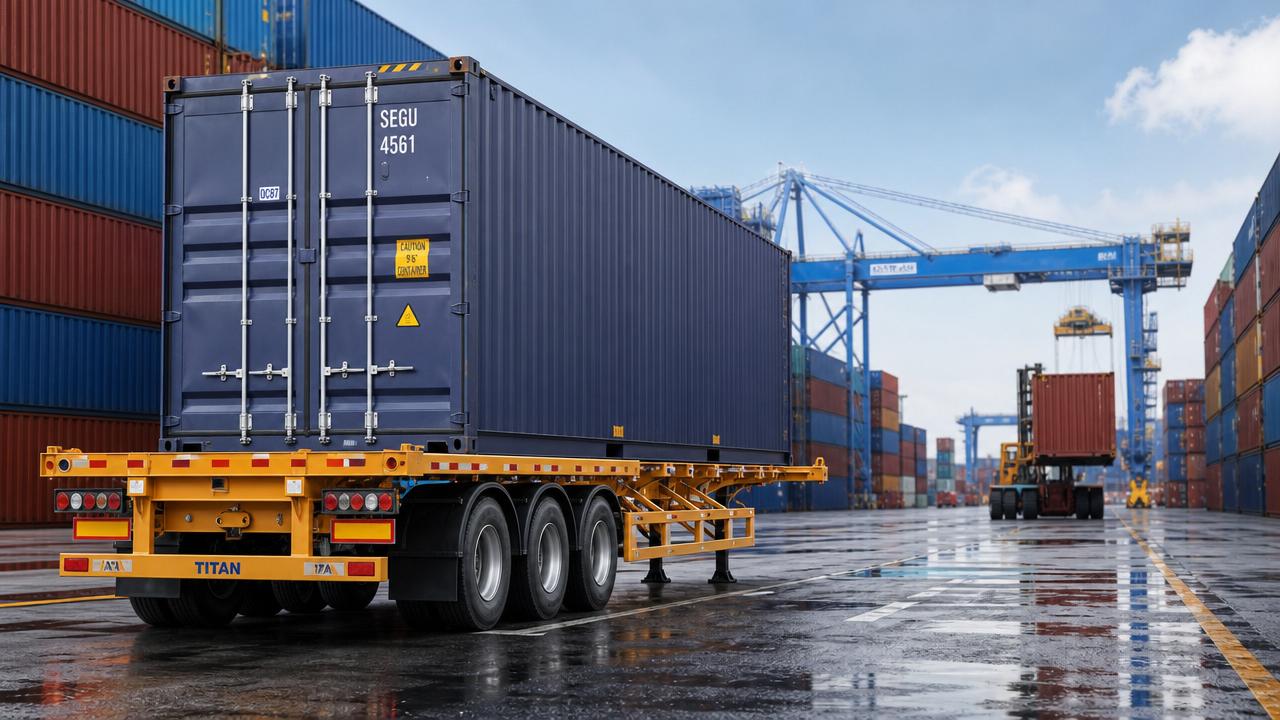
When sourcing a Skeleton (Container) Semi-Trailer, buyers must look beyond price and focus on the factors that directly affect load capacity, operational efficiency and turnaround time. For procurement teams, choosing the right trailer means balancing durability, compliance, delivery reliability and long-term value. This article explores the key considerations that help improve container transport performance and purchasing decisions.
Why a Checklist Matters for a Skeleton (Container) Semi-Trailer
A Skeleton (Container) Semi-Trailer works in high-frequency logistics, port transfer, yard movement and regional road haulage. Small specification mistakes can reduce payload, slow loading and increase downtime.
A checklist-based review helps compare offers on the same basis. It also reveals whether a trailer is designed for actual container duty, rather than only meeting a headline price.
For engineering vehicle operations, the right Skeleton (Container) Semi-Trailer should support safe container locking, stable running, fast turnaround and easier maintenance across long service cycles.
Core Checklist: Key Load and Turnaround Factors
- Confirm rated payload against actual container mix, road limits and tare weight, so the Skeleton (Container) Semi-Trailer can maximize legal load without compromising chassis strength.
- Check chassis material and beam design, including high-tensile steel grade, cross-member layout and welding quality, because these directly affect fatigue resistance and long-term structural stability.
- Match axle configuration to route conditions, expected gross vehicle weight and loading frequency, especially for port drayage, inland transport and rough terminal access roads.
- Verify twist lock quantity, position and operating convenience to ensure the trailer fits 20ft, 40ft or mixed container operations without delaying loading and release.
- Review suspension type carefully, choosing mechanical or air suspension based on road quality, cargo sensitivity, maintenance capacity and desired balance between cost and ride performance.
- Inspect braking components, ABS readiness, air line routing and chamber protection, because stopping consistency affects safety, tire life and turnaround under dense transport schedules.
- Assess landing gear strength and retraction speed, since repeated drop-and-hook work demands durable support legs that reduce waiting time at depots and container yards.
- Examine tire specification and wheel compatibility for load rating, availability and service network support, which can lower downtime during regional or cross-border operations.
- Ask for corrosion protection details such as blasting, primer, topcoat and anti-rust treatment, especially if the Skeleton (Container) Semi-Trailer will work in coastal or humid climates.
- Confirm dimension compliance with target markets, including kingpin setting, overall length, axle spacing and lighting layout, to avoid registration or customs delays after shipment.
- Evaluate maintenance access around brake lines, wiring, axles and locks, because quicker inspection and repair directly improve turnaround time and fleet availability.
- Check delivery capability, spare parts supply and export documentation support, since stable supply matters as much as trailer quality in time-sensitive transport projects.
How Load Capacity Is Really Determined
Load capacity is not only a catalog figure. Real carrying ability depends on tare weight, axle group design, beam strength, suspension support and local transport regulations.
A lighter Skeleton (Container) Semi-Trailer can improve payload. However, over-lighting the frame may reduce fatigue life when running overloaded port cycles or uneven terminal surfaces.
The best choice is often a balanced structure. It should deliver strong load support while keeping weight under control for better fuel economy and legal transport efficiency.
Important load-related details
- Use reinforced main beams for repeated heavy container cycles.
- Prefer proven axle brands with clear service support.
- Match tire ply and load index to operating weight.
- Review weight distribution for single 20ft container loading.
What Drives Turnaround Time in Daily Operation
Turnaround time depends on how fast the Skeleton (Container) Semi-Trailer can be positioned, locked, released, inspected and returned to service. Hardware design influences every minute.
Twist locks that are hard to reach or slow to operate can waste time at every stop. Poor landing gear or exposed air lines also cause avoidable delays.
For high-cycle container work, practical details often matter more than decorative specifications. Efficient design reduces queue time, labor effort and maintenance interruptions.
Features that improve turnaround
- Choose easy-access twist locks for quicker container securing.
- Use durable landing gear with smooth lifting operation.
- Protect wiring and hoses from terminal impact damage.
- Simplify inspection points for faster daily checks.
Application Notes for Different Operating Scenarios
Port and terminal shuttling
Port work usually means short distance, frequent cycles and high waiting pressure. A Skeleton (Container) Semi-Trailer for this use should prioritize fast lock handling and strong structural durability.
Impact protection for brake lines, mudguards and lights is especially useful in crowded yards where trailer contact damage is common.
Regional highway container transport
Longer routes demand better ride stability, tire efficiency and brake consistency. Suspension matching becomes more important when roads vary between ports, depots and distribution hubs.
In these conditions, a Skeleton (Container) Semi-Trailer should balance payload with durability, while keeping maintenance simple across wider service areas.
Cross-border and export projects
Cross-border operations require careful attention to dimensions, lighting, braking standards and customs paperwork. A non-compliant trailer can create delays larger than any initial savings.
Reliable exporters with documentation experience can reduce risk by coordinating specifications, inspection records, shipment planning and spare parts support.
Commonly Overlooked Risks
Ignoring tare weight details
Some offers emphasize heavy-duty structure without explaining the payload penalty. Excess trailer weight can reduce legal carrying capacity on every trip.
Focusing only on axle count
More axles do not automatically mean better value. The correct choice depends on route law, pavement quality, turning radius and maintenance capability.
Overlooking spare parts access
A Skeleton (Container) Semi-Trailer with uncommon components may become difficult to support locally. Parts lead time can quickly damage utilization rates.
Missing corrosion exposure factors
Salt air, rain and yard chemicals shorten trailer life. Without proper coating and rust prevention, structural appearance and resale value decline faster.
Practical Execution Suggestions Before Ordering
- Request a full technical sheet covering dimensions, axle load, tare weight, lock layout, suspension and braking configuration before price comparison.
- Map the intended routes and container types first, then match the Skeleton (Container) Semi-Trailer specification to actual operating conditions.
- Ask for production photos, welding details and anti-corrosion process records to confirm build quality beyond brochure language.
- Verify spare parts plans, after-sales response and export document accuracy to reduce delivery risk and post-arrival service pressure.
- Compare total lifecycle cost, including maintenance, tire use, downtime risk and resale value, instead of choosing only by purchase price.
Supply Reliability and Export Support
A strong supplier can make the purchase of a Skeleton (Container) Semi-Trailer more predictable. Stable inventory, technical communication and export coordination all affect project timing.
Shandong Livol Truck International Trade Co., Ltd., based in Shandong, China, provides commercial vehicle export support backed by strong industry resources and global trade experience.
As an authorized dealer for FOTON, SHACMAN and SINOTRUK, with a broad 4S network and sufficient vehicle stock, the company supports stable supply, customization, documentation, customs clearance, logistics and after-sales coordination.
Conclusion and Next Action
The right Skeleton (Container) Semi-Trailer should carry legal loads efficiently, reduce loading delays and stay serviceable under real operating pressure. Price matters, but specification fit matters more.
Use a structured checklist, verify technical details and compare support capability before confirming an order. That approach leads to better transport uptime, stronger long-term value and smoother container operations.
Search Starts Here