
News
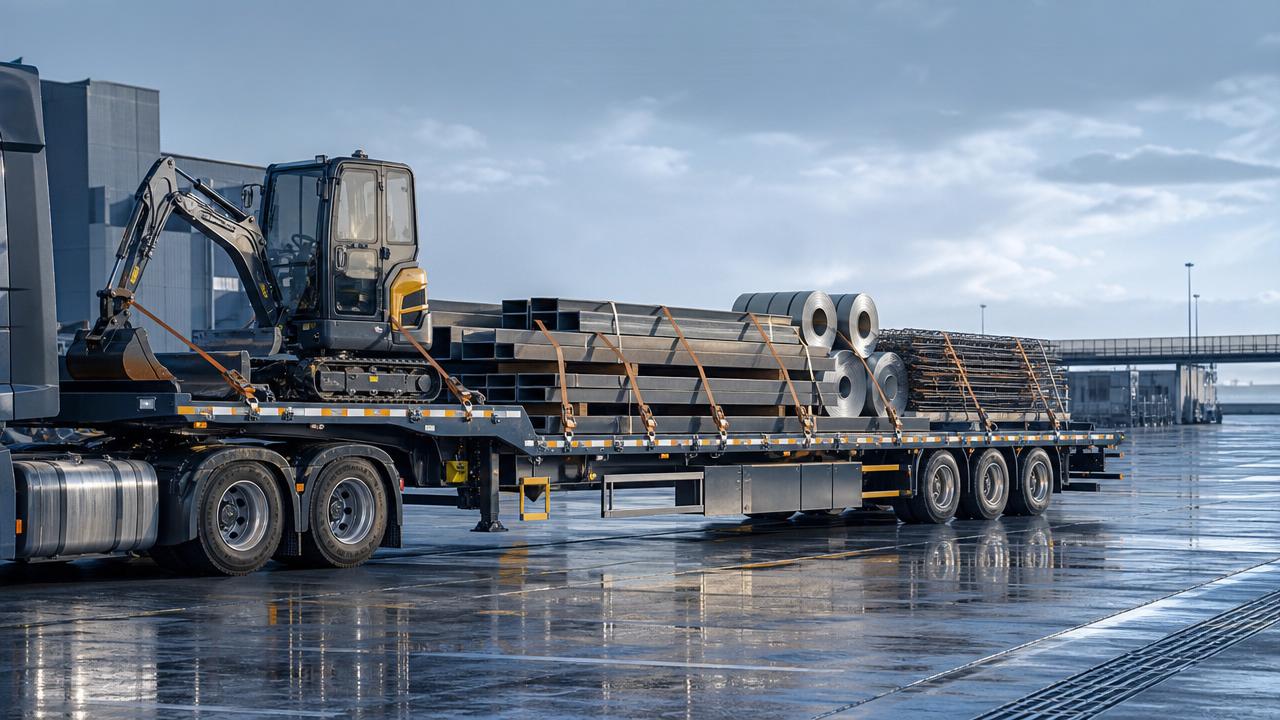
Flatbed Semi-Trailer selection starts with the real transport scenario
Choosing the right Flatbed Semi-Trailer requires more than matching basic dimensions. Deck size, payload, axle layout, and route conditions shape safety, loading efficiency, and compliance.
In engineering vehicle transport, a trailer that looks suitable on paper may underperform on rough roads, tight access points, or mixed cargo schedules.
This guide explains how to evaluate a Flatbed Semi-Trailer against actual operating demands. It focuses on route fit, cargo shape, legal loading, and long-term fleet reliability.
Shandong Livol Truck International Trade Co., Ltd. supplies commercial vehicle export solutions with strong inventory, authorized brand resources, and practical support for configuration selection.
Why route and cargo context matter before comparing specifications
A Flatbed Semi-Trailer used for steel coils, machinery, or construction materials faces very different loading pressures and road stresses.
The same deck length can be efficient in one corridor and wasteful in another. Payload ratings can also mislead if axle distribution is ignored.
Selection should begin with three questions:
- What cargo dimensions, weight concentration, and securing methods are involved?
- What road grades, bridge limits, turning spaces, and surface quality define the route?
- What loading frequency, unloading equipment, and uptime targets are expected?
When these answers are clear, a Flatbed Semi-Trailer can be matched to operational reality instead of generic catalog values.
Scenario 1: Construction material transport on regional highways
This scenario often includes rebar, pipes, timber, formwork, bagged materials, and palletized supplies moving between cities and project sites.
A Flatbed Semi-Trailer here needs balanced deck length, moderate payload reserve, and reliable lashing points for varied cargo shapes.
Core judgment points
- Choose deck space that fits mixed cargo without excessive dead area.
- Confirm side access and forklift loading convenience.
- Check crossmember strength for repeated loading cycles.
- Verify axle rating against both gross load and point load concentration.
For regional delivery, overlong trailers can create route inefficiency. Tight yards and urban turns may offset any gain from extra platform length.
Scenario 2: Heavy equipment movement to engineering sites
Engineering machinery transport often involves compact excavators, rollers, loaders, generators, and site equipment with uneven weight distribution.
In this case, a Flatbed Semi-Trailer must handle concentrated axle loads, strong braking demand, and secure tie-down under stop-start site traffic.
Core judgment points
- Match payload capacity to real machine operating weight, not nominal brochure weight.
- Check deck material thickness and main beam section strength.
- Assess axle configuration for load sharing and braking stability.
- Evaluate ramp compatibility if self-loading is required.
A common mistake is selecting a Flatbed Semi-Trailer by total tonnage alone. Heavy machinery often creates concentrated stress that exceeds localized structural capacity.
Scenario 3: Long-distance cross-border or interprovincial hauling
Long-haul operations place more importance on legal compliance, fuel efficiency, tire wear, and durability over thousands of kilometers.
A Flatbed Semi-Trailer for this route profile should balance tare weight, structural strength, and maintenance simplicity.
Core judgment points
- Review local axle load laws, length rules, and bridge restrictions.
- Prefer durable suspension and braking systems for continuous use.
- Consider lighter configurations when cargo volume is high but density is moderate.
- Ensure spare parts availability and easy service access.
For export fleets, documentation accuracy and configuration compliance are as important as hardware. Wrong specifications can delay customs or limit road legality.
How deck size affects loading efficiency and route fit
Deck size should support the actual cargo mix, not simply maximize dimensions. Longer decks help with pipes, beams, and large pallets, but they reduce maneuverability.
Wider decks improve side-by-side loading, yet width must stay within legal limits and road clearance requirements.
Key sizing considerations for a Flatbed Semi-Trailer
- Cargo overhang tolerance and local regulation.
- Loading equipment reach and platform access.
- Turning radius at warehouses, ports, and jobsites.
- Need for future cargo flexibility.
The best Flatbed Semi-Trailer deck often leaves a practical safety margin instead of using the longest available option.
Payload capacity is not enough without axle and frame analysis
Published payload capacity is only a starting point. Real performance depends on frame design, beam height, suspension type, and axle arrangement.
In engineering transport, uneven cargo often shifts the center of gravity. This affects braking, tire wear, and rollover stability.
A Flatbed Semi-Trailer should be judged by how safely it carries the intended load profile over the intended route, not by maximum theoretical figures.
Different operating scenarios require different Flatbed Semi-Trailer priorities
Practical configuration advice for better scenario matching
Use the following checks before finalizing a Flatbed Semi-Trailer specification:
- List the top five cargo types by length, width, weight, and loading method.
- Map the harshest route section, not only the average route condition.
- Compare legal axle limits with actual expected loading distribution.
- Confirm tie-down quantity, stake pockets, and anti-slip deck options.
- Check maintenance access for brakes, tires, suspension, and wiring.
- Review delivery timeline, export paperwork, and spare parts support.
These checks reduce the risk of buying a Flatbed Semi-Trailer that performs well in quotation sheets but poorly in field conditions.
Common selection errors that create cost and compliance problems
- Choosing the longest deck without checking turning space and access roads.
- Using payload rating alone to judge heavy equipment suitability.
- Ignoring tare weight when legal gross combinations are strict.
- Underestimating road surface impact on suspension and frame fatigue.
- Missing local documentation and homologation requirements for export use.
Avoiding these mistakes helps a Flatbed Semi-Trailer deliver lower downtime, better tire life, and safer cargo control.
Next step: match the Flatbed Semi-Trailer to the job, not just the catalog
A successful Flatbed Semi-Trailer choice comes from aligning deck size, payload system, and route fit with real engineering transport tasks.
Shandong Livol Truck International Trade Co., Ltd. supports this process with authorized supply resources, stable inventory, customization coordination, export documentation, and logistics service.
When route data, cargo dimensions, and compliance targets are defined early, the right Flatbed Semi-Trailer becomes a measurable operational advantage.
For the most accurate recommendation, prepare cargo weight ranges, typical road conditions, and required dimensions before comparing trailer configurations.
Search Starts Here