News
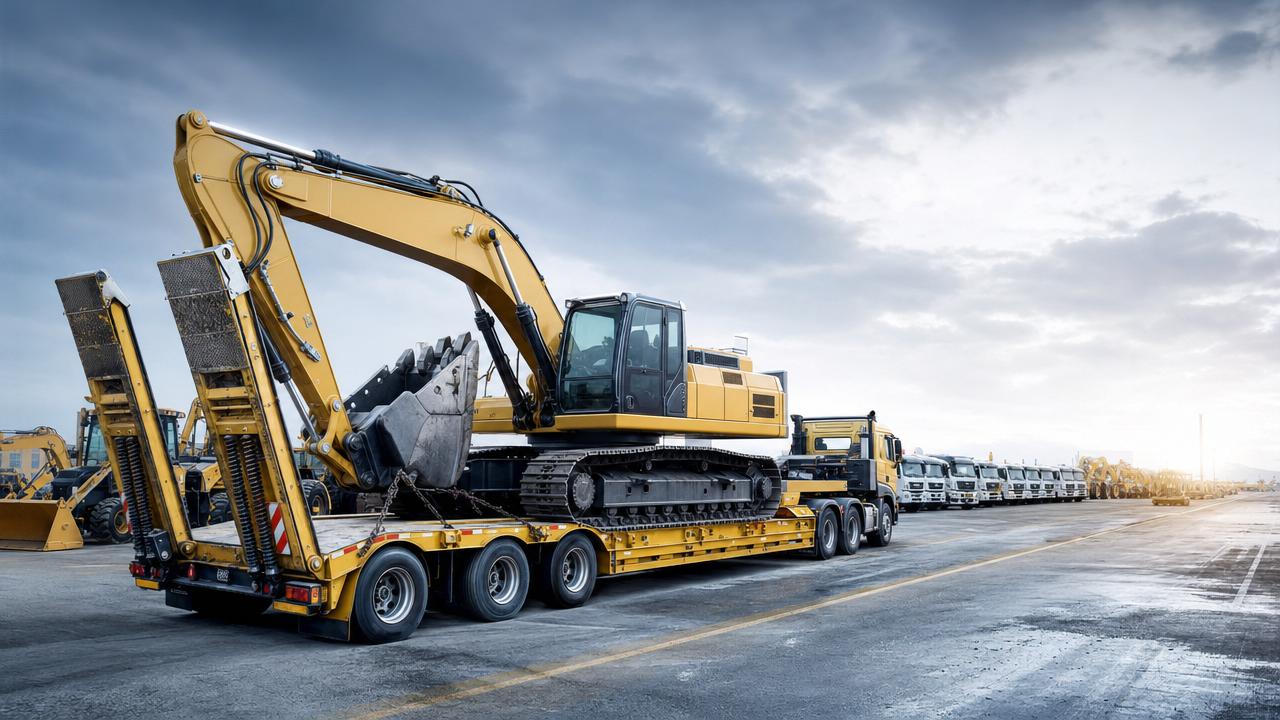
In 2026, Low Plate transport is being reshaped by tighter compliance standards, shifting project demand, and rising expectations for hauling capacity. For business decision-makers in engineering vehicles and heavy logistics, understanding these trends is essential to controlling costs, reducing delivery risk, and choosing reliable supply partners. This article explores what is changing and how to prepare for a more competitive market.
For companies moving excavators, road machinery, mining support equipment, transformers, or oversized steel structures, Low Plate trailer selection is no longer a basic purchasing task. It has become a strategic decision tied to route legality, payload efficiency, axle configuration, service support, and cross-border delivery timing.
In practical terms, a poor Low Plate decision can lead to 10%–20% higher transport cost per project, permit delays of 3–7 days, and unnecessary downtime at the jobsite. A well-matched solution, by contrast, helps fleet operators and project owners improve loading efficiency, reduce escort requirements, and maintain stable delivery schedules.
Why Low Plate Transport Is Changing Faster in 2026
Three forces are driving the market in 2026: stricter compliance enforcement, larger and more variable project cargo, and stronger demand for predictable delivery. In the engineering vehicle sector, these forces directly affect trailer specification, procurement planning, and supplier evaluation.
1. Compliance is becoming route-specific, not just vehicle-specific
In many export markets, compliance checks now go beyond gross vehicle weight. Authorities increasingly review axle load distribution, deck height, braking performance, lighting systems, reflective markings, and turning radius. A Low Plate trailer that works on one corridor may require adjustment on another within the same country.
This matters for engineering equipment transport because jobsite cargo often falls into the 30-ton to 120-ton range, where a small mismatch in axle layout can create permit issues. For decision-makers, legal transportability must be assessed before purchase, not after shipment arrives.
Key compliance checkpoints in 2026
- Axle group suitability for 2-axle, 3-axle, or modular combinations
- Loaded deck height against bridge and tunnel limits, often between 4.2 m and 4.8 m total transport height
- Brake system compatibility with prime movers in mixed fleets
- Rear overhang and ramp angle for tracked equipment loading
- Documentation readiness for customs, route permits, and inspection records
2. Project demand is less predictable but more urgent
Infrastructure and industrial projects are still generating demand, but order patterns are changing. Buyers increasingly need mixed-capacity Low Plate units for road construction, energy projects, quarry support, and municipal expansion. Instead of buying one standard platform, many fleets are comparing 3 or 4 configurations at the same time.
Urgency is also rising. When equipment must arrive within 7–15 days after dispatch planning, every weak link becomes expensive. Trailer availability, spare parts access, customs paperwork quality, and dealer responsiveness all influence final project execution.
3. Capacity expectations are rising with equipment size
Engineering vehicles are getting heavier, wider, and taller. A Low Plate used for a 20-ton excavator five years ago may not fit a newer 36-ton machine with wider tracks and modified attachments. This is pushing buyers toward stronger frame construction, optimized ramp geometry, and more careful tare-to-payload planning.
In procurement terms, capacity is no longer only the maximum rated load. It also means how much usable transport value the trailer delivers under real-world legal conditions, road restrictions, and loading frequency.
The table below highlights how the main 2026 market changes affect purchasing priorities for Low Plate transport operations in engineering logistics.
The key takeaway is clear: Low Plate procurement in 2026 is moving from simple equipment buying to integrated transport planning. Capacity, legal fit, and supply reliability must be evaluated together.
How to Evaluate Low Plate Capacity for Engineering Vehicle Projects
A common mistake in the market is treating payload rating as the only indicator of performance. In reality, the right Low Plate for engineering vehicles must match cargo weight, cargo footprint, frequency of loading, and road conditions over the full project cycle.
Match the trailer to actual cargo profiles
For fleets transporting wheel loaders, crawler excavators, rollers, and pavers, cargo profiles usually fall into three working bands: 20–40 tons, 40–80 tons, and 80 tons plus. Each band changes what matters most in a Low Plate design.
- 20–40 tons: focus on loading speed, deck accessibility, and route flexibility
- 40–80 tons: focus on axle balance, frame strength, and braking coordination
- 80 tons plus: focus on modular support, permit planning, and escort logistics
Capacity factors beyond nominal load
Decision-makers should check at least 6 items before finalizing a Low Plate purchase: rated payload, tare weight, deck length, loading angle, axle spacing, and suspension type. These determine whether the trailer works efficiently on repeated engineering assignments rather than one ideal test load.
For example, a lower deck can reduce overall loaded height by 150–300 mm, which may expand route options in restricted areas. Likewise, a better ramp angle can shorten loading time by 15–30 minutes per cycle for tracked equipment, reducing labor and idle time.
Choose structure based on project frequency
A contractor moving equipment twice a month has very different needs from a logistics operator loading machinery 20 times a month. High-frequency users should prioritize fatigue resistance, service access points, and spare parts availability over low initial purchase price.
Where mixed fleets are involved, compatibility with common tractor heads is also critical. Companies already operating FOTON, SHACMAN, or SINOTRUK prime movers often benefit from selecting Low Plate solutions that are easier to integrate with their existing towing and brake systems.
The following comparison helps procurement teams assess which Low Plate configuration is better aligned with typical engineering vehicle applications.
The most efficient Low Plate is not always the highest-capacity unit. It is the unit that delivers the best legal payload, fastest safe loading, and lowest service disruption for the cargo profile you handle most often.
Compliance Risks That Buyers Should Address Before Ordering
In 2026, compliance failures are expensive because they affect transport permits, border clearance, insurance acceptance, and customer delivery commitments. For engineering vehicle projects, one missing document or one incorrect dimension can interrupt an entire schedule chain.
Common risk areas in Low Plate transport
Most problems appear in 4 stages: specification confirmation, production verification, export documentation, and route execution. Buyers should ask suppliers for technical drawings, axle details, dimension sheets, and compatibility information before deposit release.
- Incorrect stated payload versus local legal limit
- Unverified loaded height with actual machine dimensions
- Ramp design unsuitable for tracked or low-clearance equipment
- Export documents missing key technical references
- Insufficient after-sales support for wear items and maintenance parts
A practical 5-step compliance review
- Confirm cargo dimensions, attachment width, and operating weight
- Check target market road limits for axle load, overall height, and turning conditions
- Match Low Plate structure and axle count to legal transport conditions
- Review drawings, bill of configuration, and export paperwork accuracy
- Prepare inspection and spare parts planning before dispatch
This process may add 2–5 working days before order closure, but it can prevent much larger losses later. For B2B buyers, that trade-off is usually worthwhile, especially on multi-unit orders or project cargo linked to fixed site deadlines.
What Reliable Supply Partners Need to Deliver in 2026
For enterprise buyers, the best supplier is not only the one offering the trailer itself. The real value comes from end-to-end execution: vehicle matching, customization, documentation quality, customs coordination, shipping control, and post-delivery support.
Why integrated export capability matters
Low Plate transport projects often involve multiple linked assets such as tractor heads, engineering vehicles, spare parts, and service materials. If these are sourced through disconnected channels, delivery timing can slip by 1–3 weeks and responsibility becomes unclear.
A supplier with stable inventory, coordinated export handling, and a professional overseas team can reduce handoff risk. This is especially useful for buyers in Africa, the Middle East, Southeast Asia, and other markets where customs and inland transport timing must be carefully managed.
Supplier evaluation checklist for decision-makers
Before selecting a partner for Low Plate procurement, buyers should compare capability across at least 5 dimensions: product access, technical communication, documentation accuracy, logistics execution, and after-sales responsiveness.
For international buyers, this checklist often matters as much as the technical specification itself. A competitively priced Low Plate can become expensive if supply coordination fails after the order is placed.
How Shandong Livol supports engineering vehicle buyers
Shandong Livol Truck International Trade Co., Ltd., based in Shandong, China, works with business customers who need reliable commercial vehicle export support across multiple stages. As an authorized domestic and overseas dealer for FOTON, SHACMAN, and SINOTRUK, the company can support customers looking to align tractor units and transport equipment within one sourcing plan.
Its broad 4S store network, sufficient vehicle inventory, and professional export team help buyers manage selection, customization, documentation, customs clearance, and logistics in one coordinated process. For companies planning Low Plate transport operations, that reduces communication gaps and supports faster project execution.
This kind of integrated approach is especially valuable when customers need several assets delivered together, or when local project schedules leave little room for rework. In those situations, responsive service and disciplined quality control become purchasing priorities, not secondary benefits.
Procurement Recommendations for 2026 Low Plate Investment
Companies planning Low Plate purchases in 2026 should avoid making decisions on price alone. The better method is to build a procurement matrix around usage intensity, legal route requirements, target cargo, and service support expectations over the next 12–24 months.
Priority questions for B2B buyers
- Will the Low Plate mainly carry one machine type or mixed engineering vehicles?
- Are your routes mostly domestic, cross-border, or project-specific restricted corridors?
- Do you need a standard unit, or a configuration that supports future heavier equipment?
- Can your supplier handle both vehicle export paperwork and delivery coordination?
- What is your acceptable response time for parts and after-sales support: 24 hours, 72 hours, or longer?
Avoid these 3 costly mistakes
First, do not size the Low Plate only for current cargo if fleet growth is expected within 1–2 years. Second, do not assume nominal trailer capacity equals legal route capacity. Third, do not separate trailer buying from export execution planning if the units are for international projects.
The strongest purchasing outcomes usually come from suppliers who can discuss both technical and trade execution details. In a tighter market, that combined capability helps control total landed cost and protects operational continuity.
Low Plate transport in 2026 will reward companies that prepare early, verify compliance carefully, and align capacity with real project demand. For engineering vehicle operators, the winning strategy is not simply buying heavier equipment, but choosing transport solutions that remain legal, efficient, and serviceable across repeated job cycles.
If your business is reviewing Low Plate options, matching tractor heads, or integrated export solutions for engineering vehicles, Shandong Livol Truck International Trade Co., Ltd. can help you evaluate the right configuration, delivery process, and support plan. Contact us today to get a customized solution, discuss product details, or learn more about reliable commercial vehicle export services.
Search Starts Here