
News
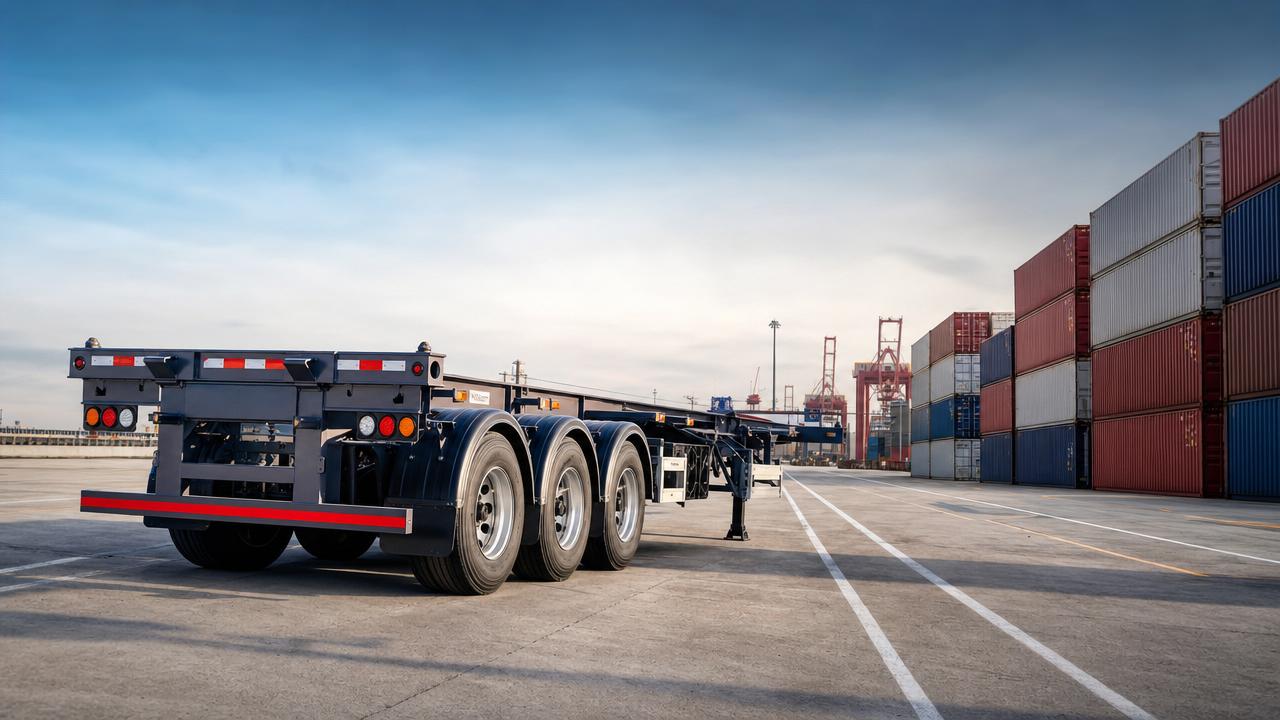
For 2026 fleet investment planning, the true cost of a Skeleton (Container) Semi-Trailer goes far beyond the initial purchase price.
Budget accuracy depends on specification choices, axle configuration, payload needs, maintenance exposure, delivery timing, and supplier reliability.
Shandong Livol Truck International Trade Co., Ltd. helps global buyers evaluate cost drivers clearly before approval.
The goal is practical: stronger cost control, reliable container transport, and better long-term return from every trailer investment.
Skeleton Container Semi-Trailer Cost Checks for 2026
A Skeleton (Container) Semi-Trailer is designed for ISO container transport, usually carrying 20ft, 40ft, or 45ft containers.
Its open frame structure reduces dead weight while keeping key load-bearing points strong and stable.
In engineering vehicle operations, this trailer supports ports, inland depots, logistics parks, mining supply routes, and cross-border freight corridors.
The 2026 cost check should examine both purchase cost and lifetime operating cost.
What does the basic price of a Skeleton (Container) Semi-Trailer include?
The basic price usually covers the trailer frame, twist locks, landing gear, suspension, axles, tires, braking system, lights, and painting.
However, the quotation structure can differ between suppliers, especially for export orders and customized transport conditions.
A standard Skeleton (Container) Semi-Trailer may look simple, but cost depends heavily on steel grade and welding quality.
High-tensile steel can raise the initial price, yet it may reduce tare weight and improve payload efficiency.
Paint quality also matters in humid ports, coastal roads, and regions with salt exposure.
Cheaper coating may save money at purchase, but corrosion can increase repair costs later.
Key items to confirm in the first quotation
- Frame material, main beam thickness, and structural reinforcement.
- Axle brand, axle capacity, and spare parts availability.
- Suspension type, including mechanical, air, or reinforced options.
- Container positions for 20ft, 40ft, and 45ft loading.
- Export documents, inspection support, and delivery terms.
A complete quotation for a Skeleton (Container) Semi-Trailer should make hidden cost items visible before payment planning.
How do axle configuration and payload requirements change the cost?
Axle configuration is one of the most important cost variables for a Skeleton (Container) Semi-Trailer.
Common export options include two-axle, three-axle, and sometimes special multi-axle designs for stricter road regulations.
A three-axle Skeleton (Container) Semi-Trailer normally offers better load distribution for heavy containers and long-distance routes.
It costs more than a two-axle unit, but may reduce overload risk and tire stress.
Payload planning should include container weight, cargo type, road grade, climate, and local enforcement practices.
For port shuttle use, simple configuration may be enough if routes are short and road surfaces are stable.
For inland transport, mining material supply, or rough regional corridors, stronger suspension and premium axles may be justified.
Which application scenarios require higher specifications?
Not every Skeleton (Container) Semi-Trailer needs the highest specification.
The right choice depends on operating frequency, road condition, cargo density, and maintenance capability.
A port-only trailer may prioritize easy maneuvering, fast coupling, and corrosion-resistant components.
A cross-border container trailer may need stronger axles, durable tires, and documentation alignment for multiple jurisdictions.
Engineering project routes often involve uneven roads, temporary yards, and heavy operating cycles.
In those conditions, a reinforced Skeleton (Container) Semi-Trailer can reduce downtime and frame fatigue.
Specification upgrades worth checking
- Reinforced main beam for frequent heavy container movement.
- Extra twist lock positions for flexible container combinations.
- Heavy-duty landing gear for repeated yard operations.
- LED lighting for night operations and road compliance.
- Anti-corrosion paint for coastal, tropical, or rainy regions.
The best Skeleton (Container) Semi-Trailer specification is not always the most expensive one.
It is the configuration that protects uptime without adding unnecessary weight or unused features.
What hidden costs should be checked before 2026 approval?
Hidden costs can distort the real investment value of a Skeleton (Container) Semi-Trailer.
The purchase price may exclude inland transport, port handling, sea freight, insurance, inspection, or destination clearance charges.
Spare parts availability should also be checked before choosing axles, valves, tires, and suspension components.
If parts are difficult to source locally, downtime may cost more than the original discount.
Maintenance exposure is another important factor in 2026 planning.
Tires, brake linings, bushings, air chambers, and landing gear parts must be included in operating forecasts.
A reliable Skeleton (Container) Semi-Trailer should combine durable structure with easy service access.
Common cost mistakes to avoid
- Comparing prices without confirming axle brand and capacity.
- Ignoring paint protection in corrosive operating environments.
- Choosing the lowest tare weight without checking frame strength.
- Forgetting export documentation, inspection, and shipping charges.
- Overlooking after-sales support and spare parts response time.
How should delivery cycle and supplier reliability be evaluated?
Delivery timing directly affects the practical cost of a Skeleton (Container) Semi-Trailer order.
A delayed trailer can disrupt container schedules, project mobilization, and equipment utilization.
The 2026 market may still face shipping space changes, port congestion, and material price fluctuations.
Supplier reliability therefore becomes a financial control factor, not only a purchasing preference.
Shandong Livol Truck International Trade Co., Ltd. is based in Shandong, China.
The company exports commercial vehicles and trailers with strong global trade experience.
It is an authorized dealer for FOTON, SHACMAN, and SINOTRUK, with many authorized 4S stores across China.
Sufficient vehicle inventory helps support stable supply, faster coordination, and clearer delivery planning.
For a Skeleton (Container) Semi-Trailer export order, full-process service can reduce communication gaps.
This includes vehicle selection, customization, documentation, customs clearance, logistics, and after-sales support.
FAQ: What should be confirmed before ordering?
How to build a practical 2026 cost checklist?
A useful cost checklist should connect technical specification with operating reality.
Start with container size, cargo weight, road condition, annual mileage, and expected service years.
Then compare the Skeleton (Container) Semi-Trailer configuration against compliance, durability, maintenance, and delivery requirements.
Finally, calculate total landed cost instead of only factory price.
This method makes quotations easier to compare and reduces approval uncertainty.
- Confirm container types and target payload range.
- Select axle, suspension, tire, and braking specifications.
- Check frame design, welding quality, and anti-corrosion treatment.
- Add export logistics, clearance, insurance, and inspection costs.
- Review supplier capability, delivery schedule, and after-sales support.
A Skeleton (Container) Semi-Trailer is a long-term transport asset, not a single purchase line.
For 2026 planning, the smartest decision combines price transparency, technical suitability, and dependable export execution.
Shandong Livol Truck International Trade Co., Ltd. can help evaluate specifications, compare configurations, and arrange complete export support.
To move forward, prepare route details, container types, payload targets, and delivery destination for a tailored Skeleton (Container) Semi-Trailer quotation.
Search Starts Here