
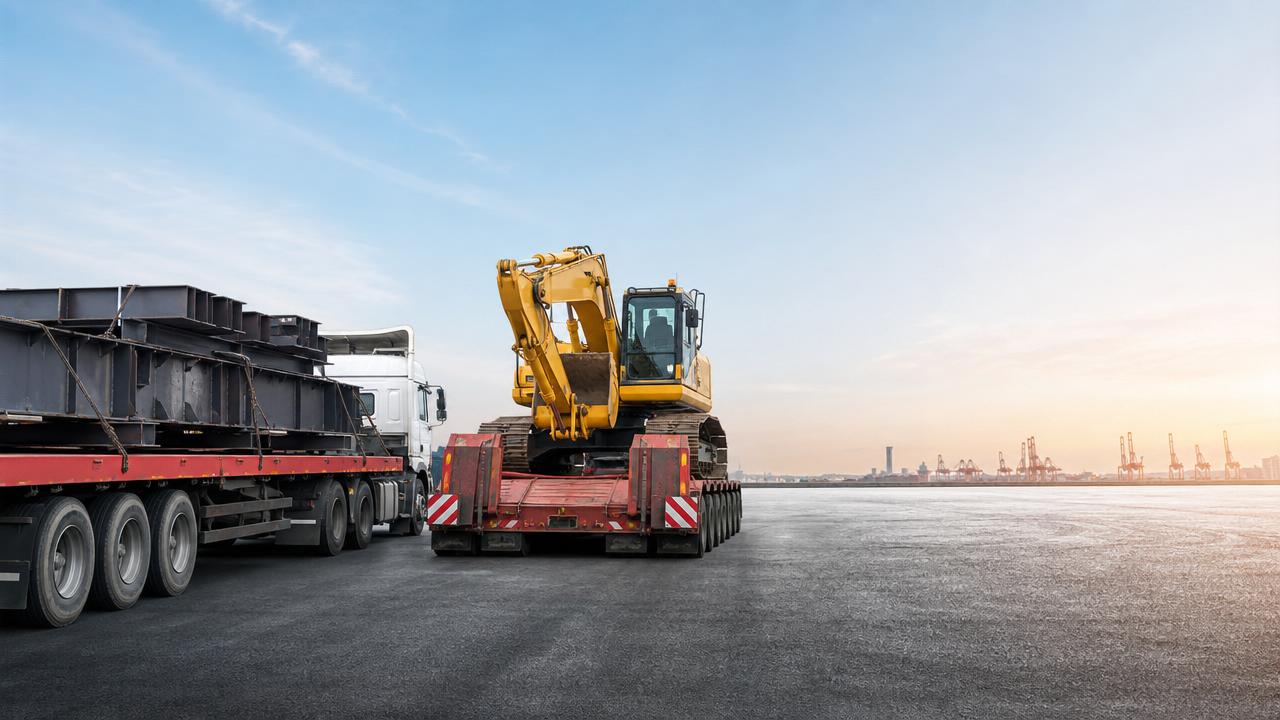
Flatbed Semi-Trailer vs Low Plate: Load Fit Guide
Selecting between a Flatbed Semi-Trailer and a low plate trailer is not only a capacity decision—it directly affects load stability, route compliance, loading efficiency, and long-term operating cost.
For technical evaluators comparing transport solutions for machinery, steel structures, containers, or oversized equipment, the right trailer configuration depends on load height, center of gravity, axle distribution, deck structure, and regulatory limits.
This guide explains how to match cargo characteristics with trailer design so you can make a safer, more efficient, and commercially sound procurement decision.
The Core Decision: Height, Stability, and Loading Method
The practical choice is simple: use a Flatbed Semi-Trailer when cargo fits legal height and benefits from an open, level deck.
Choose a low plate trailer when the cargo is tall, heavy, or has a high center of gravity that needs lowering.
Technical evaluators should avoid selecting only by rated payload, because deck height and weight distribution often decide real transport suitability.
A trailer that carries enough tons may still fail route clearance, braking balance, turning radius, or loading safety requirements.
The best selection process starts with cargo dimensions, operating route, loading equipment, and expected utilization across multiple projects.
What Is a Flatbed Semi-Trailer Best Suited For?
A Flatbed Semi-Trailer has a straight, open platform without side walls, making it versatile for many industrial cargo types.
It is commonly used for steel coils with cradles, pipes, rebar, containers, palletized equipment, construction materials, and prefabricated structures.
The main value is loading flexibility, because cranes, forklifts, or side loaders can access the deck from several directions.
For cargo within standard legal height, a flatbed often gives better operational speed than a low plate configuration.
It also supports mixed loads more easily, especially when cargo lengths and shapes vary across daily transport tasks.
Technical teams should confirm deck strength, crossmember spacing, twist-lock options, lashing points, and suspension type before procurement.
When a Low Plate Trailer Becomes the Better Fit
A low plate trailer, often called a lowbed or low loader in many markets, places the cargo deck closer to the road.
This lower deck reduces total transport height and improves stability when carrying tall machines or heavy equipment.
Typical applications include excavators, bulldozers, graders, drilling rigs, transformers, mining machinery, and oversized industrial modules.
If the load height approaches bridge, tunnel, cable, or road permit limits, a low plate design becomes technically necessary.
It also reduces rollover risk because the cargo center of gravity is lower during cornering, braking, and uneven road travel.
However, the lowered deck may reduce general cargo versatility and can require longer ramps or special loading procedures.
Key Comparison for Technical Evaluation
Payload rating is important, but it should be reviewed together with deck height, axle group capacity, beam structure, and suspension design.
A Flatbed Semi-Trailer usually offers a higher, continuous deck, which is efficient for containers and straight structural materials.
A low plate trailer sacrifices some deck simplicity to gain lower overall transport height and improved machinery stability.
For legal compliance, calculate total height as unloaded deck height plus cargo height, including tires, tracks, brackets, or packaging.
For safety, estimate center of gravity location and verify whether the cargo footprint distributes load across enough frame support points.
For operating cost, compare loading time, permit requirements, empty return usefulness, maintenance complexity, and compatibility with existing tractors.
Load Height: The First Technical Filter
Height is usually the fastest way to eliminate the wrong trailer type during early evaluation.
If cargo remains comfortably below local legal limits on a flatbed, the simpler configuration may be more economical.
If cargo exceeds limits or leaves little clearance margin, a low plate trailer should be assessed immediately.
Evaluators should include route-specific constraints, because official national limits do not reflect every bridge, toll gate, or urban restriction.
Industrial routes may include sharp ramps, temporary access roads, low wires, and worksite entrances not visible in standard specifications.
When in doubt, measure the real transport envelope and add a safety margin instead of relying only on catalog dimensions.
Center of Gravity and Load Stability
Stability becomes critical when the cargo is tall, narrow, unevenly shaped, or mounted on tracks and tires.
A higher deck raises the combined center of gravity, increasing lateral risk during turning, emergency braking, and sloped road sections.
This does not make a Flatbed Semi-Trailer unsafe, but it requires the load to fit its stability envelope.
Low plate trailers improve stability by positioning heavy equipment closer to the ground, especially on long-distance or rough-road routes.
Technical evaluation should include tie-down angles, wheel chocks, anti-slip surfaces, chain capacity, and permitted travel speed.
For concentrated loads, verify whether the cargo contact points align with reinforced beams rather than unsupported deck panels.
Axle Distribution and Frame Strength
A trailer’s rated capacity is only meaningful when the load can be distributed correctly across the frame and axle groups.
Flatbeds perform well with evenly distributed materials, containers, steel sections, and cargo that spans multiple crossmembers.
Low plate trailers are often engineered for concentrated machinery loads, but axle layout and beam design must match the equipment.
Evaluators should request technical drawings showing kingpin load, axle load, beam height, material grade, and reinforcement areas.
Overloading one axle group can create compliance problems even when gross vehicle weight appears acceptable.
For export projects, confirm that the selected configuration suits both destination regulations and the customer’s typical cargo profile.
Loading Efficiency and Site Conditions
Loading method often decides productivity more than theoretical trailer capacity, especially in construction and industrial logistics.
A Flatbed Semi-Trailer is efficient when forklifts, cranes, and side-loading operations are available at both ends.
Its open deck helps operators position cargo quickly and adjust load placement without complex ramp alignment.
A low plate trailer is more suitable when machinery can drive onto the deck through ramps or rear access.
However, it may need more preparation space, stable ground, and careful ramp angle control for heavy tracked equipment.
Before purchase, evaluators should simulate loading at real sites, including yard width, ground bearing capacity, and turning space.
Route Compliance and Permit Risk
Regulatory compliance is not only a legal issue; it affects scheduling, escort requirements, insurance, and total transport cost.
A Flatbed Semi-Trailer may avoid special permits when carrying standard-height, standard-width cargo within road limits.
For oversized cargo, a low plate trailer can reduce height enough to avoid or simplify certain permit categories.
Still, width, length, axle load, and turning radius may continue to require approval from transport authorities.
Technical teams should map the intended routes and compare trailer geometry against road class and infrastructure constraints.
This step is especially important for mining areas, ports, energy projects, and remote construction sites with limited access.
Cost Comparison Beyond Purchase Price
Purchase price matters, but lifecycle cost gives a more accurate view of trailer value.
A Flatbed Semi-Trailer is usually more flexible for return loads, mixed cargo, and general commercial transport.
This higher utilization can reduce idle time and improve revenue potential when cargo types change frequently.
A low plate trailer may cost more and serve narrower applications, but it prevents expensive compliance and safety failures.
If your business regularly moves tall or heavy machinery, the lower deck can reduce permits, damage risk, and handling complexity.
Evaluators should calculate cost per loaded kilometer, not just initial investment or nominal payload rating.
Practical Selection Matrix
Select a Flatbed Semi-Trailer when the load is not excessively tall, has a stable footprint, and needs quick multi-directional loading.
It is also preferred for containers, steel materials, palletized industrial goods, and projects requiring high daily utilization.
Select a low plate trailer when cargo height is the limiting factor or when machinery stability is the dominant safety concern.
It is the better choice for excavators, loaders, bulldozers, transformers, and other high-center or concentrated-weight equipment.
If both trailers appear suitable, compare route restrictions, loading site conditions, expected return cargo, and fleet compatibility.
The most economical trailer is the one that safely fits the largest share of real operating tasks.
Specification Points to Confirm Before Ordering
Before finalizing procurement, confirm deck length, deck width, deck height, rated payload, tare weight, and overall trailer dimensions.
Review main beam material, flange thickness, web thickness, crossmember spacing, floor plate type, and reinforcement design.
Check axle brand, axle count, suspension type, tire specification, braking system, landing gear, kingpin size, and electrical standard.
For a Flatbed Semi-Trailer carrying containers, confirm twist-lock quantity, positions, and compatibility with twenty-foot or forty-foot units.
For low plate applications, confirm ramp structure, hydraulic options, approach angle, gooseneck design, and concentrated load capacity.
Export buyers should also verify documentation, destination compliance, spare parts availability, and after-sales technical support.
How Livol Supports Trailer Selection and Export Delivery
Shandong Livol Truck International Trade Co., Ltd. supports customers with commercial vehicle selection, configuration matching, and export coordination.
As an authorized dealer for FOTON, SHACMAN, and SINOTRUK, Livol understands tractor-trailer compatibility across different operating environments.
For technical evaluators, this means trailer selection can be reviewed together with tractor power, fifth wheel height, and axle configuration.
Livol’s export team can assist with customization, documentation, customs clearance, logistics planning, and communication during delivery.
For buyers managing international procurement, stable supply, quality control, and professional after-sales support reduce implementation risk.
This integrated approach is especially useful when the trailer must match a specific project, route, or equipment fleet.
Common Mistakes to Avoid
One common mistake is choosing by maximum payload alone, without checking whether the cargo fits legal height and axle distribution.
Another is ignoring loading conditions, which can make an otherwise suitable trailer inefficient or unsafe at the worksite.
Some buyers select a low plate trailer for every heavy load, even when a flatbed would deliver better utilization.
Others choose a flatbed for versatility, then face permit problems when transporting tall machinery on restricted routes.
Technical evaluators should also avoid incomplete drawings, vague steel specifications, and unverified claims about concentrated load strength.
A structured comparison prevents these mistakes and supports a procurement decision that performs in real operation.
Conclusion: Match the Trailer to the Load, Not the Other Way Around
A Flatbed Semi-Trailer is the stronger choice for versatile, standard-height cargo requiring fast and flexible loading.
A low plate trailer is the safer fit for tall, concentrated, or heavy machinery where height and stability dominate.
The correct decision depends on total transport height, center of gravity, axle distribution, loading method, and route compliance.
For technical evaluators, the best approach is to begin with cargo data, then validate trailer structure and operating conditions.
When trailer selection is aligned with real loads and routes, buyers gain safer transport, better utilization, and lower long-term risk.