
News
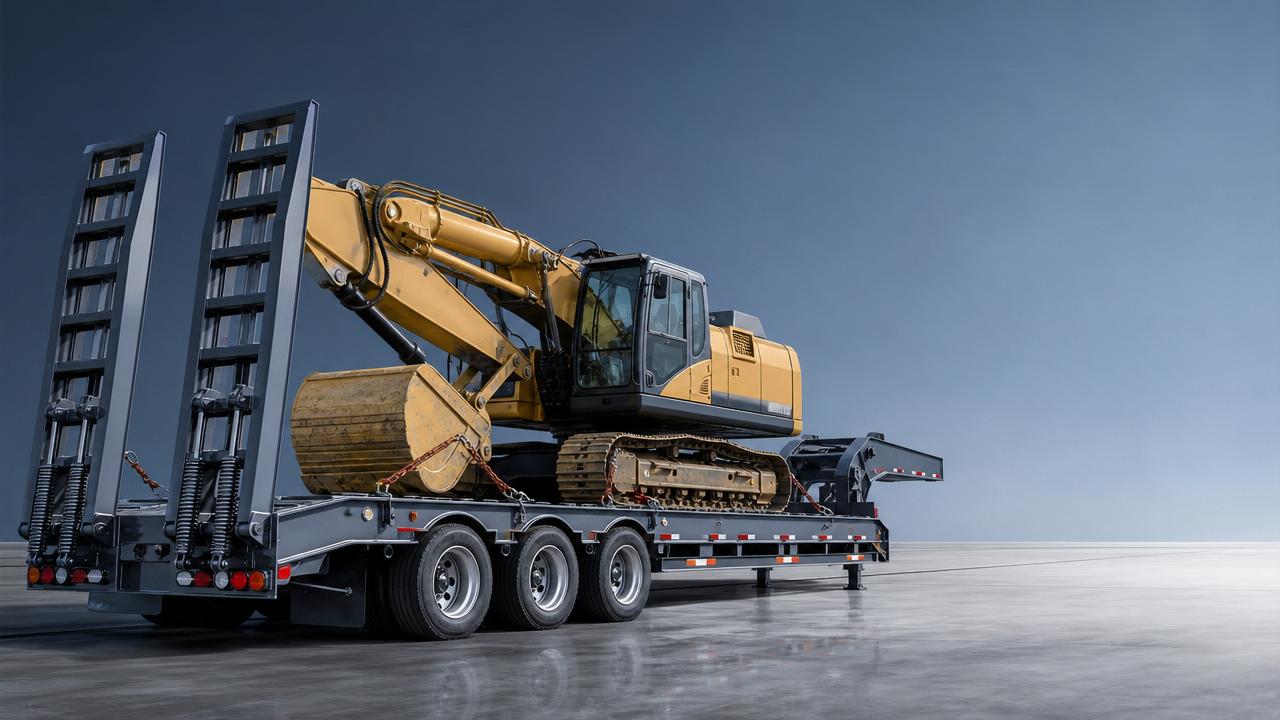
Selecting the right Low Plate trailer for heavy equipment is not only a transport decision, but also a critical safety and compliance task. For quality control and safety managers, checking structural strength, load matching, axle configuration, braking performance and tie-down reliability can significantly reduce operational risk. This guide highlights the key risk checks that help ensure safer hauling, lower downtime and more dependable fleet performance.
In construction fleets, mining support, road projects, and equipment relocation work, a wrong Low Plate choice can lead to overloading, unstable braking, deck failure, tire stress, and shipment delays. For teams responsible for inspection and operational safety, trailer selection should follow measurable checks rather than price alone.
A practical review usually starts with 5 core points: payload rating, deck structure, axle distribution, braking response, and securing method. These checks become even more important when hauling excavators, wheel loaders, rollers, bulldozers, or other heavy machines with uneven weight concentration.
Why Low Plate Trailer Selection Matters in Heavy Equipment Transport
A Low Plate trailer is designed to carry heavy and oversized equipment at a lower deck height, helping improve center of gravity and route clearance. In real operations, that lower deck can reduce rollover risk, but only when the trailer matches equipment dimensions, axle load, and road conditions.
For quality control personnel, the issue is not simply whether a trailer can carry 30 tons or 60 tons on paper. The real question is whether the frame, neck, suspension, tires, landing gear, and tie-down points can sustain dynamic loads during acceleration, cornering, uneven road travel, and emergency braking.
Common operating scenarios that increase risk
- Transporting excavators with concentrated rear counterweight loads
- Moving crawler equipment over rough access roads for 50–200 km
- Cross-border or port delivery where inspection standards are stricter
- High-frequency fleet use with 3–5 loading cycles per week
- Operations in wet, dusty, or steep terrain that stress braking systems
In these conditions, trailer mismatch often appears first as uneven tire wear, visible deck flex, unstable steering, or repeated brake adjustment. If left unchecked, those early signals can progress into axle overload, weld cracking, or cargo movement during transit.
The cost of poor specification decisions
Even a 10% to 15% mismatch between actual operating load and safe working margin can shorten component life. Safety managers should also consider indirect costs such as route restriction, permit delays, loading time, roadside inspection issues, and jobsite downtime.
A lower purchase price may look attractive at first, but repeated maintenance, tire replacement every 6–9 months under overload conditions, or one failed delivery window can quickly erase any upfront savings. That is why trailer selection should be treated as a fleet risk control decision.
Key Risk Checks Before Approving a Low Plate Trailer
Before procurement approval, quality and safety teams should use a structured checklist. The goal is to verify whether the Low Plate trailer is suitable for the heaviest expected machine, not only the average load. A 6-point pre-approval review is often more effective than relying on brochure capacity alone.
1. Structural strength and deck integrity
Inspect the main beam design, cross-member spacing, deck plate thickness, gooseneck reinforcement, and weld consistency. Heavy equipment creates point loads rather than evenly distributed loads, especially under steel tracks or outriggers. That means the trailer structure must be reviewed for concentrated stress zones.
For many engineering vehicle applications, cross-member spacing in critical loading areas should be evaluated carefully, particularly under crawler travel paths. Excessive flex during loading is an early warning sign. Surface plate deformation, weld discoloration, or visible neck twist should never be ignored.
Inspection focus points
- Main beam section and reinforcement around the neck transition
- Weld uniformity at axle mounts and suspension connection points
- Deck anti-slip treatment for tracked machinery
- Ramp hinge strength and locking mechanism stability
2. Load matching and safety margin
A common mistake is selecting a Low Plate trailer based on nominal machine weight only. Actual transport weight may increase by 5% to 20% after adding attachments, fuel, buckets, blades, hydraulic hammers, or spare components. Safety managers should calculate transport mass, not catalog mass.
A practical internal rule is to keep a reasonable operating margin between expected gross load and trailer rated capacity. For example, if a machine package regularly reaches 42 tons, selecting a trailer rated very close to that figure leaves little buffer for dynamic movement and road shock.
The table below helps compare key load matching factors during Low Plate trailer evaluation for engineering vehicle transport.
The key point is that trailer capacity must be assessed together with deck load concentration and axle sharing. A trailer that appears sufficient by total tonnage may still be unsafe if one axle group or the neck section receives too much of the load.
3. Axle configuration and suspension suitability
Axle count affects legal load distribution, braking efficiency, tire life, and road impact. In heavy equipment transport, 2-axle, 3-axle, and 4-axle Low Plate trailer configurations each serve different operational profiles. The right choice depends on payload range, route quality, and regulatory requirements.
For repeated hauling above medium duty levels, quality teams should verify axle brand consistency, bearing protection, and suspension durability. Mechanical suspension may suit rugged sites, while air suspension can improve ride quality for specific cargo, but it also requires stricter maintenance discipline.
Questions to ask during axle review
- Is the axle arrangement suitable for the maximum planned gross combination load?
- Will local road rules or export destination regulations require a different load spread?
- Can the suspension handle repeated off-pavement entry and exit angles?
- How often are bushings, equalizers, and brake components inspected in current fleet practice?
4. Braking performance and control reliability
Braking is one of the most critical safety points on any Low Plate trailer. Heavy equipment creates high inertia, especially during downhill travel and emergency stops. Safety managers should confirm brake chamber condition, lining wear consistency, air circuit sealing, and response balance across all axles.
A useful inspection routine is to check brake response, pressure retention, and adjustment status before each dispatch cycle, with deeper maintenance at fixed intervals such as every 10,000–20,000 km depending on road severity. Delayed response on one axle can increase stopping distance and trailer instability.
5. Tie-down points, ramps, and loading safety
Tie-down reliability is often underestimated during procurement. For excavators, rollers, and bulldozers, cargo movement can happen not only on the road but also during loading and unloading. Inspect the number, placement, reinforcement, and accessibility of lashing points across the Low Plate trailer deck.
Ramp angle is another practical factor. A loading angle that is too steep can cause low-clearance machinery to bottom out or shift suddenly. In many field operations, safer ramp geometry improves loading efficiency by several minutes per cycle and reduces operator hesitation.
How to Build a Practical Low Plate Inspection Framework
A good procurement decision is supported by a repeatable inspection framework. Instead of relying on visual approval only, quality departments can create a scoring sheet covering structural, operational, and compliance factors. A simple 4-category process often improves consistency across multiple purchasing projects.
Suggested 4-step internal review process
- Define the heaviest 3 equipment types to be transported over the next 12 months.
- Match load data with trailer capacity, axle layout, and deck dimensions.
- Inspect physical build quality, braking system, ramps, and tie-down points.
- Approve supplier support scope, spare parts access, and delivery coordination.
This process reduces subjective judgment and helps standardize risk review between procurement, maintenance, operations, and HSE teams. It is especially useful when fleets need multiple trailers with similar but not identical duties.
The following table can be used as a practical evaluation matrix for a Low Plate trailer sourcing decision.
This matrix shows that specification review should not stop at hardware. Delivery documents, logistics planning, and after-sales coordination also affect fleet safety because incomplete support can delay registration, operation, or maintenance readiness.
Common procurement mistakes
One frequent mistake is choosing a trailer based only on one machine type, even though the fleet may carry 4 or 5 equipment categories in practice. Another is ignoring the relationship between deck length and equipment track position, which directly affects axle load balance.
Some buyers also underestimate the importance of delivery readiness. Missing customs documents, incomplete technical lists, or unclear spare parts arrangements can delay deployment by 1–3 weeks. For engineering vehicle fleets, that delay can affect project schedules and subcontractor commitments.
Supplier Capability and Export Support for Risk Reduction
For international buyers and fleet operators, a reliable supplier is part of the safety equation. A well-specified Low Plate trailer still needs proper documentation, inspection support, logistics planning, and after-sales communication. This is especially important for buyers managing multi-country operations or urgent project delivery timelines.
Shandong Livol Truck International Trade Co., Ltd., based in Shandong, China, supports customers with full-process commercial vehicle export services, including vehicle selection, customization, documentation, customs clearance, and logistics coordination. For quality and safety managers, this can simplify procurement control and reduce administrative gaps between technical approval and final delivery.
Why exporter support affects trailer quality outcomes
When a supplier has stable inventory, authorized channels, and coordinated service capability, the buyer is in a stronger position to verify configuration before shipment. That matters when confirming axle layout, ramp design, parts readiness, and export paperwork within a realistic lead time.
With authorized domestic and overseas dealer resources for FOTON, SHACMAN, and SINOTRUK, plus broad operational experience across China, Livol can help global buyers align trailer and tractor sourcing more efficiently. This is useful when the haulage solution requires both towing vehicle compatibility and trailer compliance review.
What quality managers should confirm with any supplier
- Whether specification sheets match final shipped configuration
- Whether inspection photos or videos can be provided before dispatch
- Whether customs and logistics documents are prepared accurately
- Whether spare parts and after-sales communication channels are defined
These checks are not just commercial details. In many cases, they directly influence whether the Low Plate trailer enters service on time and whether the fleet can maintain safe operating status during the first 30–90 days after delivery.
Final Selection Advice for Quality Control and Safety Teams
The safest Low Plate trailer is not necessarily the most expensive or the one with the highest stated tonnage. It is the unit that matches your heaviest real load, your route condition, your loading method, and your maintenance discipline. That means procurement should combine technical verification with field-use reality.
For most engineering vehicle operations, a sound selection decision should cover at least 6 essentials: actual transport mass, structural strength, axle configuration, braking performance, tie-down reliability, and supplier support readiness. When these points are reviewed together, trailer-related risk can be reduced significantly.
If your team is evaluating a Low Plate trailer for excavators, loaders, rollers, bulldozers, or mixed heavy equipment fleets, Shandong Livol Truck International Trade Co., Ltd. can support the process with practical export coordination, vehicle matching, and professional service follow-up. Contact us now to discuss your transport requirements, request a tailored solution, or learn more about dependable commercial vehicle and trailer sourcing options.
Search Starts Here