
News
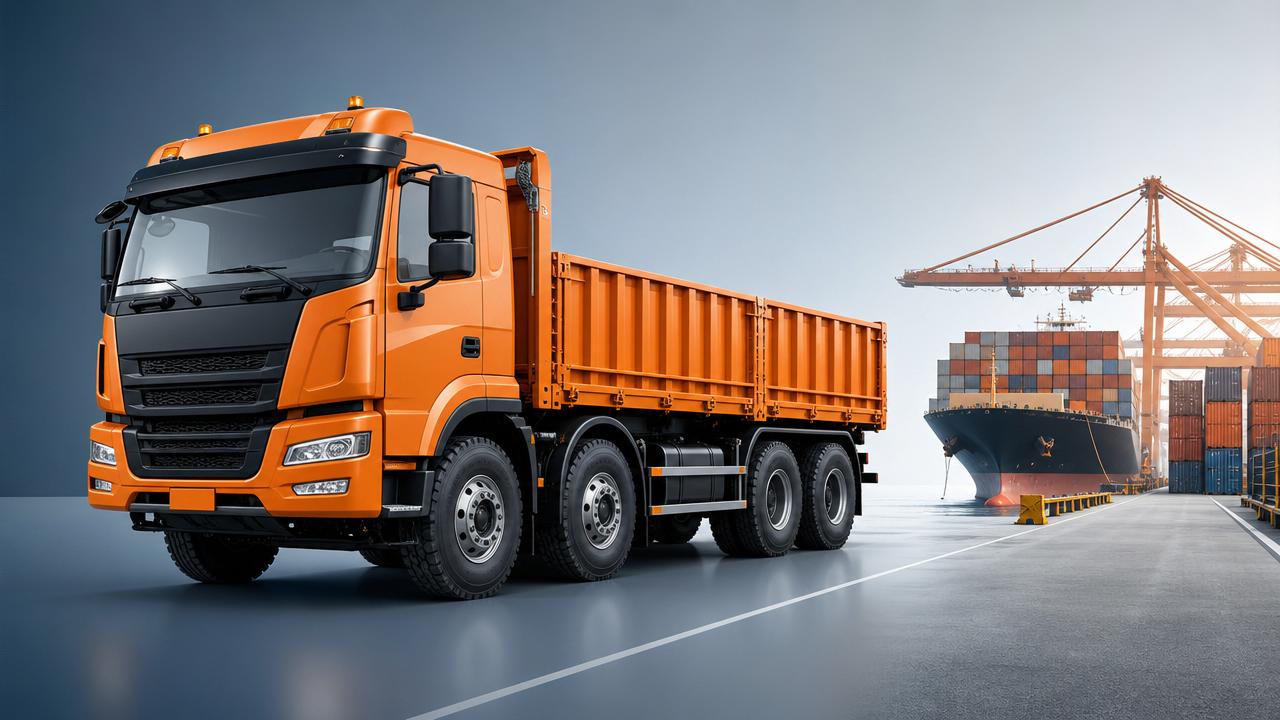
For business evaluators comparing commercial vehicle options, the Cangshan Vehicle Configuration List provides a practical starting point for understanding how core specifications influence total delivery cost.
From payload capacity and engine performance to axle setup and body dimensions, each configuration choice can directly affect shipping efficiency, compliance, and budget planning.
This guide highlights the key specs that matter most when making cost-conscious export decisions.
Why the Cangshan Vehicle Configuration List Matters in Cost Evaluation
For business evaluators, the main question is not simply which vehicle looks stronger on paper, but which configuration delivers the lowest total landed cost.
The Cangshan Vehicle Configuration List is useful because it turns a broad truck inquiry into a structured cost review covering purchase suitability, logistics efficiency, compliance exposure, and operating practicality.
In export transactions, small specification changes can create large budget differences.
A longer body, heavier chassis, or higher horsepower engine may improve application fit, but it can also increase freight cost, customs classification complexity, and delivery timeline.
That is why evaluators should treat a configuration list as a cost-control document, not just a technical sheet.
The best evaluation approach is to identify which specifications directly influence transport volume, shipping weight, destination regulations, and readiness for the intended working environment.
What Business Evaluators Usually Need to Confirm First
When reviewing commercial vehicle exports, most evaluators focus on five practical concerns: total delivery cost, operational fit, lead time stability, compliance risk, and future service support.
These concerns shape how the Cangshan Vehicle Configuration List should be read.
The goal is not to compare every parameter equally.
Instead, evaluators should prioritize the items that affect whether the vehicle can be shipped efficiently, cleared smoothly, and deployed without expensive modification after arrival.
In most cases, the highest-value questions are straightforward.
Does this configuration increase ocean freight or inland transport cost? Does it reduce container or ro-ro efficiency? Does it require special permits or create axle-load issues locally?
Can the destination customer use it immediately, or will additional bodywork and adjustments be needed after delivery?
If these questions are answered early, the evaluation process becomes faster and more commercially reliable.
Payload Rating and GVW: The First Specs That Influence Delivery Economics
Payload rating and gross vehicle weight are often among the first specifications that affect cost analysis.
They influence chassis strength, tire selection, suspension structure, axle configuration, and sometimes even the shipping method used for export delivery.
A higher payload requirement usually means a heavier-duty build.
That can be commercially justified, but it may also raise procurement cost, increase overall vehicle weight, and reduce freight efficiency when compared with a lighter configuration.
For evaluators, the key is to avoid over-specifying capacity.
If the end user only needs moderate loading performance, choosing a significantly higher-rated vehicle may create unnecessary cost at every stage, from purchase to transport to operating fuel consumption.
On the other hand, under-specifying payload can create durability claims, downtime, or non-compliance in actual use.
The best decision is usually the lightest configuration that still safely matches the real duty cycle.
Engine Power and Emission Standard: Where Cost and Market Suitability Meet
Engine specification has a direct impact on both vehicle pricing and destination market suitability.
In the Cangshan Vehicle Configuration List, horsepower, torque, displacement, and emission level should be reviewed together rather than separately.
A more powerful engine may improve gradeability and heavy-load performance, especially in mining, construction, or mountainous routes.
However, it can also increase acquisition cost and sometimes raise maintenance expectations in certain markets.
Emission standard is equally important in export planning.
Some destinations accept earlier standards for engineering vehicles, while others require tighter compliance or specific engine documentation for customs and registration processing.
Choosing the wrong emission configuration can delay delivery or force rework in documentation.
Evaluators should match the engine not only to operating conditions, but also to fuel quality, regulatory expectations, and local parts availability.
A technically superior engine is not always the commercially best choice if the market cannot support it efficiently.
Axle Configuration and Drive Type: A Major Factor in Price, Freight, and Application Fit
Axle setup is one of the most important cost drivers in engineering vehicles.
Whether the truck is configured as 4x2, 6x4, 8x4, or another arrangement affects chassis complexity, weight, turning performance, and transport economics.
For delivery cost evaluation, axle configuration matters because more driven axles usually mean more material, more weight, and a larger physical footprint.
That can increase freight charges and reduce loading flexibility during export transport.
At the same time, drive type must match the jobsite reality.
A lower-cost axle setup may save money at purchase, but it can become a poor investment if the truck must operate on unstable ground, steep gradients, or overloaded site roads.
Business evaluators should compare axle selection against expected terrain, legal axle-load limits, and maintenance support in the destination country.
The most cost-effective configuration is not the cheapest axle arrangement, but the one that avoids both overengineering and underperformance.
Body Dimensions: One of the Most Overlooked Drivers of Shipping Cost
Body length, width, height, and cargo structure often have an immediate effect on export logistics.
These dimensions determine how easily the vehicle can be transported, stored, and delivered to the final customer.
In many export projects, body dimensions have more influence on freight cost than buyers initially expect.
An oversized body can reduce vessel loading efficiency, increase inland transport restrictions, or require special handling at port and destination.
For business evaluators, this is where careful reading of the Cangshan Vehicle Configuration List adds real value.
A configuration that looks ideal for site capacity may become more expensive overall if it creates low shipping density or oversize transport complications.
It is often worth comparing whether a slightly different body length or structure can preserve application value while improving freight efficiency.
This is especially relevant for bulk procurement, where even a modest logistics saving per unit can become significant across the full order volume.
Chassis Weight, Materials, and Suspension: Hidden Contributors to Landed Cost
Many buyers focus on visible specifications, but chassis weight and structural choices can quietly shape total delivery cost.
Frame section size, reinforcement level, material grade, and suspension type all influence overall mass and transport efficiency.
A heavier chassis can improve durability in harsh engineering use.
Still, if the actual operating requirement does not need that level of reinforcement, the added structure may simply raise export freight and lower payload efficiency.
Suspension selection also deserves attention.
Steel suspension may remain the practical choice for rough-road durability, while other setups may support different loading or comfort priorities depending on application.
Evaluators should ask whether each structural feature solves a real field requirement or merely adds specification weight.
This distinction matters because overbuilt vehicles often appear attractive during technical review but become less competitive when total delivered cost is calculated.
Tires, Fuel Tank, and Auxiliary Options: Small Items That Change the Budget
Not every cost driver is a major assembly.
Tire specification, fuel tank capacity, spare wheel arrangement, toolbox structure, and similar options can all influence export pricing and delivery planning.
For example, larger or specialized tires may improve jobsite suitability, but they can also affect replacement cost and supply convenience in the destination market.
An oversized fuel tank may support longer operating cycles, yet it may add unnecessary weight or dimensional impact if the application does not require it.
Auxiliary components can also create packing and shipping implications.
External accessories may increase overall dimensions, while market-specific add-ons can alter preparation time before export release.
Business evaluators should review options line by line and ask a simple question: does this feature improve real operating value enough to justify its cost and logistics effect?
That discipline helps prevent specification inflation during quotation comparison.
Configuration Standardization vs Customization: Which One Reduces Delivery Risk?
Customization is valuable, but it should be used carefully.
For export buyers, heavily customized engineering vehicles can improve fit for a specialized task, yet they may also extend production preparation, document review, and final inspection timelines.
Standardized configurations often offer better delivery predictability.
They are usually easier to source from available inventory, simpler to verify, and faster to arrange for export documentation and logistics scheduling.
This matters greatly when project timing is tight.
Business evaluators should compare the commercial gain of each customization request against its likely impact on lead time, parts complexity, and after-sales support.
In many procurement cases, a near-standard model with limited targeted changes delivers the best balance of application fit and delivery control.
The ideal strategy is selective customization, not maximum customization.
How to Use the Cangshan Vehicle Configuration List for Better Supplier Comparison
The Cangshan Vehicle Configuration List becomes most useful when it is turned into a comparison framework.
Instead of reviewing one vehicle in isolation, evaluators should compare multiple configurations against a fixed set of cost and risk criteria.
A practical review sheet can include payload need, body dimensions, axle arrangement, engine suitability, emission compliance, chassis weight, accessory impact, and estimated logistics effect.
This method helps teams separate critical differences from cosmetic ones.
It also supports clearer communication between purchasing, technical review, and finance stakeholders.
When suppliers provide quotations, evaluators should request confirmation of available inventory, production lead time, export documentation readiness, and recommended shipping mode alongside the specification list.
That combined view is much more useful than unit price alone.
In commercial vehicle export, the lowest quoted price does not automatically produce the lowest delivered cost.
Why Export Execution Capability Matters as Much as Vehicle Specs
Even a well-chosen configuration can lose value if export execution is weak.
For business evaluators, supplier capability should be assessed together with the vehicle itself.
A reliable exporter should be able to support configuration confirmation, vehicle sourcing, quality inspection, documentation, customs clearance, and logistics coordination without creating avoidable delay.
This is especially important for engineering vehicles, where specification accuracy affects both freight arrangement and destination acceptance.
Shandong Livol Truck International Trade Co., Ltd. operates as an authorized dealer for FOTON, SHACMAN, and SINOTRUK, supported by extensive 4S store resources and stable vehicle inventory in China.
For buyers, this kind of supply and service structure can help reduce sourcing uncertainty and improve delivery responsiveness.
A professional export team also adds value by identifying which configuration choices are most likely to affect compliance, logistics cost, and deployment readiness in overseas markets.
Final Evaluation Logic: Focus on Total Delivered Value, Not Isolated Specs
For commercial vehicle procurement, the right conclusion rarely comes from one specification alone.
The real value of the Cangshan Vehicle Configuration List is that it helps evaluators connect technical choices with business outcomes.
Payload, engine, axles, dimensions, chassis structure, and optional equipment all influence delivery cost in different ways.
The most economical option is usually the configuration that matches the actual job requirement closely while avoiding unnecessary size, weight, complexity, and compliance risk.
For business evaluators, a strong review process should answer three questions clearly.
Is the vehicle operationally suitable? Is the export path efficient and predictable? And does the final landed cost support the intended commercial return?
When these questions guide the analysis, the Cangshan Vehicle Configuration List becomes more than a technical document.
It becomes a practical decision tool for selecting engineering vehicles with better cost control, lower delivery risk, and stronger project value.
Search Starts Here