
News
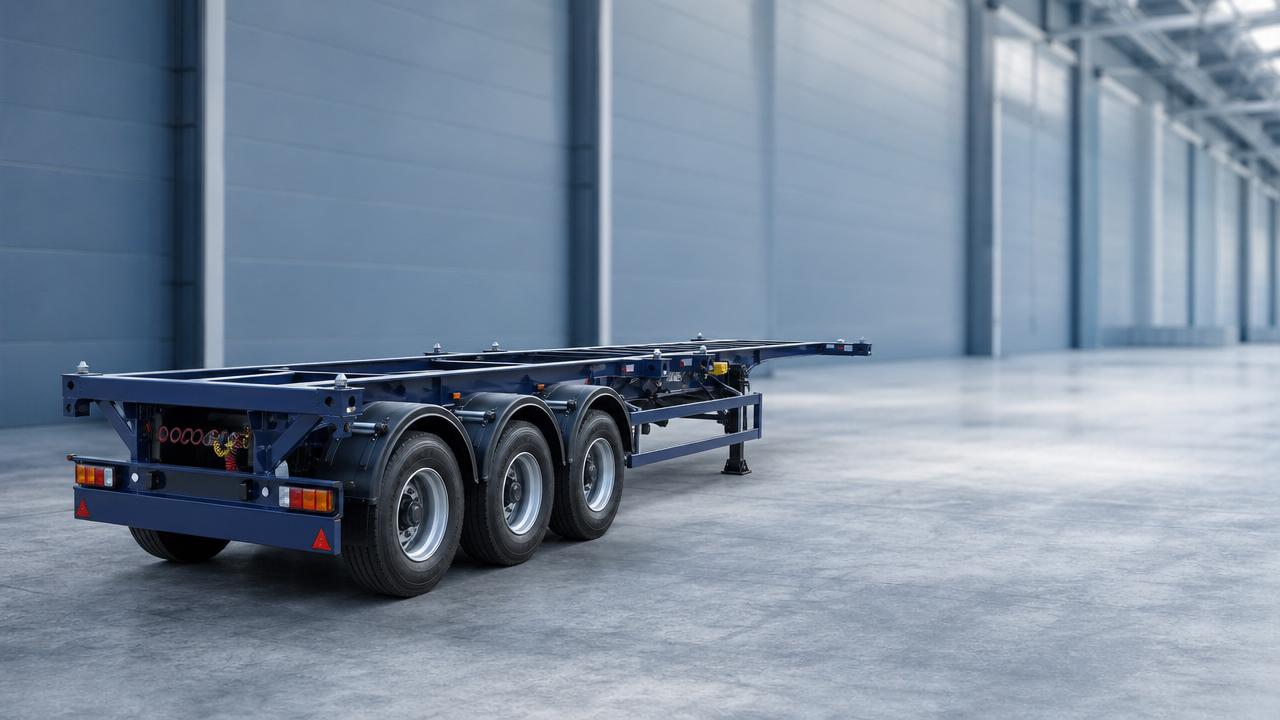
For after-sales maintenance teams, keeping a Skeleton (Container) Semi-Trailer in reliable working condition is essential to reducing downtime, protecting cargo efficiency, and lowering repair costs. From frame inspections and twist lock checks to brake, tire, and lighting maintenance, every detail affects daily performance. This guide outlines practical maintenance points that help improve fleet availability and extend trailer service life.
Why does Skeleton (Container) Semi-Trailer maintenance directly affect fleet uptime?
A Skeleton (Container) Semi-Trailer works in a demanding engineering vehicle environment. It carries containers under repeated loading cycles, rough road vibration, tight yard turns, and frequent coupling operations.
For after-sales maintenance personnel, the real challenge is not just fixing faults. It is preventing small wear points from becoming brake failure, frame cracking, tire loss, lighting faults, or container locking incidents.
When downtime happens, the cost is broader than workshop labor. Delayed dispatch, idle tractors, missed port schedules, cargo detention risk, and emergency parts sourcing all increase operating pressure.
- High-frequency loading and unloading can loosen twist lock assemblies and damage weld areas around the container support structure.
- Long-haul use can accelerate brake lining wear, air leakage, hub heat build-up, and uneven tire consumption.
- Harsh weather and poor roads often cause corrosion, lamp failure, cable abrasion, and suspension stress.
A maintenance plan for a Skeleton (Container) Semi-Trailer should therefore focus on predictable wear patterns, inspection intervals, and replacement timing rather than waiting for visible breakdowns.
What should after-sales teams inspect first during routine service?
The most efficient routine begins with components that can stop the trailer immediately or create safety risk. On a Skeleton (Container) Semi-Trailer, these usually include the frame, locking system, brake system, suspension, axles, tires, and electrical lines.
Daily and weekly inspection priorities
The checklist below helps maintenance teams identify faults before they affect dispatch reliability. It is especially useful for trailers working in ports, logistics yards, infrastructure projects, and mixed road conditions.
This table shows why routine service on a Skeleton (Container) Semi-Trailer should be systematic. The highest-cost failures often start as simple looseness, leakage, corrosion, or wear that can be found in minutes.
A practical walk-around sequence
- Start at the kingpin and front structure. Look for wear, loose mounting points, and impact damage from improper coupling.
- Move along both side rails and cross members. Check for bending, rust scale, and cracks near stress concentration areas.
- Test each twist lock. Confirm it rotates smoothly and secures without excessive free play.
- Inspect landing gear, braces, and handle operation. Damage here often creates loading delays in the yard.
- Finish with axles, suspension, brake lines, lamps, reflectors, and the rear under-run protection area.
How do frame, twist lock, and landing gear checks prevent expensive downtime?
On a Skeleton (Container) Semi-Trailer, structural parts deserve special attention because they are exposed to concentrated container loads. A trailer may still move with hidden fatigue damage, but the repair cost rises sharply once distortion spreads.
Frame and weld focus points
Inspect welds around cross members, gooseneck transitions, suspension hangers, and twist lock bases. These areas often see repeated stress under heavy box handling and uneven road surfaces.
Corrosion should not be treated as cosmetic only. Surface rust can hide pitting, while trapped moisture around brackets and joints gradually weakens steel and fasteners.
Twist lock reliability checks
- Check locking head wear and confirm the mechanism fully engages the container corner casting.
- Look for rust seizure, weak springs, damaged handles, and bent retaining parts after rough handling.
- Lubricate moving points with suitable grease and remove heavy dirt that can block full rotation.
Landing gear service points
Landing gear problems often appear during urgent loading, when there is no time for workshop repair. Check crank effort, gearbox noise, leg synchronization, shoe condition, and mounting bolts.
If the landing gear is slow, noisy, or uneven, repair it early. Delay can lead to collapsed support, yard immobilization, and secondary frame stress.
Which brake, axle, and tire maintenance points matter most?
Brake and running gear faults are among the most common reasons a Skeleton (Container) Semi-Trailer is removed from service. They also create direct safety exposure, especially under full container weight and long downhill routes.
Key maintenance intervals by component
The maintenance rhythm should reflect operating intensity, load profile, and road conditions. The table below gives a practical reference for workshop planning and field inspection.
For a Skeleton (Container) Semi-Trailer, these checks support more than compliance. They reduce heat-related failures, improve predictable maintenance scheduling, and help workshops prepare parts before a unit becomes inoperable.
Signs that should trigger immediate service
- One tire runs hotter than others after a short trip.
- Brake application feels uneven or the trailer pulls during stopping.
- Hub cap area shows fresh grease leakage or oil contamination.
- Tread wear appears only on one shoulder or in scalloped patterns.
Why are lighting, wiring, and corrosion control often underestimated?
Many maintenance teams focus on visible mechanical parts first, but electrical faults can delay dispatch just as quickly. A Skeleton (Container) Semi-Trailer often operates in rain, dust, mud, coastal humidity, and frequent wash-down conditions.
Loose connectors, cable chafing, weak grounding, and broken lamp housings are common in this working environment. If left unchecked, they create repeated failures that waste workshop time and frustrate operators.
Electrical and corrosion prevention checklist
- Inspect all lamps, side markers, and reflectors for moisture ingress and cracked lenses.
- Secure wiring harness routes away from sharp steel edges and moving suspension parts.
- Clean connectors and apply suitable protective treatment where exposure is high.
- Remove rust scale early and repair paint damage before corrosion reaches structural metal.
For units working near ports or coastal projects, corrosion prevention should be more frequent. Salt exposure speeds deterioration around fasteners, brackets, and welded edges.
How can maintenance teams build a better service plan for different operating scenarios?
Not every Skeleton (Container) Semi-Trailer works under the same conditions. A trailer running short port cycles faces different wear compared with one on regional highways or rough construction access roads.
A scenario-based plan helps after-sales teams allocate labor, parts, and inspection depth more efficiently. It also improves communication with fleet managers who need clear maintenance priorities.
This comparison makes service planning more practical. A Skeleton (Container) Semi-Trailer used in mixed-road engineering transport usually needs deeper structural and suspension checks than a yard-only unit.
What common maintenance mistakes increase repair cost later?
Several mistakes appear repeatedly in trailer service operations. They often save a little time in the short term but create much higher cost in the next operating cycle.
Mistakes to avoid on a Skeleton (Container) Semi-Trailer
- Replacing tires without checking alignment, suspension bushings, or axle condition.
- Greasing or painting over a damaged area without first checking for hidden cracks or looseness.
- Ignoring slight twist lock stiffness until the container cannot be secured smoothly.
- Repairing repeated lamp failure without tracing the underlying harness abrasion or grounding fault.
- Buying non-matching wear parts that reduce service compatibility and complicate inventory control.
For export fleets and cross-border operations, parts consistency matters. Maintenance teams benefit when the trailer configuration, documentation, and replacement parts planning are considered together from the start.
How do procurement support and spare parts planning help after-sales maintenance?
Downtime is not only a workshop issue. It is also a parts supply and configuration issue. If the correct wear parts are unavailable, even a simple Skeleton (Container) Semi-Trailer repair can stop operations longer than expected.
This is where supplier capability matters. Shandong Livol Truck International Trade Co., Ltd., based in Shandong, China, supports commercial vehicle customers with stable supply resources, authorized channel advantages, and practical export coordination experience.
Why this matters for maintenance teams
- A large authorized network and sufficient inventory help shorten response time when replacement units or related commercial vehicle resources are needed.
- Professional export process support reduces delays in documentation, customs handling, and logistics coordination for overseas buyers.
- Vehicle selection and customization guidance helps align trailer configuration with the intended operating scenario, reducing avoidable maintenance stress later.
For maintenance managers, good procurement support means clearer parameter confirmation, better parts planning, and fewer mismatches between operating conditions and trailer specification.
FAQ about Skeleton (Container) Semi-Trailer maintenance
How often should a Skeleton (Container) Semi-Trailer receive a full inspection?
A daily walk-around is recommended before dispatch. A deeper weekly inspection should cover locks, brakes, tires, wiring, and visible structure. A more detailed workshop inspection should be scheduled according to mileage, load intensity, road conditions, and local compliance requirements.
Which parts usually create the fastest downtime if neglected?
Twist locks, brake air lines, wheel ends, tires, and landing gear are frequent causes of immediate service interruption. Lighting faults can also stop dispatch where roadworthiness checks are strict.
What should buyers confirm before ordering a trailer for easier maintenance?
Confirm operating scenario, axle and suspension configuration, lock layout, tire specification, electrical standard, corrosion protection level, and expected spare parts support. These details affect workshop efficiency throughout the trailer life cycle.
Is preventive maintenance really cheaper than reactive repair?
In most engineering vehicle operations, yes. Preventive maintenance reduces emergency recovery, secondary damage, overtime labor, delayed loading, and urgent parts freight. It also makes service scheduling easier for fleets with tight dispatch plans.
Why choose us for vehicle selection, export support, and maintenance-oriented planning?
If you need support beyond basic product supply, Shandong Livol Truck International Trade Co., Ltd. can help you evaluate commercial vehicle and trailer-related requirements with a practical, operations-focused approach.
As the official authorized domestic and overseas dealer for FOTON, SHACMAN, and SINOTRUK, with a broad authorized 4S store network in China and stable inventory resources, the company is positioned to support customers who need dependable supply and faster delivery coordination.
Its professional export team can assist with parameter confirmation, vehicle and configuration selection, customization discussion, documentation, customs clearance, logistics planning, and after-sales communication support for global buyers.
- Ask about trailer and vehicle parameter matching for your actual routes and container types.
- Discuss customization options that can simplify future maintenance and parts stocking.
- Confirm delivery timing, export documentation needs, and logistics arrangements before purchase.
- Request support for quotation comparison, specification review, and service planning for overseas operations.
For teams responsible for keeping a Skeleton (Container) Semi-Trailer fleet available, the right partner helps reduce uncertainty before the unit even enters service. Contact us to discuss specification review, product selection, delivery schedule, customization options, certification-related questions, and quotation planning for your next project.
Search Starts Here