News
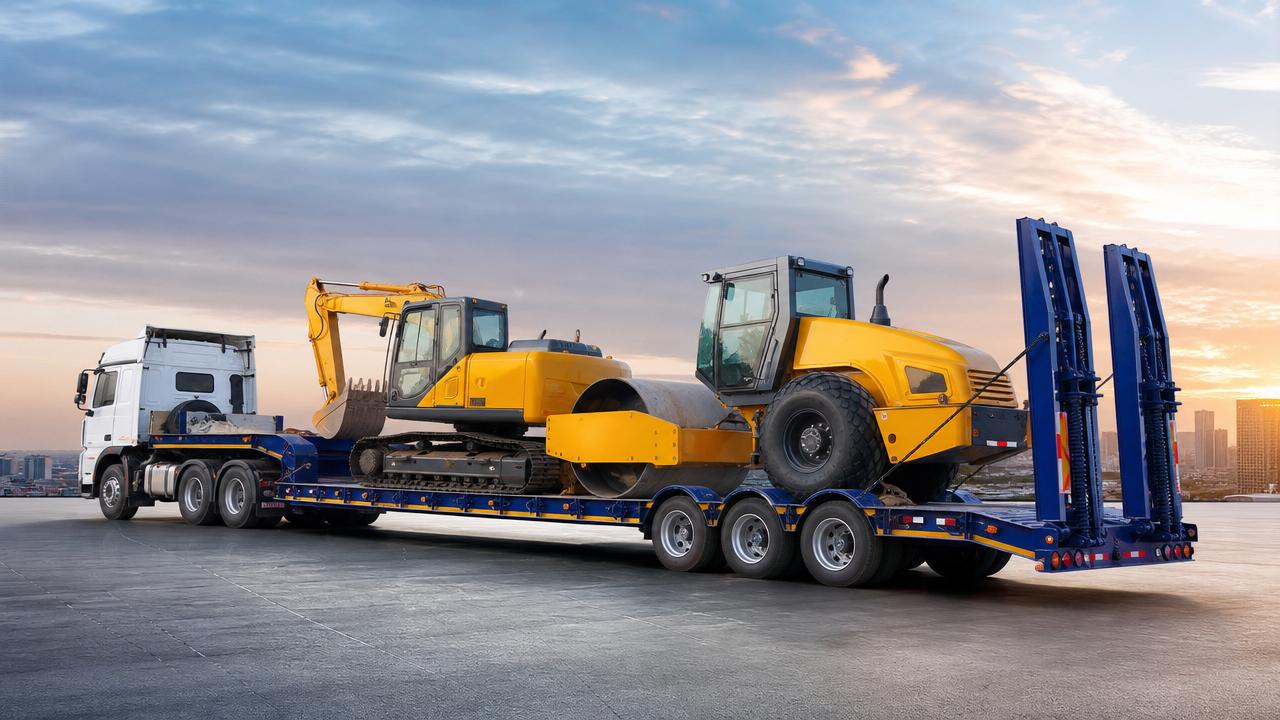
Choosing the right Low Plate trailer is critical for project managers who need heavy equipment delivered on time and within budget. A poor selection can trigger loading issues, route restrictions, cargo damage, and costly transport delays that disrupt the entire construction schedule. Understanding the most common mistakes is the first step toward safer, more efficient engineering vehicle logistics.
Why do Low Plate trailer selection mistakes create major project delays?
In engineering vehicle transport, a Low Plate trailer is not just a carrier. It is a critical link between equipment readiness, route feasibility, site access, and lifting or loading efficiency. When the trailer does not match the machine’s dimensions, axle load, ground clearance, or unloading conditions, the result is usually not a small inconvenience. It becomes a chain reaction of permit changes, road restrictions, crane rescheduling, idle labor, and missed milestones.
Project managers often face pressure from three sides at once: tight delivery windows, fixed equipment budgets, and variable site conditions. In that environment, trailer selection may be treated as a routine freight step. That is exactly where many costly Low Plate mistakes begin. A trailer that looks acceptable on paper may still be the wrong choice once bridge rules, turning radius, loading angle, and machine weight distribution are checked in detail.
- Transport permits may be delayed if the selected Low Plate trailer creates an over-length, over-width, or axle load issue that was not identified early.
- Loading can fail on the scheduled date if the deck height, ramp angle, or neck design is unsuitable for tracked or low-clearance engineering equipment.
- Unplanned costs rise quickly when the carrier must switch trailers, split shipments, change routes, or arrange escort services after dispatch.
For companies handling excavators, loaders, graders, rollers, or other construction machines, the right Low Plate solution should be chosen as part of overall project logistics planning, not as an afterthought.
The most common Low Plate selection mistakes project managers should avoid
Most transport delays come from a short list of predictable errors. The challenge is that these errors often stay hidden until loading day or permit review. The following issues are especially common in engineering vehicle logistics.
Mistake 1: Focusing only on trailer price instead of transport fit
A lower trailer quotation can look attractive during procurement, but a cheaper Low Plate option may have fewer axles, a less suitable deck configuration, or weaker adaptability for mixed road conditions. If the trailer cannot safely carry the actual machine or comply with local road rules, the apparent savings disappear quickly through delays and corrective action.
Mistake 2: Underestimating real operating weight
Project teams sometimes use brochure weight instead of operating weight. That creates a serious mismatch. Attachments, fuel, hydraulic accessories, buckets, blades, spare parts, and even mud on tracks can materially change load calculations. A Low Plate trailer should be selected against actual transport weight and load distribution, not ideal catalog data.
Mistake 3: Ignoring deck height and route restrictions
Low deck height is one of the key reasons buyers choose a Low Plate trailer, but many focus only on machine height and ignore route realities. Bridge clearance, overhead cables, toll station limitations, and local special transport rules can still affect the shipment. If total loaded height is not checked in advance, the cargo may be forced onto a longer route or held pending route approval.
Mistake 4: Choosing the wrong axle configuration
Too few axles can create legal and safety problems. Too many axles can increase trailer tare weight, maneuvering complexity, and cost without a clear benefit. Axle selection should consider machine weight, road surface, expected turning conditions, and local axle load regulations. This is particularly important for cross-border and export logistics.
Mistake 5: Overlooking loading and unloading conditions at both ends
Even a technically suitable Low Plate trailer can fail operationally if the origin yard or destination site has poor approach angles, soft ground, narrow access roads, or limited backing space. Loading plans must match site conditions, especially when moving excavators, pavers, compactors, or mixed fleets between active construction zones.
Which Low Plate specifications matter most for engineering vehicle transport?
Project managers do not need to become trailer designers, but they do need a practical checklist for evaluating a Low Plate solution. The table below summarizes the core technical factors that most directly affect schedule reliability and cargo safety.
These specifications should be checked together rather than independently. A Low Plate trailer with a favorable deck height but an unsuitable axle layout may still create compliance problems. Good selection depends on the full transport picture.
How should project managers match a Low Plate trailer to real jobsite scenarios?
Different project environments create different transport priorities. A Low Plate trailer suitable for highway-based transfers between urban infrastructure sites may not be the best fit for mining access roads or remote earthmoving projects. Matching trailer type to operating scenario reduces uncertainty before dispatch.
The comparison below helps procurement teams and project leaders evaluate a Low Plate choice based on application conditions rather than generic capacity alone.
A scenario-based approach helps avoid the mistake of buying one general-purpose Low Plate trailer for every assignment. In practice, project requirements often justify different configurations depending on fleet type and operating geography.
What should a practical Low Plate procurement checklist include?
A structured buying process is one of the best defenses against schedule disruption. Before confirming a Low Plate trailer, project managers should align the technical, operational, and documentation sides of the purchase.
- Confirm actual machine transport data, including operating weight, overall dimensions, attachment profile, and center of gravity assumptions.
- Review route constraints from origin to destination, including bridge clearance, local axle limits, escort rules, and site entry conditions.
- Verify compatibility between the tractor unit and the Low Plate trailer, especially kingpin, braking system, power matching, and legal gross combination considerations.
- Check loading and securing methods, including ramp angle, lashing points, side support needs, and whether tracked machines can self-load safely.
- Ask for export support details if the shipment is international, such as documentation handling, customs workflow, and logistics coordination.
This checklist is especially relevant when sourcing from overseas suppliers. The right vendor should do more than quote a Low Plate trailer. They should help validate whether the selected configuration truly fits the project.
Why does supplier capability matter as much as the Low Plate trailer itself?
Even a well-specified Low Plate trailer can become a delay risk if the supplier cannot support documentation, dispatch speed, customization, or post-order coordination. For project managers, supplier capability affects delivery certainty just as much as mechanical specification.
Shandong Livol Truck International Trade Co., Ltd. supports commercial vehicle and engineering transport needs with a practical export-oriented approach. As an official authorized domestic and overseas dealer for FOTON, SHACMAN, and SINOTRUK, the company combines brand access with broad inventory coverage through multiple authorized 4S stores across China. That matters when projects cannot afford long sourcing cycles or uncertain allocation.
For international buyers, the value is not limited to vehicle supply. A professional export team can help coordinate selection, customization, documentation, customs clearance, and logistics. In Low Plate procurement, that reduces the risk of choosing a trailer that is technically acceptable but operationally difficult to deliver into the target market.
- Stable inventory supports faster response when project schedules change or replacement units are needed quickly.
- Selection and customization support helps align the Low Plate trailer with actual engineering vehicle types and destination requirements.
- Documentation and logistics coordination reduce common export bottlenecks that can delay trailer delivery even after manufacturing is complete.
What hidden costs come from choosing the wrong Low Plate trailer?
Many procurement teams compare only purchase price or freight rate, but project cost exposure is much wider. The wrong Low Plate selection can trigger direct and indirect costs that exceed the initial trailer savings.
Direct cost impacts
- Reloading charges when the original trailer cannot accept the equipment safely.
- Permit amendment fees due to revised dimensions or axle arrangements.
- Cargo damage repair if the machine bottoms out, shifts, or is poorly supported.
Indirect cost impacts
- Idle crews, rented support equipment, and delayed subcontractor work at the destination site.
- Missed concrete pours, paving windows, or crane bookings because the machine did not arrive on time.
- Lower equipment utilization when transport cycles become unpredictable across multiple sites.
For project leaders, the correct question is not “What is the cheapest Low Plate trailer?” but “What configuration delivers the lowest total transport risk for this project?”
How do compliance and export process affect Low Plate trailer delivery?
Compliance is often underestimated during trailer sourcing. In domestic and cross-border engineering transport, a Low Plate trailer must align with general road transport rules, axle load expectations, braking compatibility, lighting requirements, and destination market documentation needs. Requirements vary, so early verification is essential.
For export buyers, delivery timing depends on more than production or stock availability. It can also depend on document accuracy, customs preparation, port arrangements, and the ability to organize suitable logistics from inland pickup to final shipment. That is why many project managers prefer suppliers that can manage the full process rather than handing off responsibility between multiple intermediaries.
A strong supply partner should be able to discuss route-related transport considerations, standard configuration differences, and documentation workflows in practical terms. This support is especially valuable when a Low Plate trailer is being purchased alongside tractors or other engineering vehicle transport assets.
FAQ: practical questions about choosing a Low Plate trailer
How do I know whether a Low Plate trailer is suitable for my excavator or road machinery?
Start with actual transport weight, overall transport dimensions, and loading method. Then check deck height, axle distribution, and ramp angle against the machine’s undercarriage and attachment profile. If the equipment moves across multiple regions, route restrictions should be reviewed before confirming the trailer.
Is a lower deck always better when selecting a Low Plate trailer?
Not always. A lower deck helps control total transport height, but it is only one variable. Ground clearance, loading angle, structural design, suspension arrangement, and road conditions also matter. A very low configuration may be less suitable on uneven approach roads or temporary site access routes.
What information should I prepare before asking for a Low Plate quotation?
Prepare machine type, quantity, transport weight, dimensions, loading method, destination country, expected delivery time, and whether you need customization or supporting tractor units. The more complete the input, the more accurate the Low Plate recommendation and lead time estimate will be.
Can one Low Plate trailer handle different engineering vehicle types?
Sometimes, but only within a realistic operating range. Mixed-fleet use is possible when equipment weights and dimensions are close enough for safe loading and compliance. If your fleet includes both medium and significantly heavier machines, a single compromise trailer may increase long-term cost and risk.
Why choose us for Low Plate trailer selection and export support?
For project managers, the best supplier is not the one that simply sends a price list. The best supplier helps reduce delay risk before the order is placed. Shandong Livol Truck International Trade Co., Ltd. supports buyers with a combination of commercial vehicle brand resources, stable supply capability, export coordination, and practical selection support for engineering transport needs.
If you are evaluating a Low Plate trailer for excavators, loaders, graders, rollers, or other heavy equipment, you can discuss concrete points such as payload range, axle configuration, deck layout, tractor matching, delivery cycle, destination documentation, and customization options. If your project has strict timing or cross-border shipping requirements, early technical confirmation can prevent expensive changes later.
You can contact us to confirm Low Plate parameters, compare suitable configurations, review transport scenarios, discuss quotation details, check lead times, and coordinate export documentation and logistics planning. That makes trailer procurement more predictable, and it helps keep your engineering project moving on schedule.
Search Starts Here