
News
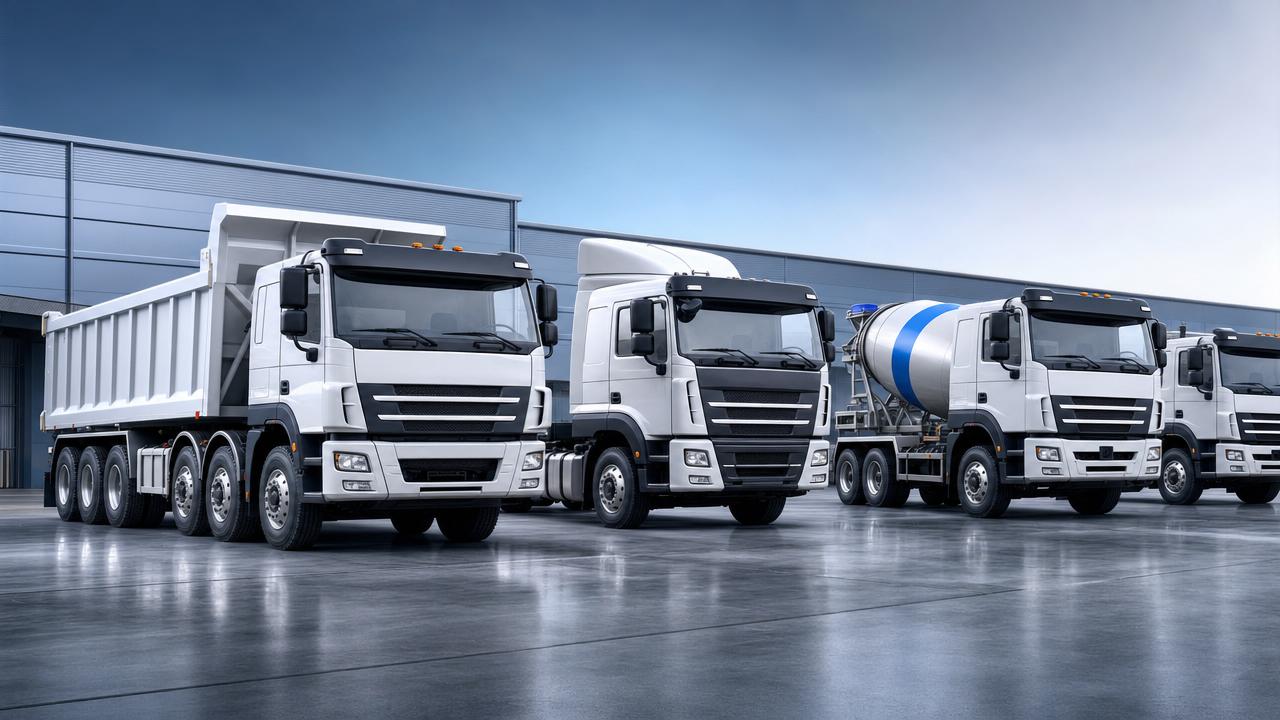
For enterprise decision-makers managing fleet procurement, the Cangshan Vehicle Configuration List offers a practical way to standardize model selection, reduce specification mismatches, and improve purchasing efficiency. By providing clear configuration references across commercial vehicle options, it supports more consistent comparisons, faster internal approvals, and better alignment with operational needs in the engineering vehicle sector.
What is the Cangshan Vehicle Configuration List, and why are procurement teams paying attention to it?
The Cangshan Vehicle Configuration List is best understood as a structured reference used to compare engineering and commercial vehicle models through standardized configuration data. Instead of relying on fragmented quotations, inconsistent model names, or sales descriptions that vary by supplier, procurement teams can use the list to view key vehicle parameters in one framework. This typically includes engine power, axle layout, payload range, cab type, transmission options, emission standard, tire specification, body dimensions, and application suitability.
For enterprise buyers, the value of the Cangshan Vehicle Configuration List is not only in product visibility but also in decision control. Engineering vehicle purchases often involve several departments: operations, finance, maintenance, compliance, and procurement. Each team has different priorities. A standardized configuration list creates a common language, helping all stakeholders evaluate the same technical baseline before discussing price, lead time, and after-sales support.
This matters even more in cross-border sourcing. When vehicles are exported for mining support, infrastructure work, municipal engineering, or construction logistics, errors in configuration matching can lead to shipment delays, local compliance issues, or vehicles that do not perform well in actual working conditions. That is why many decision-makers now treat the Cangshan Vehicle Configuration List as an operational tool rather than a simple catalog.
How does the Cangshan Vehicle Configuration List help standardize model selection in the engineering vehicle sector?
Standardization begins when companies stop selecting vehicles based only on broad model families and start selecting them according to verified configuration points. In the engineering vehicle sector, two trucks may appear similar from a brand or series perspective, yet differ in axle capacity, suspension, gearbox ratio, fuel tank size, or reinforced chassis design. These differences directly affect durability, operating cost, and job-site suitability.
The Cangshan Vehicle Configuration List supports standardization in five practical ways:
- It defines comparable fields so every candidate vehicle is reviewed under the same criteria.
- It reduces confusion caused by local naming differences, customized variants, or translated specifications.
- It speeds up internal review because departments can approve against a common specification sheet.
- It minimizes risk of ordering non-matching units in multi-vehicle or multi-project procurement.
- It improves supplier communication by turning broad requests into precise configuration requirements.
For example, if a contractor needs dump trucks for uneven road conditions and heavy stone transport, a standardized list quickly highlights whether the shortlisted units actually meet axle strength, torque, and load body requirements. Without this discipline, buyers may compare prices on vehicles that are not truly equivalent. Standardization therefore protects both technical performance and commercial fairness during bidding or vendor comparison.
Which decision-makers and operating scenarios benefit most from using the Cangshan Vehicle Configuration List?
The Cangshan Vehicle Configuration List is especially useful for organizations that purchase vehicles in batches, operate across multiple sites, or manage mixed-use engineering fleets. It is not limited to one buyer profile. Instead, it supports different decision-makers who need a more disciplined method for model selection.
Typical users include fleet directors, procurement managers, project owners, construction group executives, equipment department heads, and regional distributors sourcing vehicles for local market demand. In each case, the list helps bridge the gap between technical requirements and commercial approval.
The most relevant scenarios include:
- Construction companies replacing or expanding tipper, tractor, mixer, or cargo fleets.
- Mining and quarry operators that need higher durability and payload consistency.
- Municipal engineering projects requiring special-body trucks with compliant specifications.
- Importers comparing Chinese brands such as FOTON, SHACMAN, and SINOTRUK for target markets.
- Enterprises that need localized customization while maintaining a standard approval process.
In these environments, the Cangshan Vehicle Configuration List helps decision-makers identify where standardization should remain strict and where customization is acceptable. That balance is critical. A company may standardize engine range, axle layout, and emission level, while allowing project-specific options for body length, tire pattern, or auxiliary systems.
What should enterprises compare first when using the Cangshan Vehicle Configuration List?
One common mistake is to begin with price. A better approach is to start with operating requirements, then use the Cangshan Vehicle Configuration List to filter vehicles by function, load profile, terrain, regulation, and service expectation. Once technically suitable models are identified, commercial comparison becomes more meaningful.
The first layer of comparison should usually include mission-critical factors: vehicle type, drive configuration, engine output, payload or gross vehicle weight, transmission structure, axle specification, and chassis durability. These define whether the vehicle can perform its intended engineering task safely and efficiently.
The second layer should focus on lifecycle practicality: parts availability, maintenance accessibility, fuel efficiency, driver comfort, adaptation to local fuel quality, and expected resale or redeployment value. This is where experienced exporters and authorized dealers add value, because they can clarify not just what a configuration is, but whether it is suitable for the customer’s market and usage intensity.
What are the most common mistakes when interpreting a Cangshan Vehicle Configuration List?
The first mistake is treating the Cangshan Vehicle Configuration List as a final decision instead of a decision framework. The list supports standardization, but it does not replace application analysis. Buyers still need to confirm road conditions, climate, material type, legal loading limits, and local service capability.
The second mistake is comparing incomplete records. If one supplier provides full axle, suspension, and gearbox details while another only gives basic model information, the comparison is not reliable. Procurement teams should insist on complete fields before ranking options.
A third mistake is over-customizing too early. Many companies request extensive changes before confirming whether the base model already matches most operating needs. Excessive customization can extend lead time, complicate spare parts supply, and reduce fleet standardization. In many engineering fleet programs, the best result comes from selecting a robust standard platform and then applying only necessary market or project adaptations.
The fourth mistake is separating configuration review from supplier capability review. Even the strongest configuration list is only useful if the exporter can secure authentic supply, manage documentation, control quality, and coordinate delivery. Companies such as Shandong Livol Truck International Trade Co., Ltd. are relevant in this context because authorized dealership status, inventory access, and export process experience can greatly reduce implementation risk after the model is selected.
How can enterprises use the Cangshan Vehicle Configuration List to improve approval speed and purchasing accuracy?
To gain the full benefit, enterprises should embed the Cangshan Vehicle Configuration List into their procurement workflow instead of using it only at the quotation stage. A practical method is to create a three-step review sequence. First, operations defines job-site needs. Second, procurement maps those needs against the configuration list. Third, finance and management approve from a shortlist of technically validated models.
This approach reduces internal back-and-forth because decision-makers are no longer debating vague model descriptions. They are evaluating structured options with visible trade-offs. It also improves purchasing accuracy by making exceptions transparent. If a lower-cost model is selected despite a weaker configuration, the reason is documented and can be evaluated against project risk.
Another good practice is to establish an internal standard vehicle matrix based on the Cangshan Vehicle Configuration List. For example, a company may approve one standard configuration for urban engineering transport, one for heavy construction, and one for rough-road aggregate hauling. New purchases are then matched to the nearest approved profile, which shortens evaluation time and strengthens fleet consistency.
Before moving forward, what questions should buyers ask suppliers about the Cangshan Vehicle Configuration List?
Once a buyer identifies target models through the Cangshan Vehicle Configuration List, the next step is supplier verification. This is where many successful procurement programs separate themselves from risky ones. Buyers should confirm whether the listed configuration is standard production, optional factory configuration, or a customized export arrangement. That distinction affects lead time, warranty terms, spare parts alignment, and documentation consistency.
Key supplier questions include:
- Is the configuration available from current inventory or only by new production?
- Which items are fixed, and which can be customized without affecting delivery reliability?
- Are technical documents, homologation support, and export paperwork aligned with the listed vehicle specification?
- What after-sales support, spare parts planning, and service guidance are available in the destination market?
- How does the supplier handle pre-shipment inspection and quality confirmation?
For global buyers, working with an experienced exporter can turn the Cangshan Vehicle Configuration List from a comparison sheet into a practical sourcing system. An exporter with authorized brand access, strong inventory support, and full-process service can help confirm model fit, adapt specifications where needed, and reduce hidden risks in customs clearance and logistics.
Final answer: is the Cangshan Vehicle Configuration List worth using as a fleet selection standard?
Yes, especially for enterprise decision-makers who need a repeatable, defensible, and efficient way to evaluate engineering vehicles. The Cangshan Vehicle Configuration List helps standardize model selection by turning scattered vehicle information into a clear comparison framework. It improves alignment across departments, reduces specification mismatches, and makes purchasing decisions easier to justify internally.
Its true value appears when companies use it together with real operating data, clear approval logic, and capable supplier support. If you need to move from comparison to procurement, the priority is to confirm application scenario, required configuration fields, customization boundaries, delivery cycle, documentation needs, and after-sales expectations. With those points clarified early, buyers can select the right vehicle model more confidently and build a more reliable engineering fleet procurement process.
Search Starts Here