
News
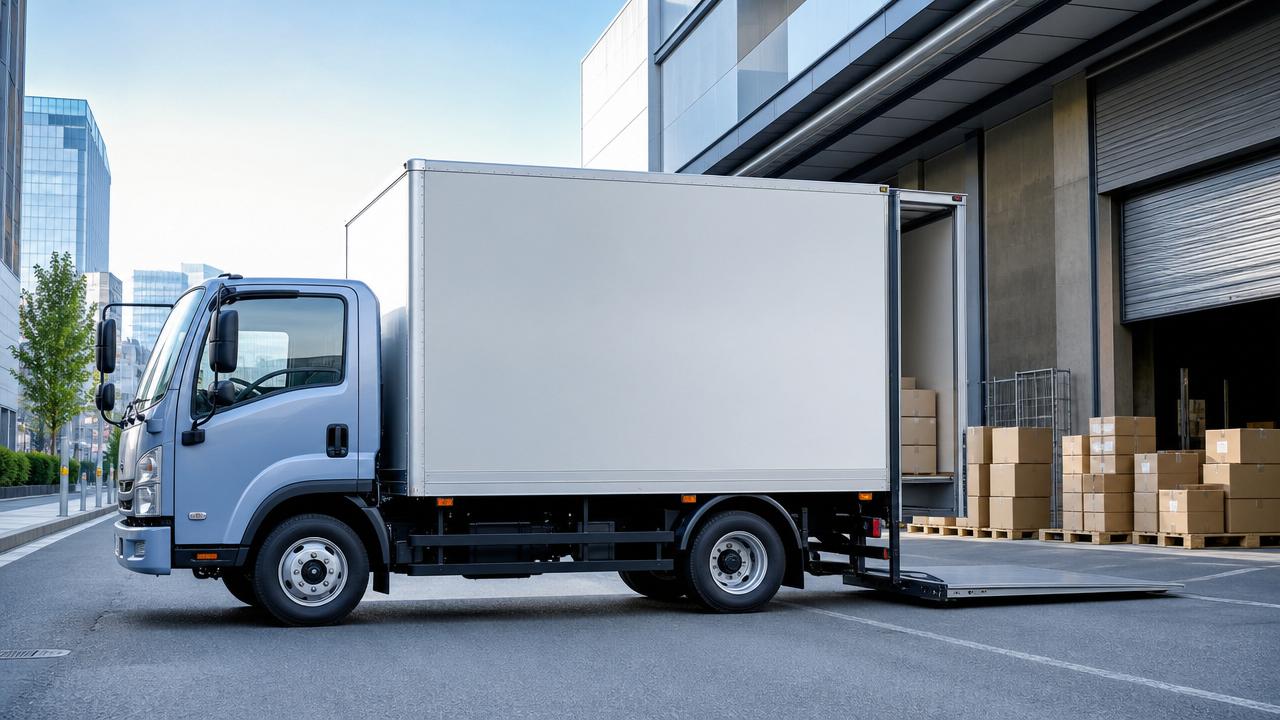
Before ordering a 4_2 Cargo Truck for daily urban deliveries, operators need to look beyond price and payload. The right truck should match route conditions, loading frequency, fuel efficiency and city access requirements while ensuring reliability and driver comfort. This guide highlights the key checks that help users choose a practical, efficient and durable vehicle for demanding urban transport tasks.
Urban delivery needs are changing faster than many buyers expect
The checklist for buying a 4_2 Cargo Truck is no longer limited to engine power, body size and list price. Daily urban deliveries have changed in recent years. Cities are becoming more congested, delivery windows are getting tighter, fuel costs remain sensitive, and more local authorities are paying closer attention to emissions, noise and road access. For operators, this means that the wrong truck specification can reduce delivery efficiency every single day, even if the initial purchase cost looks attractive.
At the same time, customer expectations have shifted. Retail distribution, supermarket replenishment, parcel movement, municipal supply runs and light industrial logistics all require quicker turnaround and more route flexibility. A 4_2 Cargo Truck that performs well on paper may still struggle if it is too tall for loading docks, too long for narrow urban streets, or too heavy for frequent stop-and-go operations. That is why ordering decisions now need to be based on real route data, loading habits and operating conditions rather than generic brochure specifications.
Why the market is paying more attention to fit-for-purpose truck selection
Several industry signals explain why users are becoming more careful before they order a 4_2 Cargo Truck. First, urban logistics is under pressure to improve efficiency without increasing fleet size. Second, maintenance downtime has become more expensive because missed deliveries quickly affect customer relationships. Third, operators want lower total cost of ownership, not only a lower purchase invoice. Finally, the driver factor matters more than before: if a truck is uncomfortable, hard to maneuver or difficult to load, productivity suffers over long work cycles.
This shift benefits buyers who take a structured approach. Instead of asking only “How much can it carry?”, experienced users now ask “How many trips can it complete per day?”, “How easily can it enter my delivery zones?”, “How often will it need service?”, and “Will drivers be able to operate it efficiently during repeated urban stops?” These are practical trend-driven questions that lead to better vehicle selection.
The main checks that matter more in today’s city delivery environment
When evaluating a 4_2 Cargo Truck for urban delivery work, operators should focus on a combination of compliance, usability and lifecycle value. The following areas have become more important because urban routes are more demanding than many intercity applications.
Route reality should drive every 4_2 Cargo Truck decision
One major trend in commercial vehicle selection is the move from product-first thinking to route-first thinking. For a daily-use 4_2 Cargo Truck, actual route conditions are often the strongest factor in long-term performance. Buyers should map average trip distance, road width, traffic density, delivery point height restrictions, daily stops, parking conditions and road surface quality. A truck that handles smooth main roads may not perform equally well in mixed urban neighborhoods with narrow corners and frequent reversing.
Operators should also evaluate loading and unloading rhythm. If cargo is handled many times per day, body access design becomes important. Rear door type, side opening options, floor height and cargo securing points can affect speed much more than buyers first assume. In urban delivery, minutes saved at each stop often matter more than a small difference in rated horsepower.
Fuel efficiency is no longer just a cost topic, but a planning signal
In the past, some buyers accepted broad fuel estimates. That approach is becoming less useful. For a 4_2 Cargo Truck operating inside cities, fuel economy depends heavily on low-speed torque, gear matching, axle ratio, driving pattern and average stop frequency. A truck selected only by engine output may consume more fuel than expected if the powertrain is designed for different working conditions.
This is why operators should request realistic fuel references for urban use, not only ideal test figures. They should compare trucks under similar payload, route density and stop frequency. Good urban efficiency usually comes from balanced specification rather than the biggest engine. Buyers should also check whether the truck supports easier daily inspection, efficient cooling in hot traffic conditions and proven durability in repetitive start-stop duty cycles.
Compliance and city access are becoming more influential in truck choice
Another important change is the stronger influence of local operating rules. Depending on the market, urban delivery fleets may face emission requirements, axle load restrictions, hour-based access controls or neighborhood-specific road rules. As a result, checking whether a 4_2 Cargo Truck can legally and practically enter the intended service zone is now a basic purchase condition, not a later detail.
Operators should confirm chassis configuration, rated load, body dimensions, lighting compliance and any required equipment for the target destination. Even where regulations are not immediately restrictive, many cities are moving toward tighter operational control. A truck chosen with future access in mind may remain productive for longer and reduce the risk of route changes or premature replacement.
Driver-centered design has become a productivity factor, not just a comfort feature
In urban transport, drivers are constantly entering traffic, parking, checking cargo and dealing with repeated stop-and-go movement. That is why visibility, steering ease, brake response, clutch effort, cabin entry height and seat support have become key decision points when ordering a 4_2 Cargo Truck. A truck that reduces fatigue helps maintain consistent delivery output across the day.
The market trend is clear: fleets increasingly value vehicles that are easier to operate, not only stronger on specification sheets. Better mirror design, stable suspension, smoother shifting and organized dashboard controls reduce stress during urban runs. For owner-operators and fleet managers alike, these features can influence retention, safety performance and even maintenance quality because drivers are more likely to care for equipment that feels manageable and dependable.
After-sales strength now affects purchasing decisions earlier in the process
A noticeable market shift is that buyers are evaluating support networks before they place an order, not after the truck arrives. For a 4_2 Cargo Truck in daily urban use, downtime quickly turns into missed schedules, customer complaints and revenue loss. This means after-sales support, spare parts availability and technical response should be checked as carefully as the truck itself.
This is where established exporters and authorized dealers become especially relevant. Shandong Livol Truck International Trade Co., Ltd., based in Shandong, China, works as an officially authorized domestic and overseas dealer for FOTON, SHACMAN and SINOTRUK. With a broad authorized 4S store network, stable inventory and a professional export team, the company supports buyers through vehicle selection, customization, documentation, customs clearance and logistics. For operators, this kind of support matters because correct specification and steady parts access help the 4_2 Cargo Truck remain productive long after delivery.
How different users are affected by the same truck selection trend
A practical judgment framework before placing an order
To make a better decision, users should evaluate a 4_2 Cargo Truck in three stages. First, confirm operational fit: route type, average payload, body size and legal access. Second, confirm efficiency fit: fuel use, turning ability, loading convenience and driver comfort. Third, confirm support fit: spare parts, warranty terms, technical guidance and delivery timing.
If any one of these stages is ignored, the truck may still be usable, but it may not be economically correct for urban delivery work. The best-performing vehicle is usually the one that matches the job with the fewest compromises. This is especially true when a 4_2 Cargo Truck is expected to work every day under repetitive city conditions.
Signals worth monitoring before your next 4_2 Cargo Truck purchase
Looking ahead, operators should continue watching a few signals. One is whether city access rules become tighter for conventional delivery trucks. Another is whether customer delivery windows become shorter, increasing the value of maneuverability and loading efficiency. A third signal is service responsiveness: in competitive logistics environments, the supplier that can deliver the right truck quickly and support it consistently may create more value than a lower-price seller with weaker backup.
Buyers should also watch how their own cargo mix changes. If volume increases faster than weight, body design and cubic capacity may matter more than pure tonnage. If routes become denser, transmission match, steering ease and cabin ergonomics become more important. These are not abstract trends. They directly shape whether a 4_2 Cargo Truck performs as a productive urban tool or becomes a daily operating compromise.
Final buying direction for users who want a durable urban delivery solution
The current direction of the market is clear: urban truck selection is becoming more precise, more route-based and more focused on total operating value. Before ordering a 4_2 Cargo Truck, users should check not only payload and price, but also route access, fuel behavior, loading frequency, driver usability, service support and long-term compliance risk. These factors have a growing influence because cities, delivery patterns and customer expectations are all changing.
If your business wants to judge which 4_2 Cargo Truck is best for daily urban deliveries, the most useful next step is to confirm five questions: What does your real route look like? What is your typical load profile? How sensitive is your operation to downtime? What city restrictions apply now and later? And which supplier can support the truck through its full working life? Answering those questions carefully will lead to a more durable, efficient and profitable vehicle decision.
Search Starts Here