
News
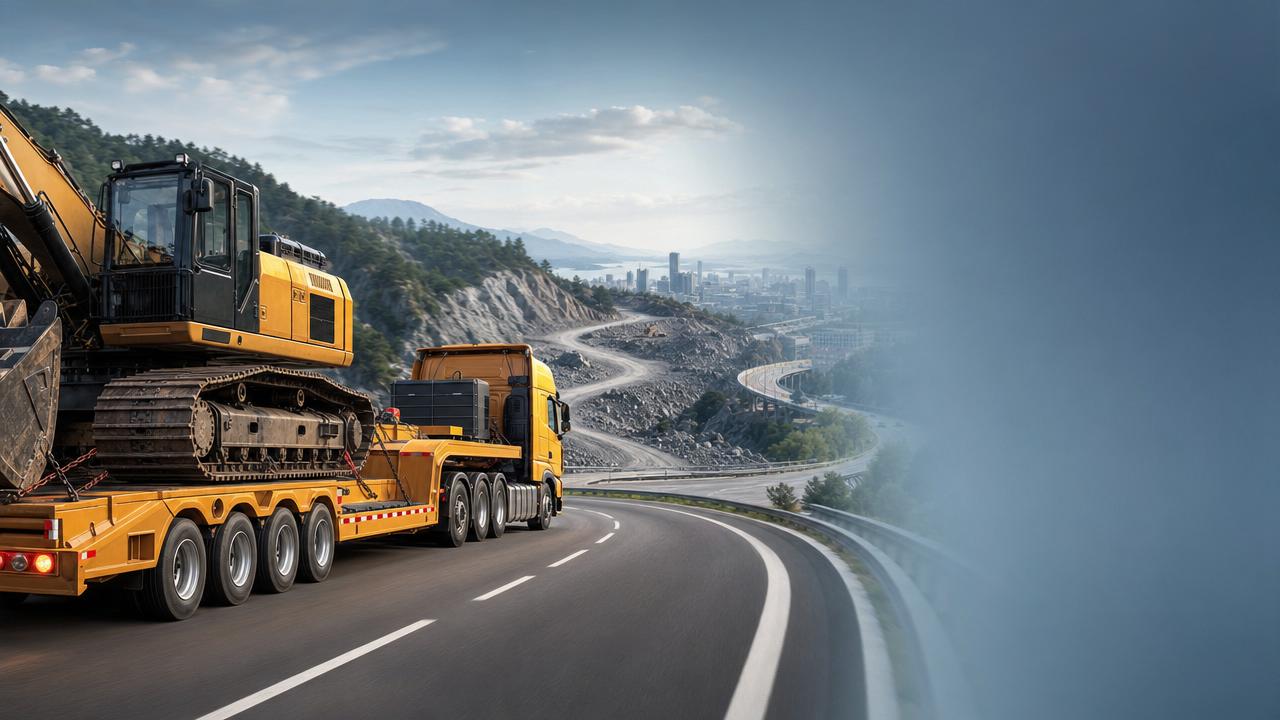
Low Plate trailer selection starts with real transport conditions
Choosing the right Low Plate trailer affects delivery time, route safety, and equipment protection in engineering vehicle transport.
The best Low Plate is not simply the one with the highest capacity or lowest deck.
It must match machine dimensions, road restrictions, site entry conditions, and loading methods.
When ground clearance is ignored, the trailer may scrape on ramps, bridges, or temporary access roads.
When capacity is misjudged, axle stress, tire wear, and legal exposure increase quickly.
When route risk is underestimated, even a compliant Low Plate can become inefficient or unsafe.
This guide explains how to evaluate Low Plate trailer choices through practical engineering transport scenarios.
It also shows how integrated export support helps reduce uncertainty across cross-border commercial vehicle operations.
Why the same Low Plate does not fit every engineering vehicle route
Engineering transport conditions vary widely between highways, industrial parks, mines, ports, and remote construction areas.
A Low Plate that performs well on paved expressways may fail on steep site entrances or uneven ground.
Some loads are dense and compact, such as rollers or generators.
Others are taller, longer, or have offset weight distribution, such as excavators, pavers, or drilling equipment.
That is why Low Plate selection should begin with scenario mapping instead of product comparison alone.
Useful checks include deck height, gooseneck angle, axle layout, turning radius, suspension type, and ramp geometry.
Route assessment should include bridge clearance, slope transition, road width, soft shoulders, and permit limitations.
In export projects, documentation timing and final destination road standards also matter.
Scenario 1: Highway transfer of tracked machines needs a balanced Low Plate
Highway movement usually favors a Low Plate with stable tracking, predictable braking, and compliant overall dimensions.
Ground clearance remains important because toll plazas, service roads, and loading ramps still create angle changes.
Tracked excavators often create concentrated point loads, especially near the center of the deck.
This requires careful axle distribution and deck reinforcement rather than relying on headline payload figures.
Key judgment points
- Check legal gross combination limits on the planned highway corridor.
- Confirm machine transport width after bucket, arm, or side component positioning.
- Measure loaded height to avoid overpass and tunnel conflicts.
- Review tie-down points for both machine weight and emergency braking loads.
Scenario 2: Quarry and mining access roads demand extra clearance and strength
Mine and quarry routes are harsher than public roads and often punish a poorly chosen Low Plate.
Loose gravel, drainage humps, ruts, and sharp approach angles increase bottoming risk.
A very low deck can improve loading stability but may reduce usable clearance in rough terrain.
In these conditions, suspension durability and structural rigidity become as important as nominal capacity.
Core selection advice
Choose a Low Plate with reinforced main beams, suitable axle spacing, and proven performance on uneven roads.
Approach and departure angles should be checked with the actual site road profile, not estimated visually.
If loading happens on unprepared ground, ramp grip and support stability need extra attention.
Scenario 3: Urban delivery routes create hidden Low Plate route risks
Urban engineering vehicle transport looks easier, but route risk is often more complex.
Tight intersections, overhead cables, school zones, and time-window restrictions can limit trailer choice.
A long Low Plate may offer better deck space, but it can struggle in dense city turning environments.
A lower deck reduces overall height, yet speed bumps and driveway transitions may increase underside contact.
What to verify first
- Turning radius at roundabouts and site gates.
- Street parking conflicts during unloading.
- Temporary detours caused by local construction.
- Night movement rules for oversized Low Plate transport.
Scenario 4: Cross-border projects require a Low Plate that fits documents and roads
Cross-border engineering transport adds regulatory and logistics complexity to Low Plate selection.
The trailer must suit local road conditions, but also match customs documentation, destination regulations, and spare parts support.
Inconsistent standards between origin and destination can affect axle compliance, lighting, marking, and braking requirements.
This is where a reliable commercial vehicle exporter adds practical value beyond basic supply.
Shandong Livol Truck International Trade Co., Ltd. provides authorized vehicle resources from FOTON, SHACMAN, and SINOTRUK.
Its export team supports vehicle selection, customization, documentation, customs clearance, and logistics coordination.
That helps reduce mismatch risk when a Low Plate must perform across multiple countries and project environments.
How ground clearance, capacity, and route risk differ by scenario
Practical Low Plate matching suggestions for engineering vehicle operations
- Start with actual loaded dimensions, not brochure machine dimensions.
- Calculate weight by axle contact area and center of gravity location.
- Review the worst route segment, not the average route condition.
- Check loading and unloading surface stability before selecting ramp design.
- Confirm local compliance for oversize Low Plate movement before dispatch.
- Prefer suppliers that can align vehicle supply with export paperwork and after-sales support.
These steps improve both equipment safety and total transport efficiency.
They also prevent overbuying a Low Plate that adds cost without solving the real operational constraint.
Common Low Plate selection mistakes that cause avoidable delays
One common mistake is focusing only on deck height while ignoring breakover angle and suspension movement.
Another is treating rated capacity as usable capacity without considering road class or dynamic loading.
Some projects check the outbound route carefully but overlook site exit conditions after unloading.
Others assume every destination can support the same maintenance response for a specialized Low Plate.
Documentation gaps can also delay international movement, even when the trailer itself is technically suitable.
Avoiding these errors requires a full view of machine, trailer, road, and delivery sequence.
Next steps for choosing a Low Plate with lower transport risk
A dependable Low Plate decision begins with route data, machine data, and clear delivery conditions.
Prepare machine weight, transport dimensions, loading method, destination road notes, and timing requirements.
Then compare trailer options against the toughest scenario, not the easiest one.
For international engineering vehicle projects, coordinated supply and export execution reduce avoidable handover problems.
Shandong Livol Truck International Trade Co., Ltd. supports this process with stable inventory, authorized brand resources, and professional export services.
With the right Low Plate, heavy equipment transport becomes safer, more compliant, and more predictable from origin to site.
Search Starts Here