
News
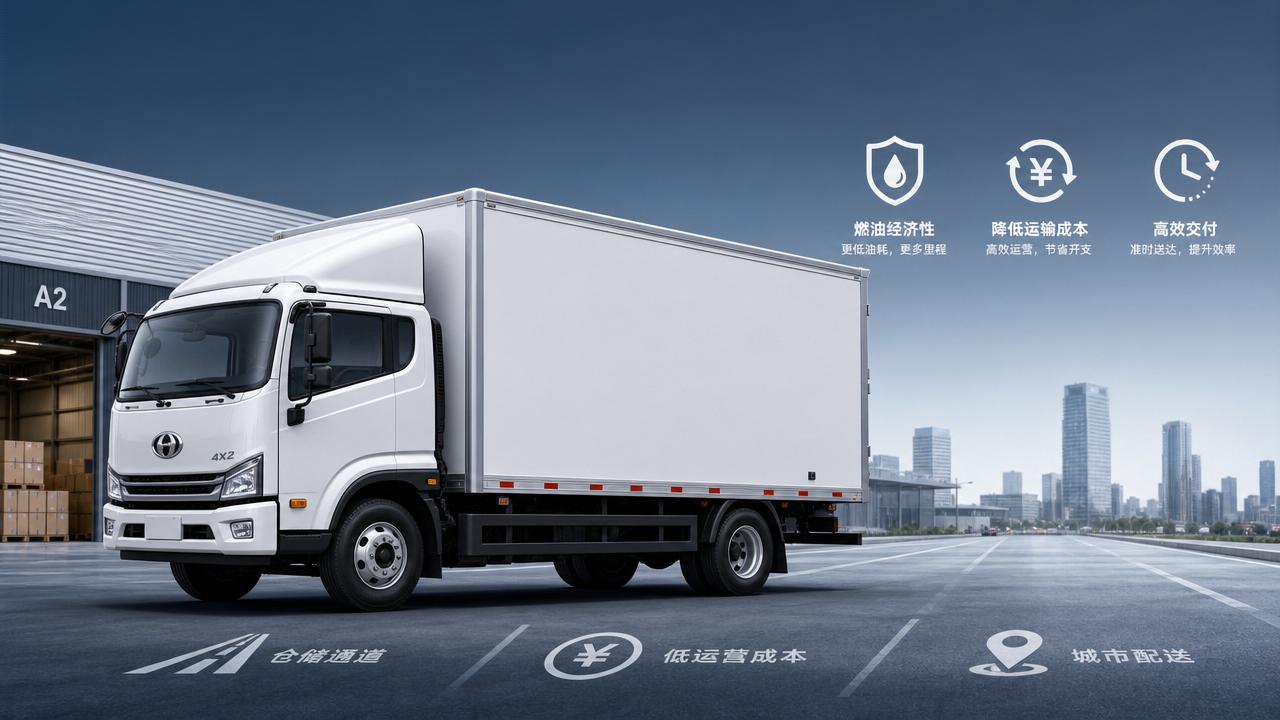
For finance decision-makers, the real cost of a 4_2 Cargo Truck goes far beyond the purchase price. Fuel economy directly affects route profitability, operating margins, and long-term fleet budgeting. In this article, we examine what changes total delivery cost, from load conditions and driving patterns to vehicle configuration and maintenance, helping buyers evaluate commercial truck value with greater accuracy and confidence.
Why fuel economy matters more than sticker price in 4_2 Cargo Truck procurement
In engineering vehicle and delivery operations, a 4_2 Cargo Truck is often selected because it balances payload, maneuverability, and route flexibility. Yet for financial approvers, the larger question is not only acquisition cost, but how operating cost behaves over three to five years.
Fuel is one of the most visible and most volatile line items in fleet spending. Even a modest difference in liters consumed per 100 kilometers can materially change monthly route cost, especially when vehicles run frequent urban, regional, or mixed-condition deliveries.
This is why a lower-priced truck can become a more expensive asset over time. If engine matching, axle ratio, body design, and maintenance planning are not aligned with the transport task, the 4_2 Cargo Truck may consume more fuel while delivering no practical gain in output.
- Higher fuel use reduces route margin and weakens predictability in annual budgeting.
- Poor vehicle matching can increase cost per ton-kilometer even if the purchase price looks attractive.
- Delivery delays caused by unsuitable configuration often create indirect cost through overtime, missed slots, or customer penalties.
For this reason, financial review should connect procurement price, fuel economy, utilization rate, and expected duty cycle into one total delivery cost model rather than treating them as separate decisions.
What changes total delivery cost for a 4_2 Cargo Truck?
Several variables influence how much a 4_2 Cargo Truck really costs to run. Some are technical. Some are operational. Many are overlooked during quotation comparison because they do not appear clearly on the first page of a bid sheet.
1. Load factor and cargo type
A truck carrying dense construction materials behaves differently from one carrying lighter packaged goods. If average utilization is close to rated payload on most trips, fuel use rises faster under stop-start conditions, gradients, and congested routes.
2. Route profile and traffic pattern
Short urban deliveries often increase idling time, braking frequency, and gear changes. Regional transport with steadier speeds may improve fuel economy, but road quality, slope, and wind resistance still matter. One 4_2 Cargo Truck specification rarely fits every route equally well.
3. Powertrain matching
An engine with unsuitable output for the mission can create hidden waste. Underpowered trucks may run at inefficient operating ranges. Over-specified trucks may add cost and fuel consumption without delivering proportional productivity benefits.
4. Vehicle body and aerodynamic resistance
Body shape, cargo box height, side profile, and add-on equipment affect airflow. At higher average road speeds, drag becomes a meaningful contributor to fuel use. This is particularly relevant for enclosed vans, high boxes, and mixed intercity operations.
5. Maintenance quality and tire management
Uneven tire pressure, delayed filter changes, poor injector condition, and alignment issues can push consumption upward over time. These are not dramatic failures, but for finance teams they are exactly the kind of small losses that accumulate across a fleet.
The table below helps financial approvers connect major operating variables to their likely cost impact when reviewing a 4_2 Cargo Truck proposal.
For financial planning, the key lesson is clear: total delivery cost is driven by fit between truck specification and mission profile. A 4_2 Cargo Truck should be evaluated as a working asset, not merely as a purchased unit.
How should finance teams compare 4_2 Cargo Truck options?
A quotation comparison that focuses only on ex-factory price or landed price can miss the real cost picture. Finance teams need a structured review method that considers operating assumptions, supply reliability, and downstream service support.
Use a total cost view, not unit price alone
When comparing one 4_2 Cargo Truck proposal to another, it is useful to estimate annual distance, average payload, route type, expected idling time, maintenance intervals, and parts accessibility. This allows procurement and finance to compare cost under real usage rather than brochure conditions.
Check whether the truck is overbuilt or underbuilt
An overbuilt vehicle often carries excess weight and higher upfront cost. An underbuilt vehicle may suffer lower route efficiency, more frequent wear, and weaker service life under engineering-related transport tasks. Both cases reduce return on investment.
Review supply and delivery risk
For project-driven buyers, delayed vehicle arrival can be more costly than a small price difference. Inventory strength, documentation accuracy, and export process control affect how quickly the truck can begin generating revenue.
The comparison table below can be used as a practical screening tool when assessing a 4_2 Cargo Truck for engineering vehicle transport and delivery operations.
This framework supports more disciplined approvals. It helps finance teams avoid comparing dissimilar trucks as if they were equivalent assets simply because the basic category is the same.
Which operating scenarios make fuel economy rise or fall fastest?
The same 4_2 Cargo Truck can produce very different fuel outcomes depending on where and how it operates. For finance decision-makers, scenario analysis is often more useful than a single nominal fuel figure.
Urban engineering support deliveries
These routes typically involve dense traffic, repeated acceleration, low average speed, and waiting time at unloading points. Fuel economy is usually more sensitive to driving habits and clutch-gear matching than to top-end power output alone.
Regional material transport
Longer distances with more stable cruising can improve fuel performance. However, body drag, road gradients, and load consistency become more influential. Selecting the right axle ratio and engine range is especially important here.
Mixed fleet use across changing jobsites
When one truck serves multiple contracts, actual operating cost becomes harder to predict. A flexible 4_2 Cargo Truck with balanced configuration may deliver better total economics than an aggressively optimized truck built for only one route type.
- Urban fleets should emphasize low-speed efficiency, serviceability, and driver control.
- Regional fleets should focus on body design, rolling resistance, and powertrain matching.
- Mixed fleets should avoid extreme specifications that reduce adaptability.
In practice, scenario-based procurement reduces approval risk. It aligns the 4_2 Cargo Truck with revenue generation conditions instead of relying on generic assumptions.
What procurement mistakes often increase 4_2 Cargo Truck fuel cost later?
Many cost overruns start during specification review. They are not always caused by poor-quality equipment. More often, they come from incomplete requirement definition or weak communication between operation, procurement, and finance teams.
Mistake 1: Buying on advertised fuel figures alone
Published fuel performance may not reflect actual road density, payload pattern, climate, or idle time. Finance teams should request scenario-based explanations rather than treat one figure as universal.
Mistake 2: Ignoring body and loading design
A 4_2 Cargo Truck with an unsuitable cargo body may lose efficiency through extra weight, poor loading speed, or unnecessary drag. This often creates indirect labor and scheduling cost in addition to fuel waste.
Mistake 3: Underestimating downtime cost
A truck that is cheap to buy but slow to support can become expensive if spare parts, service guidance, or export documents are not handled efficiently. For project fleets, downtime can be as damaging as fuel loss.
Mistake 4: Approving without a replacement horizon
If the ownership period is unclear, it becomes difficult to compare maintenance intensity, resale assumptions, and whole-life fuel impact. Procurement should be linked to a defined asset planning cycle.
How Shandong Livol supports lower delivery cost and smoother truck procurement
For overseas buyers and financial approvers, supplier capability affects cost just as much as vehicle specification. Shandong Livol Truck International Trade Co., Ltd. brings value through authorized brand access, supply stability, export coordination, and practical configuration support.
As an official authorized domestic and overseas dealer for FOTON, SHACMAN, and SINOTRUK, the company can help buyers compare suitable commercial vehicle solutions under different payload, route, and budget conditions. This is useful when a 4_2 Cargo Truck must fit both operational and capital approval requirements.
Its network of authorized 4S stores and sufficient inventory across China supports more stable supply and faster delivery planning. For buyers managing project schedules, this can reduce the commercial risk of long procurement cycles or uncertain production slots.
The export team also provides full-process support, including vehicle selection, customization, documentation, customs clearance, and logistics coordination. That matters to finance teams because paperwork errors, configuration mismatch, and shipping delays can all increase non-productive cost.
The service process below shows how a structured supplier approach can reduce friction when sourcing a 4_2 Cargo Truck for engineering vehicle applications.
This kind of end-to-end support is especially valuable when internal buyers need to justify not only vehicle price, but also delivery reliability, compliance handling, and long-term operating control.
FAQ: what finance decision-makers often ask about 4_2 Cargo Truck cost
How should we estimate whether a 4_2 Cargo Truck is cost-effective?
Start with expected annual mileage, average load factor, route mix, and planned ownership period. Then compare fuel use, maintenance assumptions, and downtime exposure. A truck with a slightly higher purchase price may still be the better choice if it improves route consistency and reduces operating waste.
Is a more powerful 4_2 Cargo Truck always a better financial decision?
Not always. Extra power helps only when duty conditions genuinely require it. If the truck mainly runs light to medium loads on urban or moderate routes, overspecification can raise both initial cost and fuel consumption without meaningful productivity gain.
What should we check before approving an imported truck order?
Review configuration logic, document requirements, delivery lead time, logistics arrangement, and after-sales communication path. For a 4_2 Cargo Truck, these points influence how fast the unit can be deployed and how well operating cost can be controlled after arrival.
Can fuel economy improvements really affect total delivery cost that much?
Yes, especially across high-frequency delivery operations. Small efficiency differences become meaningful when multiplied by monthly distance, fleet size, and fuel price fluctuations. For finance teams, this is one of the easiest operating variables to convert into a measurable budget effect.
Why choose us for your 4_2 Cargo Truck sourcing plan?
If you are evaluating a 4_2 Cargo Truck for engineering transport, city delivery, or mixed commercial use, Shandong Livol can support a more accurate and efficient procurement process. The goal is not simply to supply a truck, but to help you reduce approval uncertainty and total delivery cost.
- Ask for parameter confirmation based on payload, route distance, road condition, and cargo body requirement.
- Request product selection support across FOTON, SHACMAN, and SINOTRUK resources according to budget and duty cycle.
- Check delivery schedule, available inventory, and export process timing before final approval.
- Discuss customization options, documentation requirements, and logistics arrangements for your target market.
- Request quotation communication with a full cost perspective, including configuration rationale and service coordination scope.
For finance decision-makers, the best 4_2 Cargo Truck is the one that fits the job, protects budget discipline, and reaches service quickly. A structured consultation can make that decision clearer. Contact us to review specifications, compare options, confirm lead time, and build a truck solution that supports both operational demand and financial control.
Search Starts Here